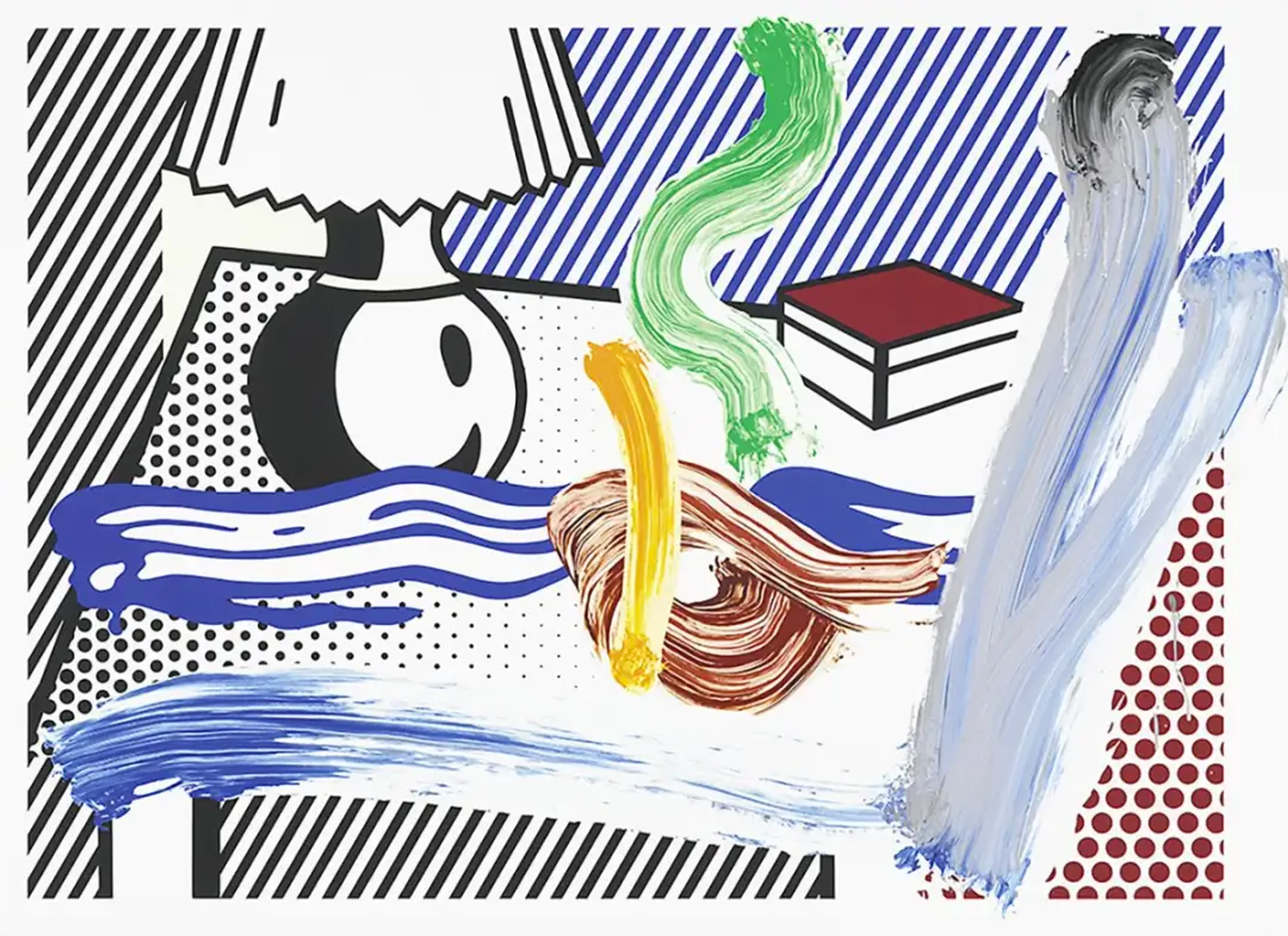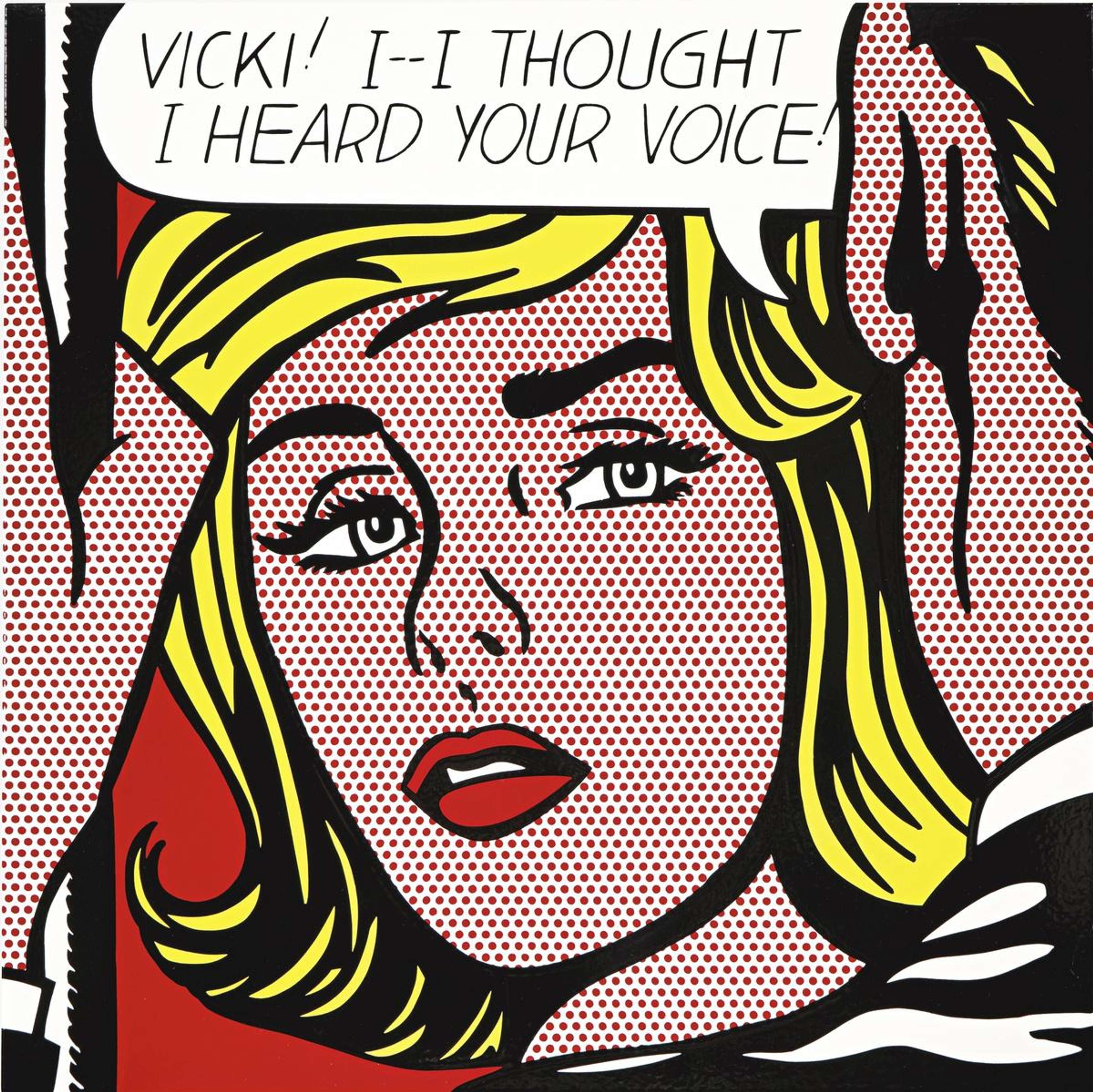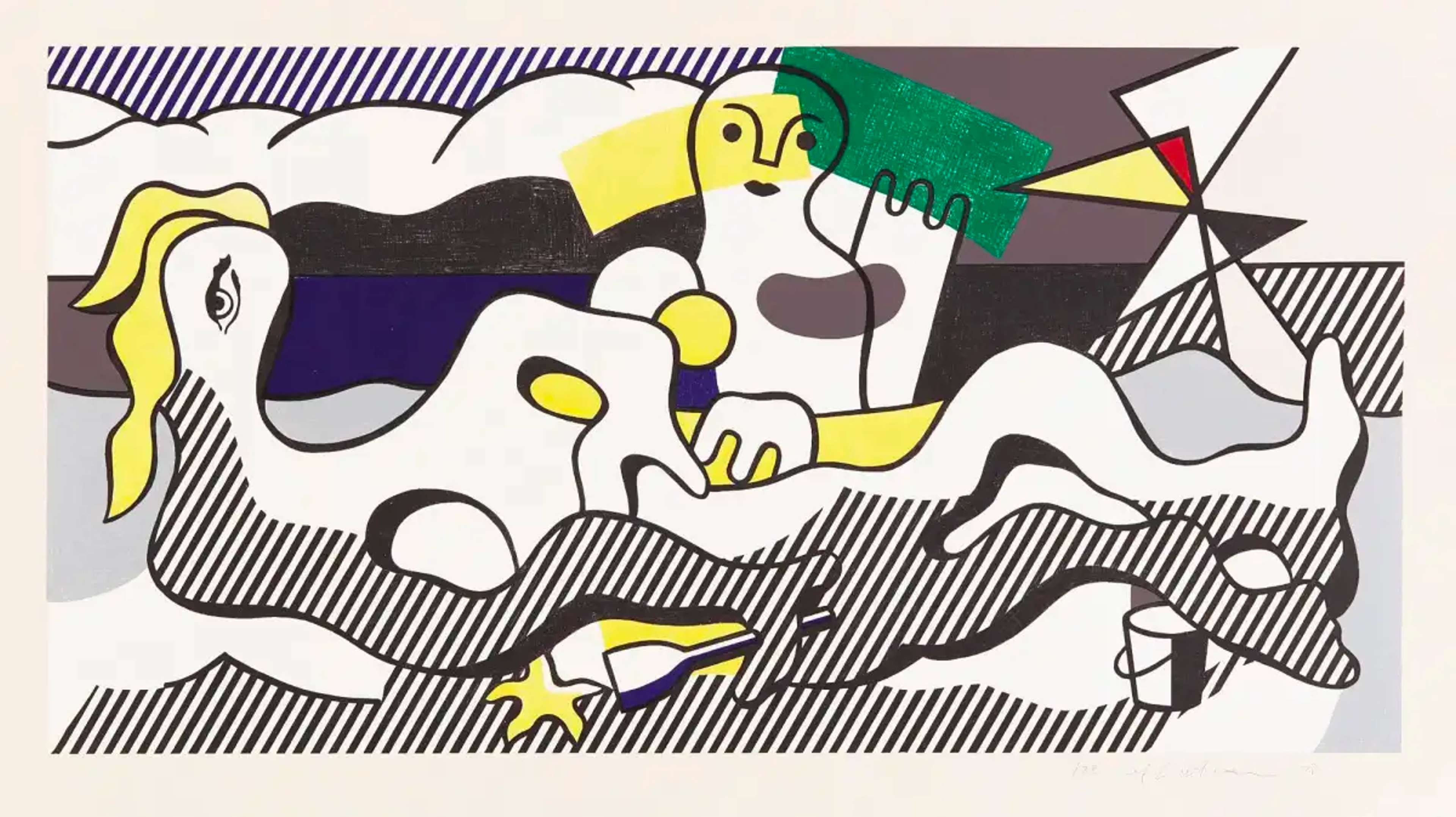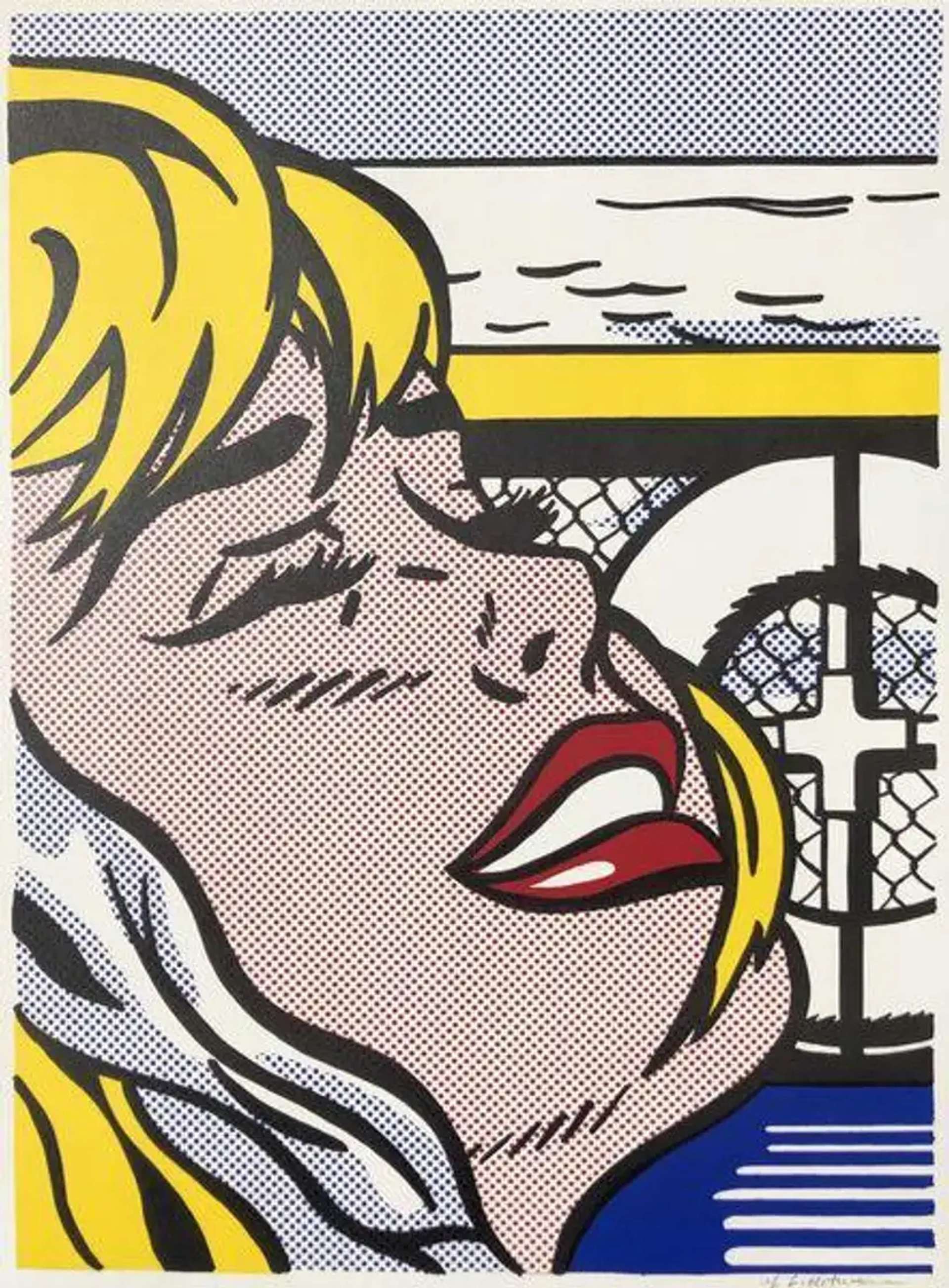


In his 1974 Six Still Lifes series, Roy Lichtenstein transformed one of art’s oldest traditions into a commentary on modern culture. Through these prints, Lichtenstein reinterpreted the still life genre, using the visual language of Pop Art to capture both the history of painting and the visual codes of advertising, presenting a playful critique of value, taste, and perception in a world saturated by image.
Roy Lichtenstein’s Six Still Lifes reimagines the classical still life genre

Lichtenstein’s Six Still Lifes takes inspiration from centuries of still life painting, while subverting the genre’s traditions. Instead of quiet contemplation, the artist injects dynamism and commercial polish, transforming fruit, ceramics, and decorative motifs into graphic compositions that echo modern advertising. The series simultaneously honours and undermines the still life’s moralising tone, replacing reflection on mortality with Pop Art irony and bright colours.
Six Still Lifes strips away meaning to focus on appearance
In classical still lifes, objects often symbolised moral or spiritual ideas, such as a skull for mortality, fruit for abundance or glass for transience. Lichtenstein deliberately empties his arrangements of such symbolism, saying; “my still life paintings have none of those qualities, they just have pictures of certain things.” Instead of using objects to tell moral or symbolic stories, Lichtenstein reduces them to pure visual form, so that lemons, pitchers, and flowers are no longer symbols of life or beauty but simply striking shapes on a flat surface. In doing so, he asks whether art’s power comes from what it represents, or from the way it’s made and seen.
In Still Life with Portrait, Lichtenstein’s familiar muse enters the still life
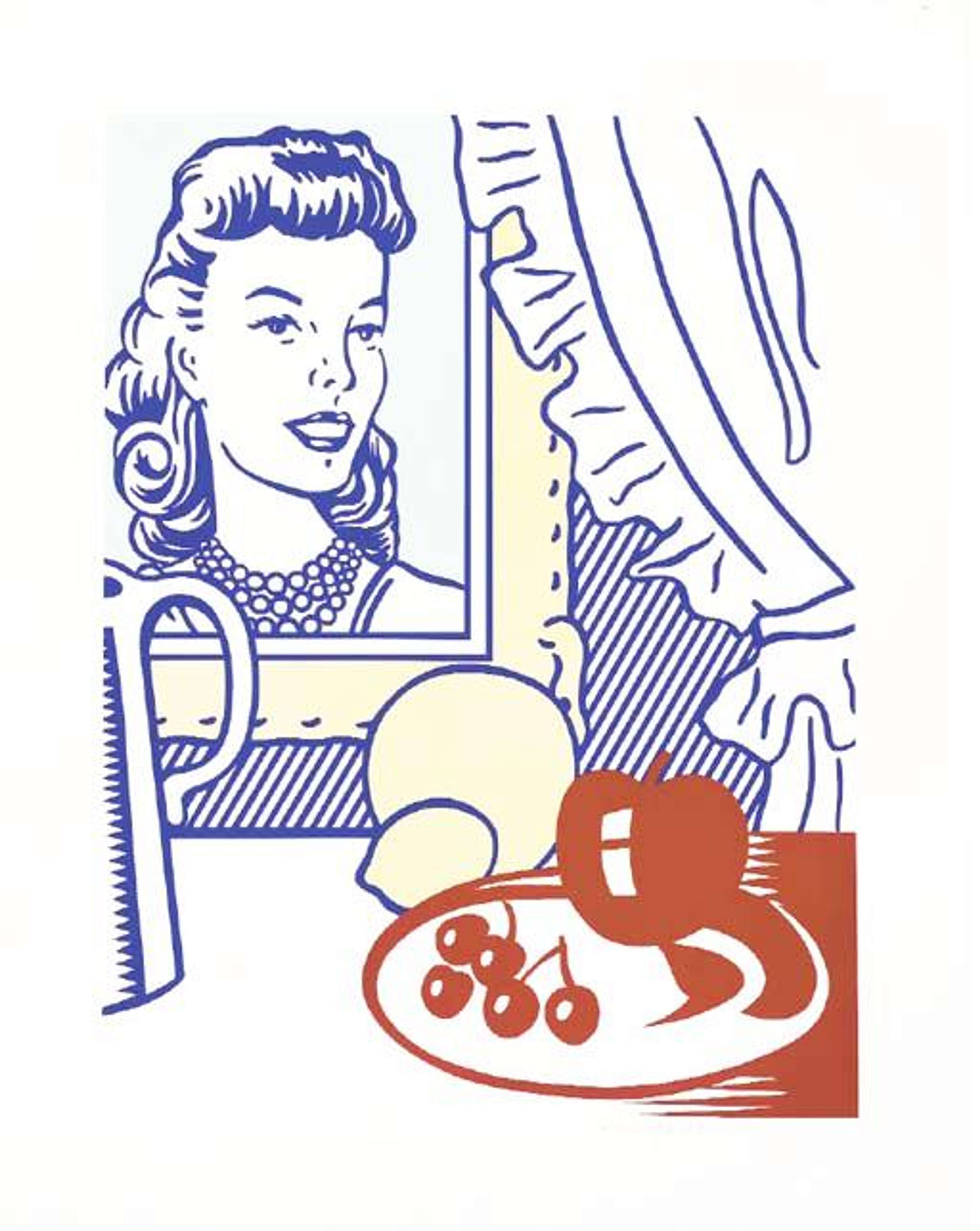
In Still Life with Portrait, Lichtenstein includes one of his familiar comic-book heroines into a classical still-life set-up. The fruit bowl and curtain reference traditional still life compositions, but the framed woman on the wall introduces the world of romance comics and glamour. By treating the muse as an image-within-the-image, Lichtenstein shows how desire, advertising and domestic display overlap.
Still Life With Pitcher and Flowers explores themes of mortality

In Still Life with Pitcher and Flowers, Lichtenstein takes the traditional still life pairing of a vessel and flowers (used to symbolise life and mortality) and transforms it into a Pop Art image. What was once a sombre meditation on time becomes more about visual balance than emotion, showing how Pop Art can modernise artistic symbols through intention, colour and design.
Six Still Lifes is Lichtenstein’s deepest exploration of still life
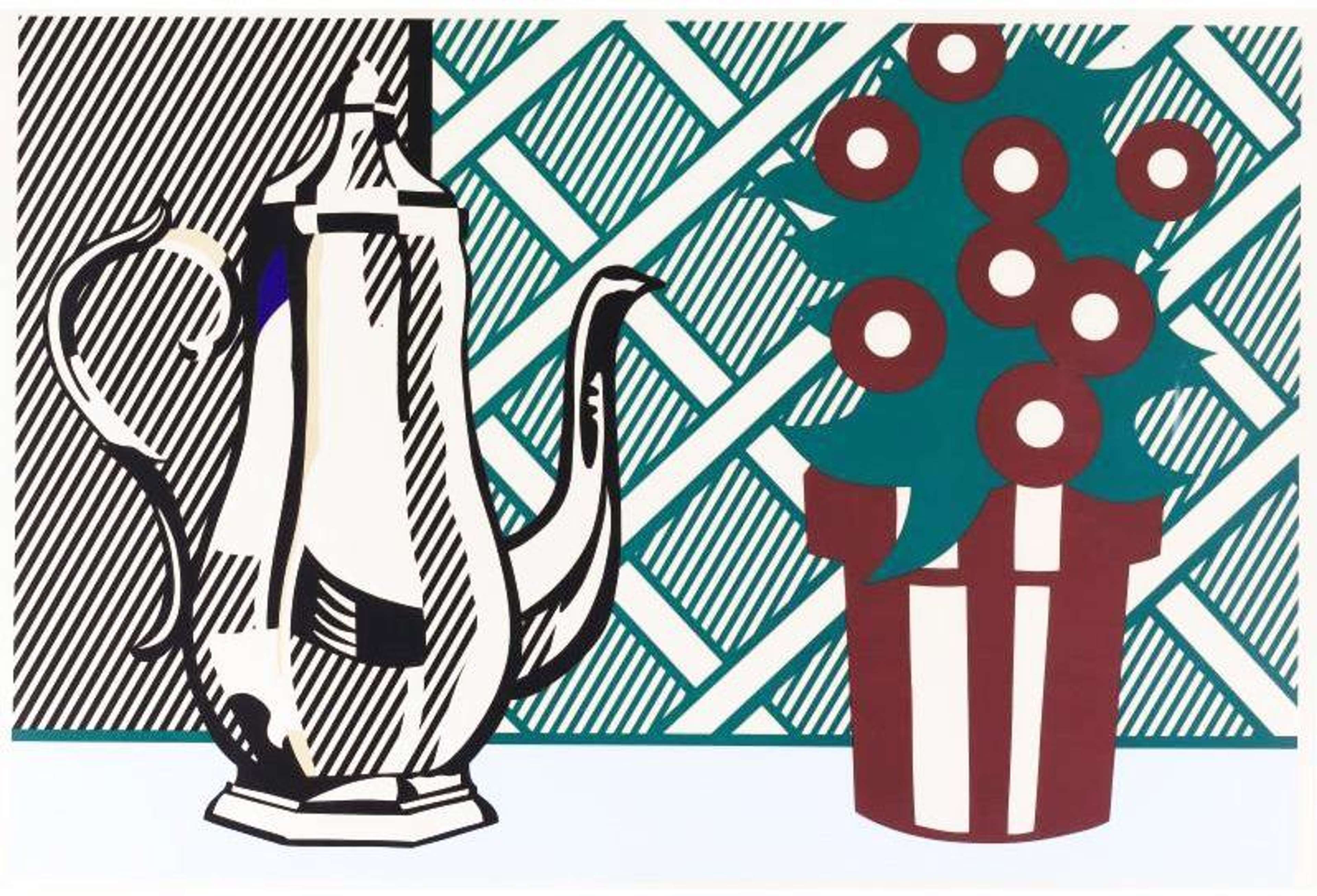
Although Lichtenstein had depicted still-life subjects since the early 1960s - such as in Sandwich and Soda (1964) - Six Still Lifes represents his first concerted return to the theme. Created in 1974 at Styria Studio in New York, the series gathers diverse types of still life to form a “capsule history” of the genre; a Pop Art study of representation itself.
Still Life With Windmill blends interior and landscape
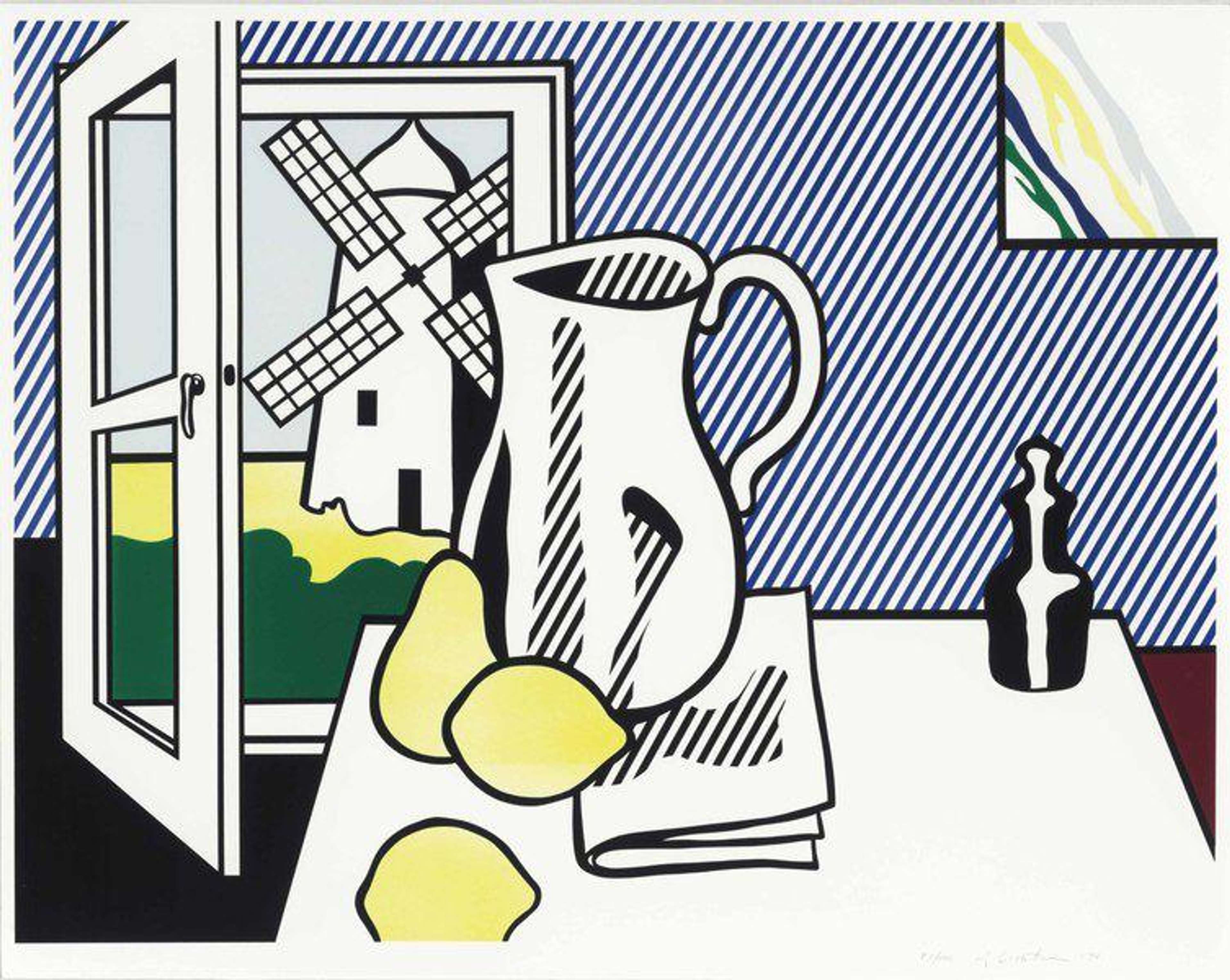
Still Life with Windmill merges indoor still life and outdoor landscape into the same image. A window opens onto a windmill, echoing Dutch Golden Age painting, while interior objects maintain the modern decoration of Lichtenstein’s Pop vocabulary. The juxtaposition of nature and man-made objects encapsulates how image and environment constantly reflect one another in the modern imagination.
Still Life With Lobster is a commentary on class
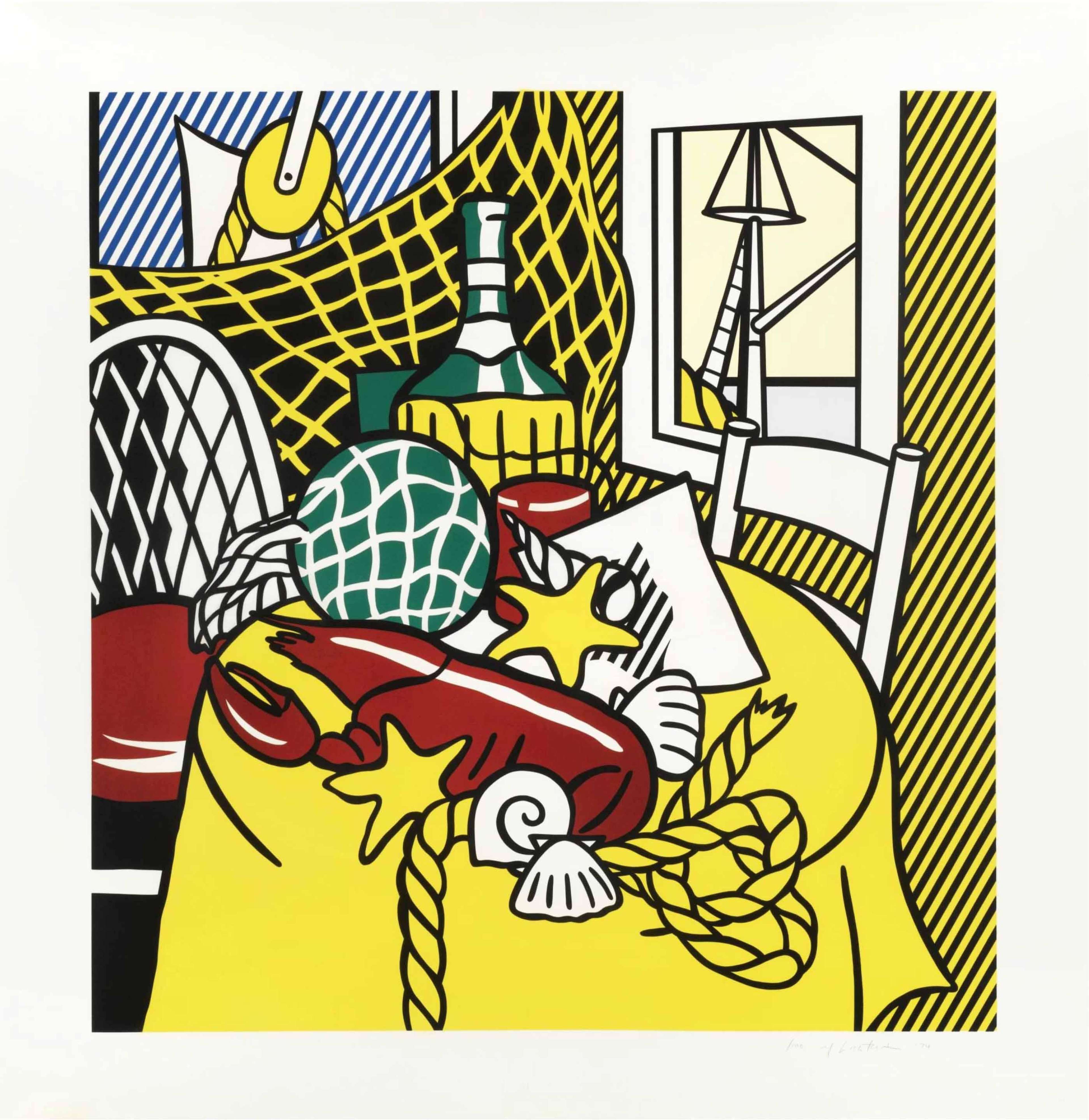
In Still Life with Lobster, Lichtenstein fills the scene with a bright lobster on the table and a fisherman’s net in the background. The pairing turns a meal into a symbolic representation of the tension between indulgence and hard work. The lobster suggests leisure and luxury, while the net hints at the labour behind it. Through Pop Art colour and composition, Lichtenstein transforms a still life into a playful yet pointed reflection on who gets to enjoy luxury.
Lichtenstein uses the printmaking making processes to bridge art history and advertising
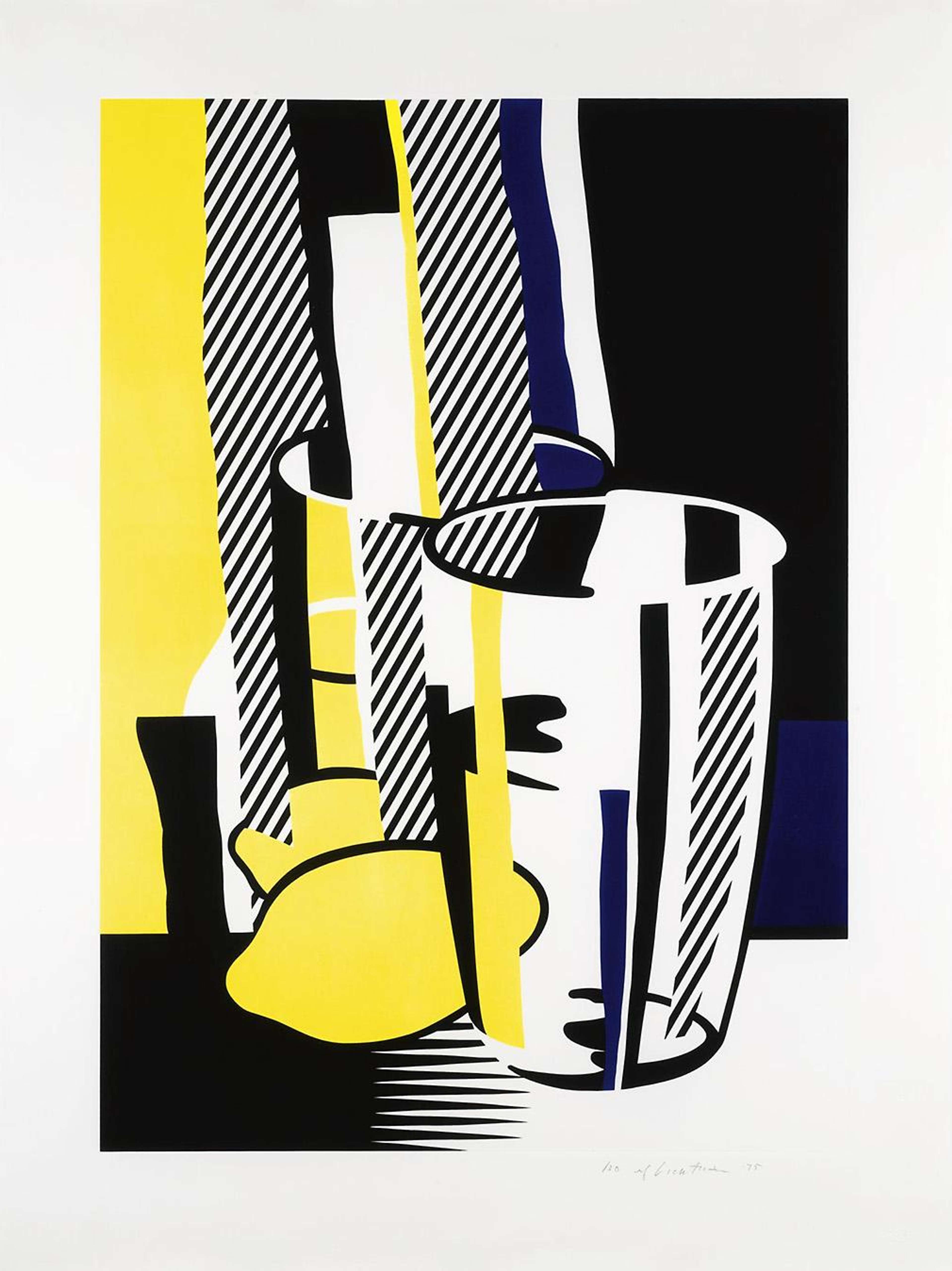
Lichtenstein’s Six Still Lifes bridges the two worlds of the Old Masters and the immediacy of twentieth-century media. By translating the still life into a format that echoes billboards and magazine spreads, he exposes how visual culture has replaced narrative meaning. The series captures Pop Art’s defining tension between artistic depth and the appeal of surface imagery.
Still Life With Figurine Turns a shrine into a decorative design
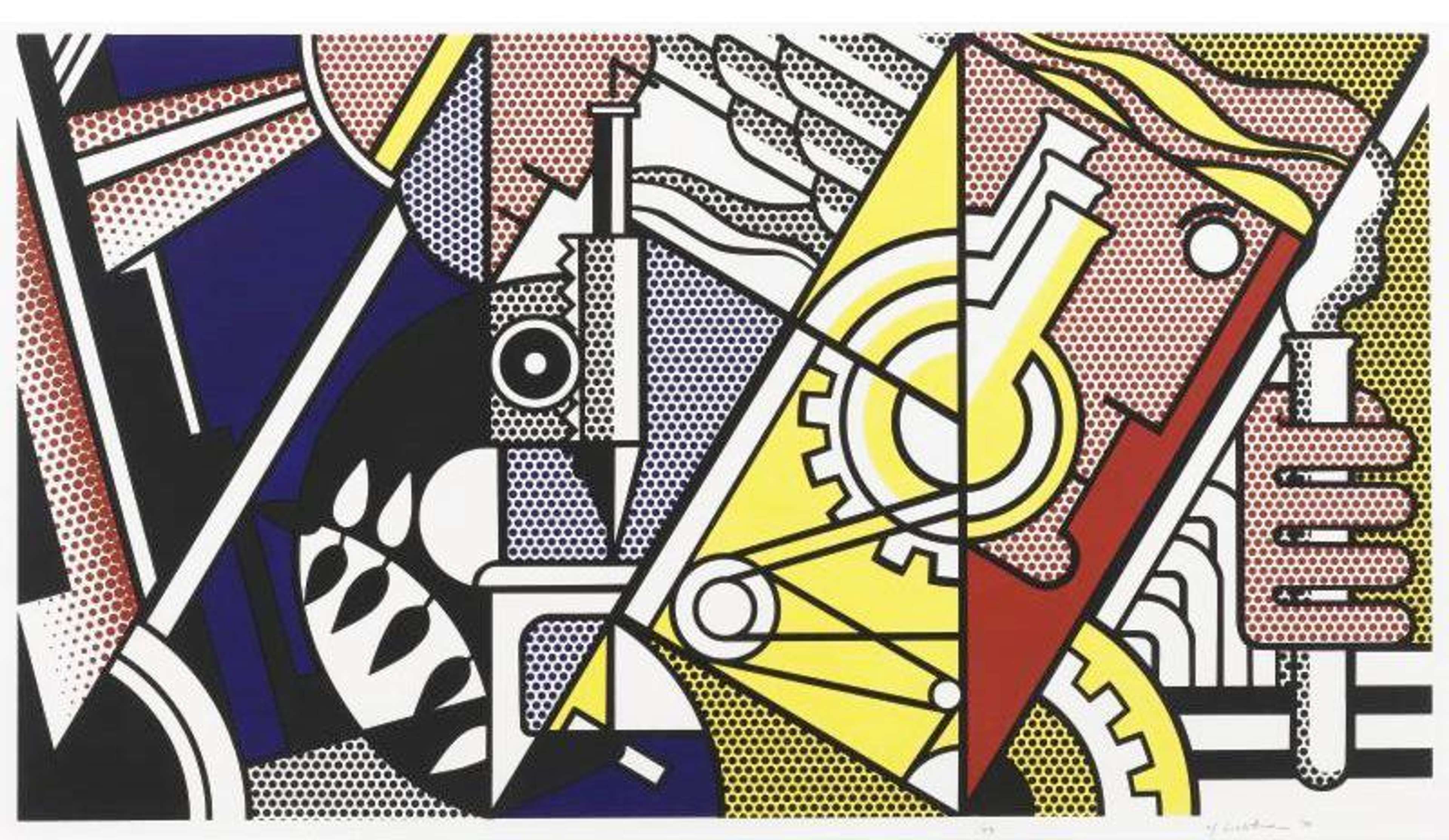
In Still Life with Figurine, Lichtenstein arranges a small praying statue beside patterned walls, a plate, and a jug, creating a scene that looks devotional. However, the commercial-style design makes the image look more like decoration than worship. The print shows how religious and spiritual symbols can lose their sacredness once filtered through Pop Art’s commercial polish.
Lichtenstein’s Six Still Lifes abandon his iconic Ben-Day Dots
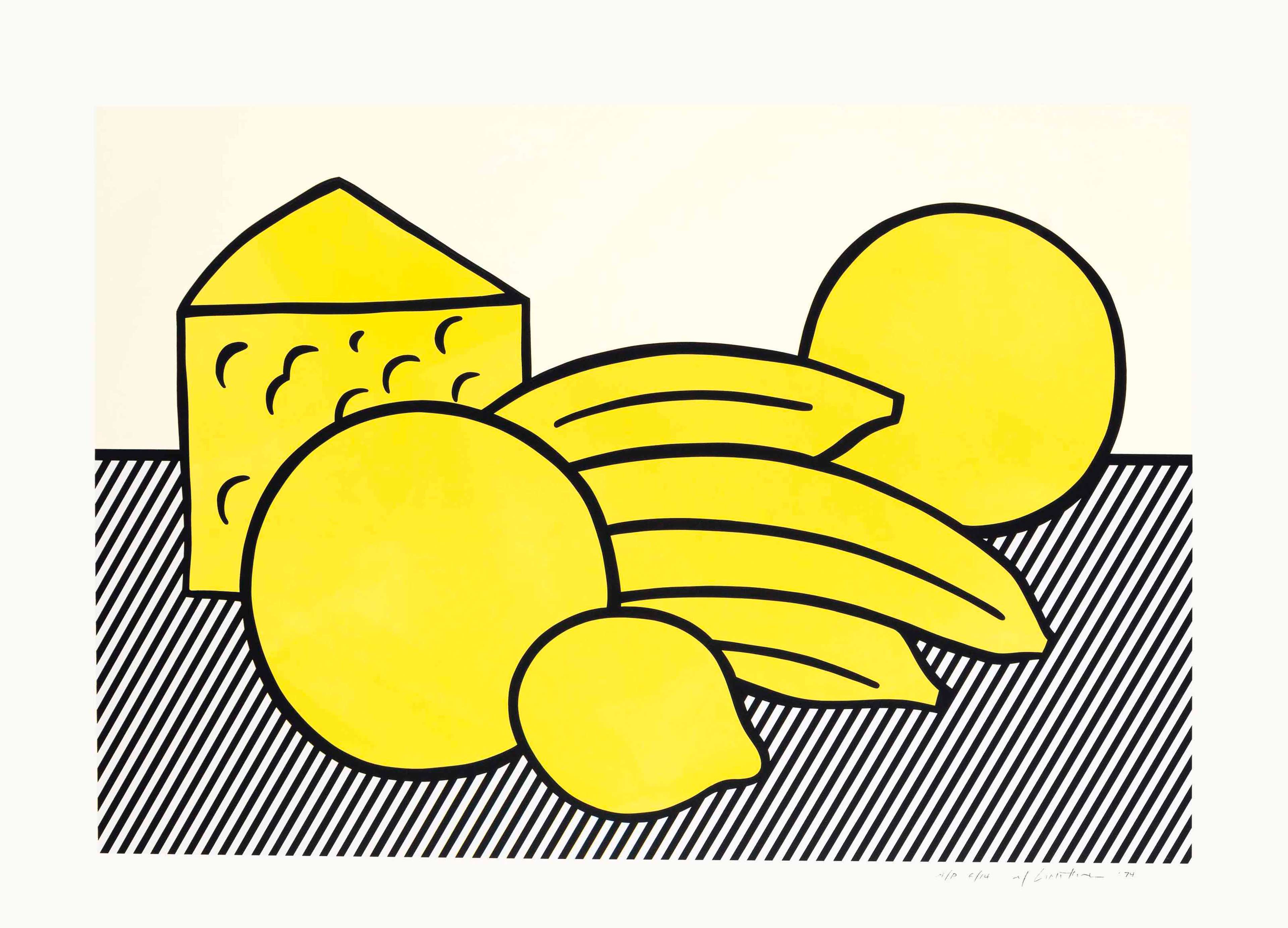
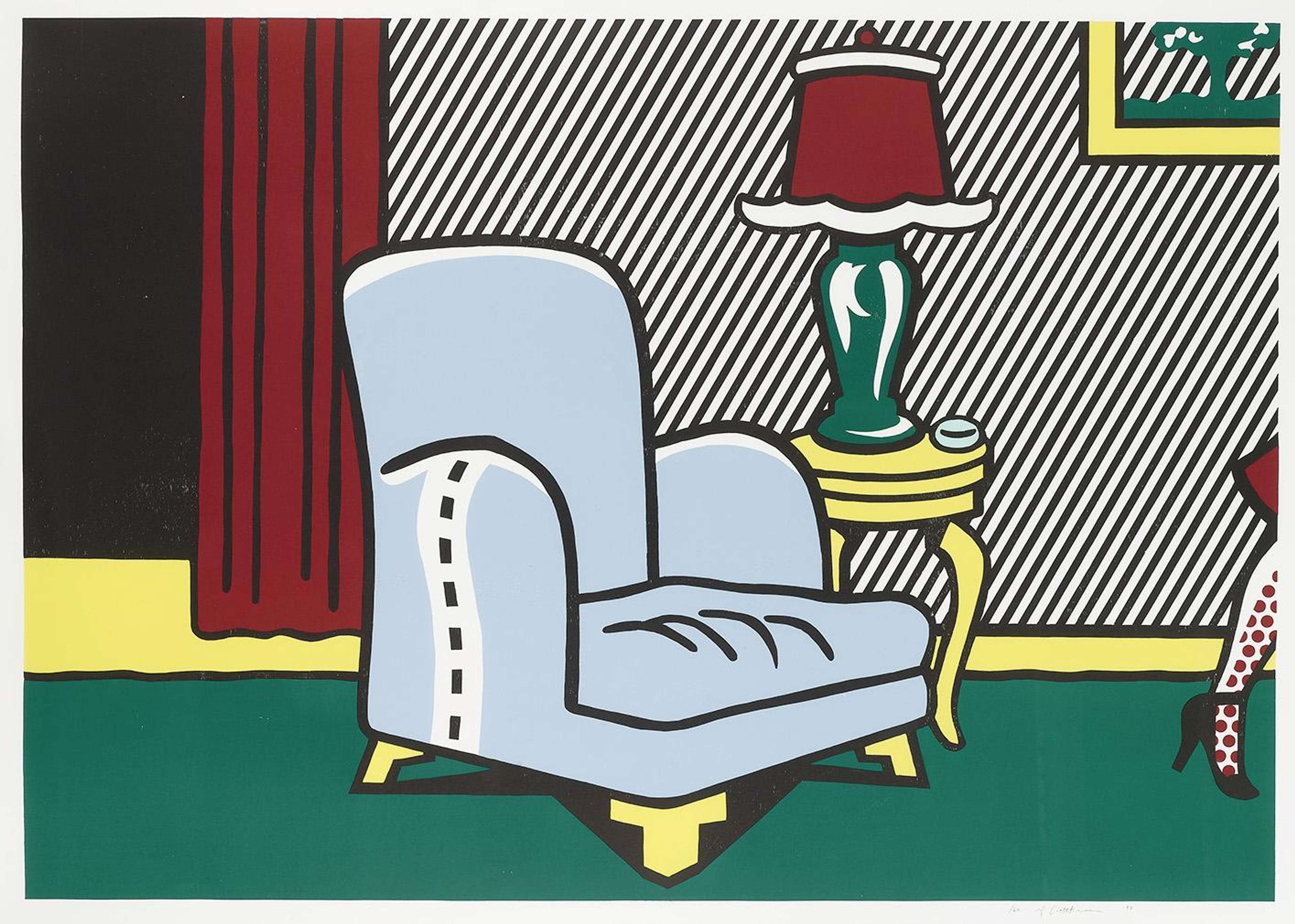
In Six Still Lifes, Lichtenstein employs his most recognisable Pop Art techniques: thick black contour lines and bright, flat colour that echoes comic-book style. Instead of his signature Ben-Day dots, he uses stripes to create an intentionally commercial look, while restaging classical still-life motifs.