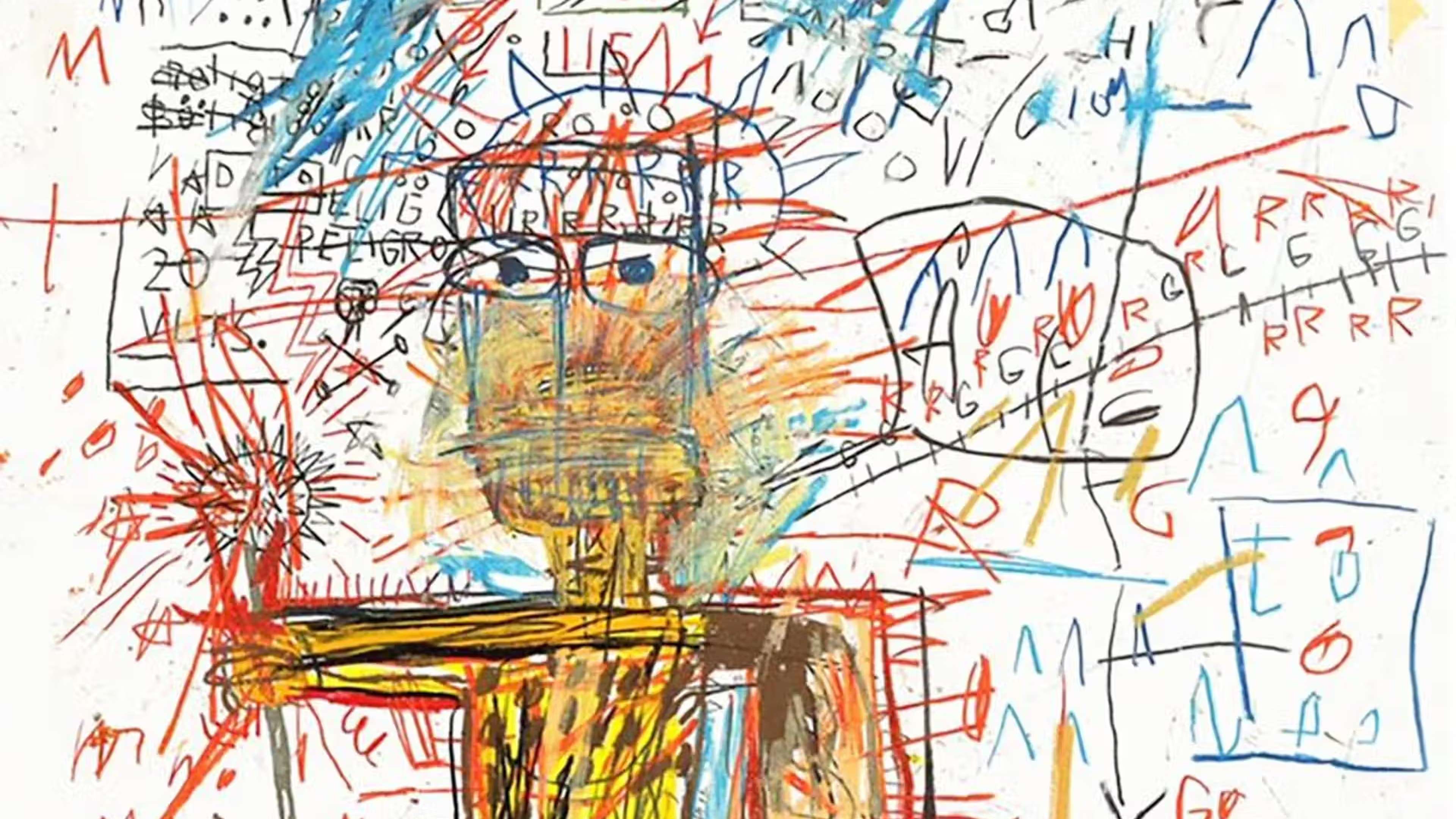


Key Takeaways
Key Takeaways: How to Buy a Jean-Michel Basquiat Print
- Understand the three tiers – lifetime signed prints (1983), Anatomy series (1982), and estate-authorised posthumous editions – as each carries different rarity, pricing, and documentation profiles.
- Set your budget against current market benchmarks – estate editions typically trade £30,000–£70,000 at hammer, Anatomy works £11,000–£45,000, and lifetime signed prints are rarely available below six figures.
- Verify authentication thoroughly – with no active authentication body since 2012, provenance, publisher documentation, and estate stamps are the foundation of any legitimate purchase.
- Prioritise imagery strength – across estate editions, crown motifs, skull compositions, and text-heavy works aligned with Basquiat's most recognisable visual language consistently command the strongest demand.
- Buy through reputable channels only – Basquiat is one of the most forged artists in the market, and purchasing through a specialist dealer, auction house, or platform with authentication expertise is essential.
Whether you are considering a lifetime-signed screenprint, one of the eighteen Anatomy works, or an estate-authorised posthumous edition, this guide covers everything you need to know before buying a Basquiat print – from authentication and condition to pricing, market timing, and where to purchase.
Why Collect Jean-Michel Basquiat Prints?
Basquiat’s cultural reach extends well beyond the art market. His imagery – crowns, skulls, anatomical diagrams, SAMO tags, and aggressive text – has become embedded in contemporary visual culture, from fashion collaborations with Tiffany & Co. and Uniqlo to major institutional retrospectives at the Fondation Beyeler, the Barbican, and the Brooklyn Museum.
His original paintings routinely anchor major evening sales. In November 2025, Crowns (Peso Neto) (1981) sold for £3.7 million at Sotheby’s. In May 2025, Baby Boom (1982) achieved £17.5 million at Christie’s. That institutional and auction visibility creates a halo effect across his editions.
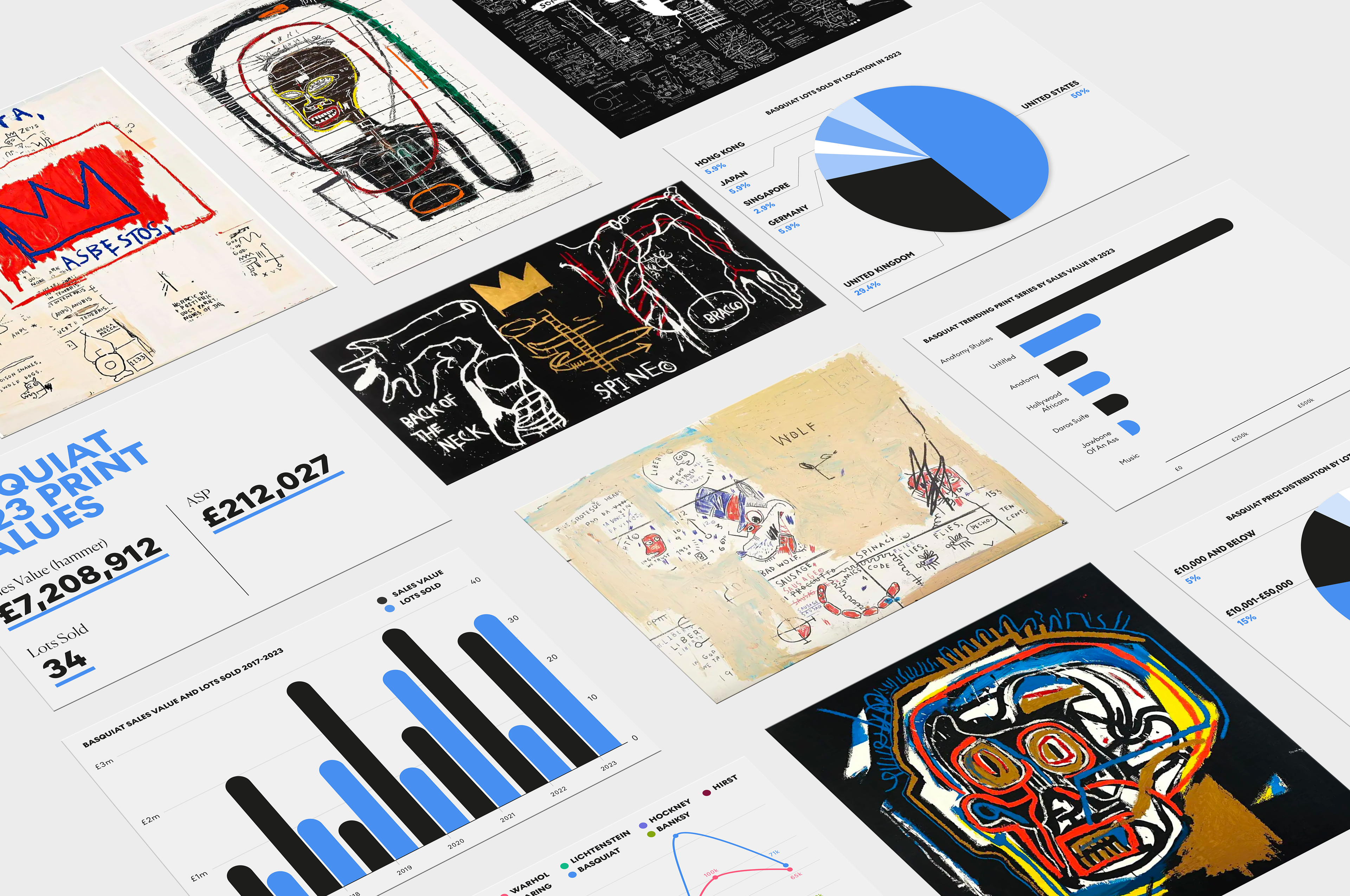
Basquiat's lifetime print production was minimal – limited to a handful of screenprints in 1982–1983 and the Anatomy series. That structural scarcity, combined with sustained demand, has underpinned a print market that generated over £3.1 million in hammer sales in its peak year (2022) and has remained consistently active since. For collectors, prints balance cultural significance and financial potential with relative accessibility compared to his multi-million-pound originals.
What Types of Basquiat Prints Are Available?
Basquiat’s print output divides into three distinct categories, each with different rarity profiles, price points, and market dynamics. Understanding which category a print falls into is the first step in any purchase decision.
Lifetime Signed Prints (1983)
Basquiat’s rarest prints were produced and signed during his lifetime, all dating to 1983. The highest valued are Back Of The Neck, a large-scale hand-coloured print in an edition of 24, and Untitled (black), featuring white symbols on a black ground in an edition of just 10. Both works are now largely absent from public auction, with most transactions occurring privately.
The Anatomy Series (1982)
Basquiat's only signed collection produced during his lifetime is the Anatomy series: 18 screenprints on black Arches paper, each in an edition of 18. The works feature anatomical and skeletal references rendered in white line drawing, accompanied by Basquiat's characteristic text annotations. They are signed in white coloured pencil on the reverse.
Complete sets are exceptionally rare, partly because individual prints circulate independently and edition numbers across a set rarely match. For buyers, Anatomy represents the most accessible tier of Basquiat's lifetime-signed market – works that predate the estate editions by nearly two decades and carry a direct connection to Basquiat's hand.
Estate-Authorised Posthumous Editions
Since 2001, the Estate of Jean-Michel Basquiat has released a growing catalogue of posthumous screenprints based on his most recognised paintings. These editions are produced with publishers including Flatiron Editions and Pace Prints, printed by Brand X Editions, and signed by the estate administrators – initially Gérard Basquiat (Jean-Michel's father, now deceased), and currently his sisters Lisane Basquiat and Jeanine Heriveaux. Edition sizes are typically 60 or 85, occasionally with additional hors commerce (HC) or artist proof (AP) variants.
- Portfolio I (Ernok, Per Capita, Rinso, Untitled Head) – 1983/2001, editions of 85
- Flexible – 1984/2016, edition of 85 plus HC variants. One of the most liquid estate prints.
- Hollywood Africans in Front of the Chinese Theater – 1983/2015, edition of 60
- Cabeza – 2004, estate edition with strong skull motif.
- Superhero Portfolio (Riddle Me This, A Panel of Experts, Piano Lesson, Flash in Naples) – 1982–87/2022, editions of 85
- Daros Suite (Wolf Sausage, King Brand, Dog Leg Study, Undiscovered Genius) – 2017–2019, editions of 60
- The Figures Portfolio – 1982/2023, five screenprints, editions of 85. Individual prints trading between £20,000 and £30,000.
- Odours of Punt – 1983/2024, edition of 60
- King Alphonso – 2025, edition of 60, released exclusively through Pace Prints.
Estate editions have reshaped Basquiat's print market, providing liquidity and price discovery in years when signed works are scarce. They allow collectors to acquire imagery tied to Basquiat's most important paintings without the multi-million-pound price tags of originals.
How Much Are Basquiat Prints Worth in 2026?
Basquiat’s print market operates as a two-tier structure. At the top, rare lifetime-signed works can materially shift annual performance when they surface. Below this, estate editions provide consistent trading activity and price discovery.
Lifetime Print Pricing
The 1983 signed screenprints command the highest values. Untitled (black) holds the all-time Basquiat print record at over £3 million (Christie's, 2022). Back Of The Neck last sold for £922,408 million in main edition (William Doyle, 2023). In years where either work surfaces at auction, they account for a disproportionate share of market value.
Anatomy prints trade at a more accessible level. Recent results (2025–2026) show individual works achieving between £15,000 and £40,000, with pricing influenced by conditions, the specific image, and whether the impression is a printer's proof or main edition.
Estate Edition Pricing
Estate prints form the core of the active market. Individual estate works typically trade between £30,000 and £70,000 at hammer, with imagery driving the range. Skull compositions and text-heavy works consistently outperform and complete portfolio sets command premiums over individual works.
Market Trends and Volume
Basquiat’s print market peaked in 2022 at £3.1 million in hammer sales from 17 lots, driven by the appearance of Untitled (black) and other high-value lifetime works. The market saw elevated volume in 2023 (£2.3 million, 31 lots), boosted by a wave of posthumous prints entering auction.
A correction followed in 2024, with turnover falling to £877,200 across 16 lots as supply contracted after the 2023 influx. This reflected natural market absorption rather – individual lot values held firm, with Flexible and Cabeza continuing to achieve consistent results.
In 2025, the market showed measured recovery: £1 million from 18 lots, supported by strong complete portfolio sales and steady estate edition activity. Through Q2 2026, £435,500 has traded across 11 lots, with Flexible achieving its strongest result in nearly three years (£141,337 at SBI Art Auction in March 2026). If the current pace holds, 2026 is on track to match or exceed 2025 levels.
Which Basquiat Prints Are Most In Demand?
Demand in Basquiat’s print market is stratified by tier. Demand tends to concentrate around imagery strength and structural scarcity. Several estate releases warrant close attention from buyers:
- Ernok – Conceived in 1983, produced in 2001. Distinguished by its non-replica status – it is not based on a known painting. Set a German auction record at £102,709 in 2023.
- Rinso – Also 1983/2001 and non-replica. Showed upward price movement between its 2024 and 2025 auction appearances.
- Odours Of Punt – The most recent estate edition to establish secondary market comparables, achieving £81,425 at its first auction appearance in March 2025.
- King Alphonso – The newest estate release (2025), available exclusively through Pace Prints in an edition of 60. Fresh-to-market editions with no secondary market history offer early-entry positioning.
When selecting a posthumous print, prioritise imagery that aligns with Basquiat’s most recognisable visual language. Estate editions are still relatively new to the secondary market, and imagery strength has proven to be the primary driver of long-term demand.
How to Authenticate a Jean-Michel Basquiat Print
Basquiat is one of the most forged artists in the market. The Authentication Committee of the Estate of Jean-Michel Basquiat was disbanded in 2012 after reviewing over 2,000 works, and no formal authentication body currently exists. This makes documentation, provenance, and publisher alignment the foundation of any purchase decision.
Lifetime Print Authentication
Basquiat’s signed prints were never released with certificates of authenticity. His signature varies across works – the Anatomy prints, for instance, are signed in white coloured pencil on the reverse, and edition numbering can be ambiguous, with auction houses sometimes cataloguing them as “presumably from the edition of 18.” Certain artist proofs from the Anatomy series carry inscriptions on the reverse.
For lifetime works, verification relies on traceable provenance: proof of purchase, gallery invoices, prior auction records, exhibition history, and consistency between the physical print and documented production details (publisher, printer, paper stock, edition size, numbering format). The Enrico Navarra catalogue raisonné project serves as the most widely referenced archival resource for Basquiat’s works.
Estate Edition Documentation
Posthumous prints released by the estate carry more structured documentation. Most are signed by a family member – initially Gérard Basquiat, and currently Lisane Basquiat and Jeanine Heriveaux – and bear the estate stamp on the verso.
Several estate releases include a certificate of authenticity issued by the publisher (Flatiron Editions for works such as Flexible, Boxer Rebellion, and the Superhero Portfolio). Some editions, such as Odours Of Punt, were presented in custom framing. When purchasing an estate print, it should include its COA (where applicable), any original framing, and the estate stamp. Missing documentation can diminish value and raise questions at resale.
Red Flags and Forgery Risk in Basquait Prints
Key warning signs when assessing a Basquiat print include:
- Inconsistent paper stock – Arches wove is standard for lifetime works, Saunders watercolour for posthumous editions.
- Print quality or colour registration that deviates from documented examples.
- Signatures that differ from verified specimens – forgers have created fake stamps mimicking the defunct authentication committee.
- Missing or incomplete publisher documentation, edition numbering, or estate stamps.
- Vague provenance – claims involving lost storage units, undocumented studio purchases, or anonymous private collections.
- No clear chain of ownership traceable to the publisher or a reputable dealer.
Purchasing through a reputable dealer, auction house, or platform with specialist expertise is strongly recommended. Where possible, engage a third party to verify documentation and mediate the transaction.
How to Assess the Condition of a Basquiat Print
Condition materially affects pricing across all tiers. Surface quality, colour retention, and margin integrity can create significant variance between impressions from the same edition.
Lifetime prints are now over 40 years old. Expect potential signs of age: light-induced fading, paper toning, handling marks, foxing, or margin wear. Minor age-related notes are typical and do not necessarily disqualify a work, but they affect pricing. Full, untrimmed margins and strong colour saturation command premiums.
Estate editions, produced more recently, are generally expected to be in excellent condition if properly stored. Discolouration, surface abrasion, or framing damage on newer works is scrutinised more heavily by buyers.
For preservation, UV-protective glazing, stable humidity, acid-free mounting, and professional framing are advisable. Trimming margins, applying adhesives, or undertaking undocumented restoration can reduce resale appeal significantly.
When Is the Best Time to Buy a Basquiat Print?
Timing in Basquiat’s print market is shaped by institutional activity, auction cycles, and estate releases.
Major retrospectives, anniversary exhibitions, and high-profile original painting sales at major auctions tend to drive renewed collector interest, which can lead both to price appreciation and to increased consignment activity – meaning more prints entering the market. These moments can create buying opportunities as sellers typically respond to heightened demand.
New estate releases also present early-entry opportunities. Prints purchased at release pricing, before secondary market comparables are established, have historically appreciated as the edition enters auction circulation.
Periods of supply correction can also favour buyers. The 2024 market contraction, following a wave of posthumous prints in 2023, saw lot values hold firm while competition eased – a window that rewarded patient buyers who acted during a quieter season.
The first step is identifying which print you want to acquire and setting a clear budget. Working with a specialist who understands supply patterns, edition saturation, and pricing history helps avoid overpaying in competitive bidding environments.
Where to Buy Basquiat Prints
Choosing the right purchasing channel is critical, particularly for an artist with significant forgery risk. Unregulated marketplaces and informal private sales carry disproportionate risk and should be avoided.
Auction Houses
Sotheby’s, Christie’s, Phillips, and Bonhams regularly feature Basquiat prints in their prints and multiples sales. Auction provides transparency on hammer prices and competitive market validation. However, buyer’s premiums can reach 25–26% of the hammer price, plus shipping and applicable taxes. The print you want may not appear in every sale cycle, and competitive bidding can push prices beyond fair market value.
Private Dealers and Online Platforms
Specialist dealers offer curated access and advisory support, though dealer fees and margins vary. Online platforms provide a more streamlined process with broader market visibility. One of the key advantage of working with a specialist platform is access to off-market inventory – prints available through private collector networks that never reach public auction.
Why Use MyArtBroker to Buy a Basquiat Print?
MyArtBroker connects buyers directly with experienced print specialists and a global network of over 40,000 collectors, dealers, galleries, and institutions. Our live Trading Floor provides access to Basquiat prints available through private networks, including works that do not appear at public auction.
Every print sourced through our platform is checked for authenticity and condition by our specialist team. We facilitate the full transaction process – from sourcing and verification to delivery – combining the reliability of working with a dedicated specialist with the transparency and efficiency of an online platform.
For buyers seeking specific works, our network and market intelligence allow us to identify availability outside peak auction seasons, helping you acquire the right print at the right price.