

Key Takeaways
How To Find Out What Your Keith Haring Artwork Is Worth
A Haring print valuation depends on a plethora of criteria: what the work is, how it was produced, whether it is signed by Haring or estate signed, whether it belongs to a complete set, how strong the colours remain, whether the paper has deteriorated, and how desirable the subject is within Haring’s wider visual language.
A specialist will assess the work’s medium, dimensions, image size, sheet size, signature, date, numbering, paper type, edition structure, provenance and market comparables. Auction data is important, but it does not stand alone. Private demand, recent collector behaviour and the specific position of the work within Haring’s market hierarchy all shape the final valuation.
Haring’s market is particularly image-led. The most recognisable motifs — the barking dog, radiant baby, dancing figures, Pop Shop imagery, activist slogans and AIDS-related works — carry different levels of demand. A strong valuation depends on understanding not only the edition, but the cultural weight of the image.
As Louisa Earl, American Pop Specialist at MyArtBroker, explains:
What Information Do You Need For A Keith Haring Valuation?
A strong Haring valuation begins with detailed images and documentation. Ideally, the work would be examined in person, but where that is not possible, high-resolution photographs are essential.
The most useful submission includes:
- A full image of the front of the work
- A full image of the reverse
- Close-ups of the signature
- Close-ups of the date and edition number
- Images of all four corners
- Images of the full sheet edges
- Raking-light images to reveal surface issues
- Sheet dimensions
- Image dimensions
- Details of whether the work is framed or unframed
- Any invoices, gallery labels, publisher documents or provenance records
- Any existing condition report
- Details of storage, framing or conservation history
For Haring, image size and sheet size both matter. Some works have an image that fills the sheet, while others have margins that need to be measured accurately. A specialist will compare these dimensions to known edition records and catalogue information.
If a work is framed, collectors should not remove it themselves. However, a valuation may remain provisional until the full sheet and reverse can be reviewed safely by a professional.
Speak to Louisa about your Keith Haring print, and find out what it’s worth in today’s market
Medium: Screenprint, Lithograph, Etching Or Multiple
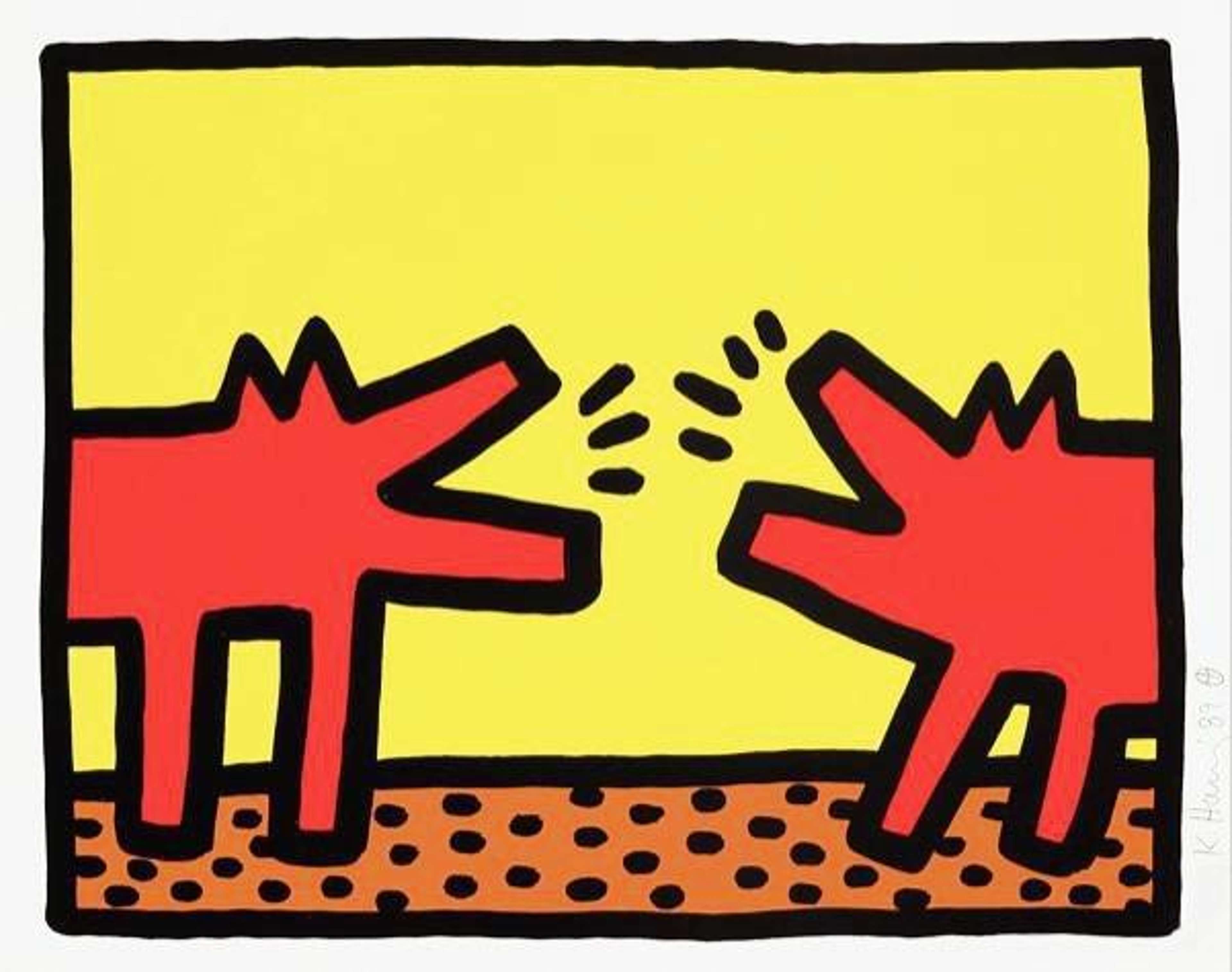
One of the first checks in a Haring valuation is medium. Haring worked across screenprint, lithograph, etching and sculptural multiples, and each medium carries different visual and condition characteristics.
A screenprint should have the qualities expected of screenprinted ink. A lithograph will have a different surface and fineness of image. An etching should show the signs associated with intaglio printing, including evidence of the plate mark where relevant. If the physical characteristics do not match the expected medium, that raises a red flag.
Medium also influences value. Haring’s screenprints are often the most familiar to collectors because they carry the bold colour, graphic line and immediacy associated with his wider visual language. Lithographs can be more delicate, particularly where they are printed on finer papers. Sculptural multiples, such as his wooden dogs or Totem-related works, sit in a different category again: still editioned, but closer to objects than flat prints.
Because Haring worked across multiple print processes, a valuation should never assume that all editions behave the same way. Medium, materials and condition need to be assessed together.
Signature, Date And Numbering
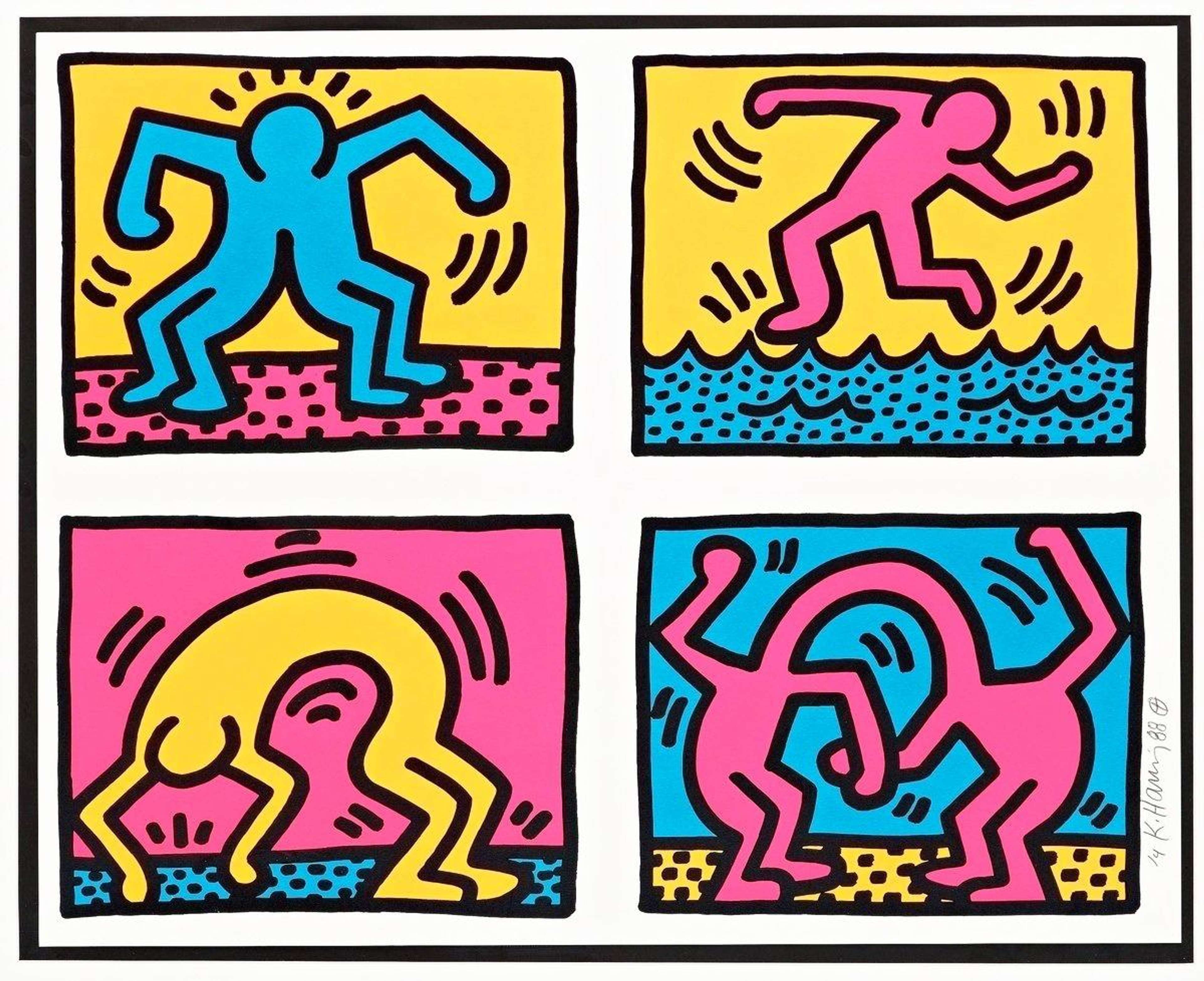
Most Haring prints should have clear inscription details. For lifetime editions, this usually means the artist’s signature, date and edition number. Haring’s hand is relatively consistent, and a specialist will look closely at the fluidity, pressure and shape of the signature and numbering.
The numbering can be especially revealing. The way Haring wrote numbers has identifiable characteristics, and inconsistencies in the edition number may be a warning sign. As Louisa notes:
A specialist will compare the signature and numbering against known authentic examples, but signature alone is never enough. It must be assessed alongside medium, paper, dimensions, provenance and edition details.
Use our Instant Valuation tool to explore the value of your Keith Haring print at a glance.
Lifetime Signed vs Estate Signed Works
One of the most important distinctions in Haring’s market is between works signed by Haring during his lifetime and works issued posthumously with estate authorisation.
Because Haring died in 1990 at the age of 31, some editions were released after his death. These works may carry the Keith Haring Estate stamp and the signature of Julia Gruen, the Estate’s executor, on the reverse. They are not “unsigned” in the casual sense. They are properly authorised estate editions, but they sit differently in the market from works signed by Haring himself.
Lifetime signed works usually command stronger values because they carry the artist’s hand directly. Estate-signed works can still be highly desirable, particularly where the image is strong, the edition is respected, and the work has a clear place in the market. However, buyers do distinguish between the two categories.
The Pop Shop series is a useful example. As Louisa describes, “The first four are signed on the front by the artist, and numbers five and six were issued with the Estate stamps and signatures on the reverse.” The difference does affect value, although not as dramatically as in some other artist markets where posthumous editions dominate.
Certificates Of Authenticity And The Haring Foundation
Keith Haring prints do not generally rely on Certificates of Authenticity in the same way as Banksy prints. Haring did not issue COAs as standard across his editions, and the Keith Haring Foundation no longer authenticates works.
The Foundation previously had an authentication committee, but it was dissolved in 2012. As a result, today’s Haring market relies heavily on provenance, edition records, specialist judgement, publisher documentation and condition review.
There are exceptions. Some works, including those connected to International Youth Year and related campaigns, may have specific accompanying paperwork. Occasionally, older works may also come with historic Foundation-related documentation, but this is not something sellers should assume.
For most Haring prints, the strongest authentication picture comes from a clear paper trail: original purchase documentation, publisher records, reputable gallery history, auction history, and consistency with known edition details.
Get in touch with Louisa to discuss the authenticity of your Keith Haring print.
Provenance And Publisher Documentation
Provenance matters in the Haring market. A work with a clear route from publisher or gallery to the current owner will be easier to value and place than one with no supporting documentation.
Relevant documentation can include:
- Original invoices
- Publisher documents
- Gallery labels
- Martin Lawrence documentation
- Auction records
- Estate-related paperwork
- Historic correspondence
- Frame labels
- Condition reports
Louisa notes that, for Haring, documentation is often linked to the edition’s original publisher or distributor:
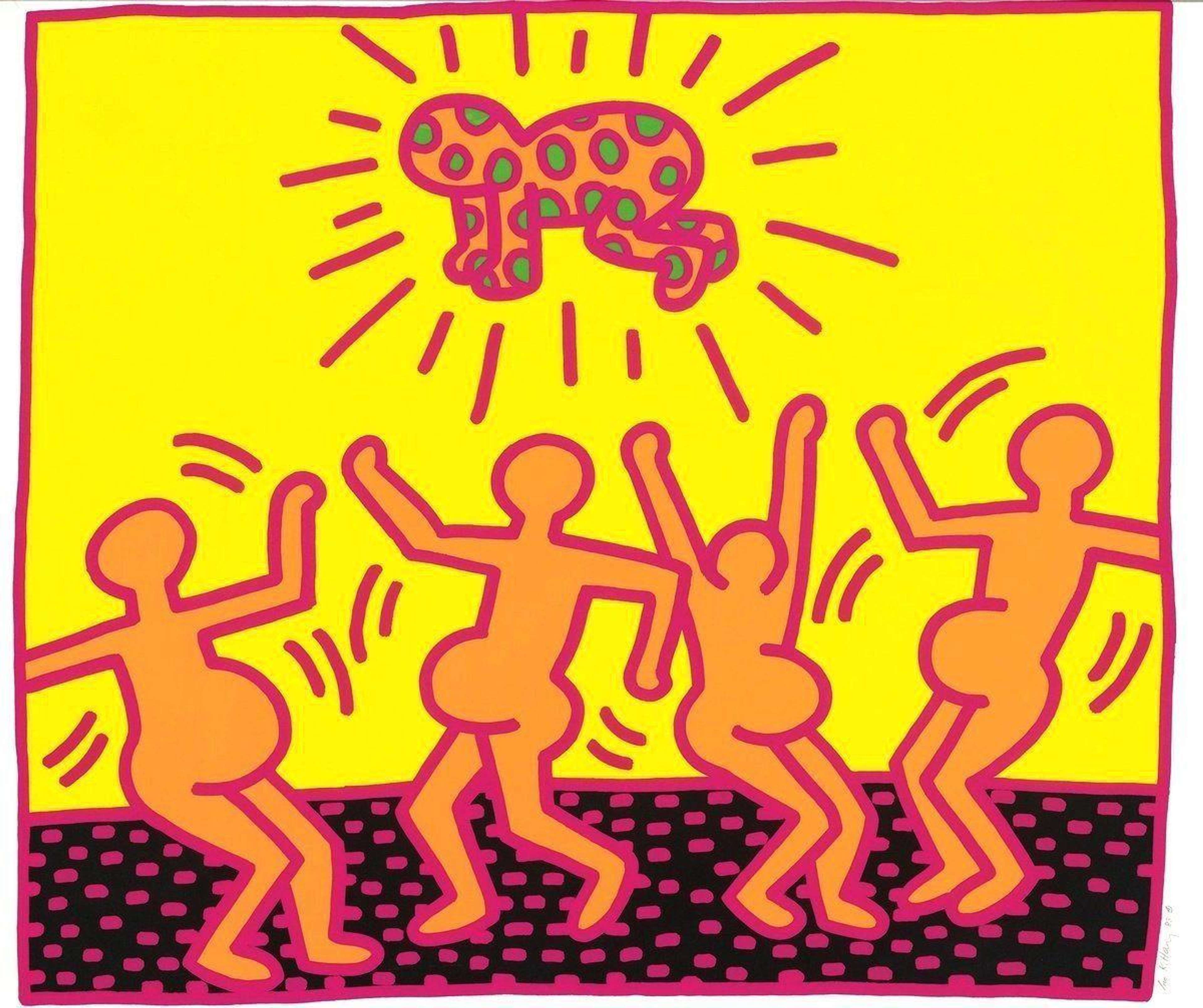
Martin Lawrence documentation is often seen in relation to Haring editions, particularly where the gallery was involved in the early resale or distribution of works. A label or invoice does not replace specialist review, but it can support confidence.
Works that come directly from the Foundation or have Foundation archive provenance can carry a premium, particularly in the originals or sculptural market. In editions, this is less common but still relevant where it appears.
Condition Issues In Keith Haring Prints
Condition is one of the most important factors in a Haring valuation. Haring’s works are visually direct, and damage to colour, paper or surface can have a clear effect on value.
The most common condition concerns include:
- Fading
- Colour loss
- Paper discolouration
- Foxing
- Acidic mount damage
- Creasing
- Handling marks
- Surface abrasions
- Tears or edge damage
- Poor framing history
- Damage to delicate papers
Colour is especially important. Many Haring prints rely on bright, flat, graphic colour. If those colours have faded through sunlight exposure or poor framing, the impact can be significant. In the Pop Shop works, variations in colour strength are common, and a print with exceptionally strong, unfaded colours can be much more desirable.
Paper also matters. Haring used a range of paper supports, including Lenox Museum Board, Coventry Rag paper for Pop Shop prints, and more delicate papers in some lithographic works. Fine Japanese paper, where used, can be particularly vulnerable to discolouration and handling damage.
Condition issues are not uniform across Haring’s output. Screenprints may be more affected by colour strength and surface issues, while lithographs may be more sensitive to paper condition. Sculptural multiples have their own condition concerns, including surface wear, chips, structural issues and handling marks.
Pop Shop Prints
The Pop Shop works form one of the core trading areas of Haring’s print market. They are recognisable, liquid and closely connected to Haring’s belief that art should circulate beyond elite gallery contexts.
However, the Pop Shop market is not flat. Pop Shop I is generally the most desirable of the six Pop Shop sets and commands stronger values. This is partly because of its early position in the series and partly because of the strength and familiarity of the imagery.
When valuing a Pop Shop print, a specialist will consider:
- Which Pop Shop set it belongs to
- Whether it is a single print or part of a complete set
- Whether it is lifetime signed or estate signed
- Colour strength
- Paper condition
- Edition number
- Provenance
- Recent comparable sales
- Current buyer demand
A single Pop Shop print can be valuable, but a complete set usually carries a premium. Complete sets become rarer over time because they are often split up by collectors, dealers or estates. When an intact set appears in strong condition, it can attract more serious collector interest.
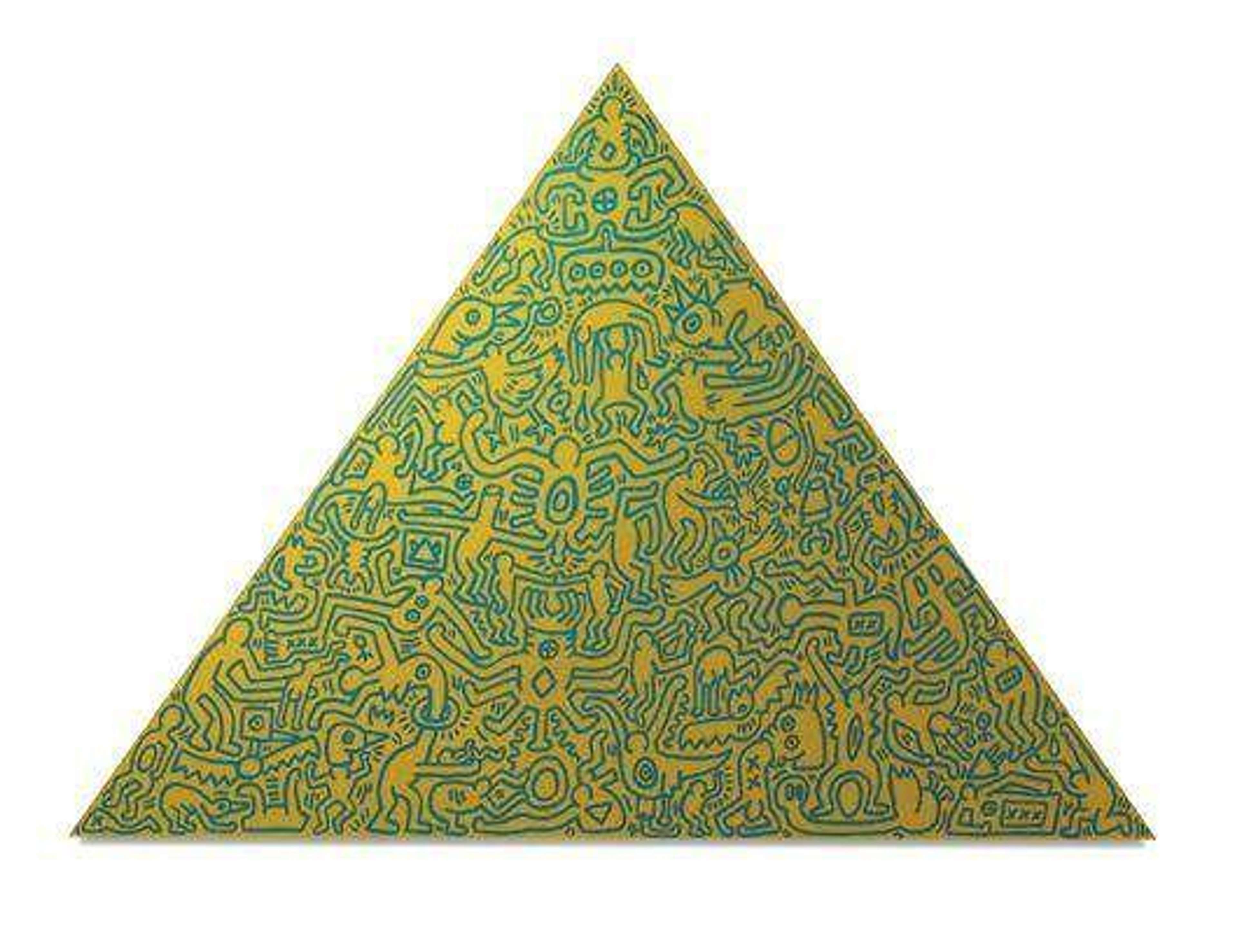
Complete Sets
Complete sets are highly important in Haring’s market. As with Warhol and other major printmakers, collectors often prefer a complete set because it preserves the full visual and conceptual structure of the edition.
A complete set is not simply the sum of its parts. It can carry a premium because intact sets are harder to find, easier to position, and often more desirable to serious collectors.
This is particularly relevant for:
- Pop Shop sets
- Icon series
- Fertility Suite
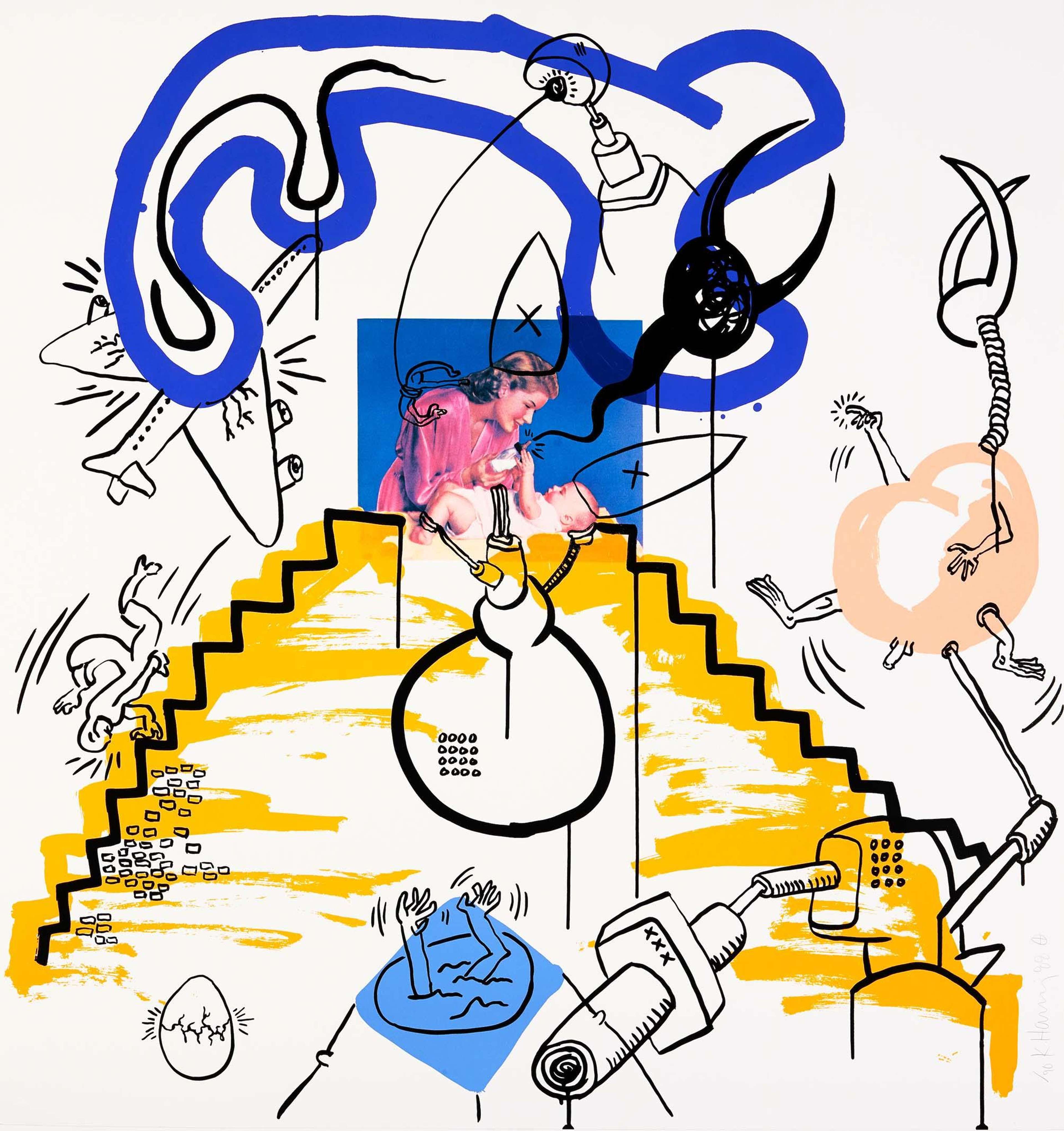
- Apocalypse
- Blueprint Drawings
- Other major portfolios
Condition consistency matters. A complete set where all works are in strong, even condition will usually be more desirable than a set where one or two sheets have fading, staining or paper issues. Matching provenance can also strengthen the valuation.
Subject Matter And Haring’s Visual Lexicon
Haring’s market is deeply shaped by subject matter. His most valuable prints are often those that combine recognisable imagery with cultural or political significance.
Key motifs include:
- Barking dog
- Radiant baby
- Dancing figures
- Crawling baby
- Figures in motion
- Hearts
- Pyramids and totems
- Activist slogans
- AIDS-related imagery
- Pop Shop icons
The barking dog is especially important. It is one of Haring’s most recognisable motifs, but it also carries political weight. Haring’s use of the dog can be read in relation to the atmosphere of 1980s New York, public health campaigns, homophobic rhetoric and the artist’s own visual vocabulary of warning, resistance and power.
Works connected to AIDS activism, including Silence = Death, hold a different kind of market significance. Their value is not only visual, but historical. They connect directly to Haring’s life, his activism, and the urgency of the social context in which he worked.
Pop Shop imagery, by contrast, is highly accessible and widely loved because it distils Haring’s visual language into direct, graphic forms. This mass recognition supports liquidity and demand.
Edition Size And Scarcity
Edition size affects value, but it is not the only determinant. In theory, a smaller edition should be more scarce and therefore more valuable. In practice, Haring’s market is shaped just as much by imagery, story and demand.
A larger edition of a highly desirable image can outperform a smaller edition of a less sought-after work. Conversely, rare objects such as sculptural multiples can command strong interest because they appear infrequently and sit outside the standard flat-print market.
Scarcity matters most when it intersects with image strength. A rare edition of a recognisable subject, in excellent condition and with strong provenance, is likely to attract attention.
Find out where your print sits within the wider Keith Haring market with our Instant Valuation tool.
Artist’s Proofs, Hors Commerce Copies And Variants
Haring’s editions may include standard edition impressions, Artist’s Proofs and, more rarely, Hors Commerce copies. HC copies are not seen across every edition and should be checked carefully against edition records.
Unlike Warhol, Haring does not have a major market for unique colour trial proofs. However, there are editions where colour variations matter. The wooden dog multiple, for example, was issued in different colourways, including black and white, yellow and black, and red and black. In some cases, unique colour combinations produced by the publisher can appear, and these need to be assessed individually.
For valuation, a proof or variant should be considered in relation to rarity, documentation, image, condition and demand. A proof designation alone does not automatically create a major premium, but a genuinely rare or unusual variant may.
Subway Drawings And Works On Paper
Subway drawings occupy a complex place in Haring’s market. They are central to his public practice and mythology, but they also present serious authentication challenges.
Because of the ambiguity around removal, provenance and authorship, MyArtBroker does not typically deal with Haring subway drawings unless the provenance is exceptionally clear, such as a work that has passed through a reputable auction house, comes directly from the Foundation, or has an unusually strong ownership history.
The greatest ambiguity in the Haring market often appears around drawings and works on paper rather than editioned prints. “In the style of Keith Haring” works, copied drawings, questionable stamps and weak provenance are common issues. Sellers should be cautious about assuming that a drawing is authentic without specialist review.
Posters And Open Editions
Haring posters exist, but they occupy a different part of the market from signed limited edition prints. Posters can be collectable, particularly where they relate to exhibitions, campaigns or events, but they are not valued in the same way as signed limited editions.
The first question is whether the work is a limited edition print or a poster. That distinction affects value, sale route and buyer expectations.

Why Auction Results Only Tell Part Of The Story
Auction results are useful because they show public willingness to pay. They provide a benchmark for comparable works and help identify broader trends.
However, auction data needs interpretation. A strong result may reflect rarity, condition, complete-set status or competitive bidding. A weaker result may reflect timing, estimate strategy, condition issues or a quiet sale room. Haring’s market can also shift depending on whether major sets or more accessible individual prints dominate the sales calendar.
A specialist valuation looks beyond one result. It considers:
- Comparable works from the same series
- Condition of each comparable
- Whether the work was a single print or complete set
- Timing of the sale
- Artist market trends
- Private demand
- Current buyer appetite
This is where specialist judgement matters. A record price should not be applied indiscriminately to every comparable work, especially if the condition, set status or market timing is different.
How MyArtBroker Values Keith Haring Prints
A MyArtBroker Haring valuation combines public auction data, private sales history, specialist knowledge and live collector demand.
Auction houses estimate for a public sale environment, often setting estimates to encourage bidding. Galleries may apply a retail premium because they have already acquired the work and need to resell it. MyArtBroker’s valuation sits closer to fair market value: what a real buyer is prepared to pay and what a seller can realistically expect to receive.
Because MyArtBroker works directly with active collectors, the valuation can reflect demand that is not visible at auction. If buyers are looking for complete Pop Shop sets, Icon works, barking dog imagery, Fertility Suite prints or sculptural multiples, that live demand can shape the pricing strategy.
How To Prepare Your Keith Haring Print For Valuation
Before requesting a valuation, gather:
- High-resolution front and back photographs
- Close-ups of signature, date and edition number
- Sheet and image dimensions
- Raking-light images of the surface
- Images of all corners and edges
- Any publisher or gallery documentation
- Any auction history
- Any condition report
- Framing and storage details
Do not clean, restore or unframe the work without professional advice. If the work is valuable, a condition report from a paper conservator can make the valuation more accurate and help build buyer confidence.
Haring Value Depends On Image, Condition And Context
Keith Haring’s print market is accessible, active and deeply image-led, but it is not simple. Value depends on authenticity, condition, signature status, edition structure, subject matter, provenance and demand.
A bright, lifetime-signed Pop Shop I print in excellent condition will sit differently from an estate-signed later Pop Shop work. A complete set will be valued differently from a single sheet. A barking dog or AIDS-related image may carry meaning and demand beyond its edition size. A sculptural multiple may attract a different collector entirely.
For sellers, the most important step is to obtain a specialist valuation before relying on a single auction result or broad online estimate. Haring’s market rewards clarity: clear images, clear documentation, clear condition and a clear understanding of where the work sits within the artist’s visual and market hierarchy.
At MyArtBroker, every Haring valuation is built around that specificity, combining specialist expertise with live market intelligence to give sellers a realistic view of what their Keith Haring print is worth today.