

How to Buy a David Hockney Print in 2026
- Understand price tiers first. David Hockney print prices range from under £10,000 for early portfolio works and posters to £600,000+ for his most sought after prints and complete sets.
- Identify the series. Swimming Pools, Arrival of Spring, Yosemite, and early etchings perform differently in the market.
- Check edition type and state. Standard editions, Artist’s Proofs (AP), and Printer’s Proofs (PP) can materially affect David Hockney print value.
- Review recent auction results. Comparable sales shape fair market pricing.
- Choose your route to buy carefully. Auction premiums can exceed 25–30%, while private sales offer discretion and negotiated pricing.
Why Collect David Hockney In 2026?
Hockney’s passing has prompted renewed attention on a career that transformed contemporary art and redefined what printmaking could be. While market interest often intensifies following the death of a major artist, Hockney’s appeal was already supported by decades of institutional recognition, global collector demand, and one of the most widely recognised visual languages in contemporary art.
For collectors, Hockney’s print market combines innovation, accessibility, and recognisable imagery. From Swimming Pools to The Arrival of Spring and The Yosemite Suite, his editions reflect distinct creative periods while remaining highly liquid. Buying a Hockney print offers both art historical significance and access to a globally traded secondary market.
David Hockney Print Prices in 2026 – What Do They Cost?
Hockney print prices in 2026 vary significantly by series, edition size, and availability – spanning multiple decades and formats. ``because of this, price tiers exist between collections and within them.
David Hockney Value Entry Level: Under £10,000
Buyers entering the market at this level may find individual prints from larger portfolios such as A Rake’s Progress or early etchings, as well as select exhibition posters. Supply at this level is limited, as many early works are tightly held. Condition and paper quality play an important role in determining value.
David Hockney Value Mid-Tier: £10,000–£100,000
This is the most active segment of the Hockney print market. Various iPad drawings, portraits, and interior compositions trade within this range. Celia prints in particular are gaining momentum, reflecting growing demand for recognisable portrait imagery.
Within major collections, pricing varies materially by image. For example, works from Moving Focus range widely: while Hotel Acatlán: Second Day achieved £182,020, other works such as Pembroke Studio with Blue Chairs And Lamps typically trade between £10,000 and £20,000 depending on edition and condition.
Prints from the Yosemite Suite have sold between £50,000 and over £100,000 in recent years. Although, not all Yosemite works were produced in the same edition size, and smaller editions generally command stronger pricing. Availability often determines momentum within this category.
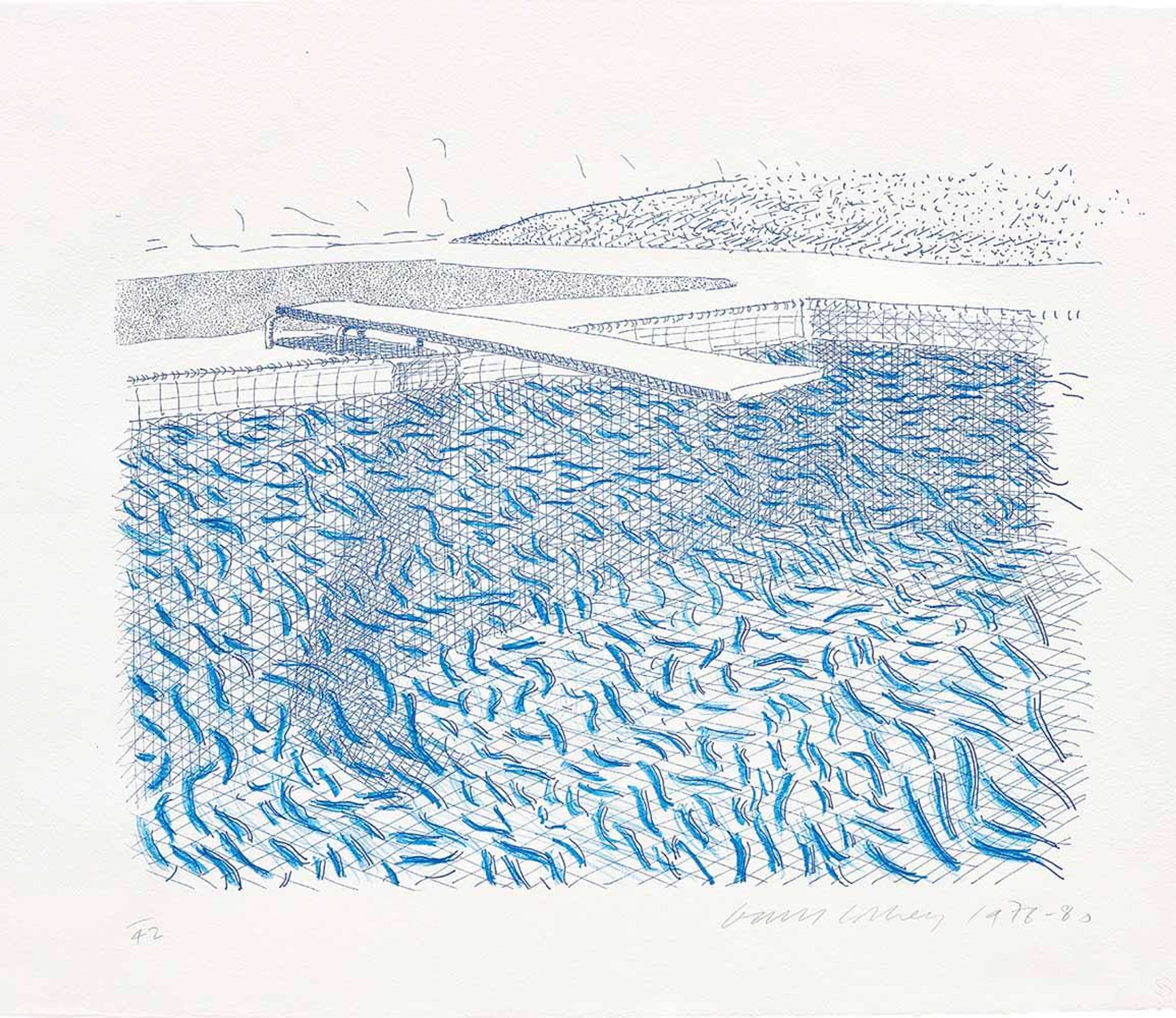
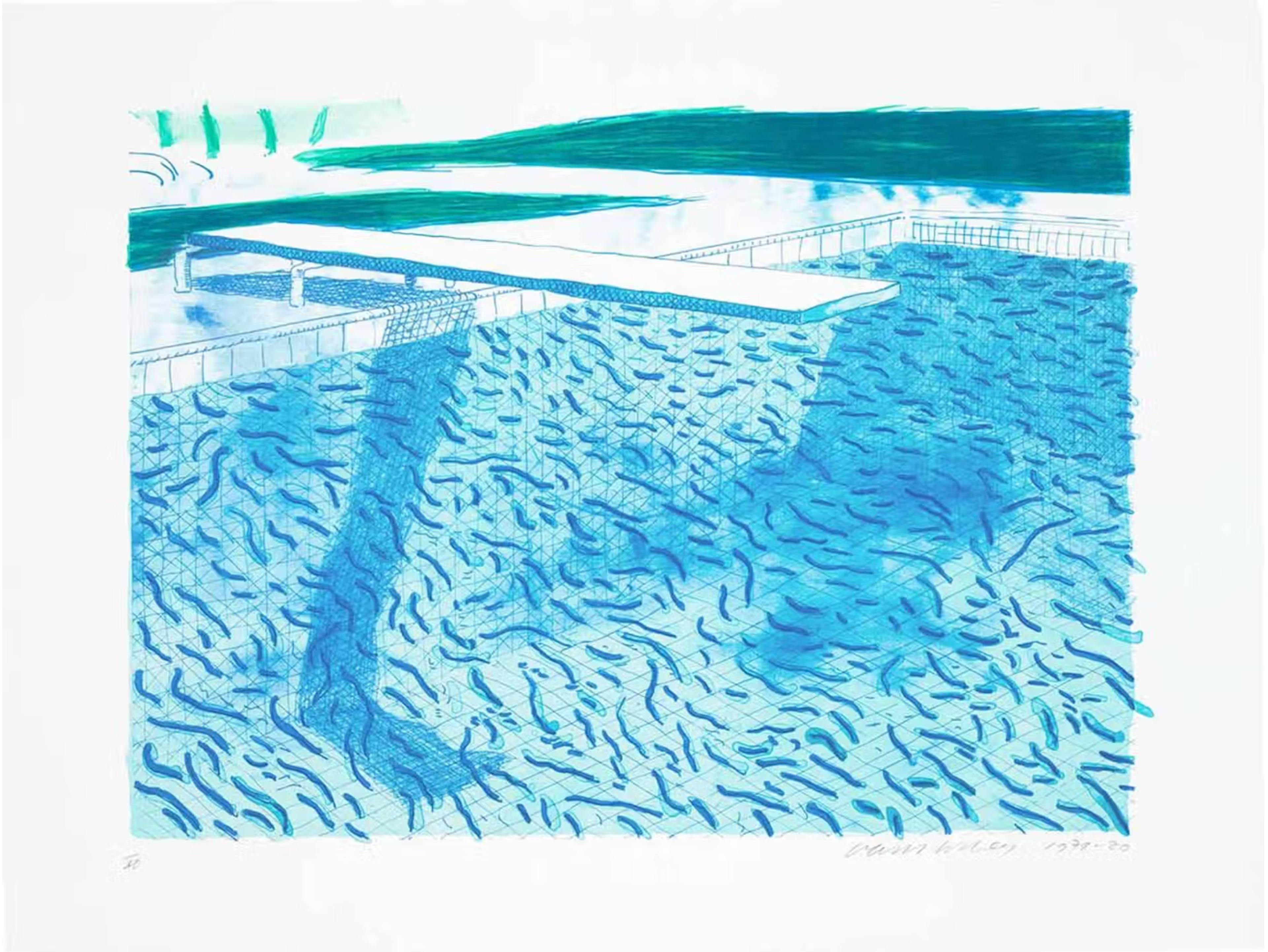
Lithographic Swimming Pool works have achieved prices above £200,000, though numerous variations exist in different editions. This creates lateral movement within the category, allowing buyers to wait for the right impression or composition rather than chasing a single benchmark result.
David Hockney Value Top Tier: £100,000+
At the top of the market sit Arrival of Spring prints, in both the edition of 25 and the rarer edition of 10. These works consistently define the six-figure tier and represent the strongest segment of current Hockney print value.
Other high-performing works include Afternoon Swimming (edition of 55), which has traded around £360,000, and digital landscapes such as A Bigger Green Valley, which has surpassed £300,000. Within Moving Focus, standout compositions such as Caribbean Tea Time have also exceeded £300,000.
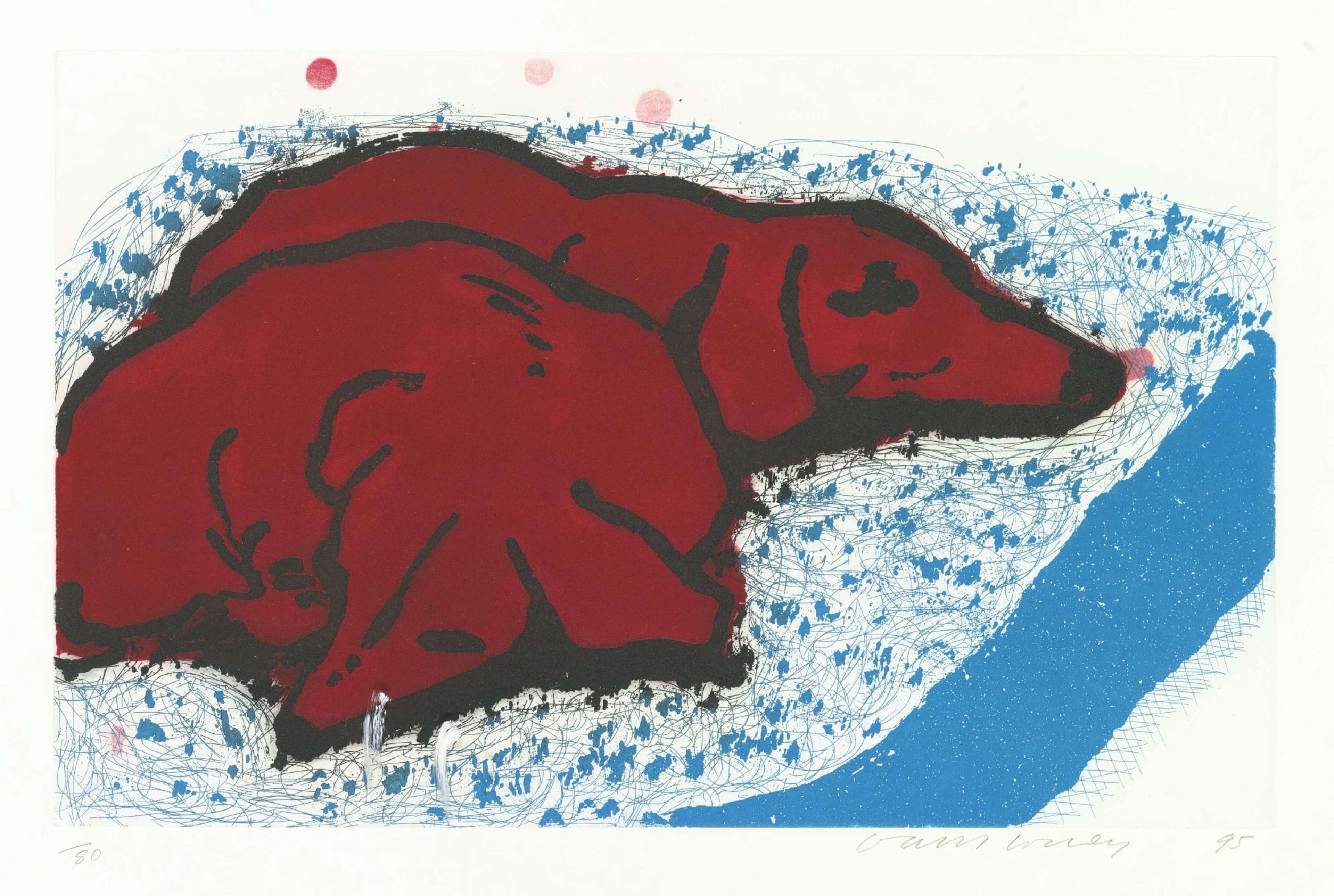
Complete sets are rare in Hockney’s market but command significant pricing when they appear. Dog Wall and A Rake’s Progress have both sold for over £300,000 in recent years, while The Weather Series has achieved over £200,000 as a portfolio.
The highest editioned category of Hockney's market is unique swimming pool editions which have commanded millions at auction and are usually featured in major evening sales.
Because Hockney prints are tightly held, availability often drives competition as much as image recognition. Buyers should assess edition size, recent comparable auction results, and timing carefully before agreeing on price.
Are David Hockney Prints a Good Investment in 2026?
Hockney prints have historically shown strong resale liquidity. In 2026, the key distinction for buyers is between highly liquid, globally recognisable works and more niche compositions that trade less frequently.
Liquidity remains strongest in works tied to Hockney’s most celebrated motifs – particularly swimming pools, seasonal landscapes, and portrait subjects. These categories benefit from deeper bidding pools and more consistent resale history. By contrast, less frequently traded works may experience longer holding periods before optimal resale conditions emerge.
As with any blue chip print market, investment outcomes depend on entry price, condition, and edition structure. Buyers seeking a deeper breakdown of historical growth, volatility, and collection-level performance can consult our dedicated David Hockney Print Investment Guide, which analyses long-term trends across major series.
What Types of David Hockney Prints Are Available in 2026?
Hockney’s printmaking spans more than six decades through various techniques. For buyers exploring Hockney prints for sale, understanding the production method and creative period is essential, as each category carries different characteristics, liquidity patterns, and collector appeal.
Early Etchings and Lithographs (1960s–1970s)
Hockney’s early printmaking includes etchings such as A Rake’s Progress, Illustrations for Six Fairy Tales from the Brothers Grimm, and The Blue Guitar, as well as lithographic Swimming Pool works. These prints are highly regarded for their technical precision and art historical importance.
Etchings tend to appeal to collectors drawn to line, narrative, and Hockney’s early experimentation with perspective. Lithographic Swimming Pools, by contrast, connect directly to one of his most recognisable motifs. Buyers should note that multiple variations and edition sizes exist within these categories, which can influence desirability and resale potential.
Photocollages and Experimental Works (1980s)
In the 1980s, Hockney expanded into photography and collage as a natural extension of his long-standing exploration of perception and shifting perspective. Although these works appear on the market less frequently than his prints, editioned photocollages from this period offer collectors a distinctive alternative to his more recognisable painted compositions. A recent example is Woldgate Woods, Winter, an editioned photocollage that achieved £819,000 in 2025, underscoring the sustained demand for his experimental photographic works.
Moving Focus and Interior Works (1980s)
The Moving Focus series reflects Hockney’s sustained interest in perspective, interior space, and architectural form. This collection is one of his largest and includes a wide range of compositions, from abstracted portraits to complex spatial interiors.
For buyers, variation within this series is significant. Some works are rare and tightly held, while others appear more regularly on the market. Understanding edition size and state is particularly important in this category.
Digital iPad Prints and Landscape Series (2000s–Present)
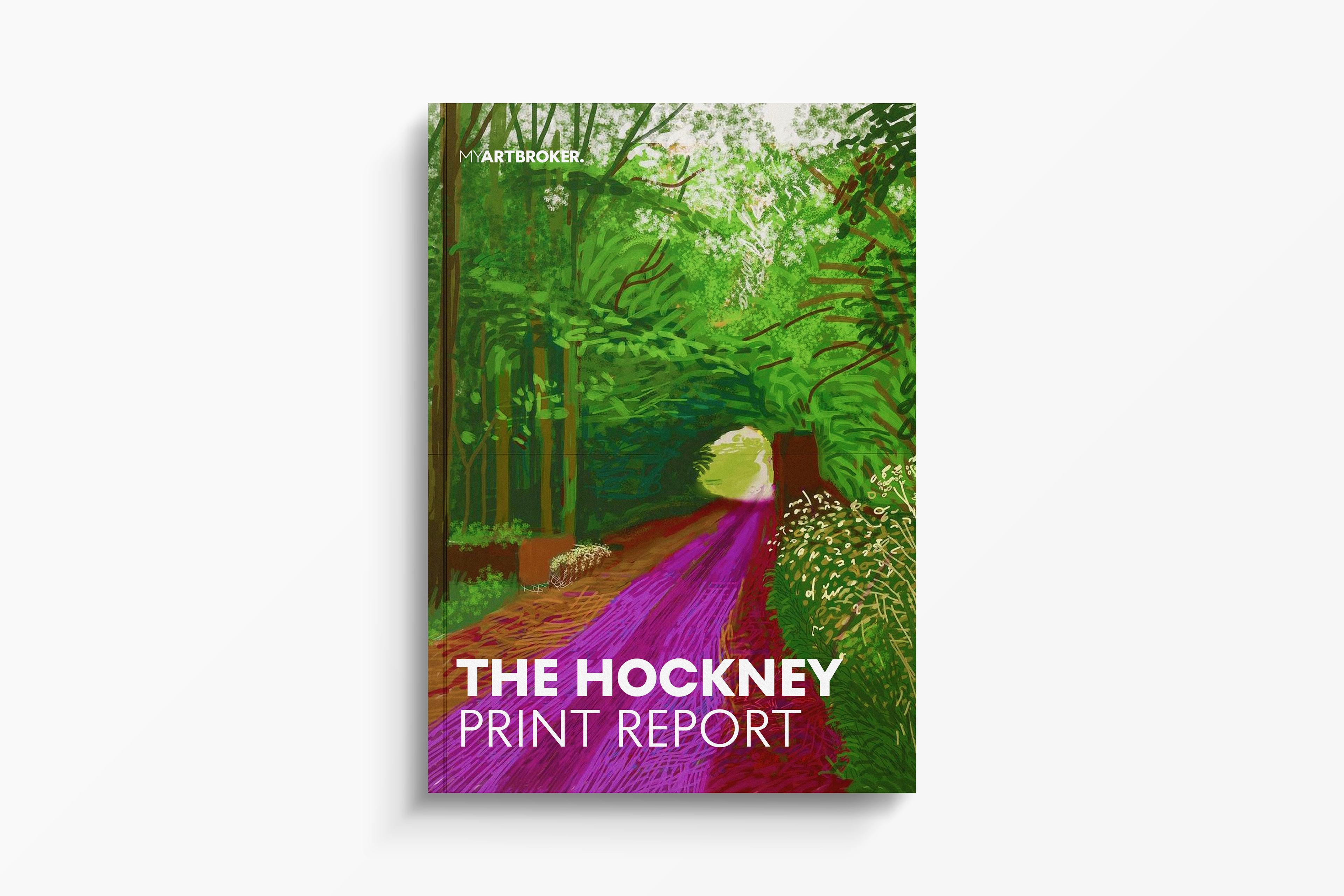
Hockney’s digital iPad works represent one of the most innovative chapters in contemporary printmaking. Series such as Arrival of Spring, The Yosemite Suite, and other seasonal landscapes demonstrate how he translated digital drawing into limited edition prints.
These works feature vivid colour, layered composition, and strong visual immediacy. Not all digital prints were produced in identical edition sizes, and smaller editions tend to command stronger buyer interest. Institutional exhibitions have further reinforced the relevance of this category.
Posters and Accessible Works
Exhibition posters and unsigned works form a separate category within the Hockney print market. While they do not carry the same long-term resale potential as numbered editions, original period posters can provide an accessible entry point for new collectors.
Buyers should distinguish clearly between original exhibition posters and later reproductions, and verify condition carefully before purchase.
What Are Some of David Hockney’s Most Popular Prints in 2026?
While Hockney’s print market is broad, certain works consistently define buyer demand and auction momentum. The following examples illustrate how recognisable imagery, edition structure, and scarcity influence popularity.
1.The Arrival of Spring (Edition of 25 and 10)
The Arrival of Spring series remains the strongest-performing category within Hockney’s print market. Both the edition of 25 and the smaller edition of 10 have achieved consistent six-figure results. These works combine institutional visibility, vivid colour, and tightly controlled supply – making them among the most sought-after Hockney prints for sale in 2026.
2. Afternoon Swimming (Edition of 55)
Afternoon Swimming represents the enduring appeal of Hockney’s Swimming Pool motif. Despite an edition of 55, the work has achieved prices around £360,000, reflecting sustained global demand for this imagery.
3. Hotel Acatlán: Second Day (Moving Focus)
From the Moving Focus series, Hotel Acatlán: Second Day achieved £182,020, demonstrating how rarer impressions within this large collection can command premium pricing.
The Moving Focus series offers significant variation, and while not every work trades at this level, standout compositions continue to attract competitive bidding. For buyers, this category rewards careful selection and attention to edition nuance.
How to Authenticate a David Hockney Print Before Buying
Authenticating a Hockney print requires careful review of signature, edition details, publisher marks, and provenance. Because Hockney’s print output spans multiple decades and production methods, verification should always precede purchase – particularly for higher-value works.
David Hockney Signature and Edition Number
Most Hockney prints are signed in pencil, typically in the lower right margin, with the edition number written in the lower left (for example, 12/25). The signature should be consistent with known examples from the same period.
Buyers should confirm that the work is part of a documented edition, the edition number corresponds to a legitimate print run, and that the paper margins remain intact and untrimmed.
David Hockney Publisher and Blindstamp
Hockney collaborated with respected publishers including Gemini G.E.L., Tyler Graphics, Petersburg Press, and others. Most Hockney prints carry a blindstamp indicating the publisher.
The presence of a correct blindstamp, aligned with the documented edition, strengthens authenticity and market confidence.
David Hockney Catalogue Raisonné and Reference Literature
There is currently no single comprehensive catalogue raisonné covering the full scope of Hockney’s print output. However, three key reference catalogues are widely used by auction houses, galleries, and specialists to document and verify works:
- S.A.C. – David Hockney Prints 1954–77, Scottish Arts Council (1979). Covers Hockney’s earliest printmaking period, including etchings such as A Rake’s Progress and The Blue Guitar.
- M.C.A.T. – David Hockney Prints 1954–1995, Museum of Contemporary Art Tokyo (1996). The most comprehensive reference currently available, extending coverage through the mid-1990s.
- T.G. – Tyler Graphics: Catalogue Raisonné, 1974–1985 (1987). Documents works produced with Tyler Graphics, including prints from the Moving Focus series and other collaborative projects from this period.
These abbreviations appear regularly in auction lot notes and dealer listings. Buyers should be aware that none of these catalogues extends beyond 1995, meaning Hockney’s digital iPad prints, Arrival of Spring, Yosemite Suite, and other post-2000 works are not covered by any published catalogue raisonné.
A new catalogue raisonné is understood to be in development, though it is expected to begin with paintings rather than prints. For buyers acquiring works from Hockney’s later print output, provenance documentation, publisher records, and specialist verification become especially important in the absence of a definitive printed reference.
David Hockney Documentation and Provenance
Understanding provenance plays a significant role in the Hockney print market. Buyers should request: previous auction records, gallery invoices, exhibition history where applicable, and condition reports.
Works tied to established galleries such as L.A. Louver, Annely Juda Fine Art, or Galerie Lelong carry additional confidence due to documented handling history.
The David Hockney Foundation does not currently issue certificates of authenticity. Buyers should therefore rely on documented edition records and specialist review rather than third-party guarantees. Consulting a specialist before completing a purchase is strongly advised. Authentication errors can materially affect both resale value and long-term collectability.
How to Check the Condition of a David Hockney Print Before Buying
Condition is one of the most important factors affecting Hockney print value. Even strong works can underperform if condition issues are overlooked. Before buying a Hockney print, request a detailed condition report and review the work in person where possible.
Common Condition Issues in David Hockney Prints
Buyers should inspect for: fading or colour shift (particularly in early lithographs and prints exposed to direct light), Paper undulation or warping, foxing or staining, trimmed margins, which can significantly reduce value, and surface abrasions or handling marks.
Hockney’s early etchings and lithographs were printed on fine art papers such as Arches and Rives BFK, which require stable environmental conditions. Digital iPad prints are generally found in stronger condition, but improper framing or storage can still affect paper integrity.
Framing and Restoration Considerations
Improper framing – particularly acidic mounts or non-UV glass – can accelerate deterioration. Buyers should confirm whether the work has been reframed using conservation-grade materials.
Over-restoration can also negatively impact value. Aggressive cleaning, margin repair, or undocumented conservation work may reduce long-term desirability. Minor, stable ageing is often preferable to invasive correction.
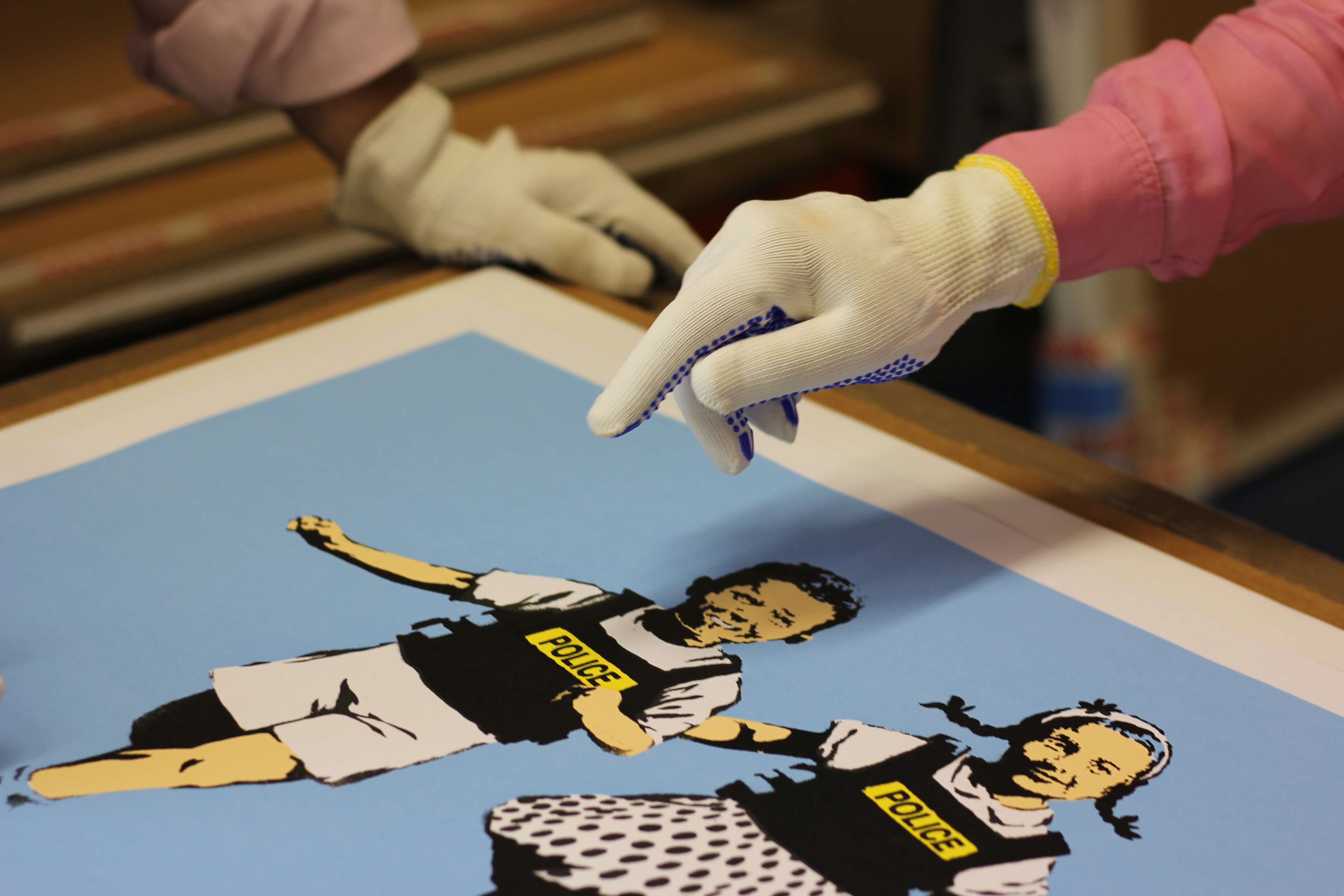
Richard Law of Darbyshire Framing, leading framer of Hockney prints, explains that collectors must think beyond appearances when framaing artworks. In many cases collectors focus on aestehtics, but it is equally important to focus on the longevity of the work.
Why a Condition Report Matters
A professional condition report provides transparency on any flaws and ensures pricing reflects the true state of the work. For higher-value Hockney prints, this step is essential before agreeing on a final purchase price.
Where to Buy David Hockney Prints in 2026
Hockney prints can be purchased through auction houses, commercial galleries, art fairs, and private brokers. Each route carries different pricing structures, risk profiles, and levels of access.
Buying David Hockney Prints At Auction
Auction offers transparency and public price discovery. Buyers can review past results and bid competitively when desirable works appear.
However, auctions come with additional costs. Buyer’s premiums typically range between 25–30% plus VAT, meaning the final price paid can significantly exceed the hammer price. Public bidding also exposes demand, and competition can push prices beyond recent comparables.
Auction may be suitable when a rare or highly sought-after Hockney print appears and competitive bidding is expected. For a detailed comparison of the advantages and risks of each route, see our guide to Auction vs Private Sale before committing capital.
Buying David Hockney Prints Through Private Sale
Private sale offers discretion and controlled pricing. Rather than bidding publicly, buyers negotiate directly with sellers or through a broker.
This route can provide access to works not publicly advertised, negotiated pricing without buyer’s premiums, greater flexibility around timing, and more detailed due diligence before committing.
As many high-value Hockney prints are tightly held and increasingly traded privately, buyers often find stronger opportunities outside the auction room. Choosing the correct route depends on the work, the budget, and the urgency of acquisition.
Why Buy David Hockney Prints With MyArtBroker?
Buying a Hockney print requires more than tracking auction headlines. It requires access, negotiation strategy, and careful review of condition and edition nuance.
Access to Off-Market Works
Many of the strongest Hockney prints do not reach public auction. Through our Trading Floor and global collector network, buyers gain access to privately offered works that may not appear on the open market.
Data-Led Pricing Guidance
We assess each work against recent Hockney auction results and comparable private transactions, helping buyers avoid overpaying during competitive cycles.
Negotiation Without Auction Premiums
Unlike auctions, private acquisitions through MyArtBroker avoid buyer’s premiums. Pricing is agreed directly, with full clarity on market comparables and condition.
Specialist Review Before Purchase
Each acquisition is supported by authentication checks, condition assessment, and edition verification – ensuring buyers can proceed with confidence.
For collectors seeking to buy a Hockney print in 2026, structured access and disciplined pricing matter more than exposure alone. Explore current Hockney prints for sale on our Trading Floor or speak with a specialist to discuss acquisition strategy.