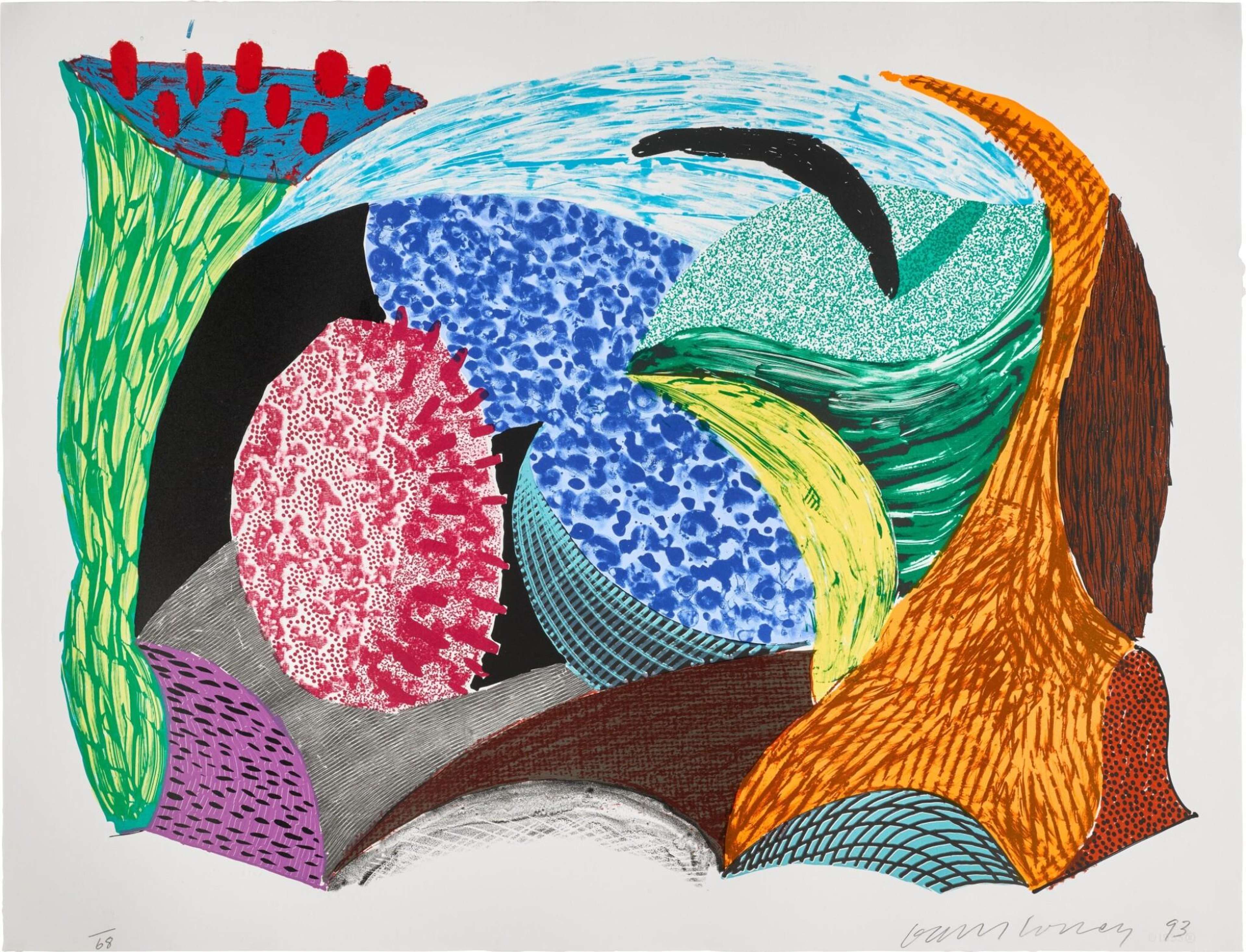


A few key steps can help you verify that a piece is authentic, giving you confidence before you buy, sell, or insure a Hockney print.
Understanding David Hockney’s Print Practice
Hockney’s print output is extraordinarily varied, spanning traditional and experimental mediums. Since the early 1960s he has worked in etching, lithography, aquatint, and screenprinting, producing intricate portfolios including A Rake’s Progress (etched in 1961-63) and The Weather Series (lithographs from 1973). He has also pushed the boundaries of printmaking through less conventional technologies: in the 1980s, Hockney produced his Home Made Prints using office photocopiers, alongside works made with fax machines, and from the late 2000s onwards he embraced digital tools to create iPad drawings.
Each of these methods leaves distinct physical clues which can aid authentication, but this diversity also means there’s no single template for a “typical” Hockney print. A genuine Hockney could be a black-and-white etching on thick rag paper or a large vivid inkjet print on glossy stock. Collectors should familiarise themselves with the range of Hockney’s print practice. Understanding how his prints were made in each period will help you know what authentic features to expect and how to spot anything that doesn’t fit.
What to Look For and What to Be Wary Of When it Comes to Hockney Prints
Hockney’s Signature
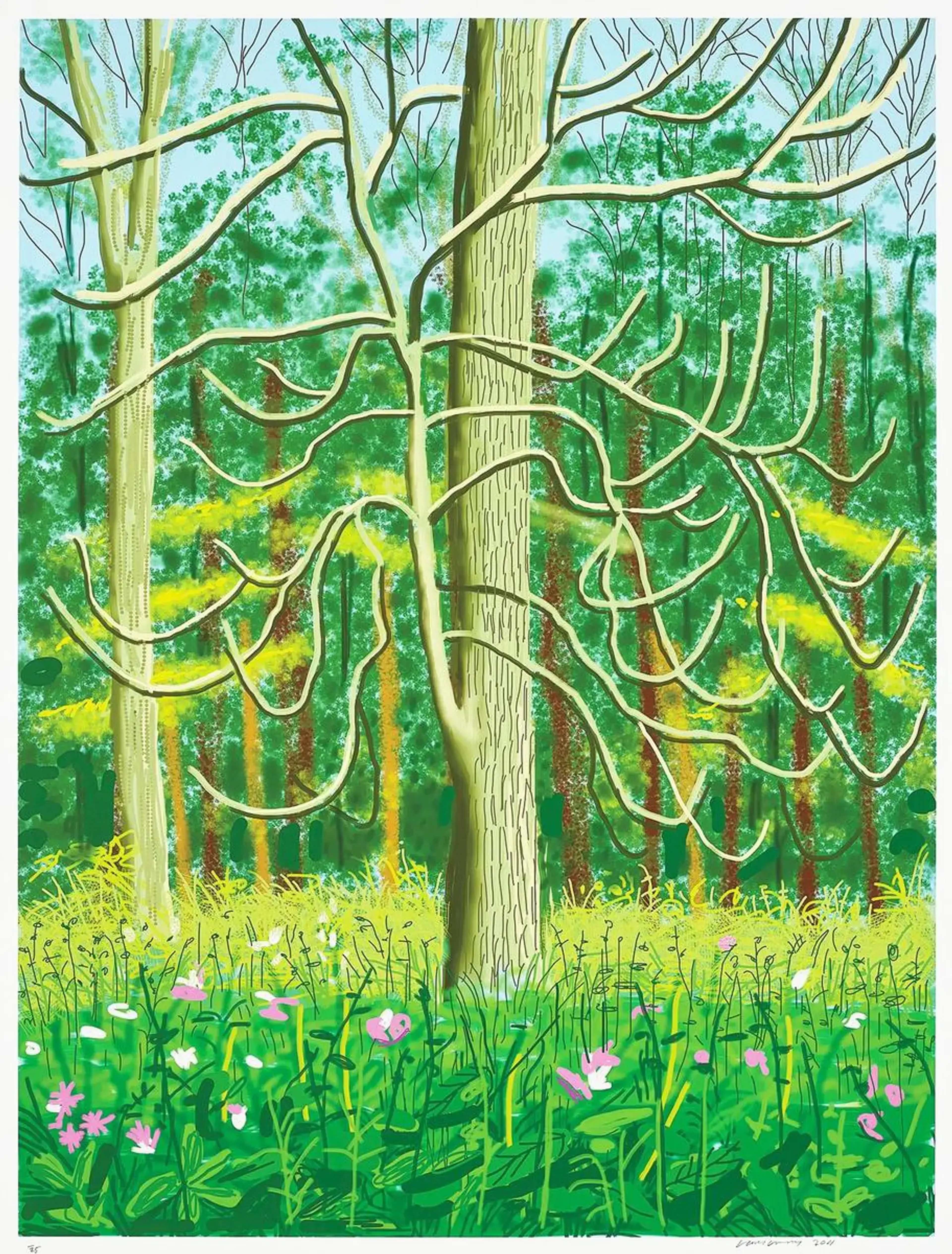
One of the first checks for any Hockney print is the signature. The vast majority of Hockney’s limited edition prints are hand-signed by the artist in pencil, usually on the bottom right corner of the margin. The signature typically reads “David Hockney”, though some works are signed only with initials. In most cases, it should appear in clear but naturally varied handwriting, with subtle pressure changes and visible texture – not the flat appearance of a reproduced signature. Edition information is usually penciled on the bottom left (for example, a number like 25/75). Always confirm that the signature and numbering look authentic and correspond to known Hockney editions.
An unsigned and unnumbered Hockney print should raise questions – while a few open-edition Hockney posters were never signed, nearly all genuine limited edition Hockney prints carry the artist’s pencil signature and edition number. If those are missing, or if the signature style looks different compared to authentic examples from the same era, check with a specialist. A good practice is to compare the signature on your print to a verified one from a trusted source – differences in the formation of letters, size, or placement can be telling. However, a signature alone does not guarantee authenticity, but a correct signature in the right place paired with other indicators is a strong sign. When in doubt, consult a specialist who has handled authentic Hockney prints and can recognise his signature’s nuances.
Hockney Edition Numbers and Proof Types
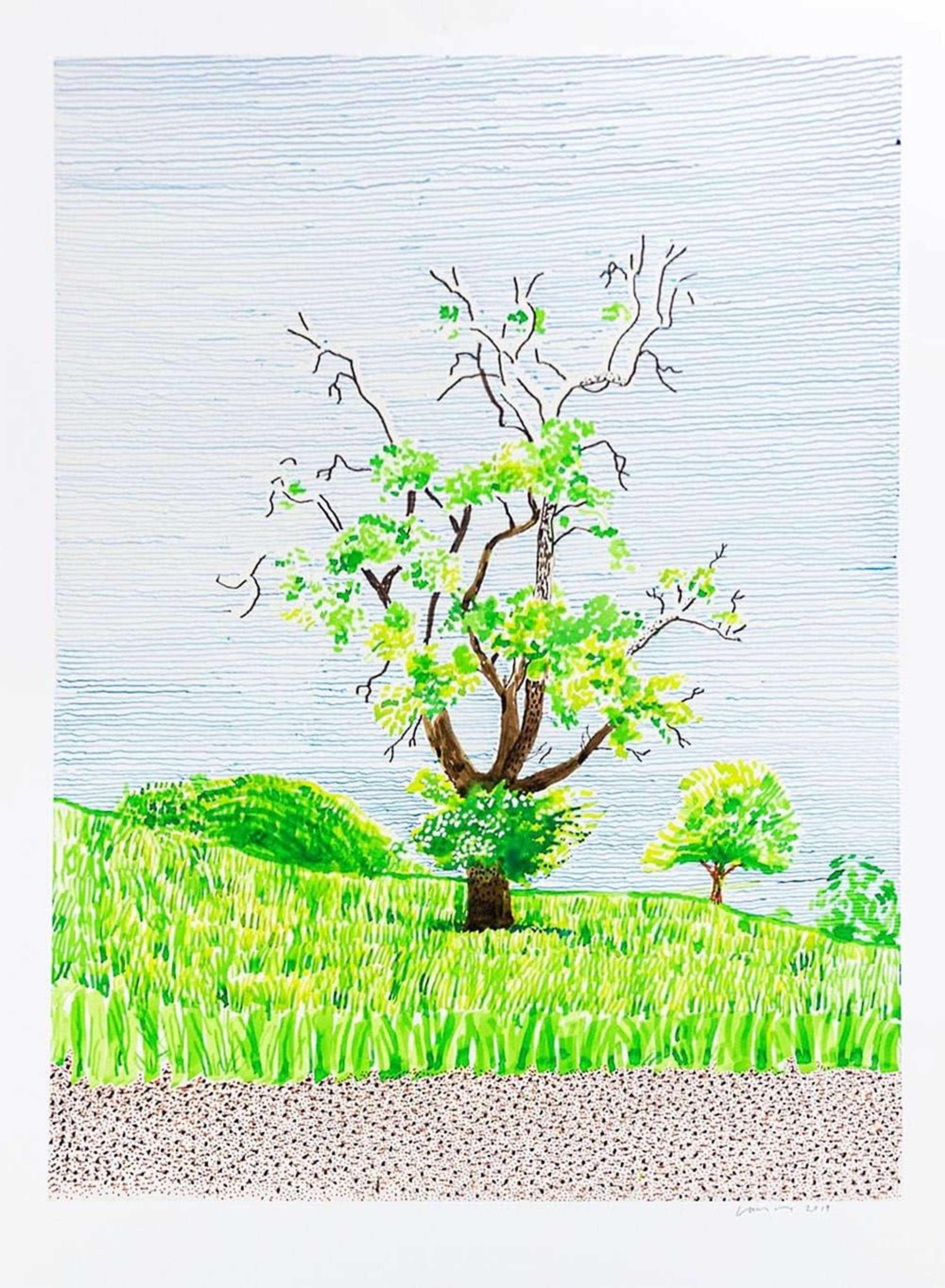
After the signature, check the edition number and any proof markings on the print. Hockney, like most printmakers, limits his editions and numbers each impression – a typical marking will be a fraction like “15/75”, meaning the 15th print out of a total edition of 75. All the prints in that edition should carry the same total number (75 in this example), so if you encounter a Hockney print numbered 80/100 when literature calls for an edition of 75, there’s a problem. Beyond the standard editions, Hockney’s prints also include proofs that are marked differently such as Artist’s Proofs (AP) or Printer’s Proofs (PP). These are usually limited in number (often a small percentage of the main edition) and may be annotated as “AP 5/10”.
For authentication, consistency and known data are essential in verifying that the edition size and any proof designation on your print match official records or a catalogue raisonné listing. Hockney's upcoming catalogue raisonné is expected to be available online from 2026 and will be an excellent reference for checking edition details. In the meantime, specialists, reputable galleries or archival records held by The David Hockney Foundation can often confirm how many were in an edition. In addition to specialist confirmation, it can be helpful to cross-check your print against the standard reference literature that dealers and auction houses often cite. Key examples include David Hockney Prints 1954–1995 (Museum of Contemporary Art Tokyo, 1996; often abbreviated as M.C.A.T.), David Hockney Prints 1954–77 (Scottish Arts Council, 1979; S.A.C.), and Tyler Graphics Catalogue Raisonné, 1974–1985 (1987). These publications don’t cover every print Hockney ever made, but they can be extremely useful for verifying edition sizes, dates, titles, and proof designations where they do apply.
Hockney’s edition sizes vary widely across his printmaking career. Some early published works from the early 1960s, such as Myself and My Heroes (1961), were produced in relatively small, clearly defined editions. By contrast, many later works, including certain iPad Drawings, were issued in much larger editions, sometimes running into the several hundreds. Because there is no single “standard” edition size for Hockney, the numbering on any print must always be checked against reliable records for that specific work. Any mismatch between the stated edition and established documentation should be treated as a potential warning sign of forgery.
Publishers and Studios Associated with Hockney
Knowing who worked with Hockney on his prints is an important part of authentication. Throughout his career, Hockney partnered with a handful of respected print publishers and studios, so if your print can be linked to one of these, it’s a very good sign.
In the early 1960s, Hockney’s first major print projects were produced in Britain, most notably with Editions Alecto and Petersburg Press. Among these, Editions Alecto published the series A Rake’s Progress in collaboration with the Royal College of Art. From the late 1960s onwards, Hockney’s printmaking became increasingly associated with American workshops. His long and prolific collaboration with Gemini G.E.L. in Los Angeles spans several decades and includes some of his most recognisable print series, such as The Weather Series (1973). Another key collaborator was Tyler Graphics: Ken Tyler worked with Hockney on ambitious large-scale prints and experimental projects during the 1980s, including the Moving Focus series.
If a print’s paperwork or stamp identifies Gemini G.E.L., Tyler Graphics, Editions Alecto, Petersburg Press, or other well-documented Hockney publishers and printmaking studios, that context strongly supports authenticity. While publishers themselves do not authenticate artworks, their involvement provides a paper trail that aids verification.
Provenance and Documentation for Hockney Prints
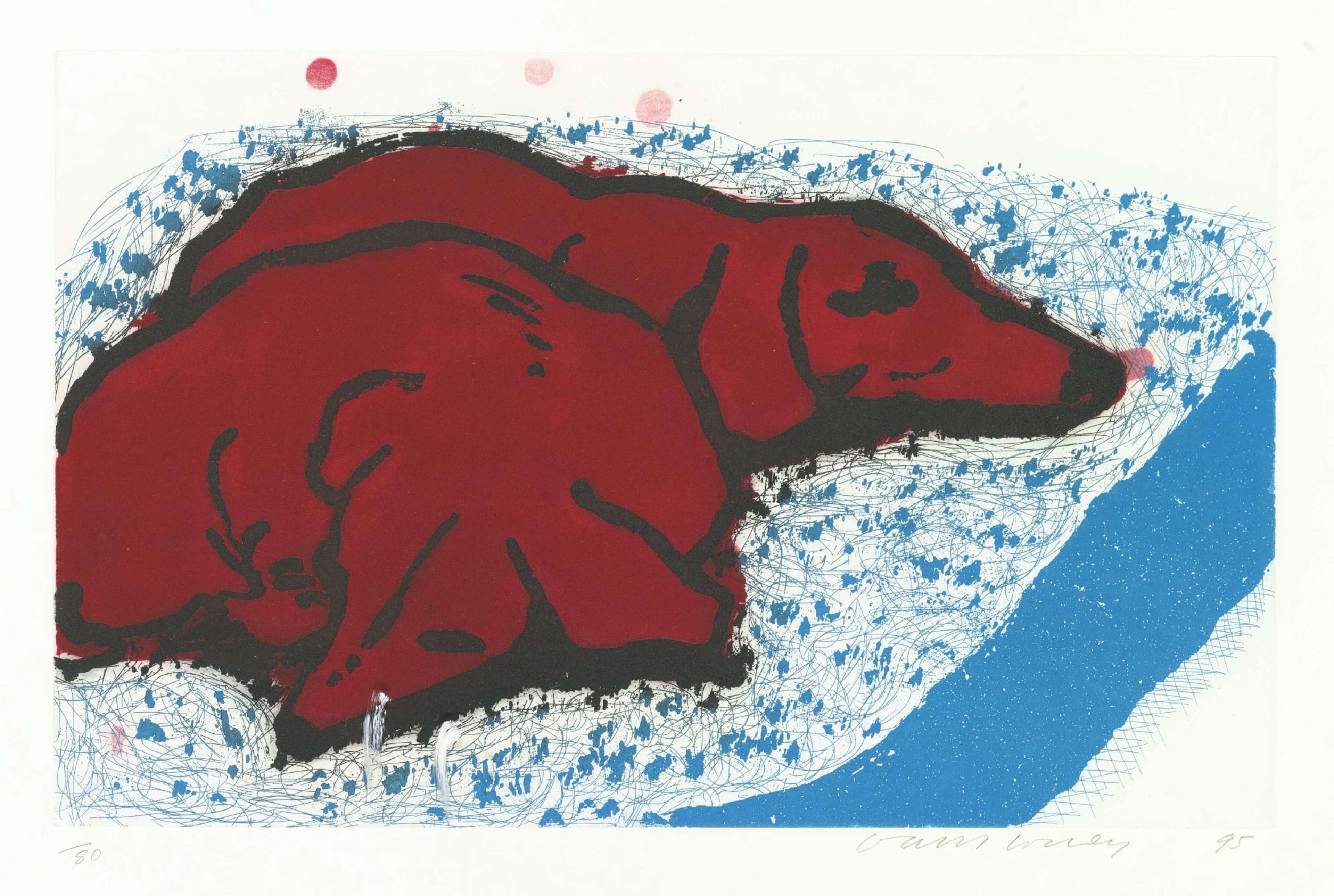
Paperwork matters enormously when authenticating a Hockney print. Provenance is the documented history of ownership and exhibition, and it can provide critical evidence of authenticity. A Hockney print should come with records such as the original bill of sale from a gallery, a receipt from a reputable auction house or letters between previous owners, as these documents help establish an unbroken chain back to the source. Similarly, a catalogue from a known Hockney exhibition that lists your print can serve as provenance. In practical terms, keep all documentation related to your Hockney print – a thorough provenance file can greatly speed up the verification process.
What Condition Can Tell You About a Hockney Print
Condition can offer useful clues when assessing a Hockney print, but it must always be read in context. Genuine works usually show natural signs of age that align with their materials and date of production. Paper, for example, can subtly discolour over time, so a work from the 1960s that appears perfectly bright and unchanged may warrant closer scrutiny, while gentle ageing can support its claimed period. However, the absence of ageing is not proof of inauthenticity on its own, as paper can be artificially distressed. Hockney’s own experimental approach means that some works were produced using materials not intended to last, most notably his Home Made Prints of the 1980s, which, due to the delicate paper, can be more fragile. Therefore, a Hockney print’s condition should make sense for its medium, date and production method, which can either reinforce authenticity or signal the need for specialist examination.
Authenticating Hockney prints involves a careful assessment of multiple factors, and by carrying out proper due diligence, you help protect both the integrity of the market and your own investment. By using trusted resources alongside professional guidance, you can be confident that the Hockney on your wall is the real thing.