
London’s October Sales Show Signs of Measured Recovery
After months of uncertainty, the October sales season marked what felt like the first tangible rebound since the beginning of the year. Across Sotheby’s, Christie’s, and Phillips, London’s Post-War & Contemporary auctions achieved a combined hammer total of £167.1 million, up from £132.6 million in 2024 and £154.7 million in 2023. Sell-through rates rose to 89%, a notable improvement from the mid-70s seen during the May sales. While average lot values held steady at roughly £356,000, the number of unsold works fell by 30 – a clear indication of tighter pricing, stronger demand, and greater alignment between estimates and collector appetite.
These were solid numbers, and the results showed clear strength – but there were some notable absences. The top lots included Peter Doig’s Ski Jacket (£14.2m), Francis Bacon’s Portrait of a Dwarf (£13.1m), and Lucian Freud’s Self-Portrait Fragment (£7.6m) – artists who represent a more traditional, painterly canon; the so-called “painter’s painters.” By contrast, in previous years, the top seats were occupied by artists such as David Hockney (L’Arbois, Sainte-Maxime, £13.1m in 2024) and Jean-Michel Basquiat (Future Sciences Versus The Man, £10.4m in 2023) – markets more closely tied to Pop, celebrity, and global brand recognition.
The reason for this shift comes down to supply. Major works by certain blue-chip names are increasingly being held or traded privately – a trend supported by the latest Art Basel & UBS Global Art Market Report, which recorded a 14% rise in private-sales activity at the major auction houses. This reflects a more selective approach to consigning high-value works, with sellers prioritising timing and discretion over public exposure. Even so, these sales were highly successful – with total hammer values outpacing the previous two years – signalling that buyer stability has returned even as the market’s character evolves.
While major consignments are now being distributed more evenly across global centres – from Paris to New York – the October season’s clearest expression of confidence came through London’s single-owner sales and the rise of printmaking as a dominant, stabilising force.

Single-Owner Print Collections Reframe The October Season
Two single-owner collections set the tone for October’s renewed confidence – and both put printmaking at the centre. Sotheby’s David Hockney: The Arrival of Spring realised £4.8 million at the hammer, while Christie’s Spellbound: The Hegewisch Collection brought in £7 million – both runaway successes that underscored a growing appetite for editioned works across eras.
Sotheby’s David Hockney Arrival of Spring White Glove Success
At Sotheby’s, all 17 works from The Arrival of Spring were editioned 15/25. Six made their auction debut, and nearly every piece set a new benchmark price. The key to the sale’s success was scarcity. These iPad drawings are exceptionally hard to source, publicly or privately – only 11 had sold before this, just three more than the previous year. This was the first time such a cohesive group had been offered together, and collectors responded with confident, competitive bidding.
Christie’s Spellbound complemented that story from a different angle. A mix of engravings, woodcuts, etchings, and drawings, the sale saw 53% of lots exceed their estimates – a notable result that reinforced the season’s renewed confidence in printmaking as a medium. Together, the two collections highlighted a clear behavioural shift, where collectors are engaging across mediums, eras, and price points in pursuit of artistic craft and material depth.
New York Editions Sales Lead the October Momentum
After the London sales, momentum moved to New York’s October print auctions – the biggest editioned sales of the season and a reliable barometer for market sentiment. The results reaffirmed that the appetite for blue-chip imagery remains robust. Works by Warhol, Hockney, and Basquiat drove strong bidding across houses, proving that collector interest in recognisable, iconic subjects are still relevant and have evolved across mediums – increasingly expressed through the editions market, where accessibility and brand power meet.
Across Phillips, Sotheby’s, and Christie’s, aggregate hammer values rose 24% year-on-year, unsold lots fell by 32%, and the average price reached £32,700 – a figure moderated by the high lot volume (692 works offered, 615 sold).
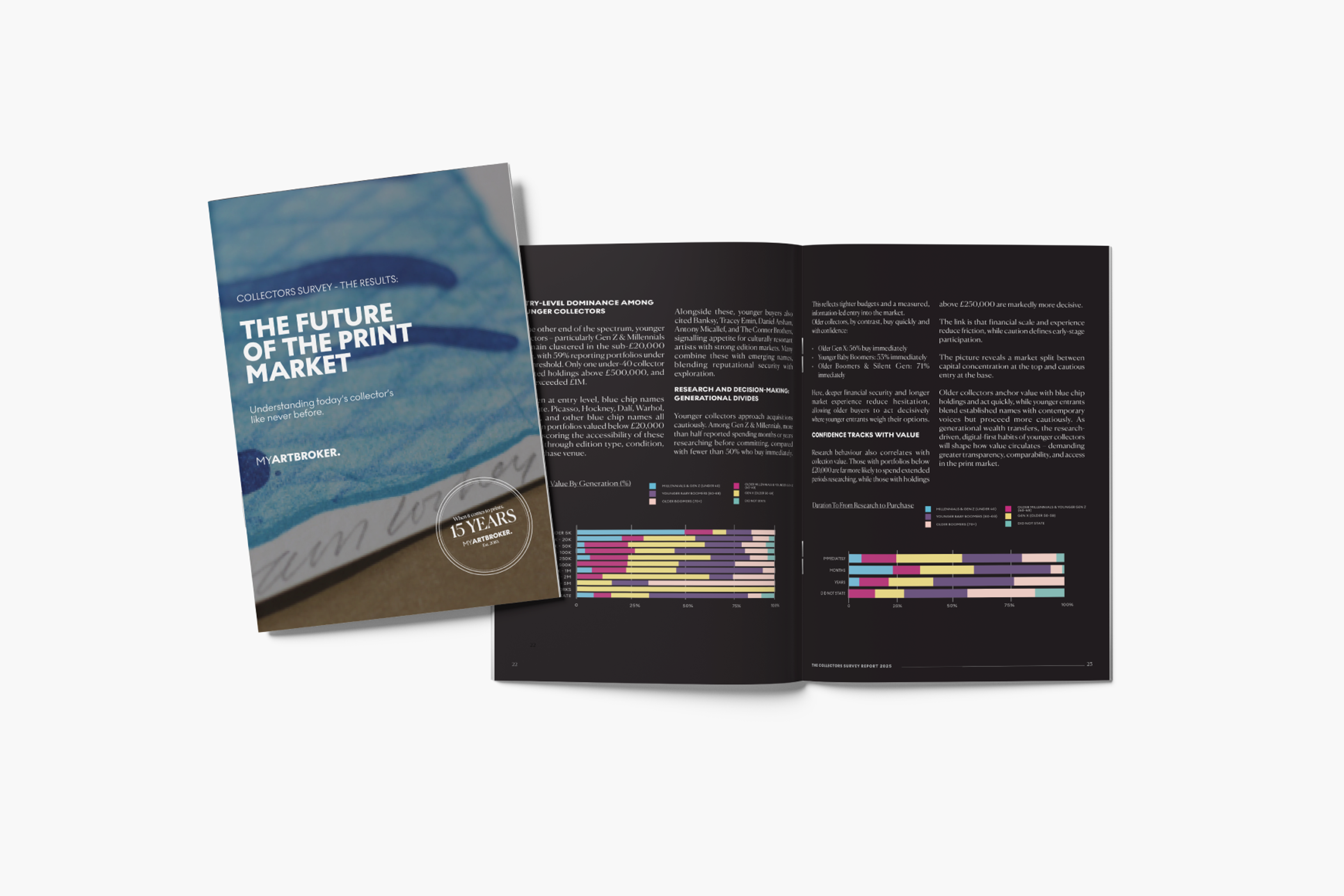
Sotheby’s introduced a two-part Prints & Photographs format – a strategic adaptation aligned with the generational collecting trends outlined in the 2025 UBS Art Basel Collector Survey. The data revealed clear divergence by age: Millennials devoted the highest share of their art spending to prints (16%), while Gen X collectors spent the most on photography (17%). Both groups outpaced Boomers, who remain primarily focused on paintings (61%). This generational spread helps explain the resilience of the editions market: the pool of active buyers is broader and more globally distributed than other categories, spanning established collectors seeking liquidity and younger entrants prioritising visual immediacy and accessibility.
Sotheby’s total hammer for its two sales combined was 66% higher year-on-year. Christie’s maintained its traditional structure but still achieved a 25% increase, while Phillips – which offered the highest lot count (333, compared with 199 at Christie’s and 160 at Sotheby’s) – reported $4.5 million at the hammer, 10% above the low estimate and 24% higher than 2024, with an 87% sell-through rate. CEO Martin Wilson credited the house’s priority-bidding model, introduced earlier this year, for boosting liquidity and early engagement – following a 40% increase in advance bids during its September Editions sale in London.
Together, these results mark a clear vote of confidence in a market that only a year ago felt subdued. The shift isn’t about a sudden surge in demand, but about auction houses adapting intelligently to collector behaviour. In New York, Sotheby’s two-part structure, Christie’s steady format, and Phillips’ priority-bidding model all demonstrated how strategic innovation and strong curatorial focus are keeping pace with a more responsive, data-aware collector base.
What Sold In The New York Editions Sales
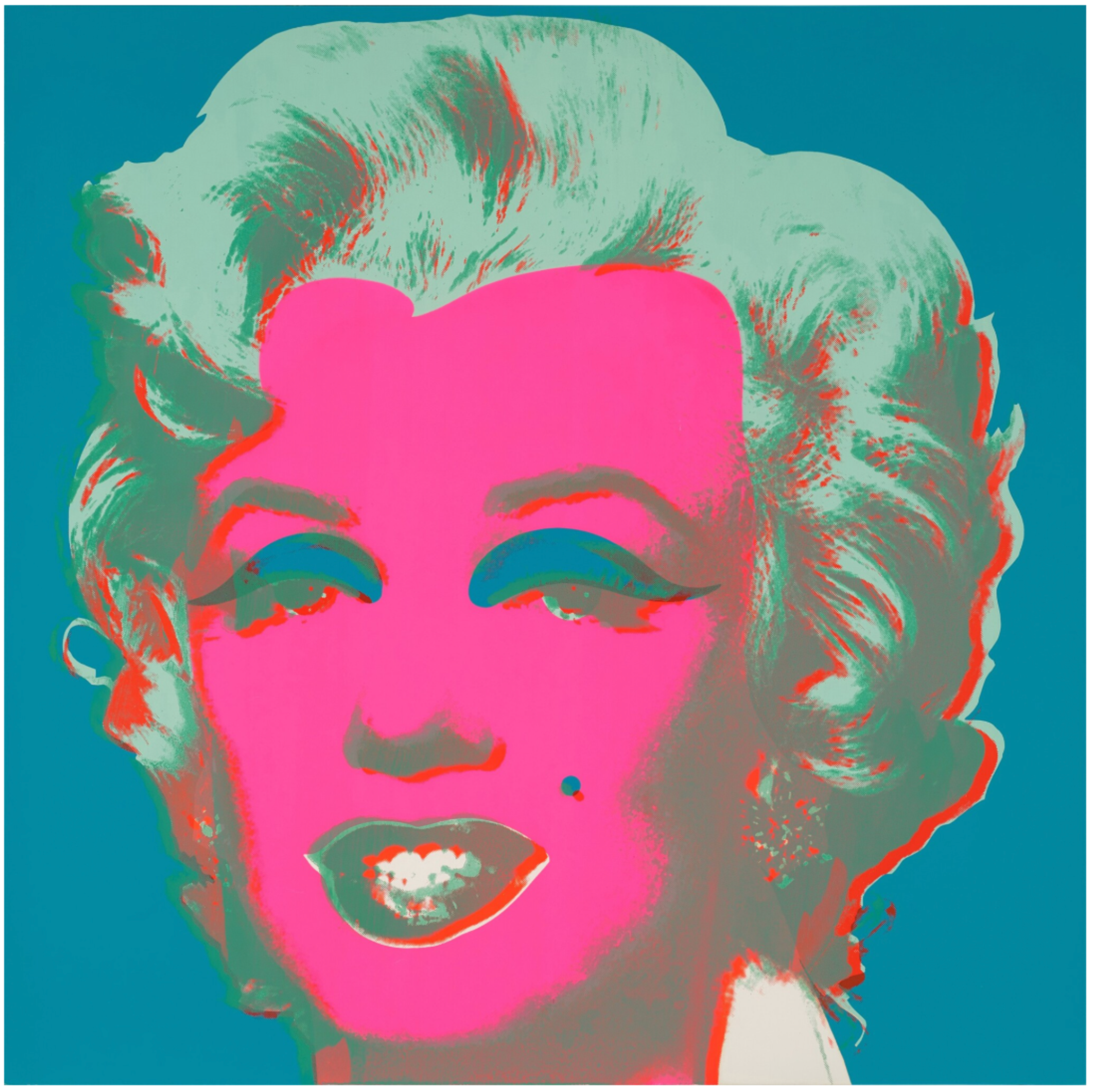
At Sotheby’s, five Marilyn prints – all editioned 222/250 – drew significant competition, echoing the psychological premium seen in Hockney’s Arrival of Spring sale, where identical edition numbers heightened the appeal of matching sets. Every work either met or exceeded expectations, but the standout was Marilyn II.30, featuring a rare ghost image of George Washington within the print – a completely unique anomaly that underscored the individuality that can exist even within editions. The work sold for $215,900 (USD) against a $120,000 high estimate.
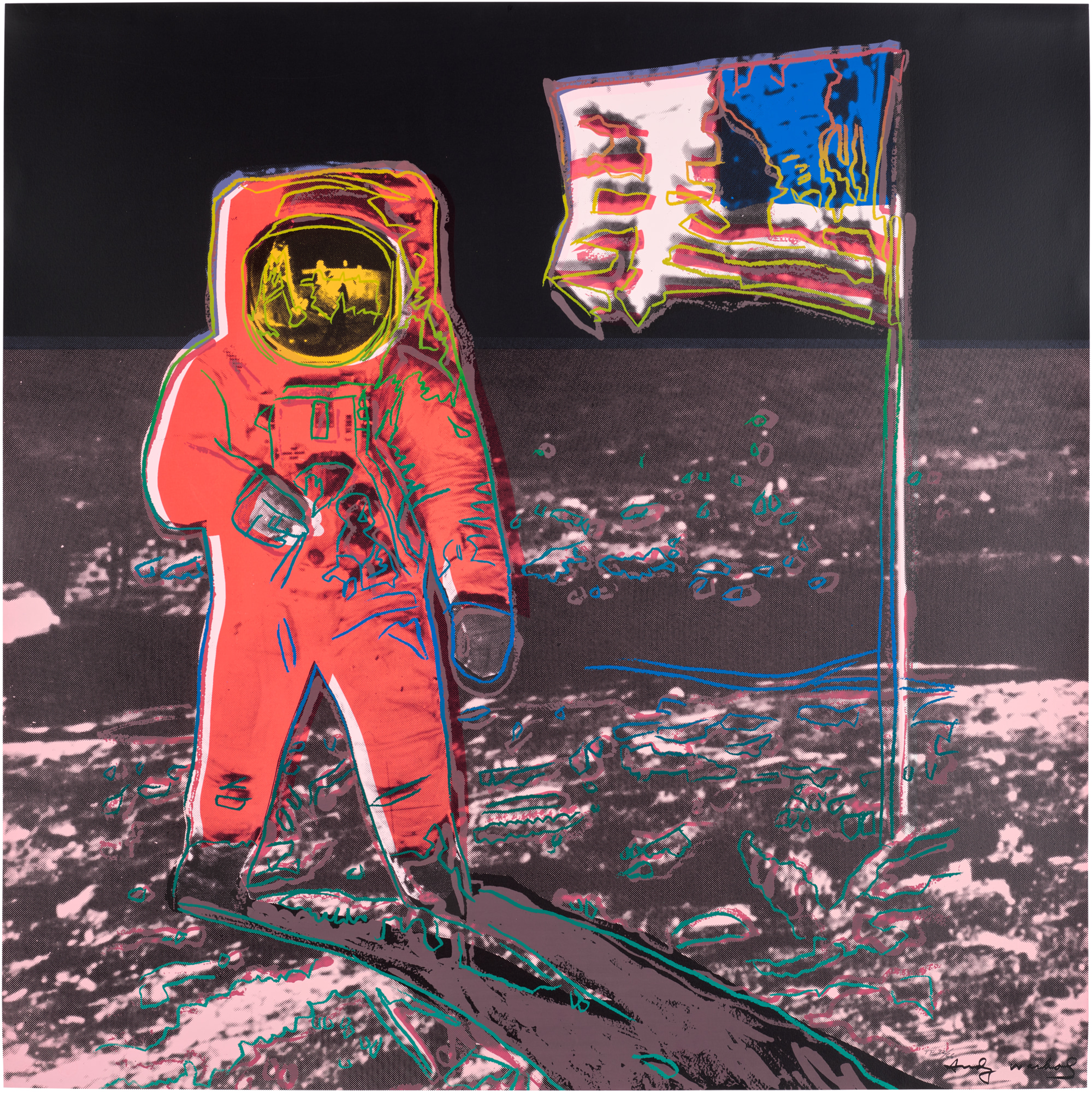
Warhol’s Myths series also performed strongly, with a Superman printer’s proof (PP 1/5) setting a new record at $444,500 (USD), and Mickey Mouse achieving $241,300. At Phillips, demand for Warhol’s Trial Proofs (TP) came roaring back – two Moonwalk TPs, one featuring a vivid red-orange astronaut outlined in electric blue and acid green, reached $516,000 (USD), a new record for the individual work.
Christie’s offered its own standout with a rare complete set of Details of Renaissance Paintings (Sandro Botticelli) – the first time all four colourways had appeared together since 2016 – which achieved a record $666,750 (USD). Warhol’s Ads series also reappeared after relative scarcity, with a Lifesavers (TP) featuring a royal purple background setting a record at $165,100 (USD), while Apple achieved $241,300 (USD).

Lichtenstein On Track For a Record Year
Beyond Warhol, Lichtenstein’s works continued to perform well in the New York print sales, particularly pieces from his Surrealist Series including Blonde, a trending work in the market which hit $40,640 (USD). Though not from his personal collection, their results reflected how print collectors are closely tracking and capitalising on momentum within artist markets.
If there’s a single takeaway, it’s that the market for editioned works – even at the blue chip level – remains resilient. Prints are holding their ground, and they’re actively expanding the middle of the market in meaningful ways. That momentum carried through to the following Paris sales, where Lichtenstein’s editions also performed well – a study for At the Beach achieved €304,800, and an Artist’s Proof of Water Lily Pond With Reflections realised €1.1 million, underscoring continued confidence in top-tier printmaking.
Looking Ahead: Market Trends To Watch Into Q4 November Auctions
Two broader trends emerging from these October sales are worth watching into Q4:
Segmented Strength. Collectors are diversifying across mediums, artists, and genres – and the print market reflects that shift more clearly than anywhere else. Value is no longer monolithic; it’s shaped by artist, series, and edition structure, with collectors showing increasing sophistication in how they assess rarity, authorship, and narrative.
Structural Shifts. As auction houses adapt to these behavioural changes, we’re seeing strategy evolve. Single-owner print sales have proven remarkably successful in the October sales, and I would bet that we will see more estate print collections integrated into the November evening and day sales going forward – with the latter now often accompanied by more guarantees.
Finally, while public auctions projected renewed stability, it’s critical to emphasise that much of the year’s real market movement still remains concentrated in private transactions – where discretion, placement, and timing can offer more assured success in the current climate. Equally important, however, is that the broader market appears to be in a phase of recalibration – one where quiet confidence, curatorial storytelling, and evolving sales formats are proving far stronger than they might appear in the headlines.