The Print Collectors’ Survey 2025
How today’s print collectors behave – and what’s changing.
of print collectors work in Tech, Creative, Finance and Law.
- Tech & Engineering
- Creative & Cultural
- Finance, Law & Real Estate

of print collectors work in Tech, Creative, Finance and Law.
- Tech & Engineering
- Creative & Cultural
- Finance, Law & Real Estate
of print collectors view their collection as an investment

of high-value print portfolios sit with collectors aged 50+

of print collectors don’t use traditional art advisors

Grounded in survey responses and set against current and past market trends, this report analyses behaviours across age groups without relying on rigid generational labels.
The findings highlight where confidence is strongest – from the growing role of digital platforms to the resilience of blue chip names – while also exposing the barriers that continue to hold collectors back.
Ready for the full story? Access the complete 2025 Print Collectors‘ Survey Report.
The first dedicated study of who today’s print collectors are - and where the market is heading.
Demographics
Who are today’s print collectors? Where are they concentrated? Which industries and shifting demographics are reshaping the market?

Industries
20% of collectors work in Tech & Engineering, 18% in Creative & Cultural fields, and 14% in Finance, Law & Real Estate – together anchoring today’s collector base.
Collectors are male
But among Gen Z & Millennials (under 40), 55% identify as female, non-binary, or prefer not to say – a generational rebalancing already underway.
Nearly half are UK-based
Despite Brexit frictions, the UK remains a trading hub, anchored by Modern British legacies, the YBAs, and regional galleries and fairs.
Collectors based in the UK, Europe, or US
A reminder of how concentrated the print market remains in the West.
collectors work in creative, cultural, or media fields.
Highlighting the role of visual expertise in shaping early collecting habits.

MyyArtBroker © 2025
When they enter
From Gatekeepers to Open Access: since 2010, digital platforms have redefined how collectors start their journeys.
The Access Revolution

2010 tipping point
Online auctions, searchable databases, and social media are transforming collecting into a more transparent, accessible, digital-first market.

Gen Z & Millennials began after 2010
Entire generations have only ever known a digital-first art world, shaping expectations around independence and access.

Older Millennials & Younger Gen X (40–49) are split
Half entered through dealer-led networks before 2010, half through digital platforms after – a true bridge generation.

Older Gen X (50–59) entered after 2010
Digital access didn’t just bring in younger buyers – it opened the door later in life for older entrants too.

Older Boomers & Silent Gen (70+) started pre-2000
Rooted in opaque, gatekeeper-led systems, this group provides sharp contrast to today’s transparency-driven market.
Collection Size & Knowledge
Scale matters: as collections grow, so does confidence, knowledge, and market fluency.

A QUARTER OF COLLECTIONS SIT IN THE MID-PRINT MARKET VALUE BRACKET
23% hold collections worth between £100,000–£250,000.
27% of collectors surveyed own 30+ works
Including 23% of Older Millennials & Younger Gen X (40–49), proving serious scale isn’t limited to retirement-age buyers.
Confidence Strengthens With Scale
Knowledge rises from 3.4 to 4.2 as holdings grow; market fluency climbs from 2.8 to 3.8; perceived investment value improves from 4.6 to 6.0.
The Next Generation
The generational wealth handover will reshape value.

The generational wealth handover will reshape value
Over 40% of high-value portfolios sit with collectors aged 50+, but this capital is beginning to pass down – setting up digitally fluent younger buyers to redefine how value circulates in the print market.
is the core cluster
23% of collectors fall in this range, showing how significant capital is already embedded in the print market.
of collectors surveyed hold £1m+ collections
Mostly Gen X, Younger Baby Boomers, and Older Boomers & Silent Gen, reflecting decades of focus on blue chip names.
59% of Gen Z & Millennials hold collections under £20k
Younger collectors start smaller, but are well positioned to scale as wealth transfers.
Why We Collect
Collectors are led by passion and personal connection, but balance emotion with pragmatism - weighing fair price, reputation, and accessibility far above speculation.
INVESTMENT
84% of print collectors view their collection as an investment
FAIR PRICE
60% placed fair price in their top three priorities, showing how passion is balanced by pragmatism.
RECOGNITION
58% cited Artist Name as a key purchase factor, underscoring the role of brand recognition in prints.
PASSION
51% rated Love of The Work “very important,” and nearly 80% placed it in their top two motivators.
Where collectors buy is shifting
Digital platforms now play a dominant role in research and sales – but the meaning of “personal networks” is generational.

Personal networks matter more to Older Boomers & Silent Gen (70+) vs Gen Z & Millennials (under 40)
But the meaning has changed: what once meant exclusivity and access is now just as likely to be cultivated online through social media and artist connections.

Use MyArtBroker as their go-to research tool
Ahead of Artsy (56%), Christie’s (51%), and Phillips (44%).

Gen Z & Millennials are twice as likely to buy direct from artists as from galleries
Immediacy, transparency, and direct relationships define their approach.
Digital adoption is now mainstream
Nearly 40% of Gen X and Younger Baby Boomers buy through online galleries – proof that digital collecting isn’t just for the young.

Traditional galleries still anchor older buyers
56% of Gen X (50–59) and 61% of Younger Baby Boomers (60–69) purchase through galleries.
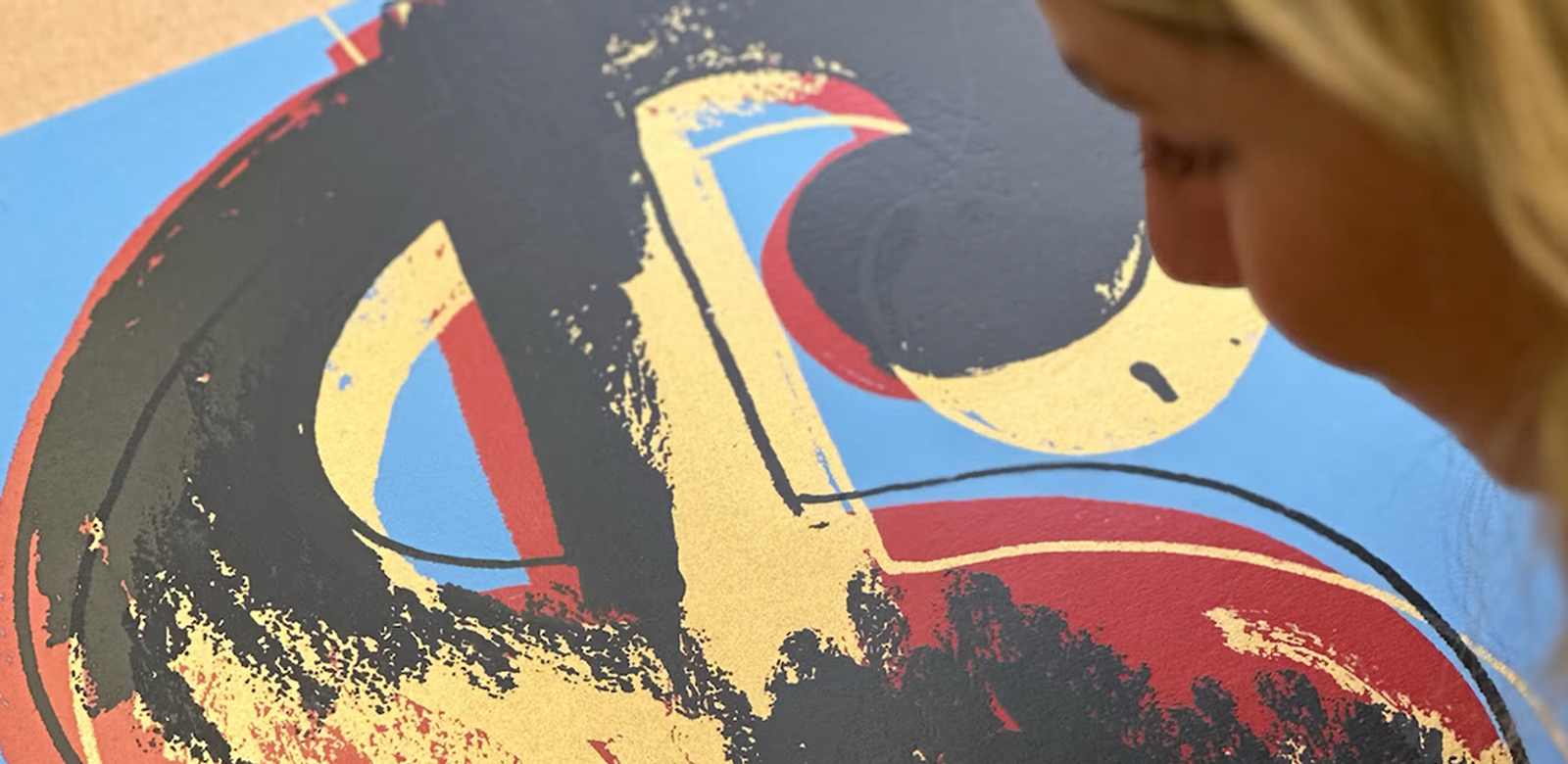
Andy Warhol © Dollar (F. & S. II.277) 1982
Tools, Barriers & Digital Infrastructure
Collectors are confident, digitally fluent, and self-directed – treating prints as long-term assets while relying on social media and online platforms over traditional advisors, though budget remains the key barrier.

See prints as long-term investments
Collectors treat them as cultural and financial assets, not short-term plays.
Now discover art through social media
Platforms like Instagram and TikTok have become the new entry points.

Don’t use art advisors
Decisions are self-directed, built on digital tools and personal networks.

Say trust in online platforms has grown in the past five years
Digital is now standard infrastructure, not a supplement.
Ready for the full story? Access the complete 2025 Print Collectors’ Survey Report.

Ready for the full story? Access the complete 2025 Print Collectors’ Survey Report.
The first dedicated study of who today’s print collectors are - and where the market is heading.
The first half of 2025 has been about weathering change. At the very top, we’ve seen a softening: adjusted estimates, thinner evening sales, and more caution around consignments. But at the same time, momentum has shifted into prints and multiples.
What the headlines often miss is that the art market has weathered change before. And in those moments, the print market has often been at the forefront – driving adaptation in strong and defining ways.