Interested in buying or selling
Andy Warhol?
Market Reports
Key Takeaways
How to Sell an Andy Warhol Step-By-Step
Andy Warhol remains one of the most liquid and recognisable names in the art market. With a print catalogue that spans iconic celebrity portraits, consumer imagery, and politically charged editions, selling a Warhol print in 2025 is less about “whether there is demand” and more about understanding where your work sits within Warhol’s value hierarchy, and how to time and position it accordingly.
Is Now A Good Time To Sell An Andy Warhol Print?
In Warhol’s print market, 2025 sales value edged above 2024 levels, driven by specific moments in the auction calendar and by collections where demand was already established. With fewer trial proofs and complete sets coming to market, attention has concentrated around works that can sustain price strength through iconic imagery, clear edition hierarchies, and legible series narratives.
Outcomes are now shaped less by momentum and more by fit. Benchmark images, differentiated formats, and well-positioned works continue to attract confident bidding, while standard main editions remain sensitive to route to market, estimate discipline, and presentation.
Selling Andy Warhol Prints During Peak Market Visibility & Exhibitions
High-profile sales of Warhol’s unique works influence the print market by shaping context rather than resetting prices. When major works tied to strong historical or cultural narratives achieve standout results, collector attention tends to flow toward print series that sit within a related framework.
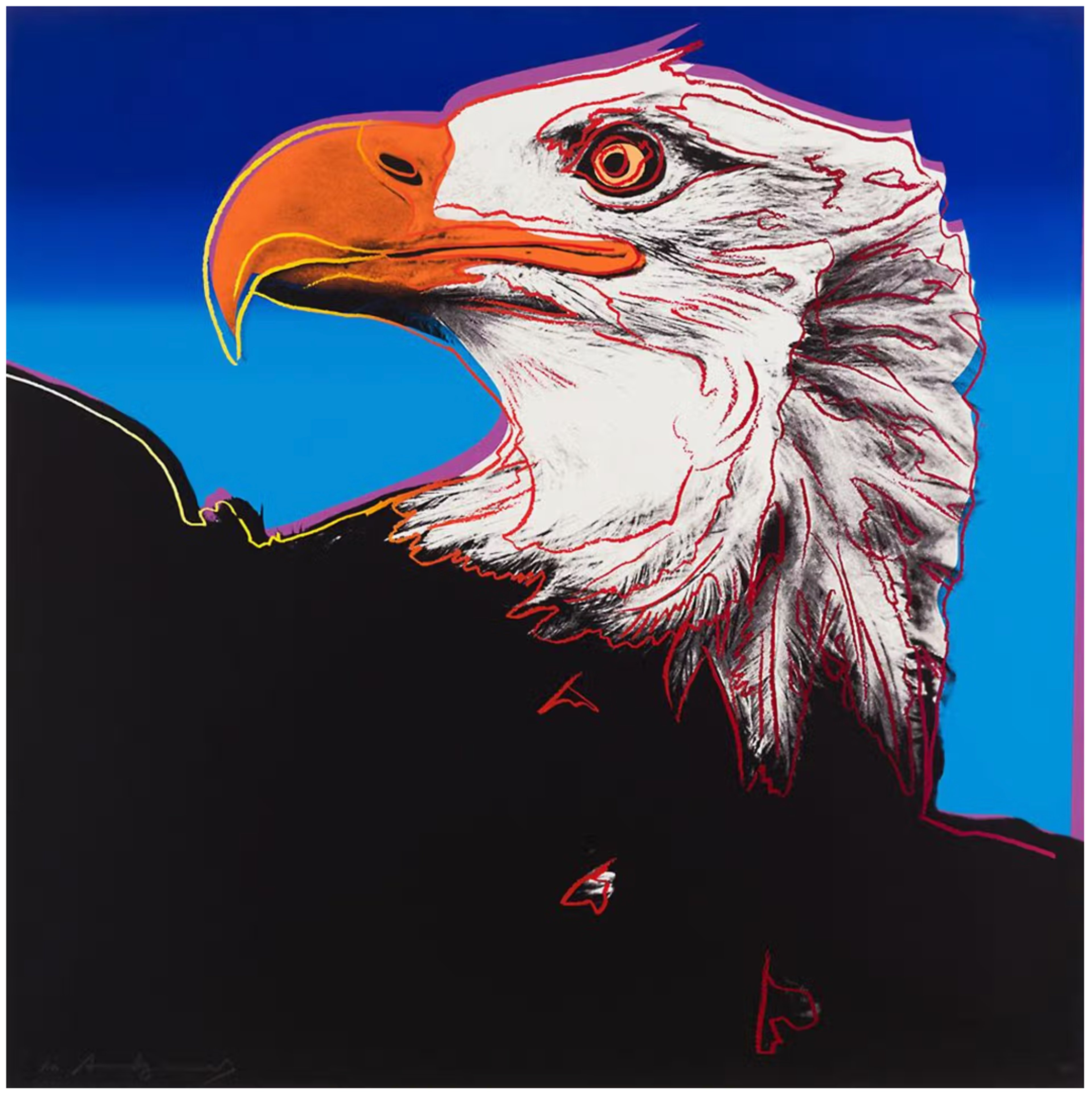
In 2025, this dynamic has supported renewed interest in narrative-driven collections such as Endangered Species, Moonwalk, and Cowboys and Indians, where messaging and symbolism are easily articulated to buyers. These contextual alignments improve visibility and buyer receptiveness even without broader market momentum.
Sellers looking to compare confidence and consistency across these collections can explore this further in our latest Most Investable Collections Report.
What This Means for Sellers
The choice between auction and private sale is increasingly determined by comparability. Works that sit clearly at the top of a series hierarchy, or that can absorb public price discovery, still perform well at auction when estimates are disciplined.
More comparable examples face less predictable outcomes, where timing and estimate strategy play an outsized role. As a result, private sale has become a more deliberate route for many sellers, allowing pricing to be anchored to recent precedent and demand to be focused among informed buyers – particularly for proofs, unusual colourways, or main editions where placement matters more than exposure.
Andy Warhol Market Performance – What Is Driving Value in the Warhol Market?
Warhol’s print market in 2025 has been defined by concentration rather than broad-based momentum. Sales value edged above 2024 levels, but performance clustered around specific quarters and clearly identifiable pockets of demand, shaped by series-level interest, image strength, and formats where scarcity could be articulated quickly to buyers.
Mid-year sales brought renewed attention to Sunset editions, particularly proofs and unusual colourways, while individual results within Endangered Species confirmed that main editions can still outperform when series momentum is active and supply remains constrained. Momentum strengthened toward the end of Q3, with September auctions resetting benchmarks for Marilyn prints and carrying through into Q4.
The autumn season delivered the highest concentration of value for the year, supported by standout individual works including further Marilyn prints, Moonwalk trial proofs, and Superman. Relatively few complete sets appeared, and those that did were distributed across both major and regional auction houses – underscoring that 2025 performance was not dependent on a single venue or auction ecosystem.
How Much Is My Andy Warhol Print Worth?
The chart above shows how sales value in Warhol’s print market is distributed across edition types, rather than tracking price growth alone. This distinction matters for sellers, because Warhol’s market is not driven by a single dominant format. Instead, value is shared between main editions, complete sets, and proofs, each operating under different selling conditions.
Value of Andy Warhol Main Editions
Main editions account for the largest share of transactional volume year-on-year and contribute a meaningful portion of total sales value. While individual main editions typically sit lower in the value hierarchy than proofs or sets, their cumulative presence underpins the market’s liquidity and consistency.
Value of Andy Warhol Complete Sets
Complete sets contribute a disproportionate share of total value in years when they appear, despite relatively low volume. Their market share expands sharply in periods such as 2021 and 2022, when even a small number of high-quality sets come to auction. When sets are absent, including parts of 2025, attention naturally shifts back toward individual works rather than signalling market weakness.
Value of Andy Warhol Trial Proofs
Proofs – particularly trial proofs – sit between these two tiers. Their contribution is highly sensitive to scarcity and context: when supply tightens or proofs are attached to highly recognisable imagery, their share of value increases even if overall market conditions remain steady. This reflects a market that rewards differentiation rather than volume.
Taken together, this distribution shows a market structured around coexistence rather than a single hierarchy. Different formats contribute value under different conditions. For sellers, understanding which segment a work belongs to – and how that segment typically participates in total market value – is often more informative than focusing on isolated records.
Get in touch with our sales team to discuss the value of you Warhol print. Request a free instant valuation.
How to Prove Your Andy Warhol Print Is Real Before Selling
Authentication and documentation are essential to achieving full value in Warhol’s print market. Sellers should be prepared to evidence provenance, edition details, publication context, and condition – particularly for higher-value prints and proofs. In practice, these factors are best addressed before a work is brought to market, where gaps can affect pricing and buyer confidence.
The Andy Warhol Foundation for the Visual Arts does not authenticate works or issue certificates of authenticity. Market confidence instead relies on documentary consistency and alignment with the Andy Warhol Catalogue Raisonné, which records accepted editions by publisher and format. While catalogue inclusion is an important benchmark, it does not assess condition, provenance gaps, or sale positioning.
For this reason, sellers are strongly advised to consult a qualified Warhol specialist. An experienced expert can interpret catalogue entries, review documentation, assess edition hierarchy and condition, and identify any issues that may affect value – helping ensure accurate positioning and smoother outcomes across both private and auction sales.
How to Conserve Your Andy Warhol Print to Retain Value
Condition remains one of the most decisive value drivers in Warhol’s print market, particularly for proofs and higher-tier works. Many prints were historically framed or handled when treated as decorative objects, leaving issues that today’s buyers are far less willing to overlook.
Fading, handling marks, undulation, and poor framing can materially affect outcomes. Before selling, it is advisable to assess condition professionally. In some cases, conservation may protect value; in others, transparent disclosure and appropriate pricing are the most effective route to a clean sale.
Where Can I Sell My Andy Warhol Print?
The Risks of Consigning Andy Warhol Prints to Auction
Auction can still work for prints that sit clearly at the top of their series – rare proofs, complete sets, or benchmark images that can withstand public price discovery. In those cases, the auction setting helps formalise value.
For more comparable works, results are less predictable. Timing, estimates, and competing supply increasingly shape outcomes, and an unsold lot can introduce uncertainty rather than clarity.
Selling Andy Warhol Prints via Private Sale
Private sale allows pricing to be anchored to recent precedent, demand to be focused among informed buyers, and context to be controlled. This route is often more effective for proofs, unusual colourways, and main editions where placement matters more than exposure.
Why Sell Your Andy Warhol Print With MyArtBroker
Specialist Valuation & Market Positioning
We provide specialist valuations grounded in live print-market data, positioning each work accurately within Warhol’s edition structure and current demand.
Private Network & Trading Floor
Works are matched with buyers through our Trading Floor and private network, allowing demand to be targeted rather than tested publicly.
0% Seller’s Fees
Sellers pay 0% commission. Our revenue comes from a buyer’s commission agreed at offer stage, keeping incentives aligned.
Managed Sales & Logistics
We manage the entire process – marketing, buyer matching, logistics, and guidance on documentation and condition – to ensure a clean, low-risk sale at fair market value.