
Understanding UK Art Desires
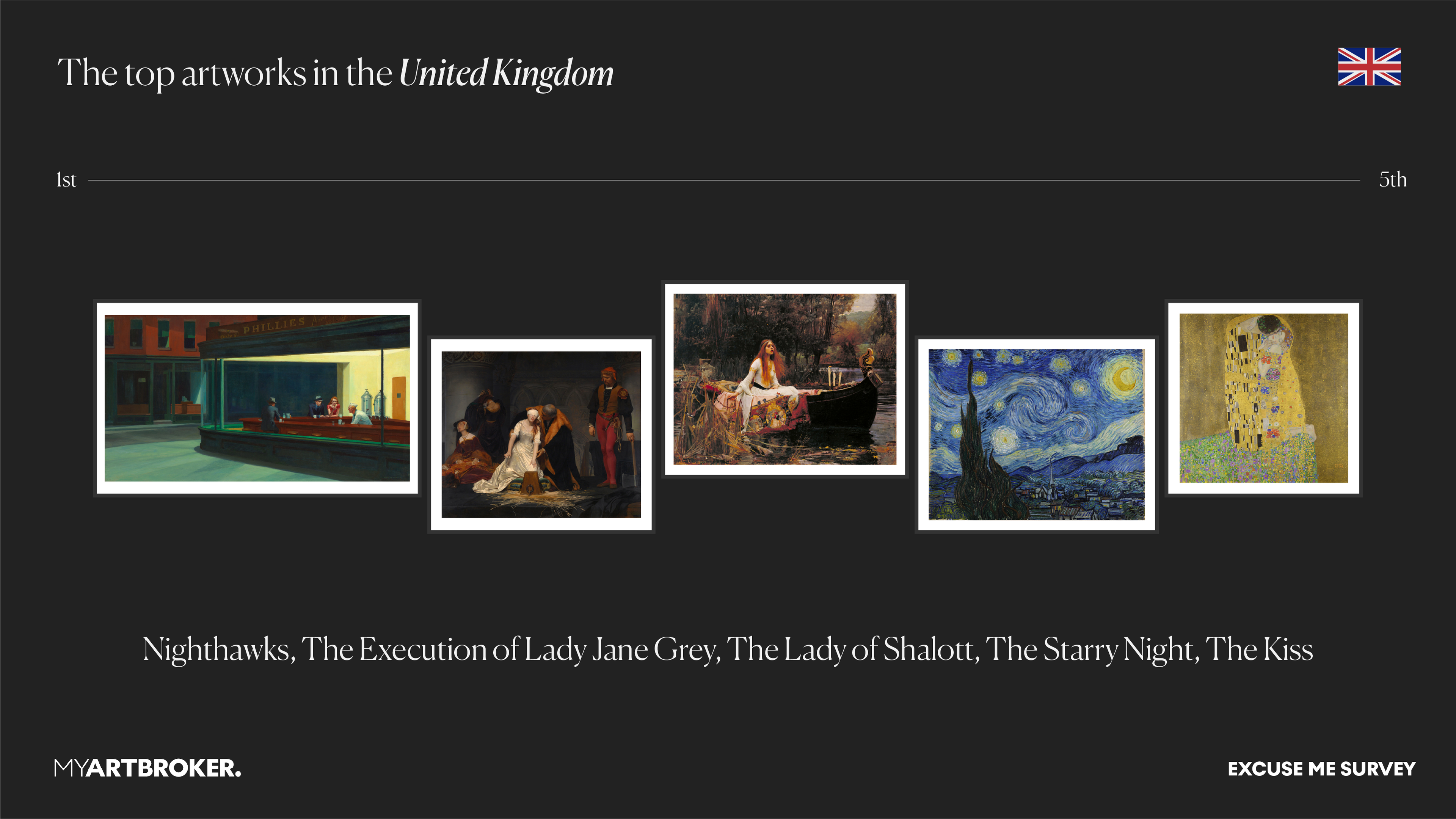
Conducted in the first half of 2025 among 7,500 self‑identified art enthusiasts across the globe, MyArtBroker’s survey paints a richly detailed portrait of who we are, and what we cherish on our walls. The most highly sought-after artwork was Edward Hopper’s Nighthawks, with The Execution of Lady Jane Grey by Paul Delaroche coming in second, John William Waterhouse’s The Lady of Shalott in third place, and Frederic Leighton’s Flaming June rounding out the top ten. In the UK, respondents were almost evenly split between women (48.75%) and men (47.81%), while 1.98% of participants identified as non-binary. This contrasts with the global sample, where women made up a majority (56.52%), compared to men (39.69%), and 2.33% non-binary respondents. Participants spanned four generations, from Gen Z to Baby Boomers, enabling an analysis of how age and identity shape our art desires.
From this data, three clear currents in British taste emerged. First, a fascination with late‑Victorian spectacle and the elaborate imagery of the Pre‑Raphaelites, embodied by tragic heroines and lush natural settings. Second, a fondness for Impressionist and Post‑Impressionist works that combine intense colour with psychological depth. And third, an interesting trend where predominantly female respondents gravitate towards images of women created by men, suggesting that transhistorical themes of sacrifice, solitude and beauty transcend the artist’s own identity.
The UK’s most coveted artworks reveal a distinctly gendered divide in taste, with women driving the top selections - with one exception. Hopper’s Nighthawks took first place overall, and was chosen by 63% of men and just 37% of women, challenging the wider trend of female-majority votes. On the other hand, Delaroche’s The Execution of Lady Jane Grey had a 92% female vote, suggesting a gendered affinity for historical female narratives. Only Gustav Klimt’s The Kiss managed to unite genders equally, perhaps because it presents an image of mutual desire, where both figures appear equally absorbed in the act of love.
1. Nighthawks by Edward Hopper
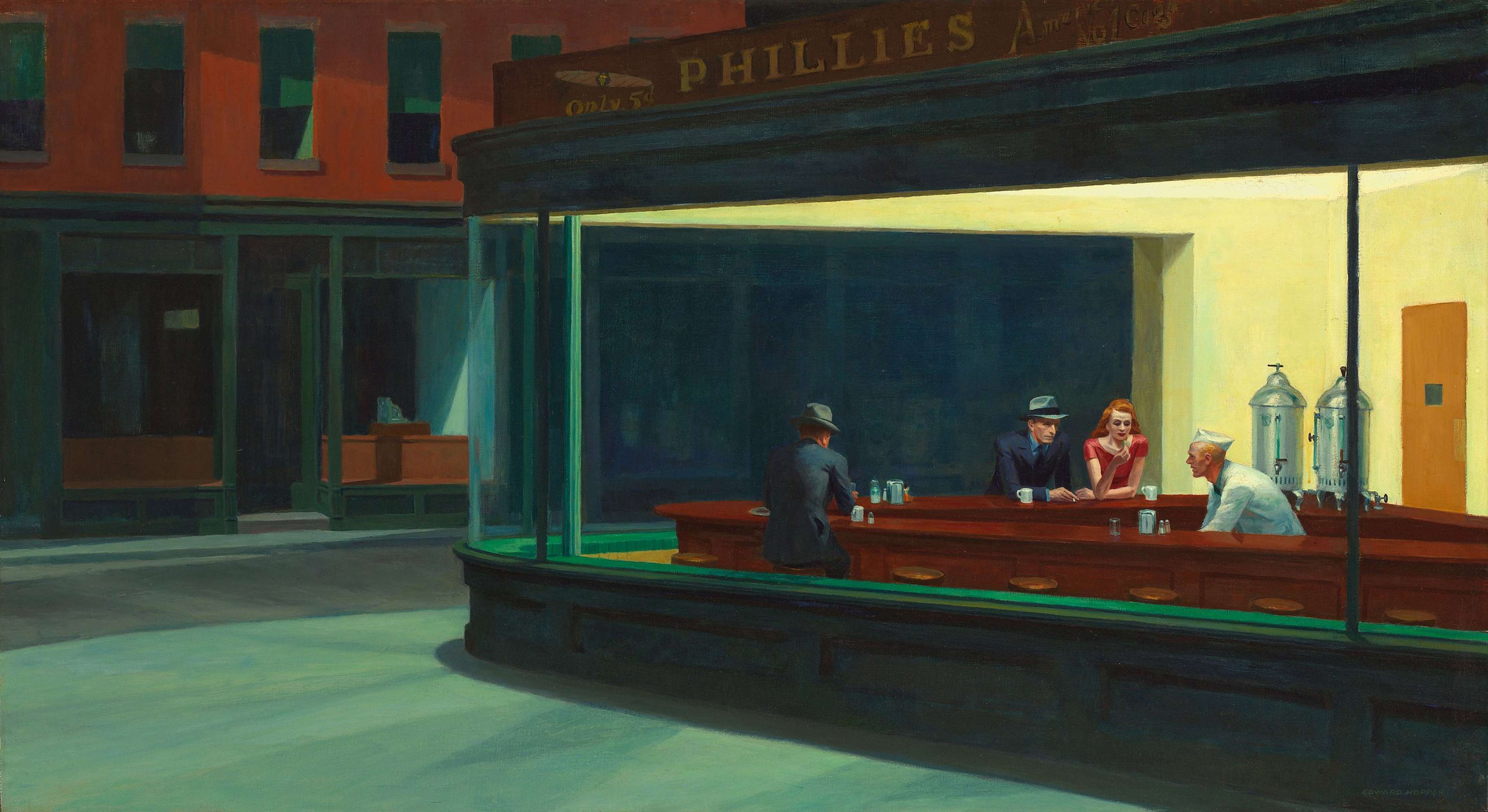
The UK’s top pick is Edward Hopper’s Nighthawks (1942), which also placed second worldwide. Inside the late‑night diner, three patrons sit apart at the counter while a lone attendant stands behind it - each sharing the space while being completely detached from one another. The dominating green colours and the street’s clinical cleanliness juxtaposes with the diner’s enticing glow, beckoning viewers to reflect on themes of loneliness, existentialism, and alienation in the modern world. Its visual resonance is evidenced through its on-screen recreations, most notably in Wim Wenders’ 1997 film The End of Violence, which recreates the painting in precise detail.
Painted weeks after Pearl Harbour, the work resonates as a portrait of wartime isolation, its lack of a visible doorway suggesting not only a city sealed off from outsiders, but an American public closing in on itself. Hopper even confessed that “unconsciously, probably, I was painting the loneliness of a large city.” Hopper drew inspiration from Vincent van Gogh’s Café Terrace at Night, combining that sense of nocturnal stillness into an ambiguous urban scene that could be anywhere, any time.
Of those in the UK who chose Nighthawks as the artwork they’d most like to own, 63.2 % identified as male and 26.3 % as female. By generation, Gen Z accounted for the largest group at 42.1 %, followed by Millennials (31.6 %) and Baby Boomers (26.3 %). It’s perhaps unsurprising, if a little poignant, that the youngest voters in the survey gravitated toward a painting so steeped in urban loneliness, having grown up amid the new and unfettered presence of social media, the isolation brought by the COVID‑19 pandemic, and an ever‑deepening digital landscape that increasingly fosters alienation.
It is also notable that over twice as many men than women chose Nighthawks as the artwork they would most like to own. This majority may reflect a deeper affinity between Hopper’s restrained visual language and the stoicism that traditional masculinity promotes. The painting never declares its characters to be lonely, rather this is suggested through quiet detachment and an absence of overt emotion. Perhaps it is the traditional cultural norms that discourage men from expressing vulnerability that make this artwork resonate more deeply with male viewers. In this way, the painting becomes not just a study of modern isolation, but also a mirror to the particular kind of silence that Western masculinity can impose.
When asked why they chose Nighthawks, respondents repeatedly praised Nighthawks for its realism and evocative mood, one participant saying; “It’s like a photograph and the lighting is beautiful”. Many also pointed to its exploration of solitude: “It portrays people’s individualism, everyone has their own struggles, in this particular piece it could be loneliness and being disconnected”. Yet Nighthawks’ greatest strength was its narrative depth: “I could put myself in any of Hopper’s paintings…there are multiple stories contained in just one piece of art.” These responses reveal that it is the artwork’s open-ended storytelling that invites personal connection and makes it the UK’s most highly desired artwork.
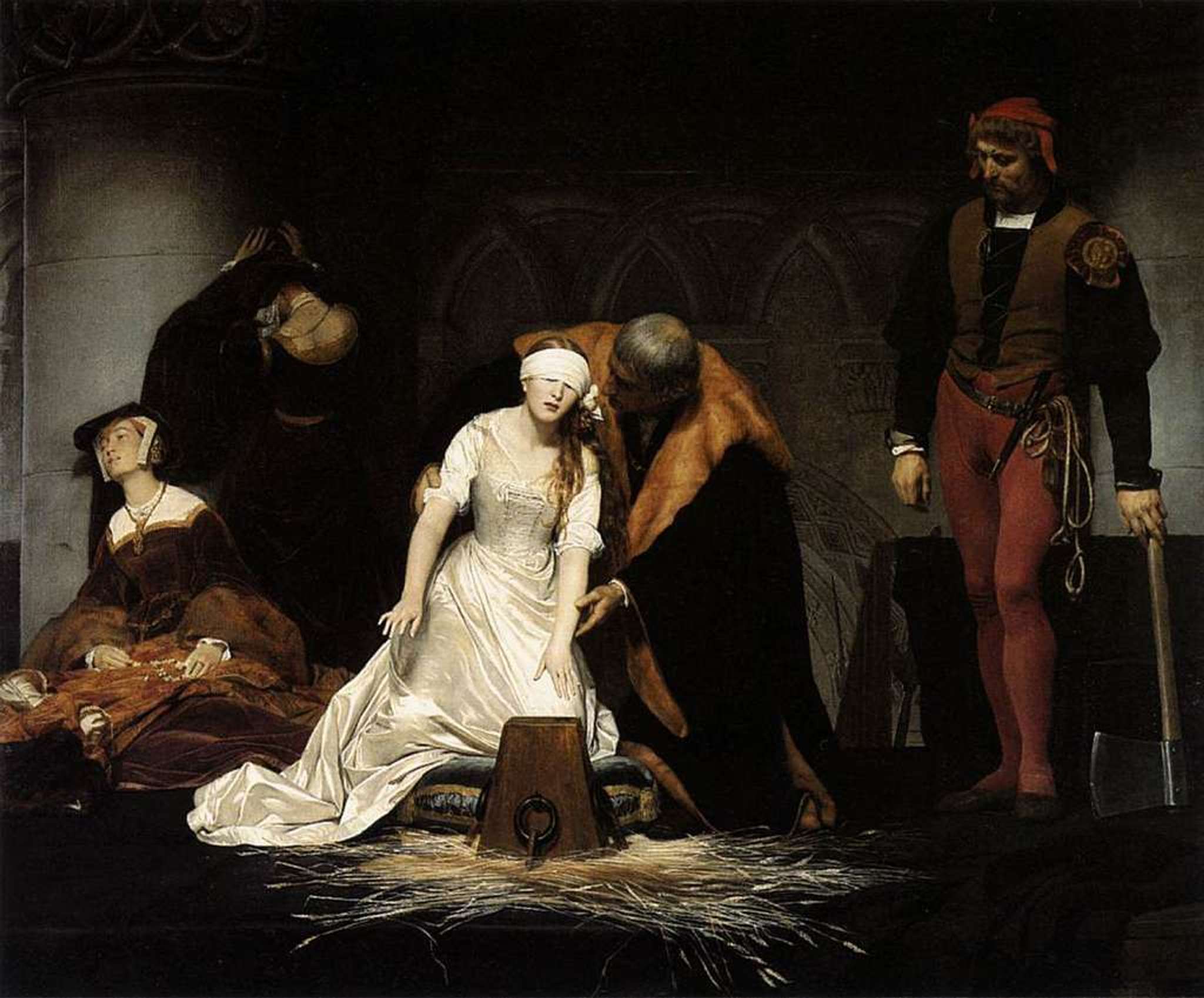
2. The Execution of Lady Jane Grey by Paul Delaroche
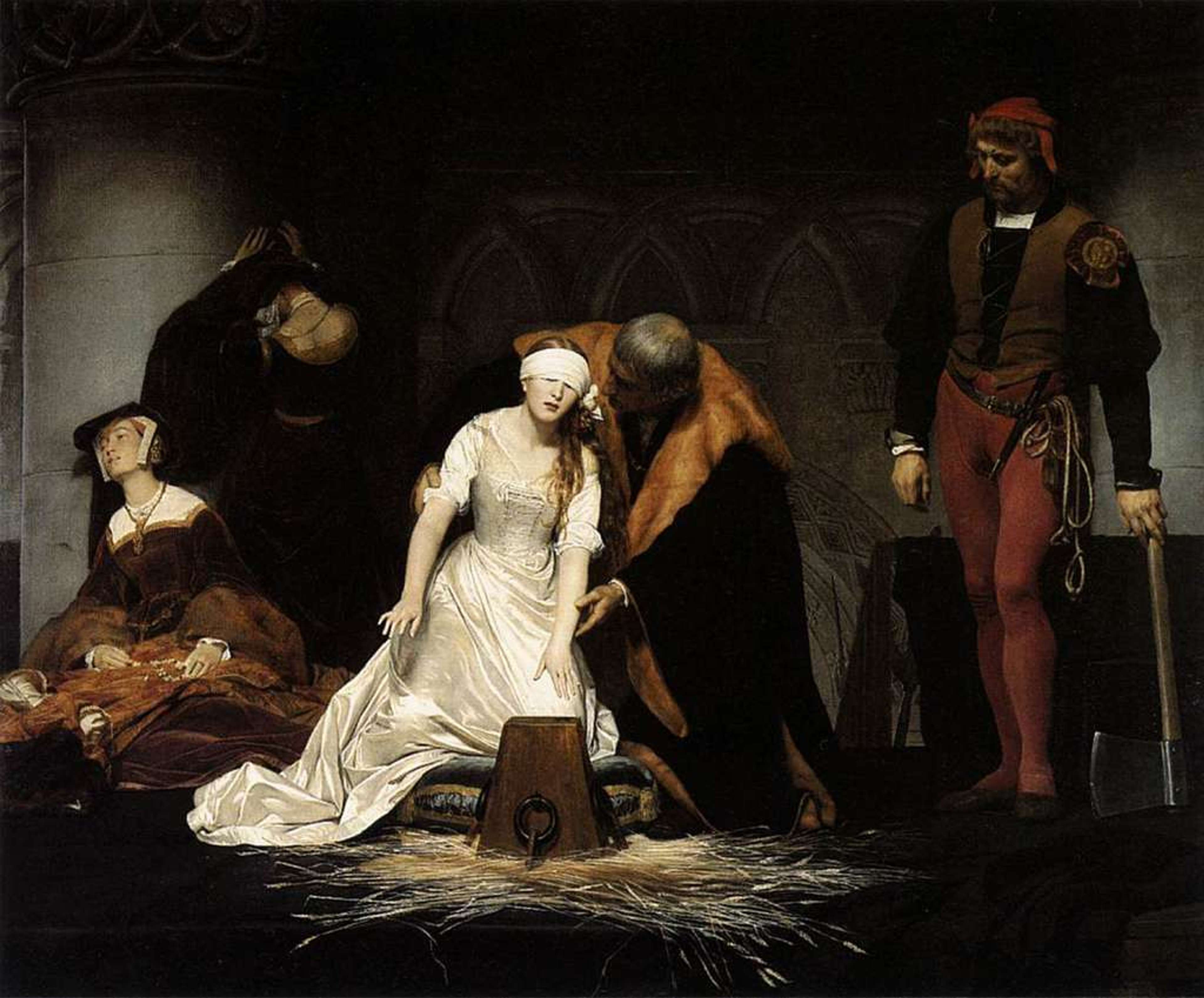
Coming in second is Paul Delaroche’s The Execution of Lady Jane Grey (1833). A tragedy staged in oils, the artwork depicts the seventeen-year-old queen moments before her beheading, illustrating the cruelty of power through the image of Jane, blindfolded and disoriented, reaching forward in terror. She is guided by Sir John Brydges, Lieutenant of the Tower, while the executioner waits silently to the side. Around her, the emotional distress is palpable: one lady-in-waiting has collapsed in grief - Jane’s discarded robes gathered in her lap - another turns away to face the wall, unable to bear witness.
With its compressed, shadowed space, theatrical lighting, and eight-foot height, the painting deliberately heightens the sense of drama. The emotion of this artwork is achieved not only by Jane’s blindfolded vulnerability, but also by the luminous contrast between her white satin gown and the sombre darkness surrounding her. Delaroche transforms historical documentation into high spectacle, compelling the viewer to confront the pathos of an innocent young woman caught in the machinery of state violence. The result is a visual confrontation with martyrdom, sacrifice and the gendered performance of power.
British art lovers were particularly moved by this image of innocence undone. Among those who chose the painting, 91.7 % identified as women and 8.33% were male. Furthermore, 66.67% of respondents were Millennials, whilst Gen Z accounted for 25 % and Baby Boomers 8.33%. The predominance of women in these statistics suggests perhaps they see Jane’s fate as reflecting their own historical erasure, with respondents citing the power of art to give voice to silenced female narratives. “It's history, unfair and hauntingly depicted” one respondent noted, whilst another commented; “this piece speaks volumes about how women have been treated throughout time from a patriarchal and misogynistic society”. Several participants described being drawn to the emotional intensity of the piece, noting the work “evokes emotion and drama with a dramatic stage like presentation, heartbreaking story, and skillful work”. Interestingly, in our global analysis Delaroche’s Execution of Lady Jane Grey does not appear in the top ten, suggesting a uniquely British fascination with Victorian martyrdom and British feminist reclamation.
3. The Lady of Shalott by John William Waterhouse
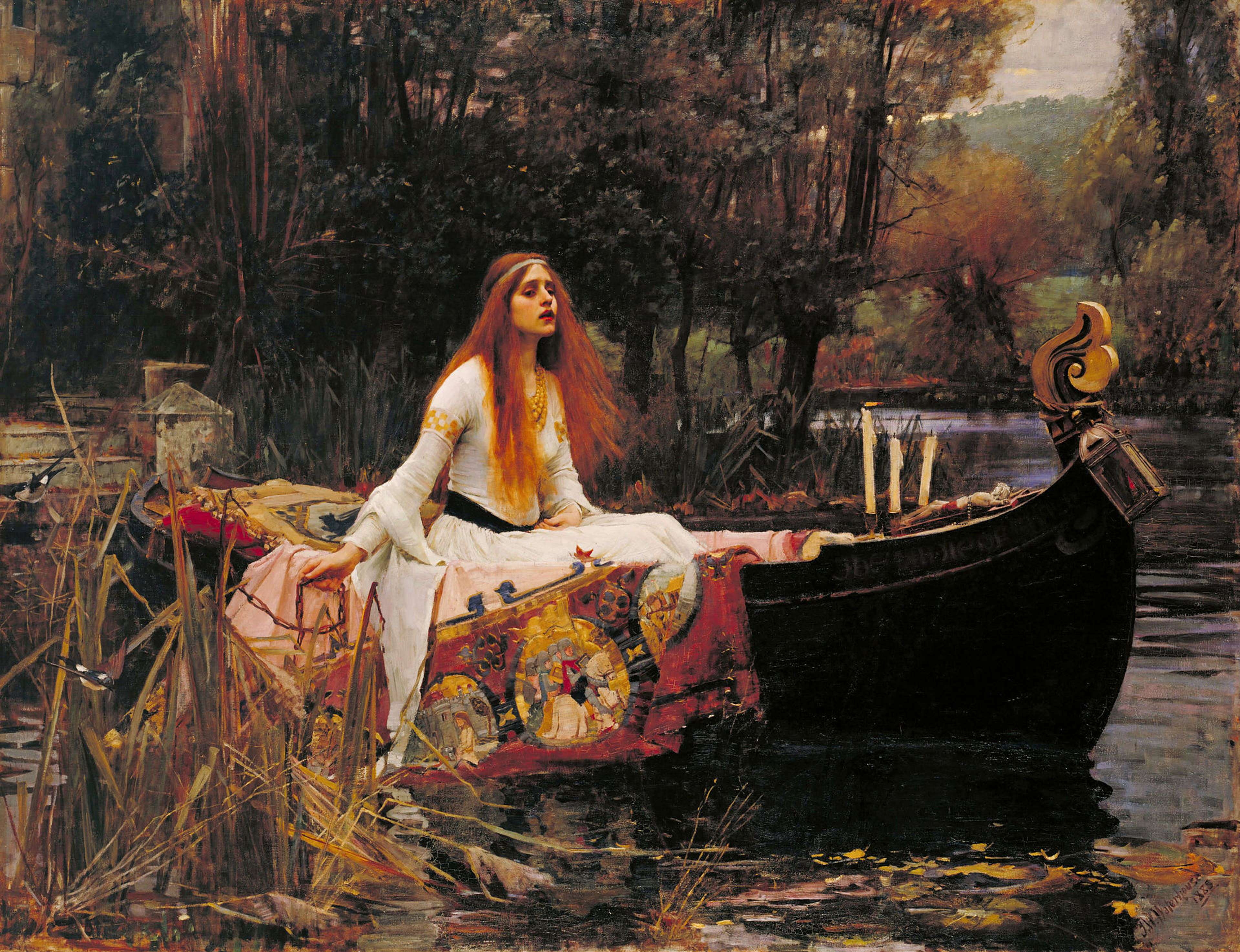
The third most popular artwork in the UK is John William Waterhouse’s The Lady of Shalott (1888), which initiated a late‑Victorian revival of Pre‑Raphaelite ideals. Waterhouse drew upon Sir John Everett Millais’ painting Ophelia (the UK’s eighth favourite artwork), reimagining the vulnerable red‑haired figure wearing a white gown adrift upon water, while paying homage to Alfred Tennyson’s 1832 poem The Lady of Shallot. In Tennyson’s Arthurian poem, a cursed maiden, confined to a tower, may only see the world through the reflections in her mirror and must weave those mirrored images into her tapestry. When she sees Sir Lancelot’s knightly figure, her longing overwhelms her caution and she turns to face him directly, shattering the curse’s terms. Stepping into a boat and drifting towards Camelot, she utters her final song before the curse claims her life on the water. Waterhouse stages her final moments: the Lady releasing the boat’s chain with parted lips, the tapestry she wove cascading around her, and three candles, two extinguished, foretelling her imminent demise.
Out of the British participants who wanted to own this masterpiece, 77.8 % are women - a pattern echoed globally, where The Lady of Shalott also ranked third, with a female majority of 82.8%. UK respondents often cited its evocative stillness and tragic beauty: “It’s just so beautiful. You can feel the silence of that river,” one remarked, while another found in the Lady’s solitude a powerful mirror of personal longing. Waterhouse’s artwork compels us to reflect on the fragile intersection between art, myth and human desire.
4. The Starry Night by Vincent van Gogh
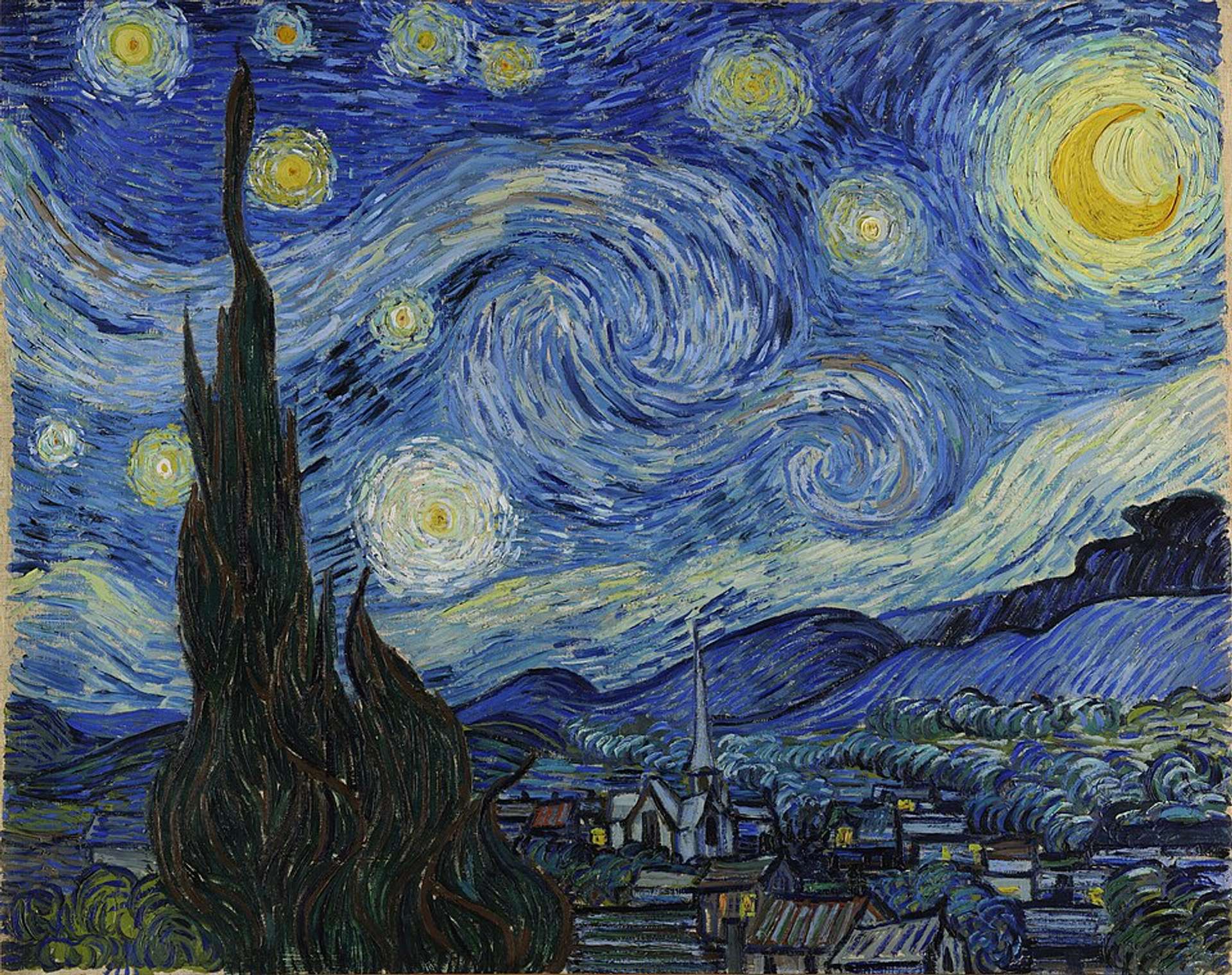
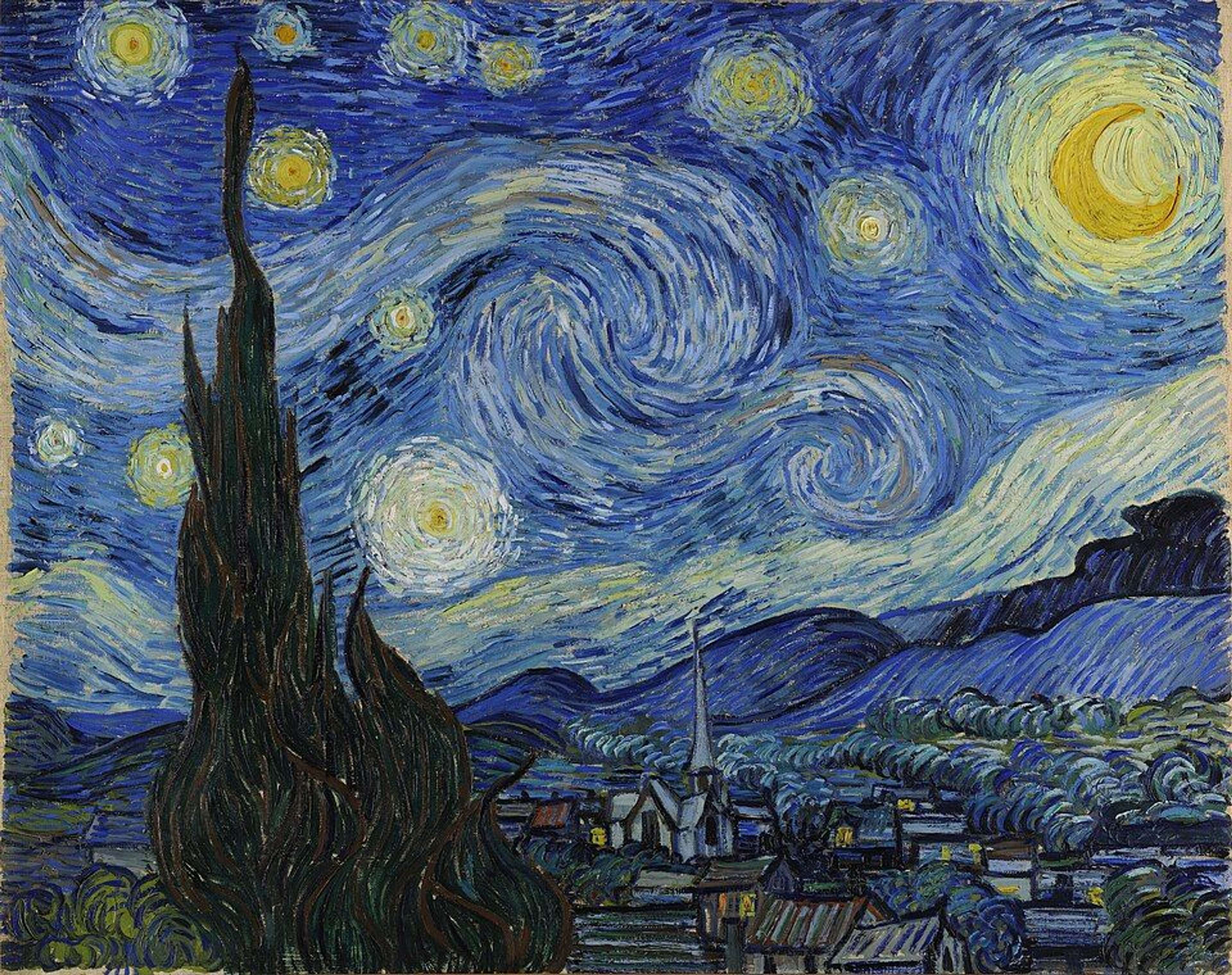
Ranking as the UK’s fourth most popular artwork - and leading the votes globally - Vincent van Gogh’s The Starry Night (1889) captures hearts with his dreamy reimagining of the nocturnal world. Created during his year at the Saint‑Paul‑de‑Mausole asylum in Saint‑Rémy, The Starry Night emerges from a period of both turmoil and creativity. In each swirling line and glowing star, Van Gogh’s emotional intensity resonates. The artist confessed that “the sight of the stars always makes me dream,” and here he pours that dream into thick impasto and sweeping brushstrokes that render the night sky as a living, breathing presence. A flame‑like cypress - a symbol of life’s fragility and a bridge between earth and the heavens - reaches up from the sleeping village, drawing the viewer’s gaze from the hush below into the churning sky above. With its gestural rhythms and a palette of deep cobalt blues and buttery yellows, the painting speaks directly to personal moments of wonder, insignificance and connectedness.
Among the UK collectors who love this work, 66.7 % are women, while 33.3 % are men. Generationally, The Starry Night appeals most to Millennials and Gen X, each constituting 33.3 % of its admirers, with Gen Z at 22.2 % and Baby Boomers at 11.1%. When asked why they would like to own The Starry Night, respondents’ reflections coalesce around its hypnotic rhythm and profound empathy. “I was mesmerised by the flow of the sky,” one admirer recalled, while another described feeling “intimately connected to something greater than myself,” emphasising how van Gogh’s luminous sky transcends individual circumstance to represent universal emotion.
5. The Kiss by Gustav Klimt
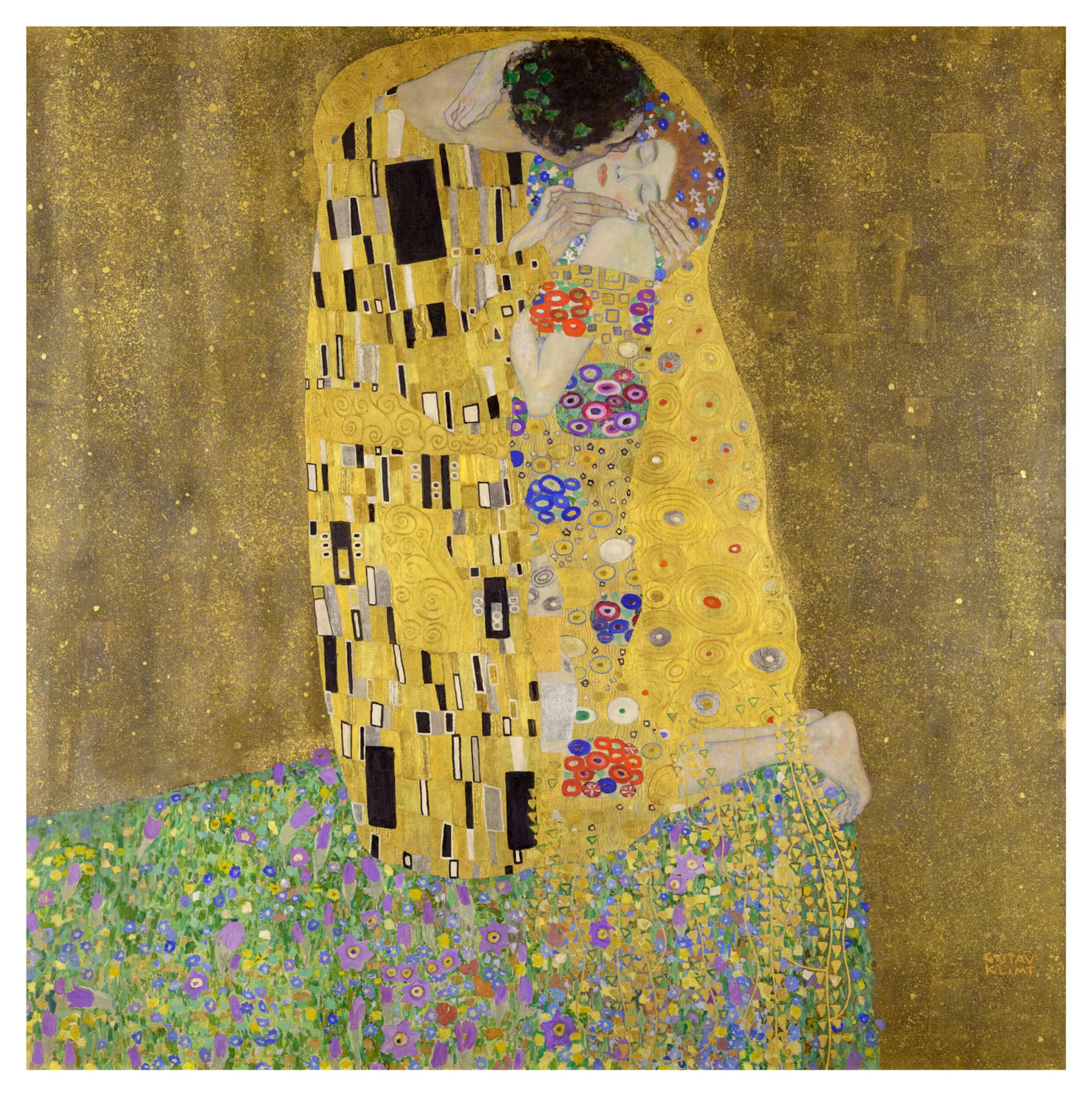
Gustav Klimt’s The Kiss (1907-08) takes the UK’s fifth place, a work which emerged from a crucible of controversy and reinvention. In the wake of vitriolic backlash against his University of Vienna ceiling paintings, which were denounced as pornographic, and his departure from the Vienna Secession, Klimt unveiled this now-iconic work at the 1908 Kunstschau. Concealed beneath a resplendent gold cloak, a couple stands entwined on the brink of an abyss, their embrace both tender and precarious. The man’s garment is etched with geometric black and white forms symbolising virility and strength, while the woman’s robe, adorned with delicate circles and blossoms, suggests femininity and fertility. In this ambivalent flower-bed chasm, Klimt crystallises the ecstasy and vulnerability of love.
Globally, The Kiss ranked third with a female majority of 78 %, whilst among UK respondents, Klimt’s artwork appeals equally to men and women; 44.4 % each. Viewers were particularly drawn to Klimt’s fusion of eroticism and ornament. For many of our respondents, the painting’s gilded surface and symbolic language offer both opulence and depth: one admirer observed that the lovers’ “awkward yet passionate embrace” reflects “the tension between desire and restraint,” while another confessed that Klimt’s work reveals art’s capacity to “render intimacy visible”. A third respondent described how the composition “felt like a secret revealed”; the man’s hidden face accentuating the woman’s serene abandon, her closed eyes evoking both submission and sublime release.
6. Carnation, Lily, Lily, Rose by John Singer Sargent
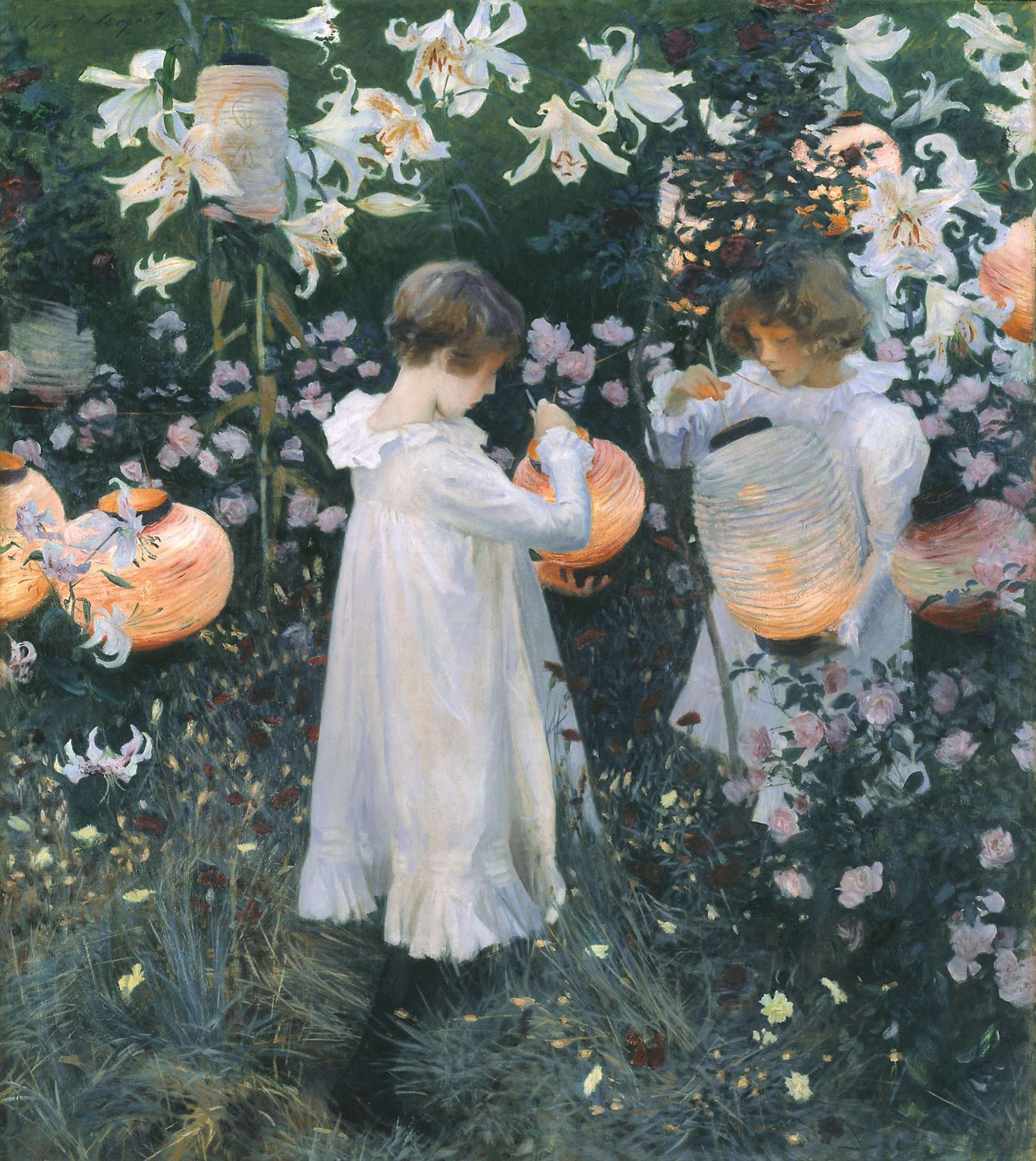
Ranking as the UK’s sixth most popular artwork, John Singer Sargent’s Carnation, Lily, Lily, Rose (1885-6) glows with the ephemeral splendour of a late‑Victorian dusk, its canvas an invented Eden where childhood innocence operates undisturbed. Essentially exiled from Paris for his Portrait of Madame X, Sargent retreated to the Worcestershire village of Broadway, painting Carnation, Lily, Lily, Rose en plein air to capture the mercurial beauty of fading twilight. The two little girls, Dolly and Polly Barnard, stand in white smocks amid a riot of pink roses, yellow carnations and towering lilies, their paper lanterns mirroring Sargent’s own captivation with Japonisme and Pre‑Raphaelite attention to detail.
In Britain’s booming 1880s, as wealth from empire and industry fostered a mass appetite for art, Sargent’s twilight reverie captivated audiences at the Royal Academy’s 1887 Summer Exhibition. The painting polarised critics, yet it triumphed when the Royal Academy acquired it for the public through the Chantrey Bequest. Today, UK art enthusiasts remain entranced, our survey revealing that 74% of those who would most like to own this piece are women, its admirers spanning Millennials (44.4 %), Gen Z (33.3 %) and Gen X (22.2 %), reflecting its cross‑generational appeal. Globally, it didn’t appear in the Top 10, underscoring a particular British nostalgia for this ephemeral twilight atmosphere.
Admirers of Carnation, Lily, Lily, Rose highlight its enthralling beauty, one respondent writing of its “ethereal, otherworldly” atmosphere, calling it “perfect, heaven.” Another describes the “summer’s evening at twilight, when all the flowers are almost glowing,” and confesses that “every time I turn the corner in Tate Britain, I gasp.” The painting’s suspension of innocence resonates deeply with Britons who appear to resonate with art that honours childhood curiosity. In its delicate balance of naturalism and fantasy, Sargent’s masterpiece remains a testament to the power of nostalgia and a desire for simpler times.
7. Water Lilies by Claude Monet
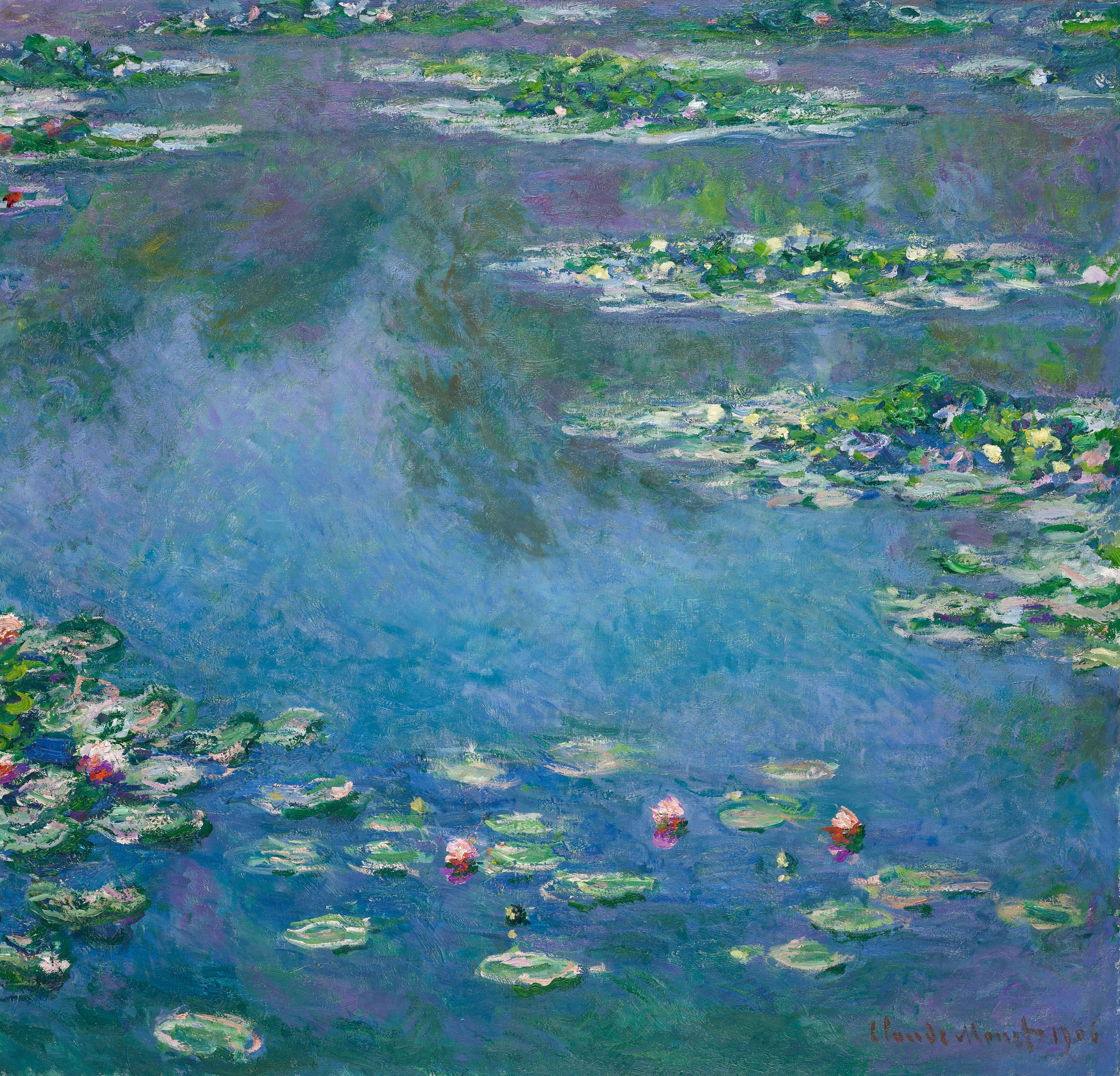
Claude Monet’s Water Lilies places seventh in UK popularity, Monet devoting the final quarter-century of his life to painting the water garden at Giverny. “One aspect of nature contains it all”, he declared. By the time he began his celebrated Water Lilies series in 1897, he had remade his estate into a living studio: diverting a river, planting willows, and installing a Japanese footbridge so he could step straight outdoors into his painted world. In these late works, he abandoned the conventional horizon entirely, tilting his canvas to capture only the mirror‑like surface of water, sky, trees and floating blossoms. The result is a vision of nature’s flux, where paint becomes the element it portrays, and the boundary between appearance and material dissolves.
In the UK, 67.86 % of those who chose Water Lilies were women. Globally, Monet’s masterpiece ranked fourth, with a nearly identical female majority of 67.9 %. Generationally, British enthusiasm is evenly split between Millennials and Gen Z (37.5 % each), with Gen X accounting for the remainder (25%). When asked why they would like to own Water Lilies, UK respondents cite both personal memory and profound calm. One confessed that the painting’s “joy, comfort and peace” mirror the solace of childhood memories, while another spoke of a grandmother’s print that “will always signify love, serenity and home to me.” Several noted the thrill of seeing the originals in person: “It’s a painting you can take a moment to stop and lose yourself in”. In every response, Monet’s masterpiece emerges as a sanctuary that continues to nourish viewers with its blend of observation and transcendence.
8. Ophelia by Sir John Everett Millais
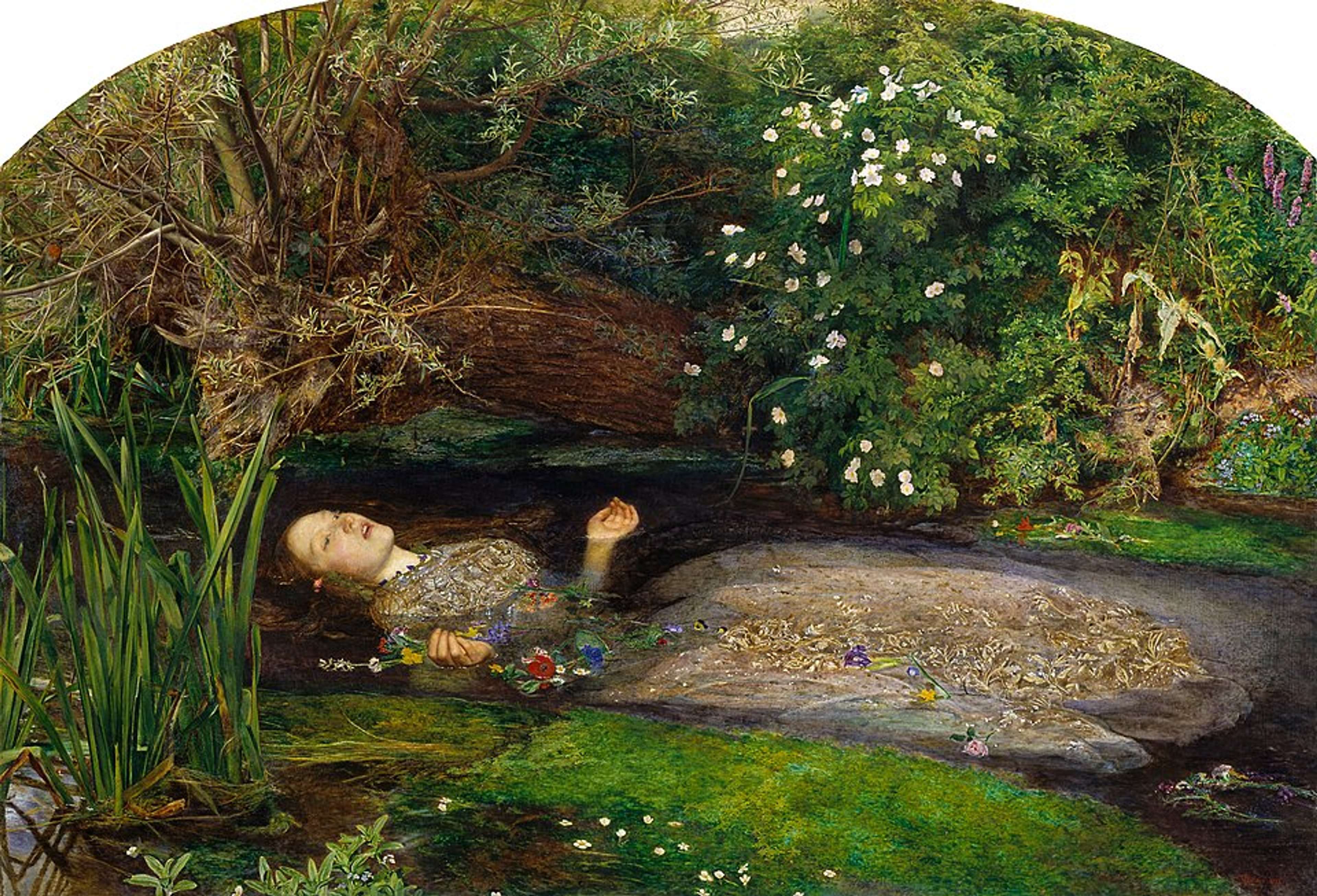
Ranking eighth in the UK, Sir John Everett Millais’s Ophelia (1851-2) remains the Pre‑Raphaelite touchstone for tragic beauty, its serene surface belying the turbulent story it portrays. Millais bought an antique, silver‑embroidered gown for Ophelia’s attire; its delicate floral motif enhancing her ethereal presence as well as keeping her afloat in her final moments, all the more poignant given that model Elizabeth Siddal nearly succumbed to pneumonia while posing for the painting. Around her neck and strewn at her feet, Millais adopted the Victorian “language of flowers”, painting violets for faithfulness, pansies for lost love, daisies for innocence and forget‑me‑nots for remembrance. Nettles and willows - symbols of forsaken affection and sorrow - crowd the bank, while a bold red poppy heralds the sleep of death. In Pre‑Raphaelite fashion, each bloom is rendered with botanical precision whilst also suffusing the scene with Romantic pathos, narrating the moment of Ophelia’s mythic demise. Ophelia’s open arms and upturned gaze evoke both martyrdom and erotic surrender, recalling saintly iconography even as they embody the Romantic fascination with feminine fragility.
This vision of beauty and loss resonated with British audiences, and among those, Ophelia speaks most powerfully to women, with 82.8% of admirers identifying as female and 10.3% as male. Generationally, the painting captivates a broad spectrum: 37.5 % Gen Z, 37.5% Millennials and 25% Gen X, underscoring its cross‑age appeal. British respondents quoted its emotional intensity: “It’s perfectly devastating, a hymn to innocence lost” one admirer wrote, while another described how the painting’s “luminous colours” and “painstaking detail” make them feel both enchanted and unsettled.
Ophelia’s popularity extends beyond the British psyche, and she has left her mark across film, music, and wider popular culture. Laurence Olivier’s 1948 Hamlet famously recreated the painting’s composition; Pearls Before Swine’s 1971 album Beautiful Lies You Could Live In uses Ophelia for its album cover; and Nick Cave & The Bad Seeds’ music video for “Where the Wild Roses Grow” sees Kylie Minogue echoing Ophelia’s submerged pose. Each homage demonstrates the impact of the painting’s balance of delicate beauty and tragic inevitability. In Britain’s enduring love affair with Romanticism and the Pre‑Raphaelite revival, Millais’s Ophelia represents how art can transmute grief into graceful tragedy.
9. Sunflowers by Vincent van Gogh
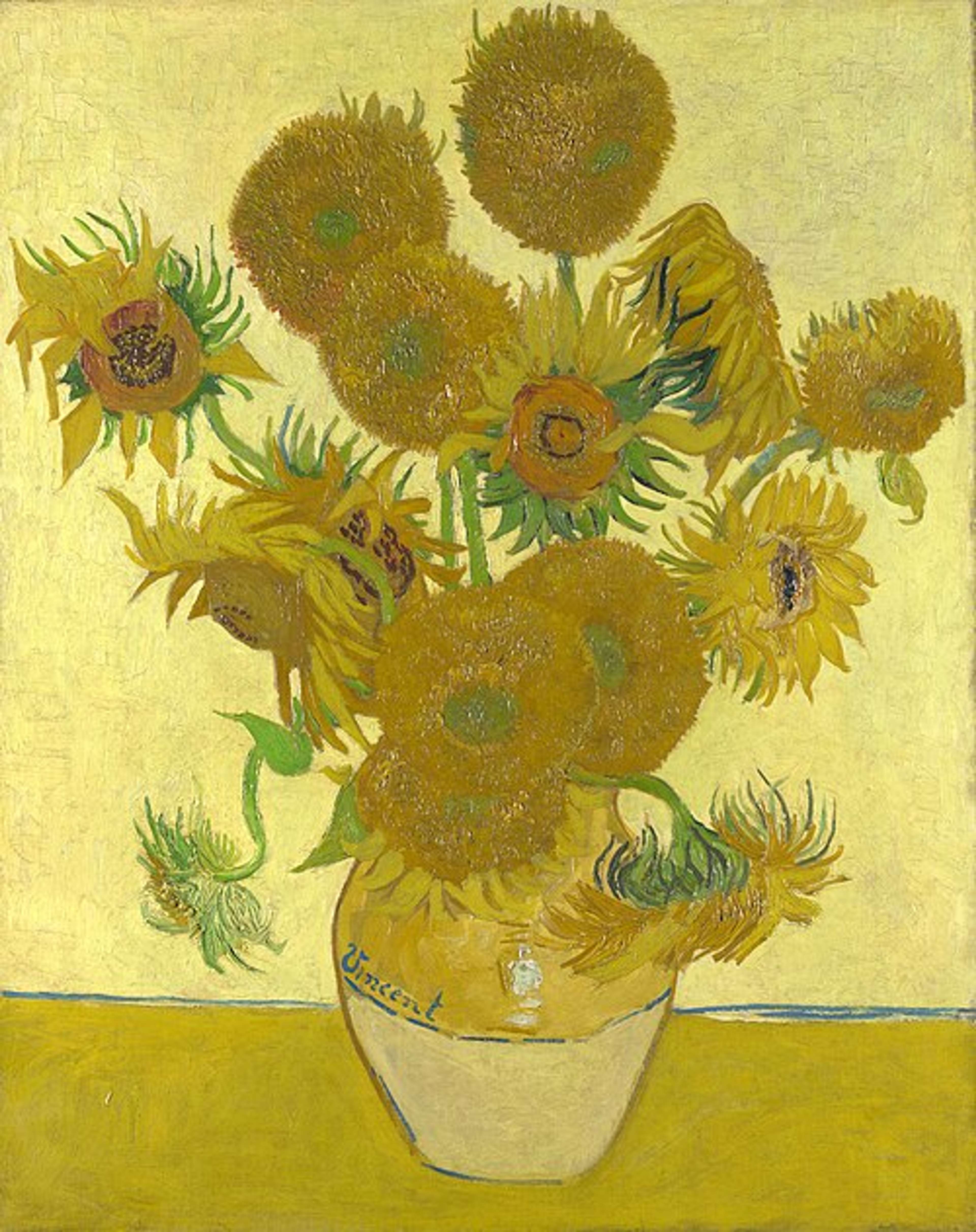
Vincent van Gogh’s Sunflowers (1888-89) holds the ninth position in the UK rankings. Born in the warm air of Arles where the artist prepared his home for Paul Gauguin’s arrival, over two summers, van Gogh painted five canvases of sunflowers in a vase to celebrate friendship and convey gratitude. He arranged buds, fully opened blooms and wilting heads, echoing the vanitas tradition that reflects life’s transient beauty. “The sunflower is mine,” van Gogh wrote, and in these works he has certainly claimed the flower as his own, transforming it into an emblem of vitality and impermanence.
In the UK, 83.3 % of voters for Sunflowers were female, whilst 16.7 % were male. When asked why they chose this iconic still life, respondents discussed emotional catharsis and philosophical reflection. One admirer confided, “It was the first piece of art that made me cry, it convinced me that art must be experienced in its original form in person.” Another praised van Gogh’s “technique and soft colours,” while a third found solace in its honest portrayal of imperfection: “It reflects reality, to be real is to be imperfect.”
10. Flaming June by Frederic Leighton
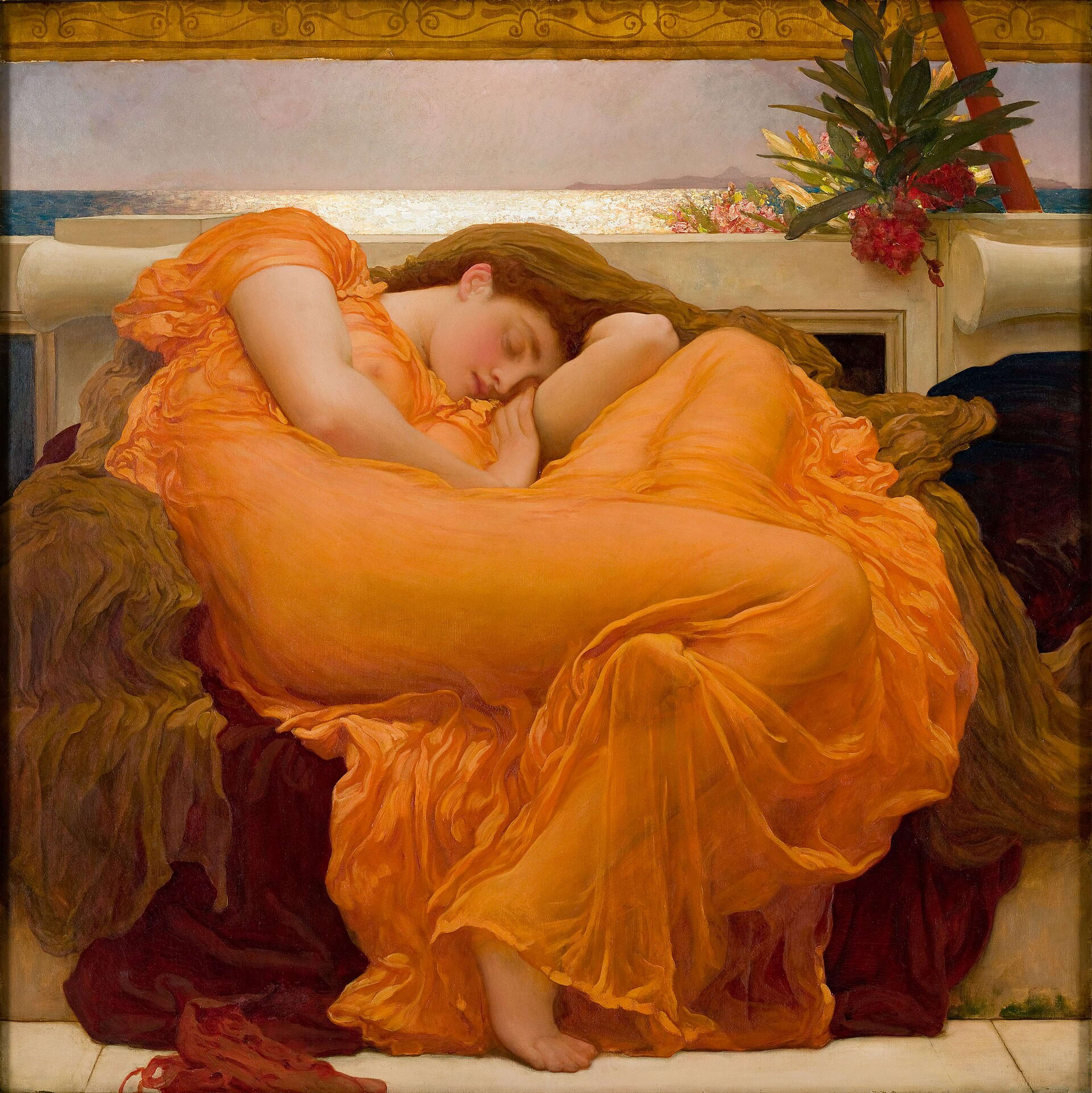
Rounding out the UK top ten is Sir Frederic Leighton’s Flaming June (1895), an artwork that crystallises the zenith of Victorian classicism. Commissioned initially as a decorative motif for his marble relief Summer Slumber, Leighton became mesmerised by the figure’s sensuous repose and expanded it into a standalone oil painting. Drawing upon Michelangelo’s sculptural personification of Night in Florence’s Medici tombs, Leighton spent months refining the model’s pose to achieve a perfect harmony of form and geometry. The result is a monumental study in intensity: the figure’s flaming garments, rippling in an implied breeze, envelop her like a glowing halo. A single oleander sprig arches overhead, its toxicity a silent reminder of the ominous ambiguity between sleep and death. In staging this classical reverie, Leighton delivered an image that invites each viewer into a suspended tableau of warmth, beauty and impending stillness.
Flaming June claimed the UK’s tenth spot; women comprising 100 % of respondents. This unanimous female devotion underscores the painting’s potent blend of sensuality, serenity and the feminine gaze, echoing Britain’s enduring affinity for Romantic and Aesthetic ideals. For many, Leighton’s sleeper embodies a glimpse of implicit vulnerability: the subtle symbolism of the toxic oleander arching above her lending the work a quiet tension, an acknowledgment of the fragility that can underlie outward composure. UK admirers describe Flaming June as “truly magical”. One admirer praised “the atmosphere, the colours, the romanticism, I could live with it and look at it forever”. Our final artwork, Flaming June conjures an endless summer daydream, balanced between wakefulness and rest.
As these ten masterpieces make clear, our collective desires are as much about the stories behind the artworks as they are about the picture itself. When set against global and US tastes, the UK’s leanings toward Victorian spectacle and Pre‑Raphaelite lyricism stand out, underscoring a distinctive national connection to narratives of sacrifice, transformation, and feminine intensity. At the same time, the cross‑generational and cross‑gender appeal of many of these works points to art’s unique capacity to reflect universal hopes, anxieties, and dreams.