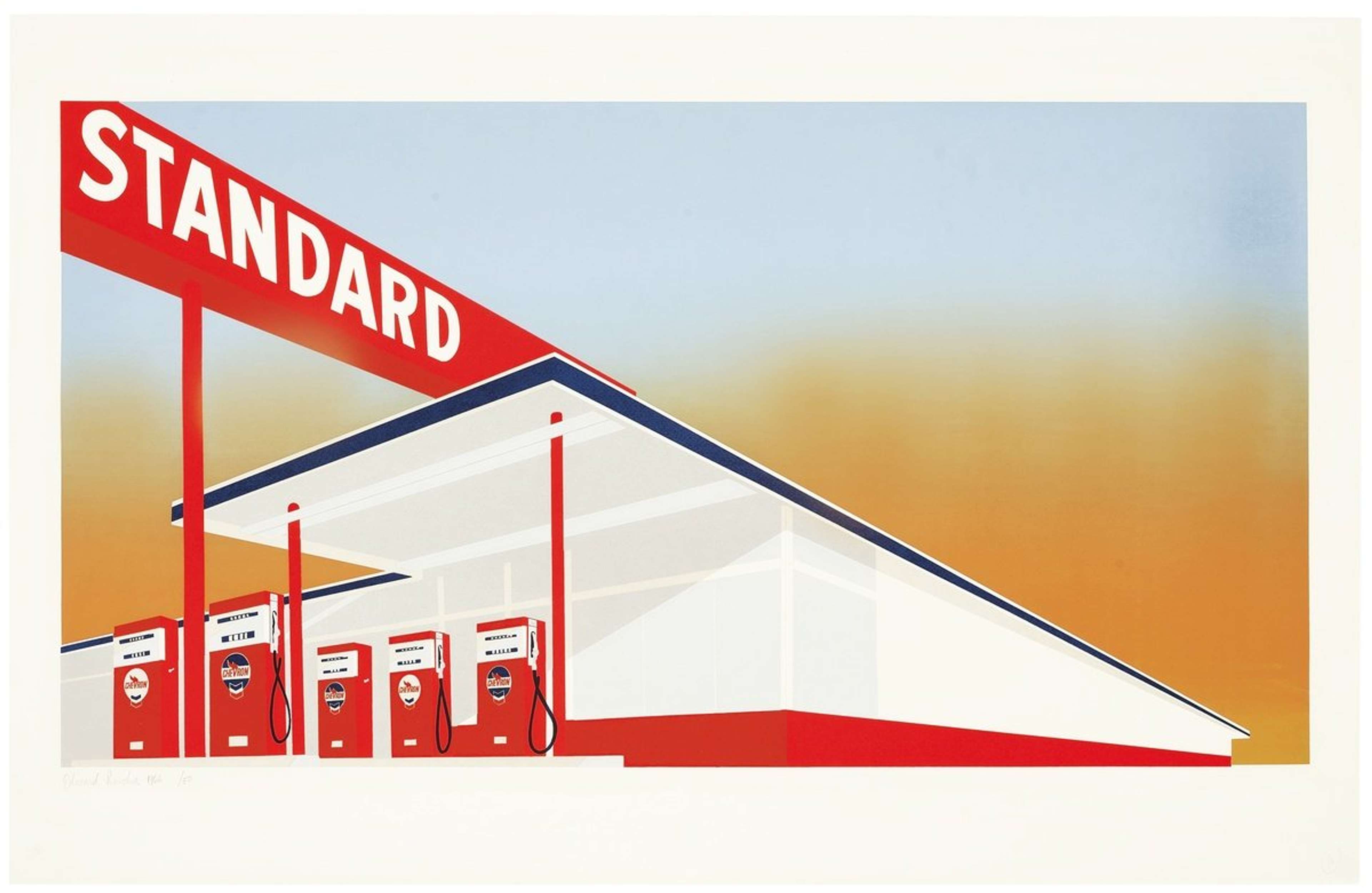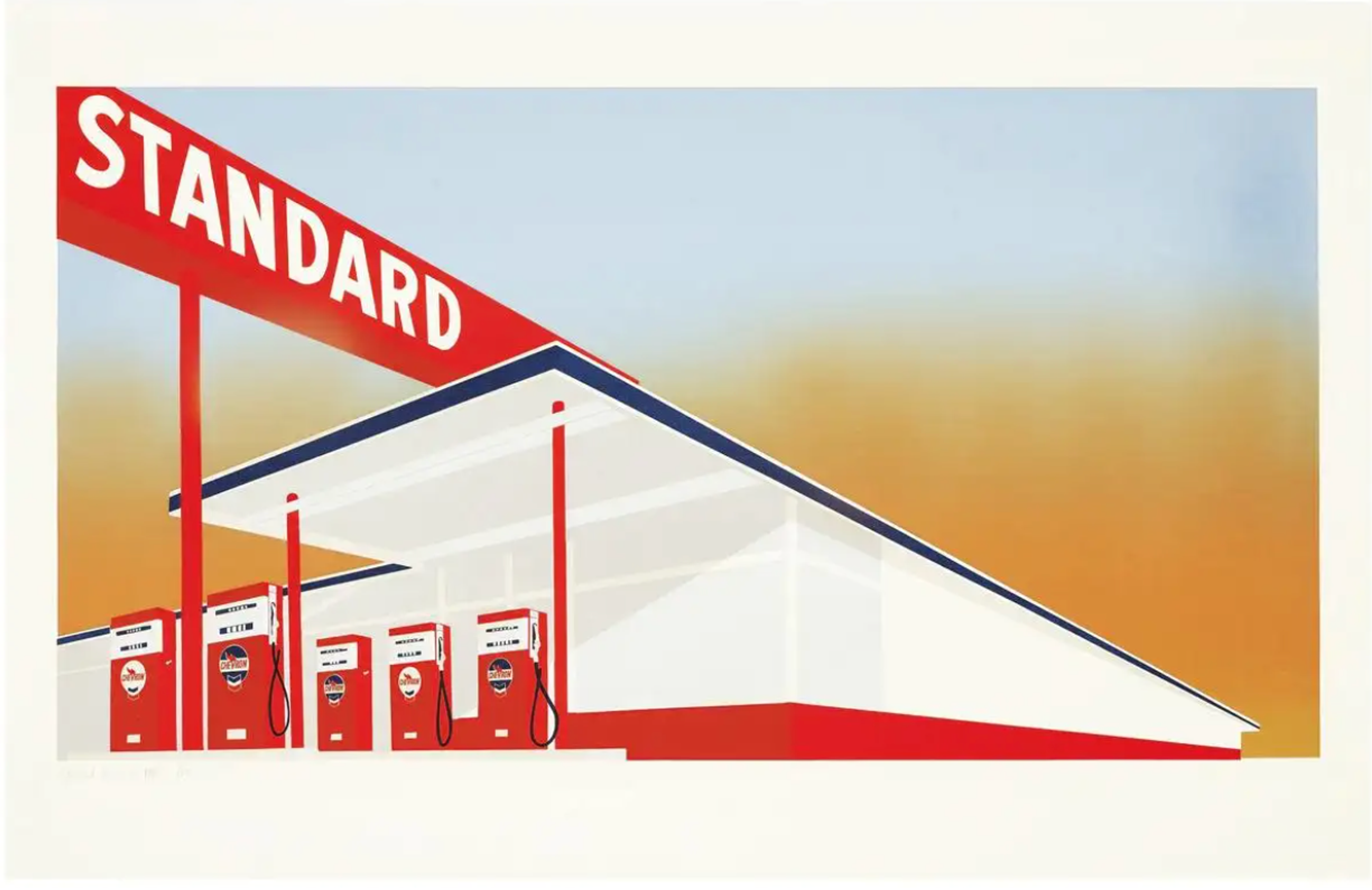


Value is not evenly distributed in the Ruscha market. A Standard Station print will sit in a very different part of the market from a more accessible text work. A lithograph from the 1960s or 1970s may be valued differently from a later etching, a Mixografia embossment, a screenprint, a photographic edition or a colour trial proof. Condition is also crucial, especially where paper has aged or colours have attenuated over time.
At MyArtBroker, a Ruscha valuation begins with identification. A specialist will review the work’s images, dimensions, paper type, signature, edition number, blind stamps, publisher records, provenance and condition. From there, the work is compared with recent auction results, private sales, publisher pricing where relevant, and live collector demand.
As Kylee Aragon, Print Specialist at MyArtBroker, explains:
That availability of information is useful, but it also means that a valuation has to be precise. With Ruscha, the details are often there to be checked.
What Information Do You Need For An Ed Ruscha Valuation?
A strong Ruscha valuation begins with clear images and accurate documentation. The ideal submission includes:
- A full image of the front of the work
- A full image of the reverse
- Close-ups of the signature
- Close-ups of the edition number
- Close-ups of any blind stamps or publisher marks
- Sheet measurements
- Image measurements
- Images of all edges and corners
- Any visible watermark in the paper
- Details of whether the work is framed or unframed
- Any invoice, gallery paperwork, publisher documentation or print shop records
- Any known condition report
- Details of storage, framing or conservation history
For Kylee, an ideal Ruscha valuation is very straightforward:
Where possible, the reverse is particularly useful. Some prints include stamps, publisher information or other details that may not be visible once framed. If a work has been bought unframed, photographing the front, back, corners, signature and stamps before framing can make future valuation significantly easier.
Paper Is One Of The First Things To Check
Paper is central to valuing Ruscha. His prints are highly material objects, and the paper often helps confirm whether a work is what it claims to be.
A specialist will look at whether the paper type matches the work’s catalogue information or known examples. That might mean checking whether the sheet is wove, whether it has a watermark, whether the edges are deckled, and whether the thickness and surface correspond with the expected support.
Ruscha often used substantial paper, and deckled edges can be important. The paper should feel consistent with the process and period. A thin Japanese kozo paper, for example, would raise questions if the work is expected to be on a heavy wove sheet.
Signature, Blind Stamps And Publisher Marks
Ruscha’s signature is relatively consistent compared with artists whose signatures changed dramatically over time. A specialist will still compare it against examples from the same period, because an artist’s hand can alter over a long career.
The best comparison is always another example from the same edition or period. A signature from 1970 should not be judged solely against one from decades later.
Blind stamps are also important. Ruscha worked with major print workshops including Tamarind, Gemini G.E.L., Crown Point Press, Mixografia and others. These publishers and printers often used blind stamps, chops, embossed marks, or verso stamps that can help support identification. Kylee explains how she reads these details:
Blind stamps should also correspond to the period. Print shop logos and chops can change over time, so the mark needs to be appropriate for the date and publisher.
If a full-bleed work does not have a blind stamp on the front, it may have a stamp on the reverse. This is one reason why images of the back of a print are so useful.
Provenance: Why Print Shop Documentation Matters
Ruscha does not operate around a standard Certificate of Authenticity system. Instead, value and confidence are built through provenance, publisher history, catalogue information and specialist review.
The strongest provenance is usually direct from the print shop, publisher, artist, reputable gallery or auction house. Ruscha’s printmaking history is closely tied to the print workshops he worked with, so documentation from those sources can be especially meaningful.
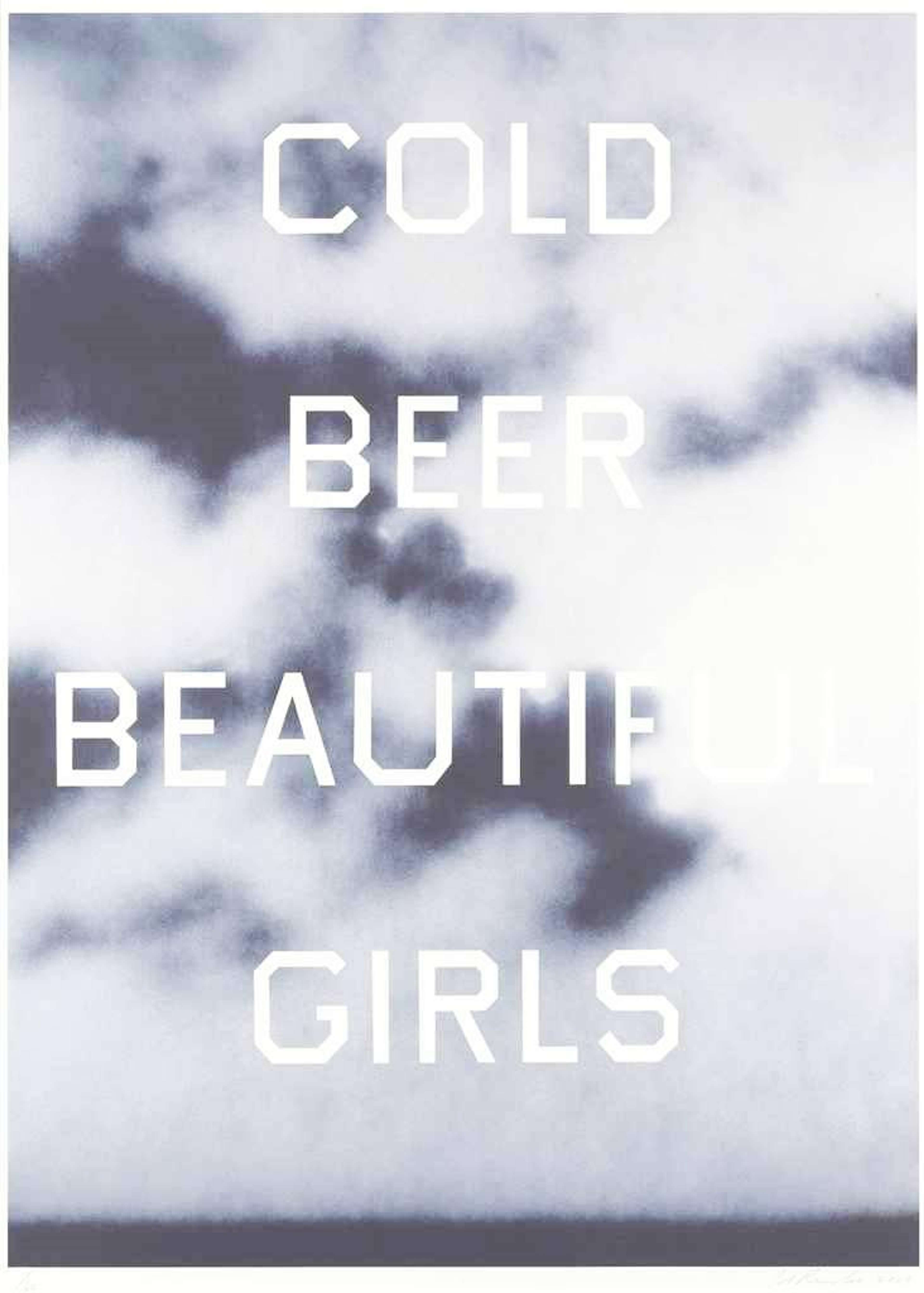
Kylee also points to a print-specific type of documentation that collectors often overlook: print shop documentation sheets. These are not COAs in the conventional sense, but they can record the paper, inks, colours, process, printer and production details.
For Ruscha, these sheets can be particularly valuable because his practice is so connected to print process. They can help conservators, support provenance, and add depth to the work’s history.
Medium: Lithograph, Screenprint, Etching, Mixografia And Beyond
Ruscha has explored a wide range of print techniques, but lithography occupies a particularly important place in his practice. His use of text, gradients, paper, colour and surface makes his lithographs especially desirable to print collectors.
Ruscha has also made screenprints, etchings, photographic editions and Mixografia works. Each medium affects valuation differently. Lithographs and etchings are usually produced in smaller editions because of the physical and chemical limits of the process. Screenprints can support larger editions, which may influence scarcity and price. As Kylee explains, “because lithographs or etchings are so chemical-based in the processes, it’s hard to have those massive edition numbers because eventually the image will break down.”
This matters for valuation because medium and edition size are linked. A lithograph in an edition of 50 or 75 sits differently from a screenprint in a much larger edition. But value is not only about scarcity. It is also about process, image and how closely the work connects to Ruscha’s most recognisable concerns.
Edition Sizes And Scarcity
Ruscha’s prints are not typically produced in very large edition sizes. Many lithographs and etchings sit under 100, with editions of 50, 75 or similar numbers being common.
That scarcity helps support value, particularly where the image is desirable. However, a smaller edition of a less sought-after work will not necessarily outperform a more recognisable image from a larger edition.
Collectors should still check edition size carefully. It tells you how many impressions exist, but it does not tell you how many are in good condition, how many remain with long-term collectors, or how often the work appears on the market.
Why Subject Matter Matters So Much in Ruscha’s Market
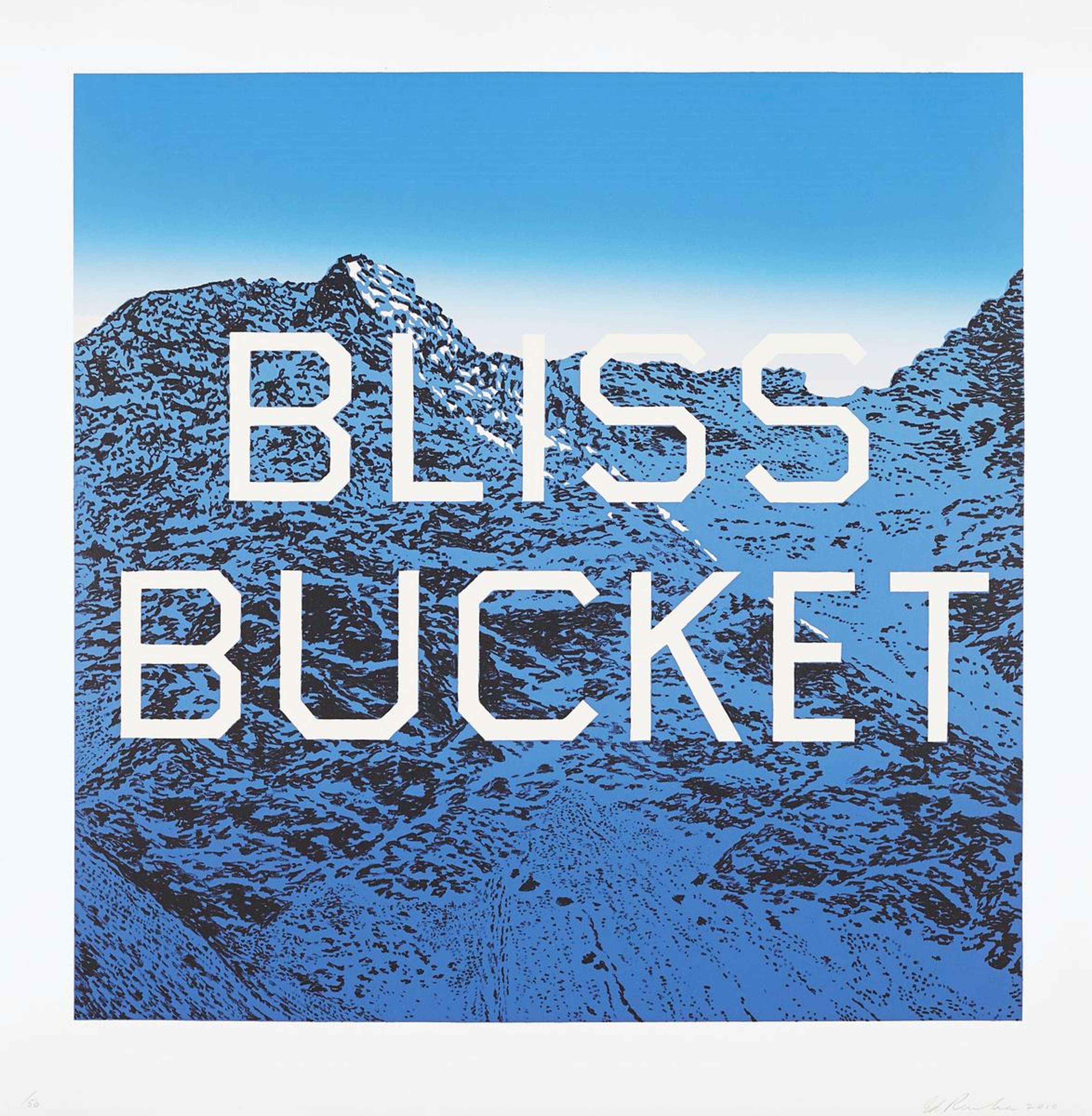
Ruscha’s strongest print values are usually tied to his most recognisable language: Los Angeles, Hollywood, petrol stations, road culture, text, typography, visual wit and California atmosphere.
Works connected to Standard Station sit at the top of the market because they combine several value drivers at once: iconic imagery, Ruscha’s West Coast identity, bold architecture, cinematic perspective and a central place in his career.
The market also responds strongly to text works, especially where the phrase, colour, composition and print process feel unmistakably Ruscha.
Standard Station, Hollywood And The LA Haze
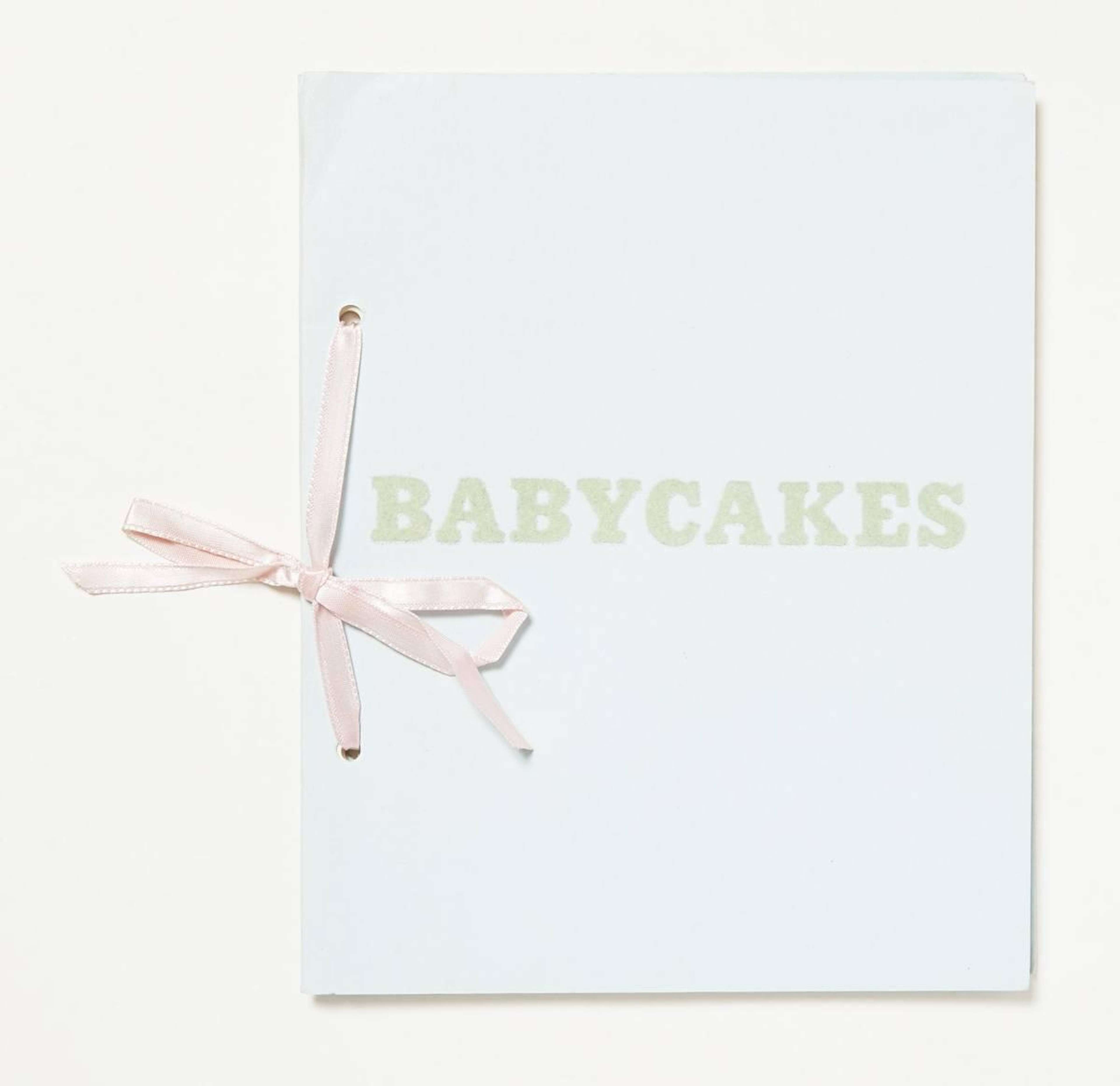
Standard Station remains one of the clearest benchmarks in Ruscha’s print market. It distils much of what collectors want from him: American road culture, typography, perspective, petrol station architecture and the stylised mythology of the West Coast.
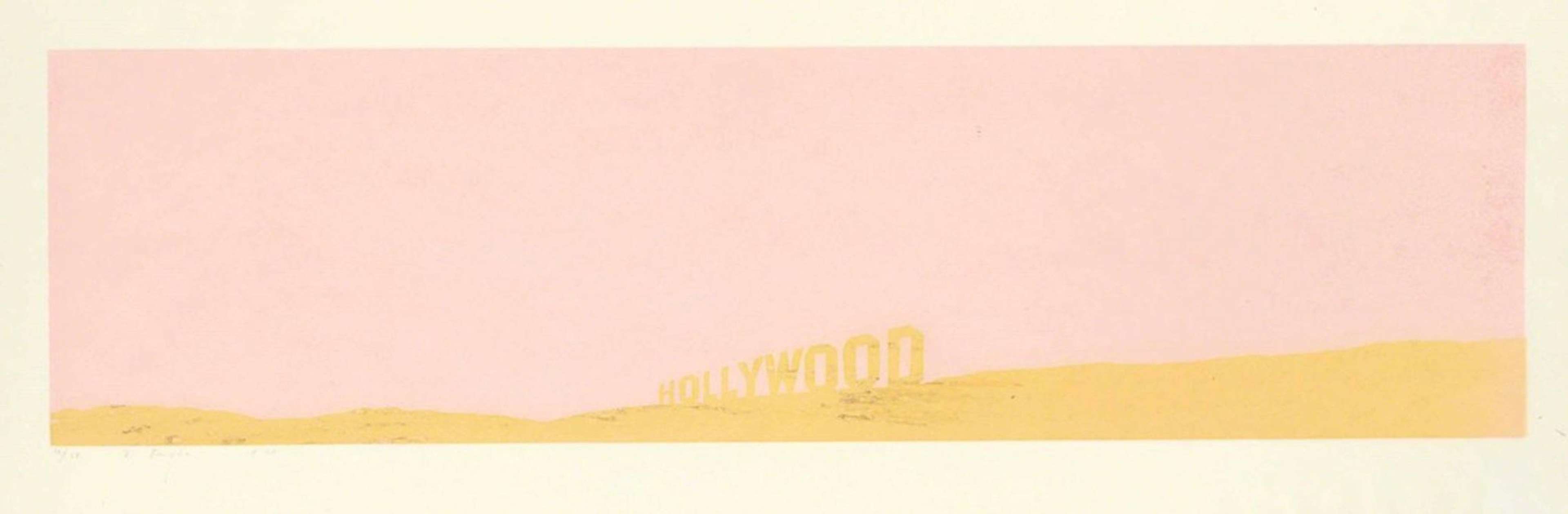
The Hollywood sign works also sit in a strong part of the market, particularly where colour and gradient are central to the composition. These works are not simply popular because they are recognisable. They are technically important because Ruscha uses printmaking to create atmosphere.
For valuation, that means colour quality matters. A faded or weakened gradient can materially affect what the work is worth.
Blend Rolls, Gradients And Colour
Colour is one of the defining factors in Ruscha’s print market. His gradients, tonal shifts and atmospheric colour fields are often central to the work’s desirability.
A blend roll is a printmaking technique where multiple inks are rolled together to create a smooth transition of colour. In Ruscha’s work, this can create sunsets, haze, atmospheric light and subtle tonal movement. It requires skill, control and a strong understanding of the printing surface.
If the colour has faded or attenuated, the work may lose part of what makes it desirable. A strong, fresh impression with clear colour transitions will usually be more competitive than an example where the tonal effect has weakened.
Drips, Objects And Overlooked Ruscha Works
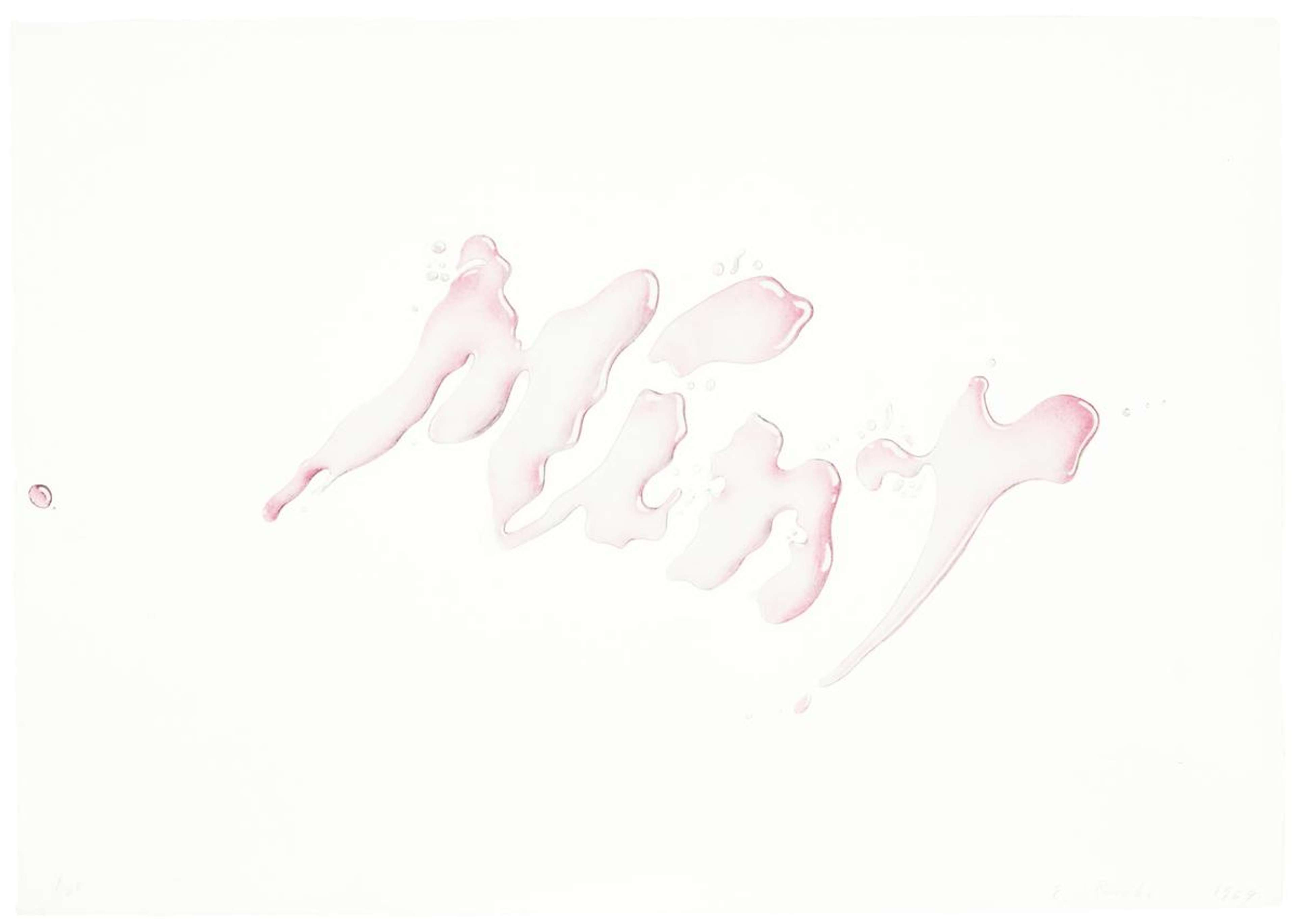
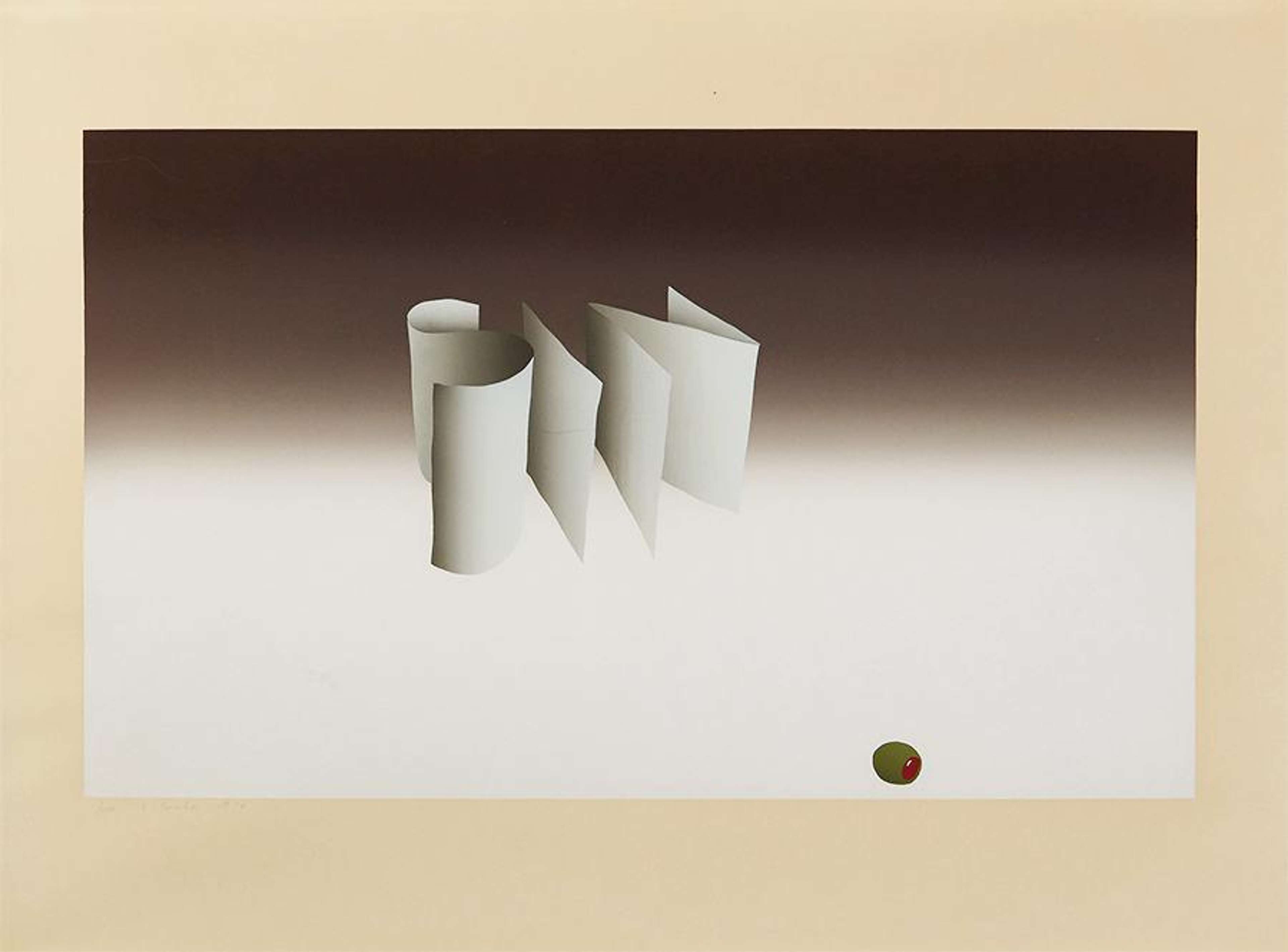
Ruscha’s market is often led by Standard Station and Hollywood imagery, but some of his most interesting works remain comparatively overlooked. Kylee identifies the drip text works and object-based compositions as areas with strong potential.
These works combine type with small, often unexpected objects: an olive, a fly, a piece of cheese. Ruscha has stated that these objects are not symbolic in a straightforward way, but they are unmistakably part of his visual world.
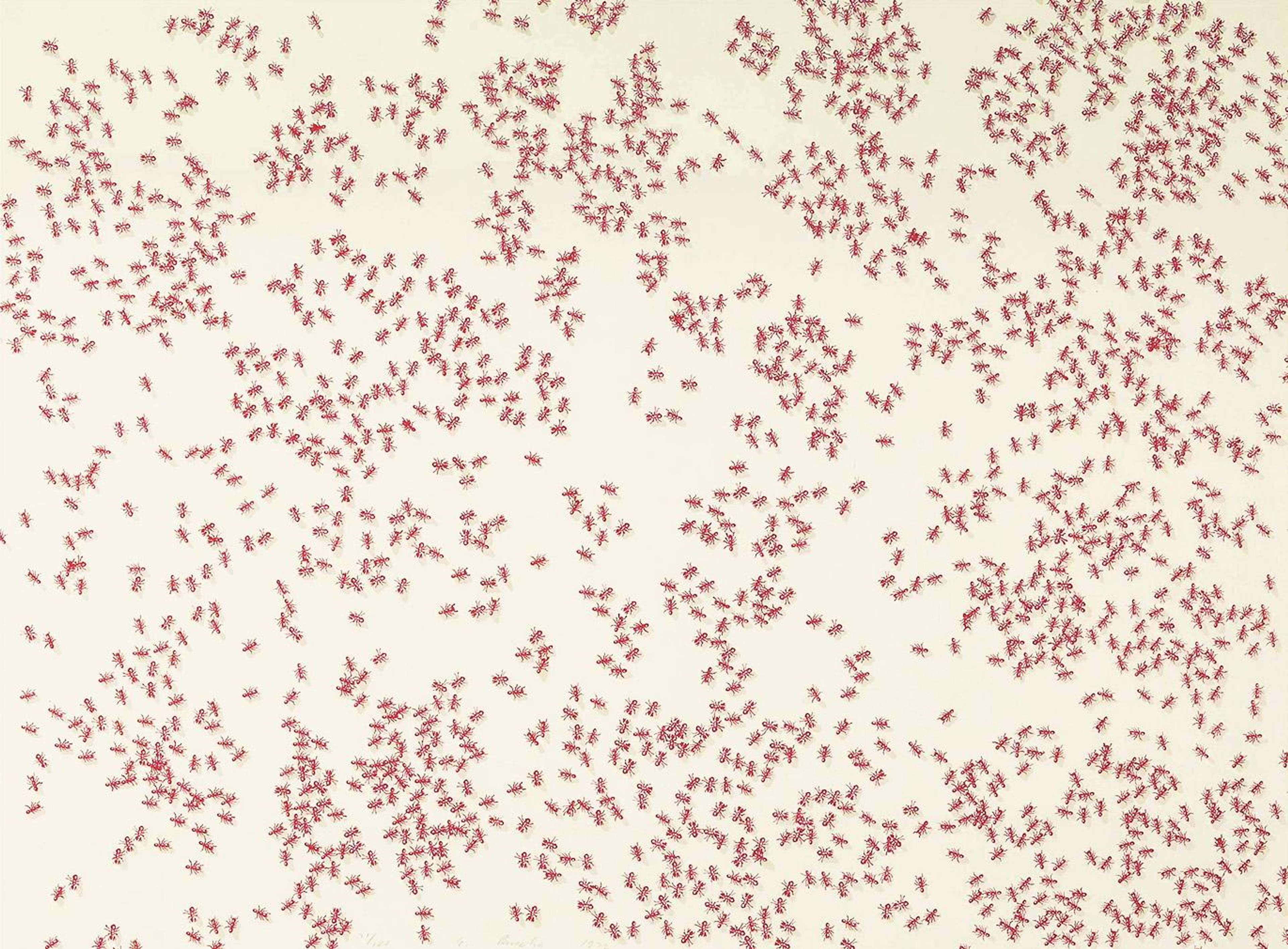
For sellers, this matters because recognisability is not always about the most famous image. Some collectors are drawn to works that feel particularly “Ruscha” because of their wit, process and language, even if they are not at the top of the public market.
Proofs, Colour Trials And Experimental Impressions
Ruscha made Artist’s Proofs, Printer’s Proofs and colour trial proofs. However, not all proofs carry the same premium.
Standard Artist’s Proofs and Printer’s Proofs are often materially identical to the regular edition. They may appeal to certain collectors, but they do not automatically double the value of a work.
Kylee is clear on this:
The exception is where a proof is genuinely unique or materially different. Colour trial proofs, registration variations or unusual early experimental impressions can command stronger interest because they offer something outside the standard edition.
Ruscha’s early printmaking years are especially interesting in this context. The 1960s and 1970s were part of a wider printmaking renaissance in the United States, when major workshops had public funding, technical ambition and the resources to experiment.
Condition Issues In Ruscha Prints
Ruscha prints don’t generally have one recurring condition problem that defines the market. Instead, specialists tend to see typical age-related issues: paper wear, fading, foxing, mould, edge tears, framing damage and colour attenuation.
Common condition factors include:
- Fading or attenuation
- Foxing
- Mould
- Paper discolouration
- Edge tears
- Handling creases
- Mount burn
- Poor framing
- Inappropriate restoration
- Damage to deckled edges
Ruscha’s use of gradients and subtle colour shifts makes retouching particularly problematic. A conservator may be able to stabilise or improve some paper issues, but sellers should be extremely cautious about any attempt to retouch colour or image areas.
Deckled Edges And Paper Wear
Ruscha often favoured deckled edges, and these can be important to the object’s character. A slight issue at a deckled edge may sometimes be more forgiving than the same issue on a clean-cut sheet.
That does not mean damage is irrelevant. It means that a specialist will distinguish between condition problems that affect the image, problems that affect the sheet, and minor age-related signs that may be treatable.
Collectors should never trim, flatten, retouch or attempt to “improve” a Ruscha print without specialist conservation advice. Paper is the fundamental part of the work.
Auction Comparables And Private Sale Valuations
Ruscha’s print market has enough auction activity to provide useful comparables. Kylee generally prefers to look at the last two years of auction results because market conditions can shift quickly.
Public auction data is important, but it needs to be interpreted alongside condition, image strength, edition size, publisher history and current demand. Some Ruscha works sit at more accessible levels, while iconic images can reach six-figure territory.
That spread is one of the distinctive features of Ruscha’s market. Unlike artists with a smoother price ladder, Ruscha has works at highly accessible levels and others that sit at the top of the contemporary print market.
How MyArtBroker Values Ed Ruscha Prints
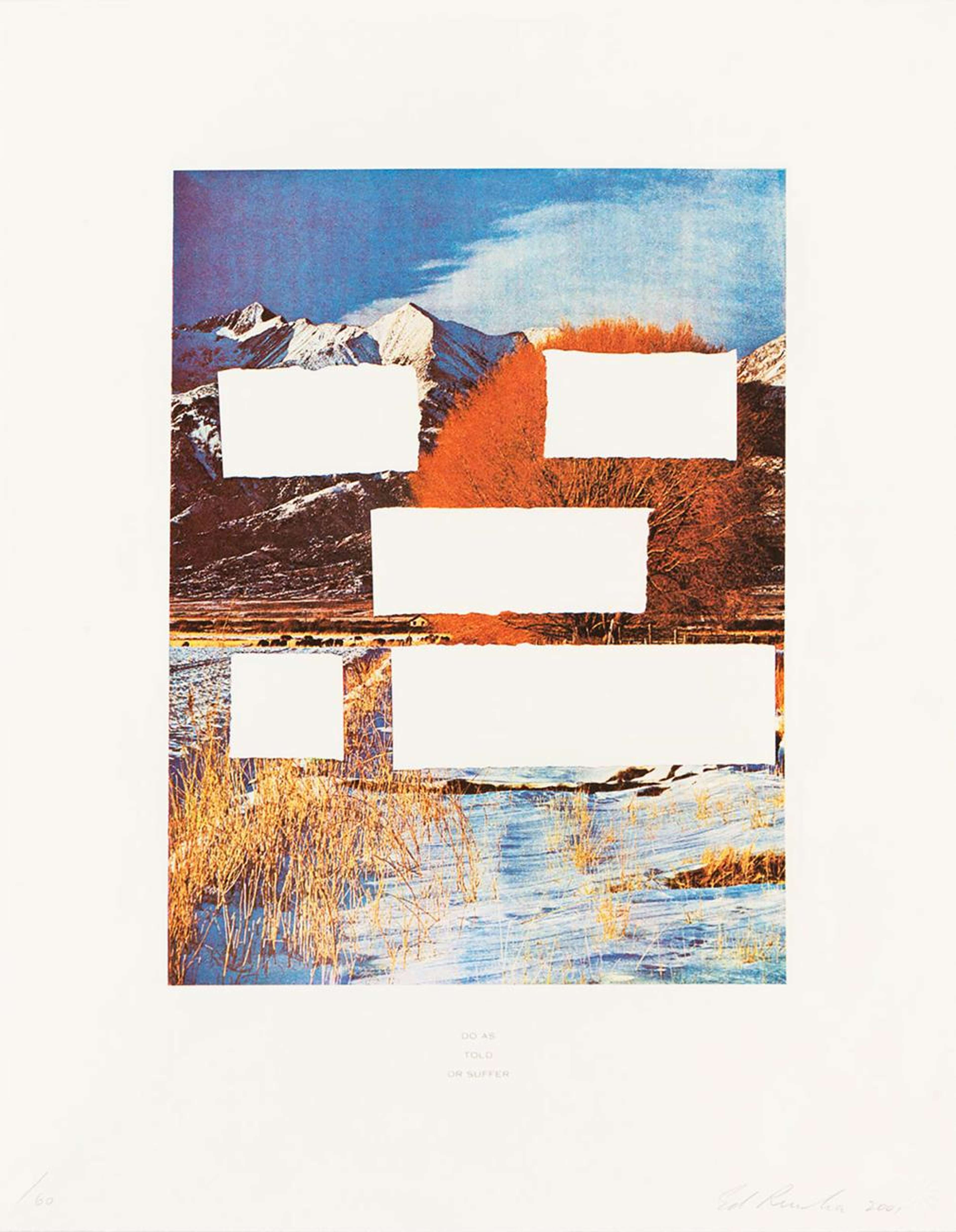
A MyArtBroker Ruscha valuation combines physical review, printmaking expertise, auction comparables, private sales data and live collector demand.
The process begins with the object: paper, signature, blind stamp, measurements, medium and condition. From there, the specialist compares the work with recent public sales and private transactions, while considering whether the image belongs to a high-demand area such as Standard Station, Hollywood, text works or drips.
Because Ruscha’s printmaking is so technical, specialist knowledge matters. Understanding lithography, blend rolls, edition structure, paper and publisher marks can materially affect the valuation.
That is the value of a print-led valuation. Ruscha’s work rewards close looking, but it also rewards technical understanding.
How To Prepare Your Ed Ruscha Print For Valuation
Before requesting a valuation, gather:
- High-resolution front and back images
- Close-ups of the signature
- Close-ups of the edition number
- Close-ups of blind stamps or chops
- Any verso stamps or publisher marks
- Sheet and image measurements
- Images of the watermark, if visible
- Any print shop documentation sheets
- Any invoices or gallery paperwork
- Details of framing and storage
- Any condition reports
If the work is framed, do not unframe it yourself. If it is unframed, photograph everything before framing, including the reverse.
Ruscha Value Depends On Process, Image And Paper
Ed Ruscha’s print market is unusually rich because printmaking is not peripheral to his practice. It is central to how he thinks about language, image, surface and the American landscape.
The strongest Ruscha valuations are built around technical accuracy, strong colour, correct paper, clear provenance, desirable subject matter and recent market evidence. Standard Station and Hollywood works remain major anchors, but text works, drips, colour trials and object-based compositions can also be highly compelling.
For sellers, the most important step is to approach a Ruscha print as a print first and foremost: the paper, process, publisher, colour and edition structure all matter.
At MyArtBroker, every Ruscha valuation is built around that specificity, combining print expertise with live market intelligence to provide a clear and commercially grounded view of what an Ed Ruscha print is worth today.