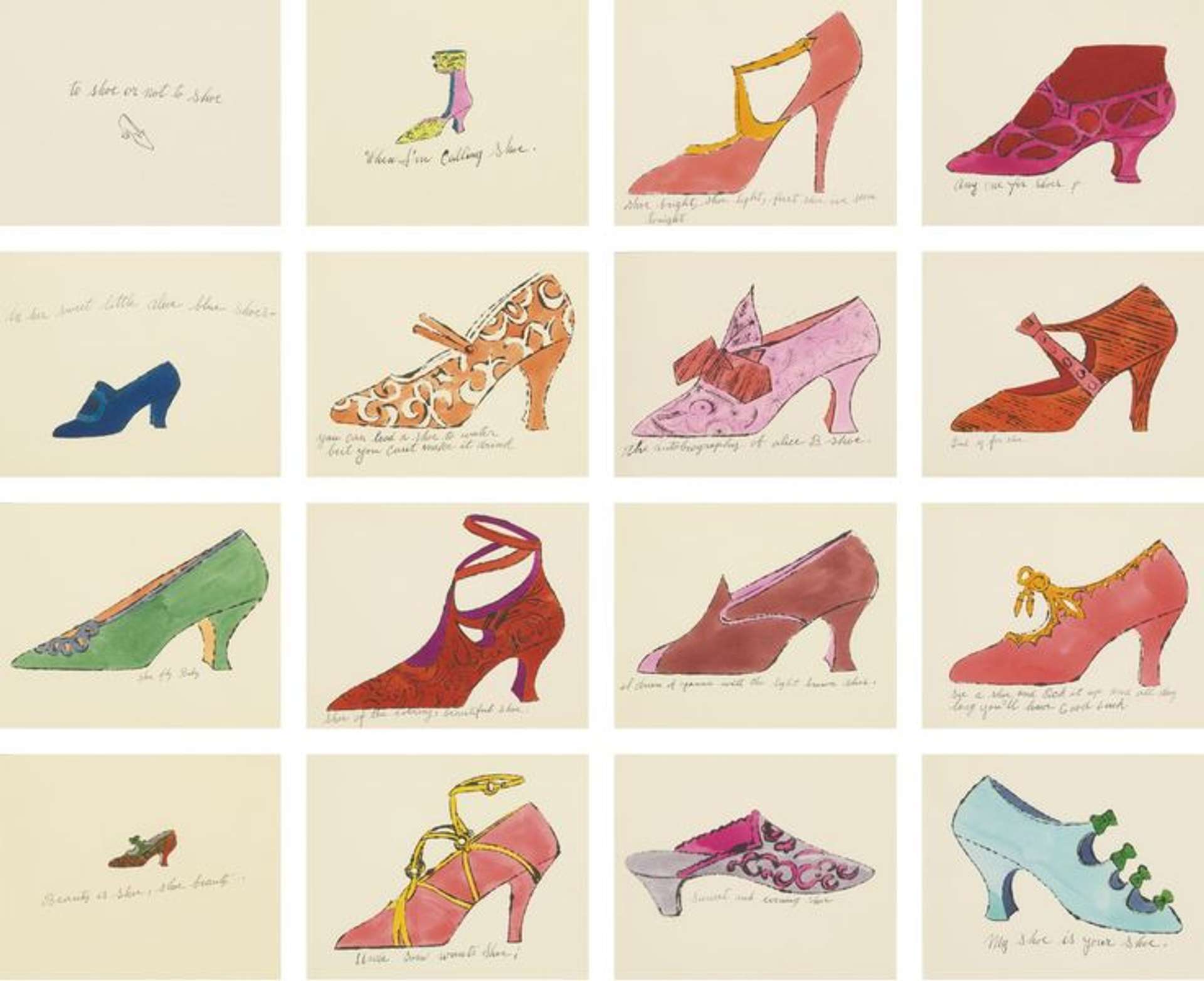

Produced in the formative years of his career, La Recherche du Shoe Perdu reveals the development of Andy Warhol's style while working as a commercial illustrator. More than mere advertisements, each work in the series is a portrait of a woman's heel with its own distinct personality.
The series was created for the I. Miller & Sons shoe company.
In the same year that Warhol began working with the I. Miller & Sons shoe company, they commissioned him to make this series to market their relaunch. The prints were released as a weekly shoe drawing, run in the society pages of the New York Times.
The title of the series nods to Marcel Proust's novel À la Recherche du Temps Perdu.
Translating to "In Search of Lost Time", this series borrows its title from Proust's novel of the same title. Proust's semi-autobiographical novel follows the author's search for truth, whereas Warhol's print series alludes to the lifestyles led by those wearing a pair of I. Miller & Sons heels.
The series consists of 16 individual shoes.
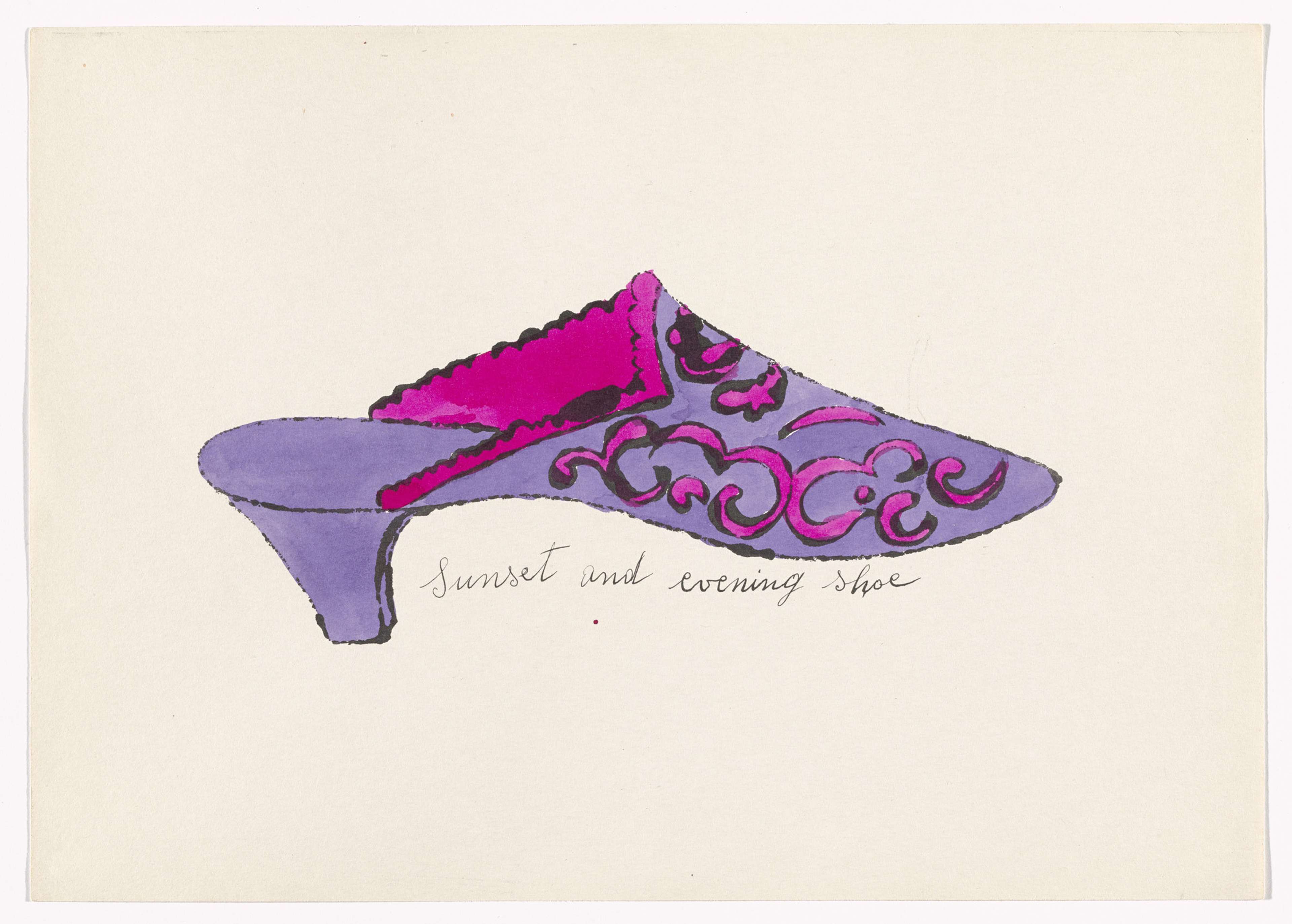
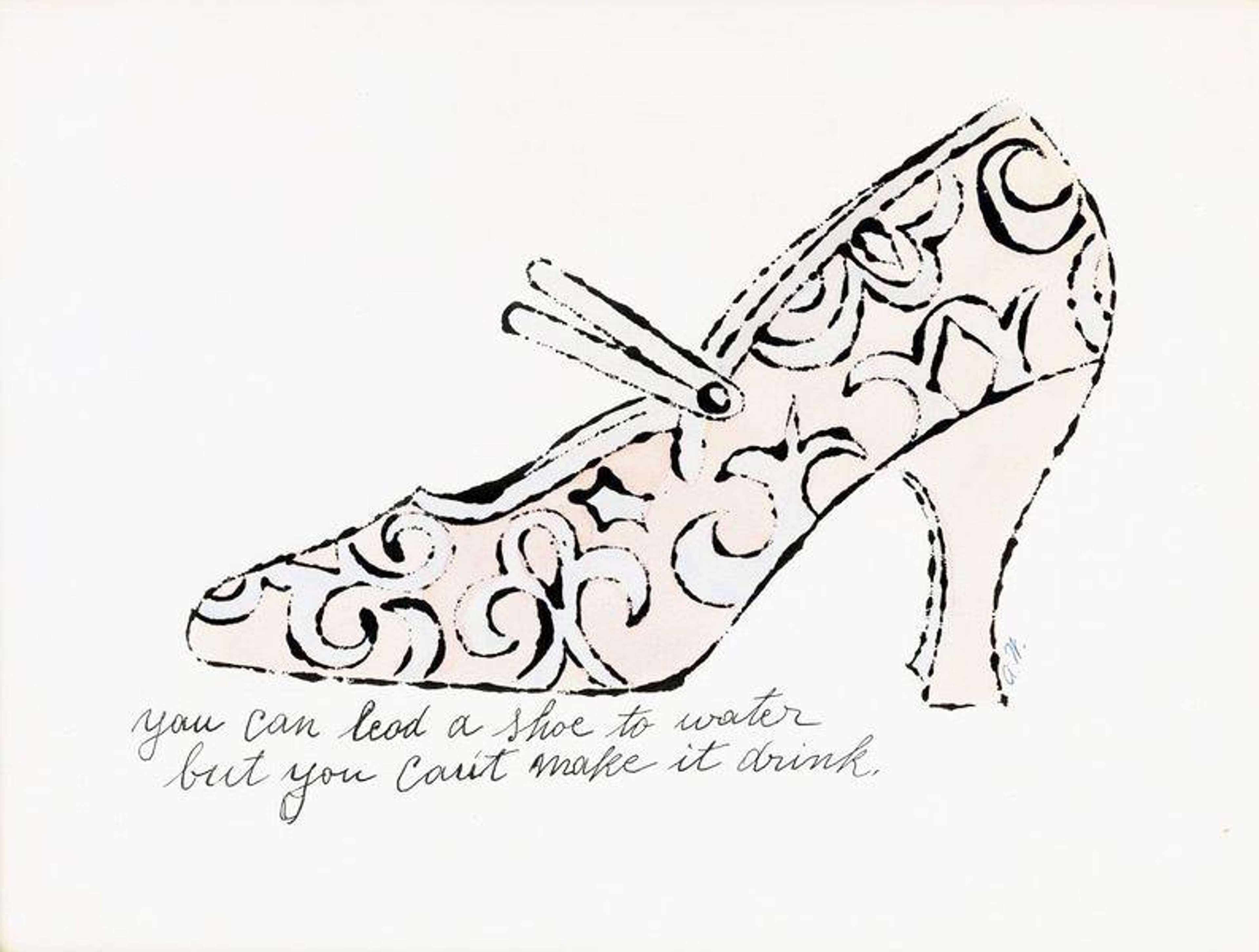
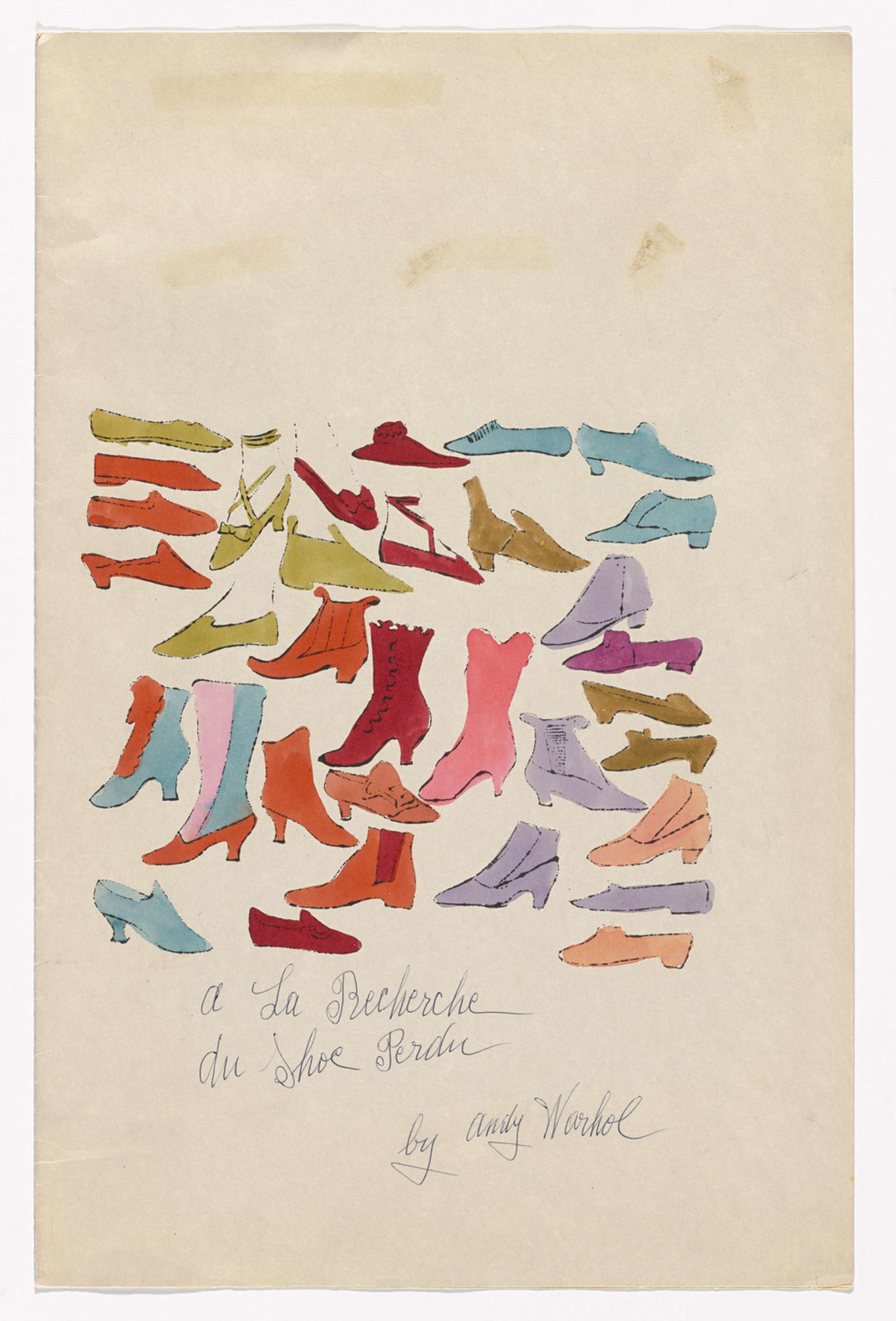
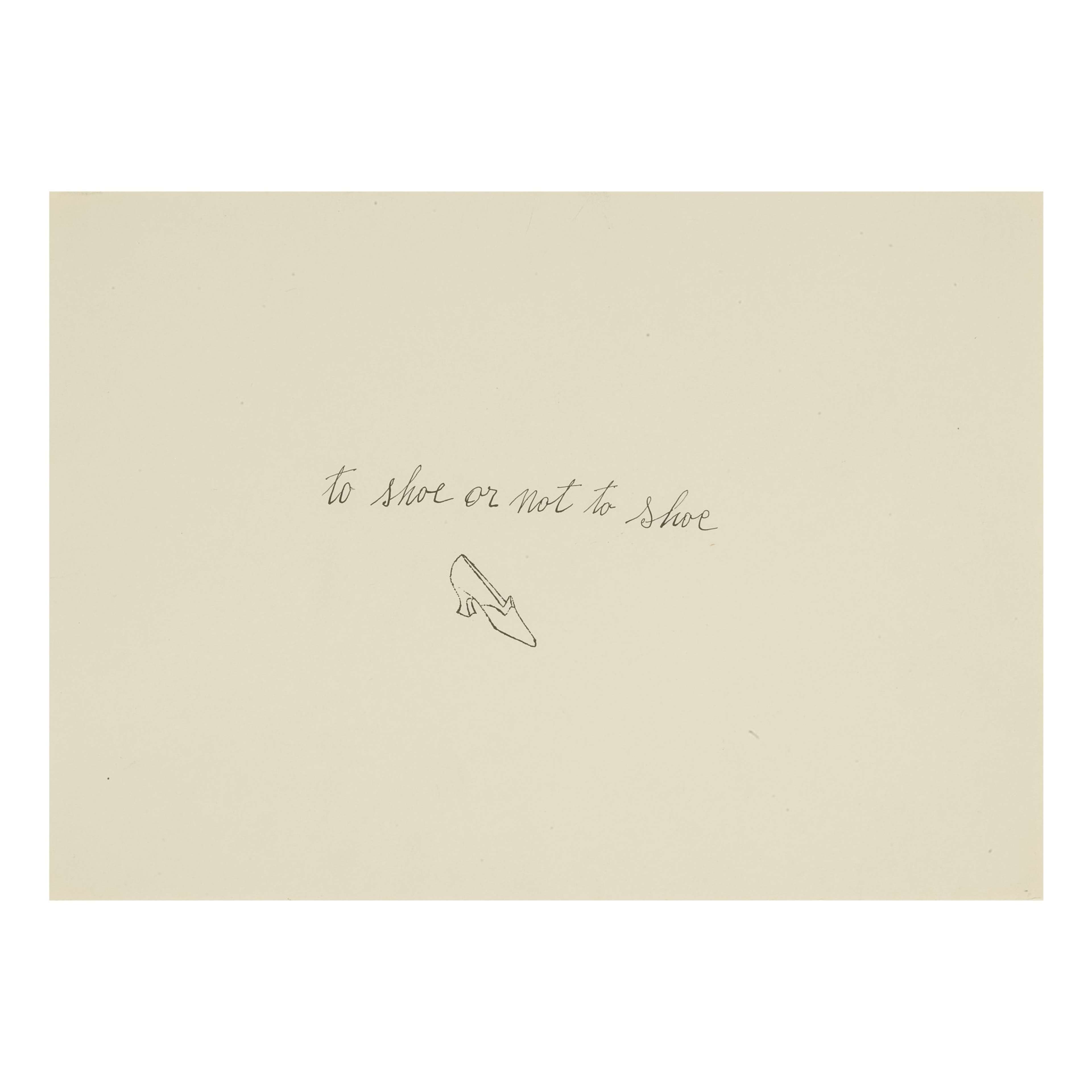
La Recherche du Shoe Perdu is a set of two print portfolios, with 16 individual shoes depicted across the series. Each shoe is unique in its colour, positioning, and the calligraphic inscription below it. Much like the portraits Warhol executed later in his career, each of the shoes has its own character and presence.
Warhol's career began in illustration.
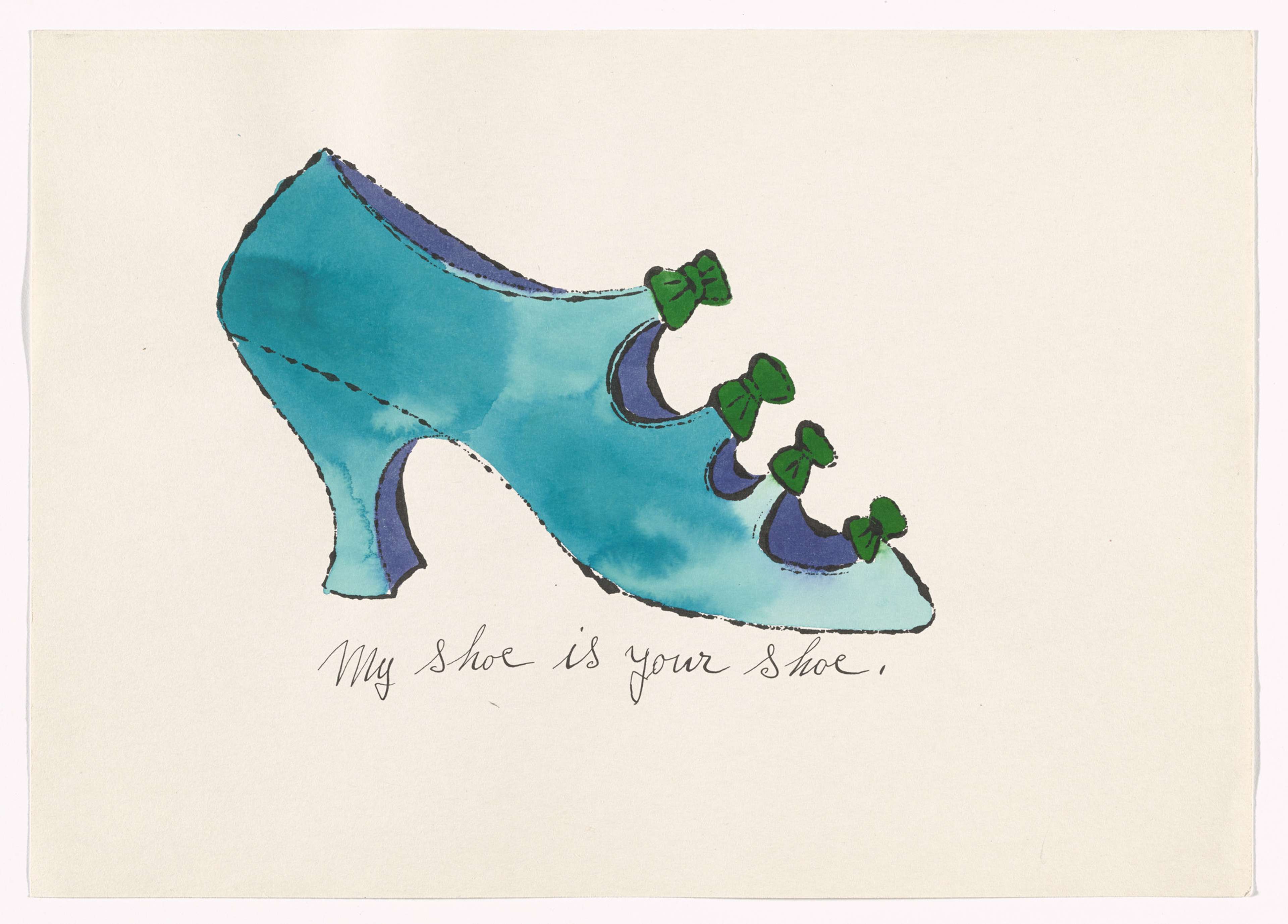
After graduating from the Carnegie Institute of Technology in 1949, with a degree in Pictorial Design, Warhol moved to New York and began work as a commercial illustrator. As well as having his work published in the New York Times, Warhol also produced advertisements for Glamour and Harper's Bazaar.
The prints were coloured by hand.
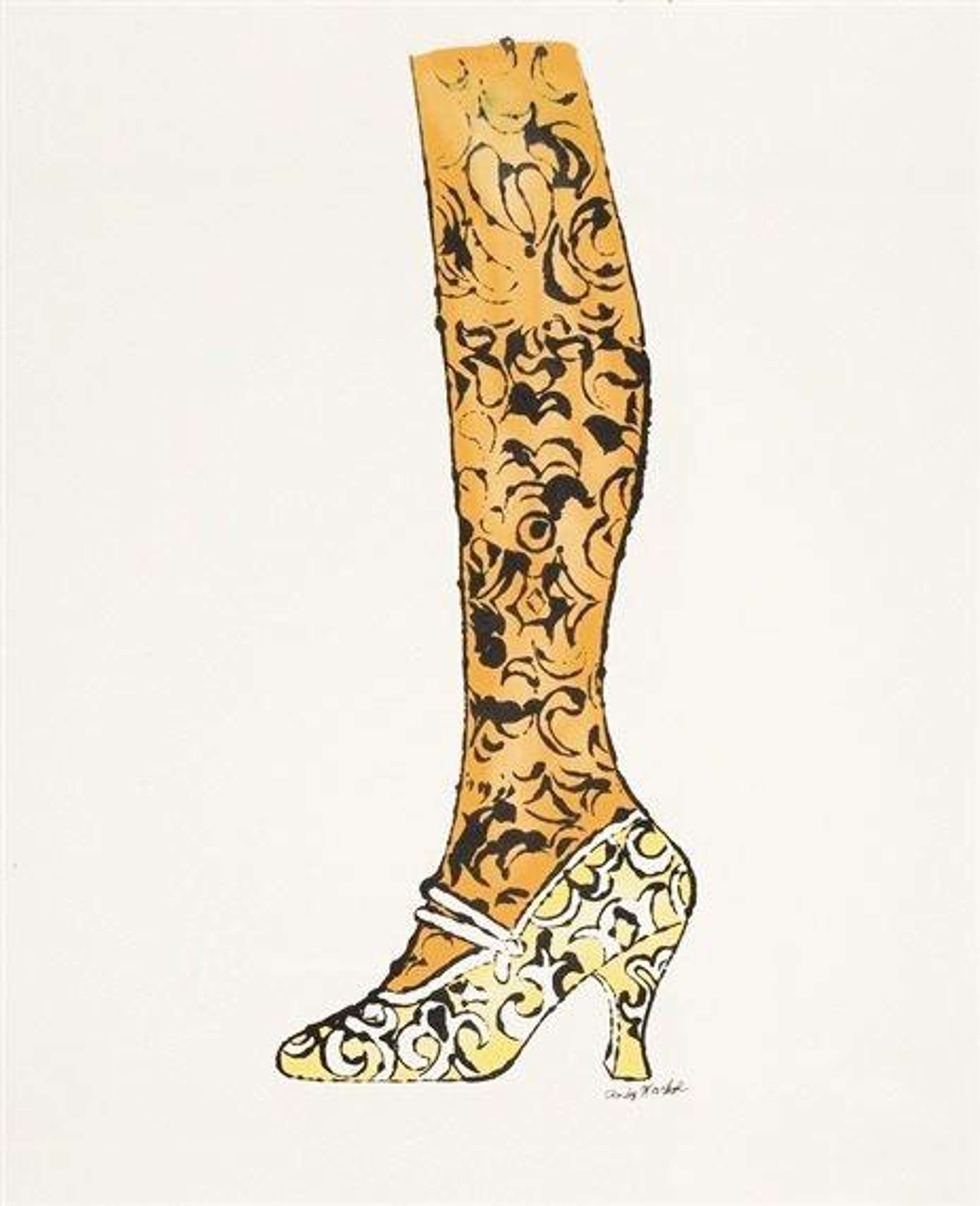
Before Warhol discovered screen printing, he reproduced his illustrations as lithographs. The black line lithographs were then hand-coloured by Warhol and his friends at their so-called "colouring parties", giving the prints a unique appeal.
The series is a collaboration between Warhol and his mother, Julia Warhola.
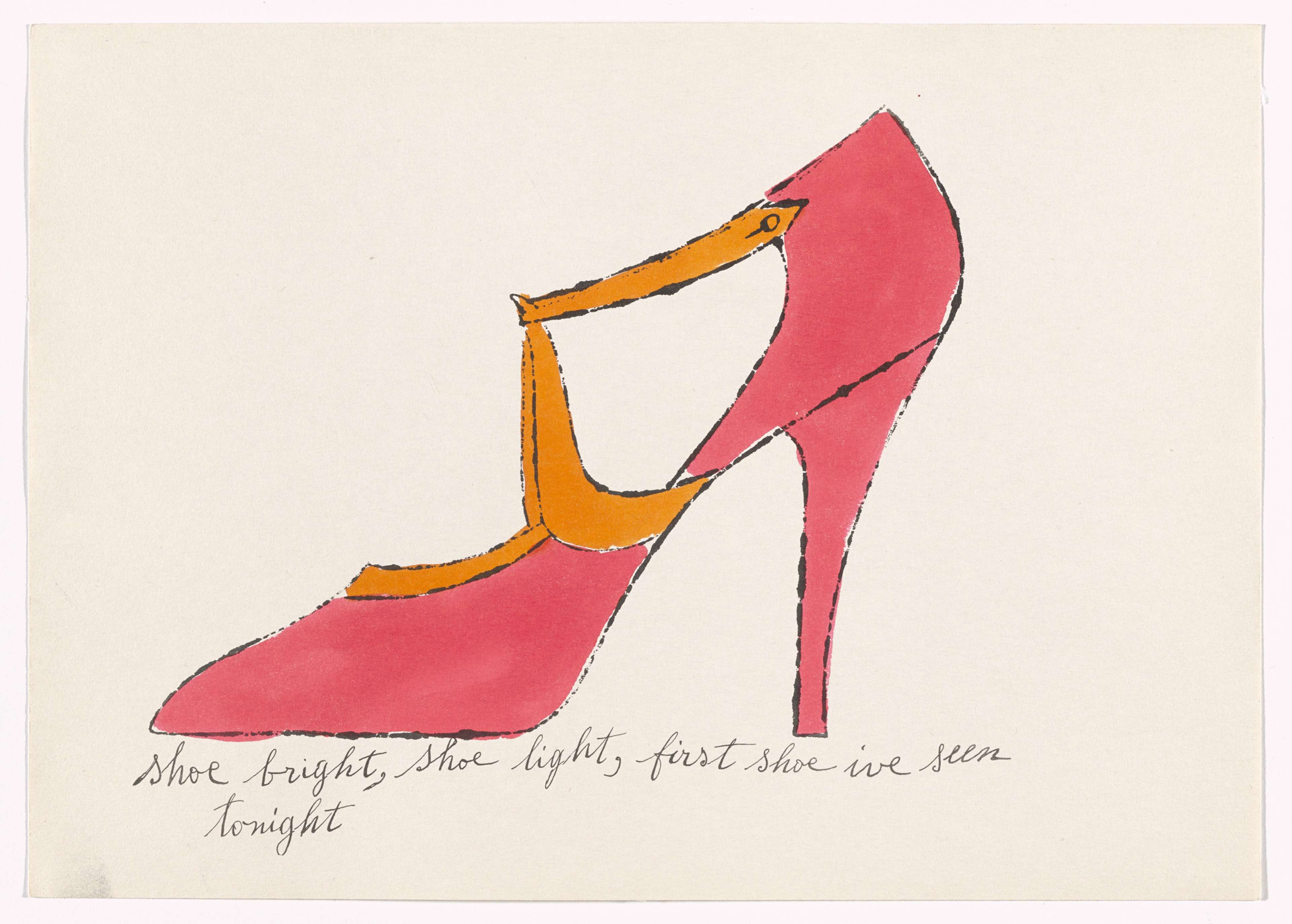
Underneath each of Warhol's shoes is a calligraphic inscription written by his mother, Julia Warhola. This wasn't the first instance of collaboration between mother and son, as Julia had also decoratively inscribed Warhol's earlier series Cats Named Sam.
The series was one of Warhol's first.
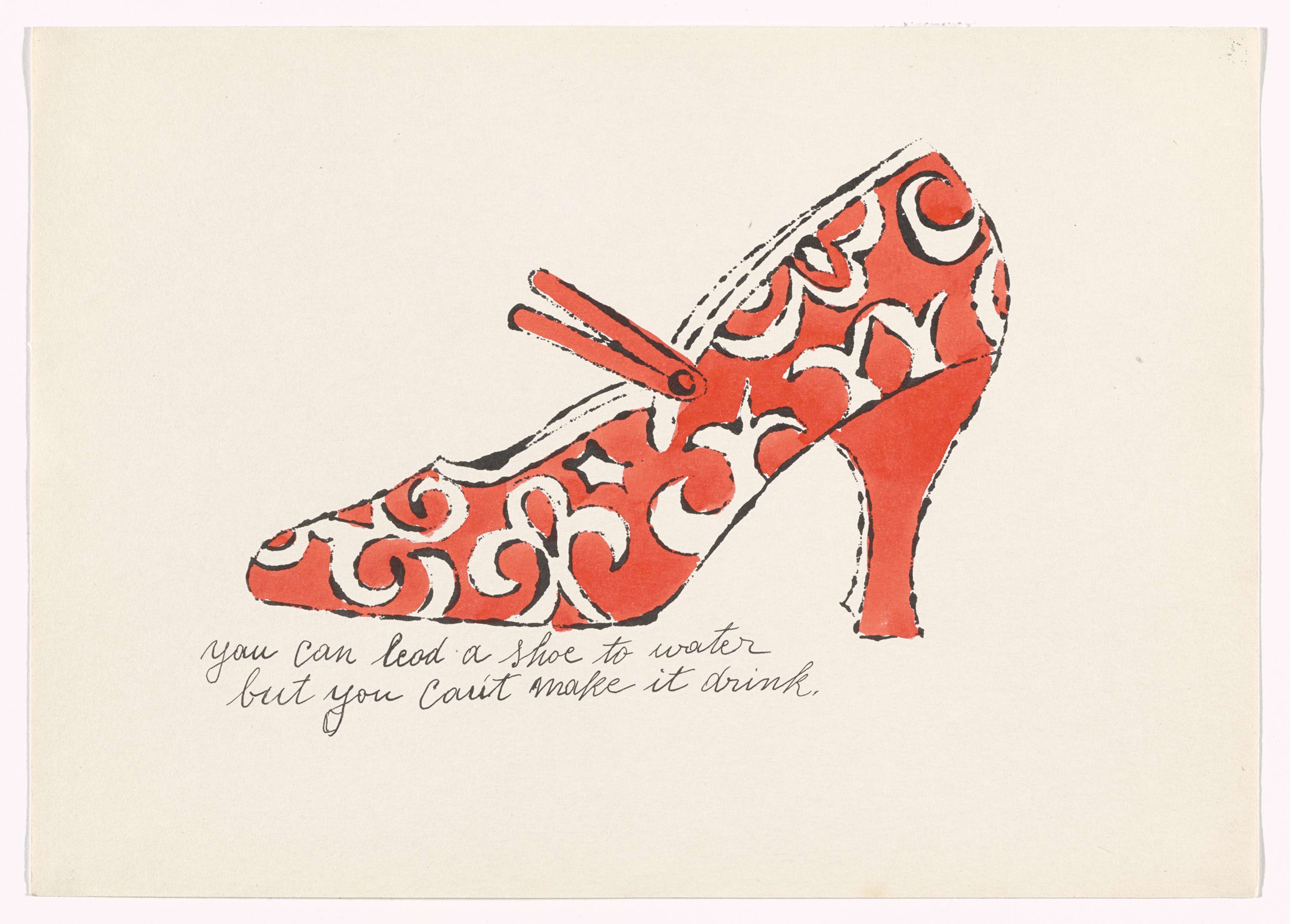
Alongside Cats Named Sam and In The Bottom Of My Garden, this is one of Warhol's earliest print series. It is, perhaps, because of his commercial roots that Warhol began making his print series, which are now some of the most covetable collectibles in the Warhol market.
Warhol returned to the subject of the shoe later in his career.
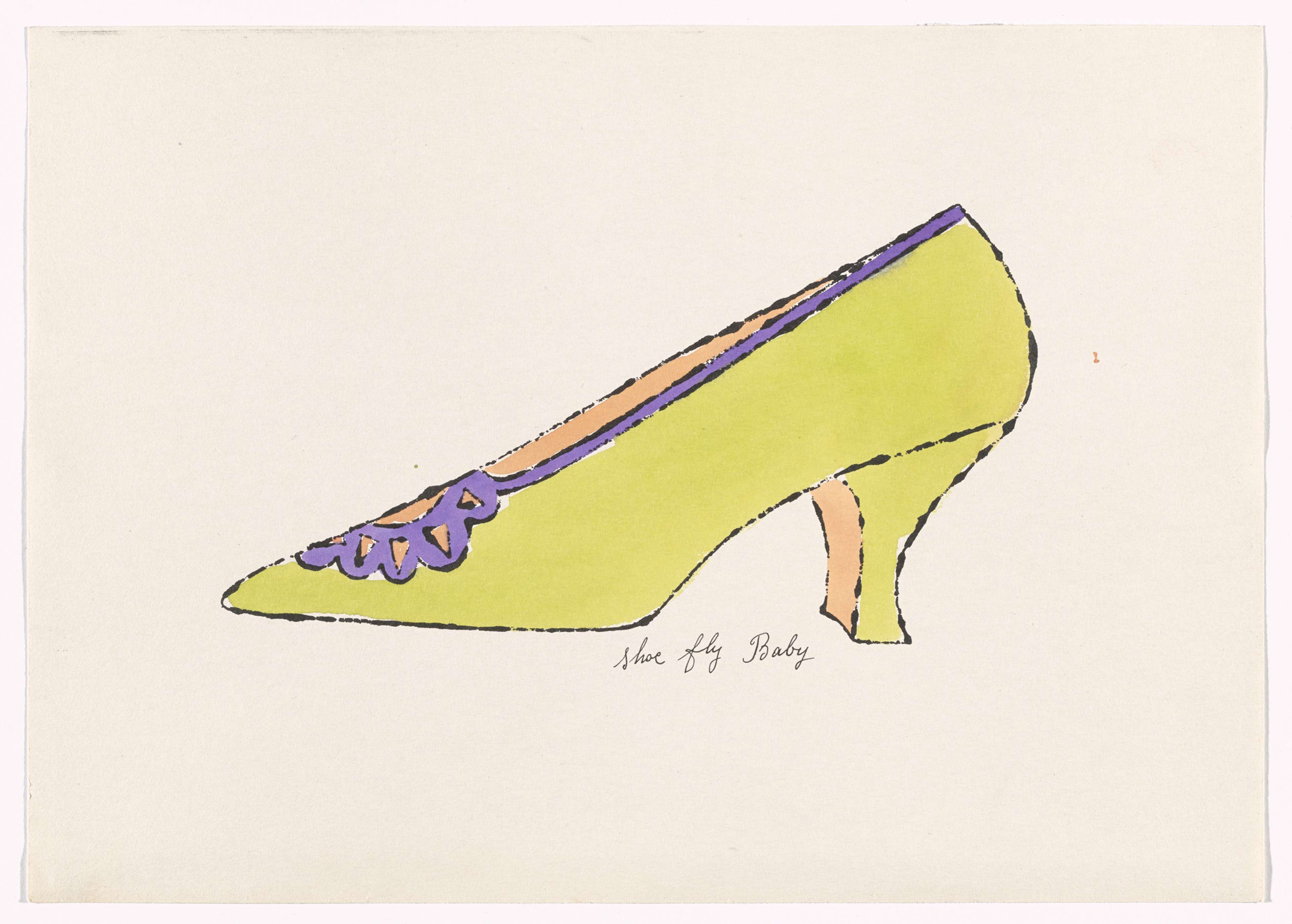
As we see in his commercial advertisements and later series like Diamond Dust Shoes, the high heel shoe was clearly a subject that captivated Warhol. Shoes are one of Warhol's most repeated subjects, and something he mastered across illustration and screen printing alike.
Consumerism was integral to Warhol's entire life and career.
Warhol's early career was grounded in advertisement, producing illustrations in the service of consumerism. As his oeuvre developed, Warhol turned his artistic attention primarily to consumer goods which were familiar to the everyman. Increasingly, Warhol treated his art like a business itself, embodying the essence of Pop Art.
The series speaks to Warhol's fascination with self-fashioning.
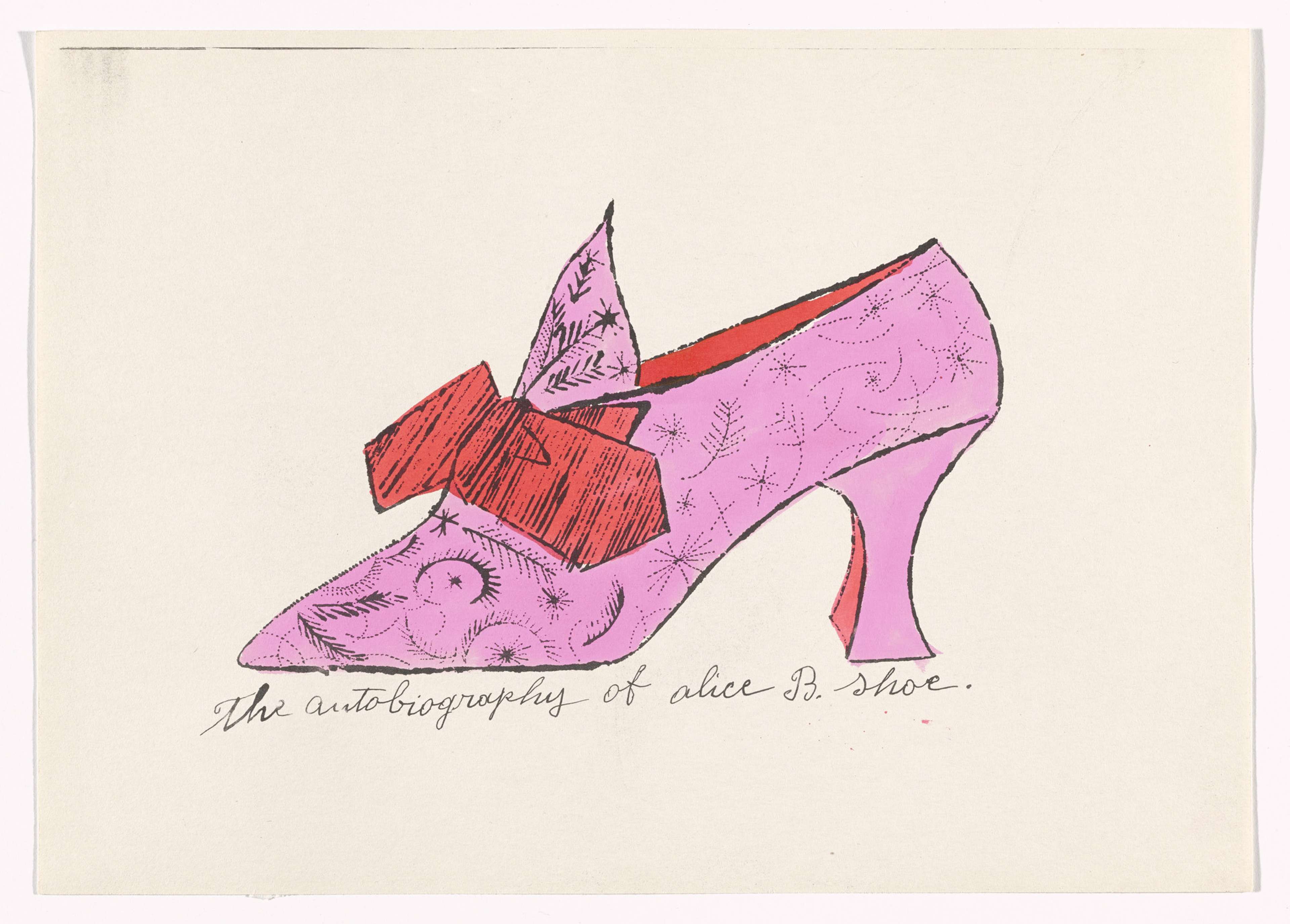
With their distinct personalities, each shoe seems to offer an opportunity to its wearer. By stepping into an I. Miller & Sons shoe, as represented by Warhol, the wearer might land herself in Warhol's imagined world - something a photographic advertisement couldn't evince. From this point in his career onwards, Warhol was fascinated with clothing and cosmetics as a mode of self-fashioning, as we see in his later series.