

A Katz valuation has to consider whether the work depicts Ada, whether it belongs to one of Katz’s most recognisable portrait or fashion-led series, whether the colours remain strong, whether the sheet edges are clean, whether the work is signed on the front or reverse, and whether the medium supports long-term collector demand.
At MyArtBroker, a Katz valuation begins with condition, medium, signature, edition information, dimensions, provenance and comparable sales. Public auction data is useful because Katz prints appear regularly, but it must be interpreted in relation to image hierarchy, colour strength, gallery pricing, private demand and broader market momentum.
We sat down with Kylee Aragon, Print Specialist at MyArtBroker, to explore what’s behind every Katz valuation.
This is especially important because Katz’s work is visually spare. Minimal compositions, clean colour fields, straight edges and full-bleed surfaces leave little room for damage to hide.
What Information Do You Need For An Alex Katz Valuation?
A strong Katz valuation begins with clear images and supporting documentation. The ideal submission includes:
- A full image of the front of the work
- A full image of the reverse
- Close-ups of the signature
- Close-ups of the edition number
- Images of all corners
- Images of the sheet edges
- Details of any verso signature, stamp or publisher mark
- Sheet measurements
- Image measurements
- Any original invoice, gallery paperwork or publisher documentation
- Any known condition report
- Details of framing, storage or conservation history
- Images taken before framing, if the work is now framed
The reverse is particularly important because Katz does not always sign on the front. Some works are signed on the back, and many include publisher or copyright stamps on the verso.
For future resale, those images can make a valuation much easier, especially if the work is later framed in a way that obscures verso information.

Signature, Verso Marks And Blind Stamps
Katz prints can be signed on the front or the reverse. This can make valuation more difficult when a work is framed, because the most important details may not be visible.
A specialist will look for the signature, edition number, publisher marks, copyright stamps and any blind stamps or chops. Katz has worked with several publishers, including Lococo Fine Art Publisher, and these publisher records can support the valuation.
For works with minimal compositions or full-bleed colour, marks may be placed on the reverse rather than interrupting the image. This is why photographs of the back are essential.
Provenance And Publisher History
Katz’s print market benefits from relatively accessible documentation. Many of his prints are well recorded through galleries, publishers and online archives. Provenance remains important, particularly where a work was acquired directly from a publisher or reputable gallery.
Useful documentation can include:
- Publisher invoices
- Gallery receipts
- Lococo Fine Art documentation
- Auction records
- Labels on the reverse or frame
- Copyright stamps
- Condition reports
- Images taken before framing
A strong paper trail helps confirm the work’s history and supports buyer confidence. It can also clarify medium, edition size, paper type and whether the work includes AP, HC, BAT, RTP or PP impressions.
Ada: The Centre Of The Katz Market
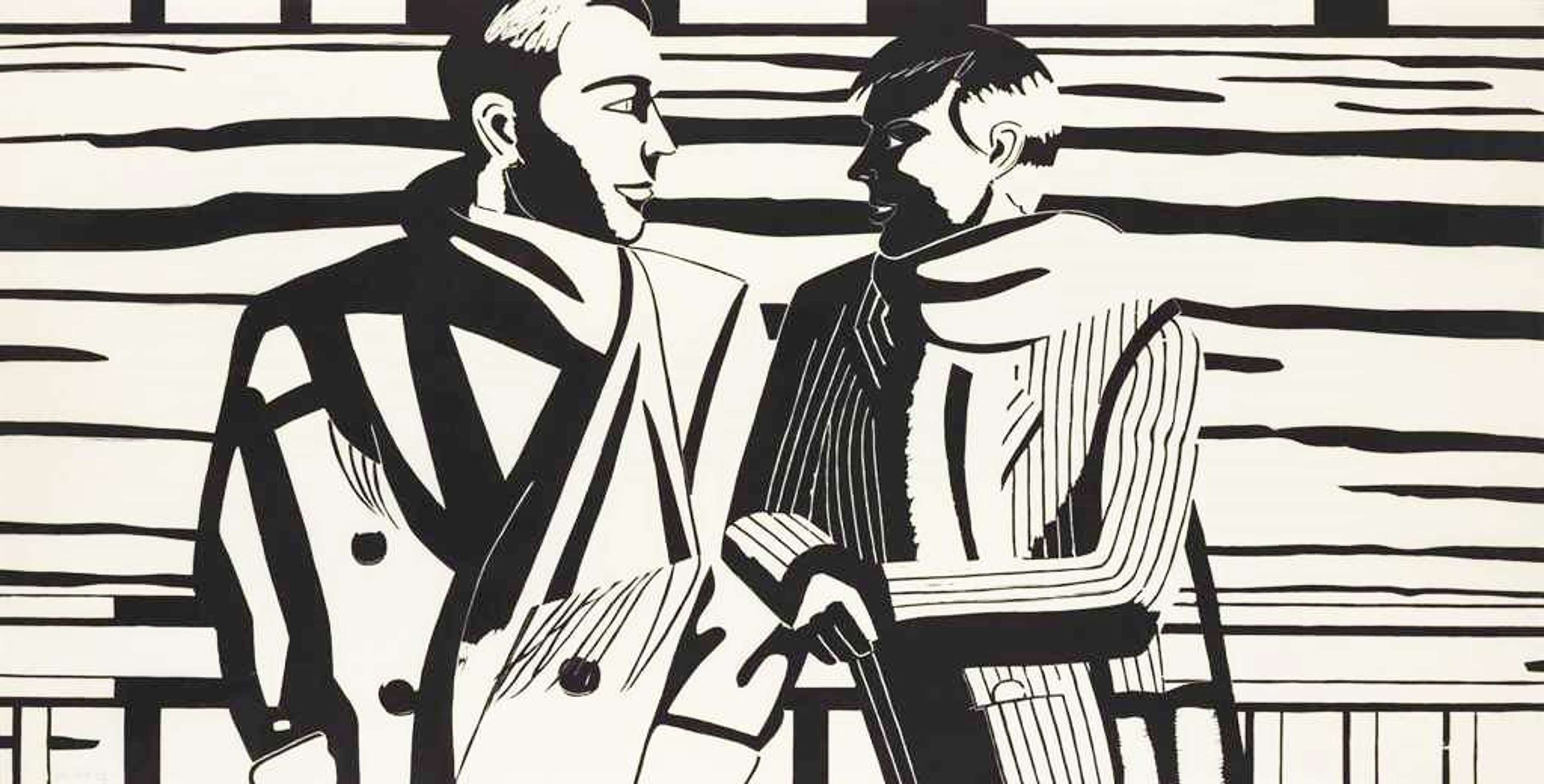
Value in Katz’s print market is most concentrated around Ada, the artist’s wife and lifelong subject. Ada is not simply a recurring sitter. She is central to Katz’s visual world, appearing across decades in different moods, styles, ages and compositions.
Kylee compares Ada’s importance to Celia Birtwell in Hockney’s work:
Ada works carry both art historical and emotional significance. They show Katz returning to the same face across time, refining his style while recording the presence of the person closest to him.

Portraits, Women And The Katz Look
Beyond Ada, Katz’s portrait prints and images of women remain among the strongest areas of the market. His faces, cropped bodies, black dresses, red swimsuits and fashion-forward compositions have become central to his identity as an artist.
The most desirable works often sit between figuration and abstraction. A face may be cropped, simplified or flattened to the point that it becomes almost graphic. This tension is part of what makes Katz’s visual language so influential.
This is important for valuation. Collectors tend to want works that are immediately recognisable as Katz. More experimental images may still be strong, but they can have a narrower buyer pool.
Black Dress And Fashion-Led Works
Black Dress is one of Katz’s most recognisable print subjects. Works in this area often appeal because they combine portraiture, fashion, scale, elegance and graphic simplification.
The market responds well to Katz images that have a clear silhouette, strong colour contrast and a sense of contemporary polish. These works are closely tied to the artist’s ability to make a figure feel both intimate and detached.
However, medium and format still matter. Katz’s sculptural cut-outs, including steel or digitally printed multiples related to his figure work, can sit at a lower price level than some collectors might expect, despite their object quality.
Flowers And Still Lifes
Katz’s flowers and still lifes have become increasingly desirable, particularly where they carry his signature clarity, scale and colour. These works can appeal to collectors who want a Katz print without entering the highest-value Ada or portrait categories.
Flowers work well in Katz’s print market because they translate his strengths into another subject: simplified form, saturated colour, strong silhouette and immediate visual impact.
However, not all natural subjects perform equally. Kylee points to his tree prints as an example of works she finds visually strong, but which have not performed as well as brighter, more recognisably Katz-like images. With Katz, even when the image is strong, if the colour palette feels too muted or uncharacteristic, the buyer pool may narrow.
Colour: One Of The Biggest Value Drivers in the Katz Market
Colour is one of the most important factors in Katz valuations. His market rewards strong, bright, saturated colour, particularly where the work features red, purple or other bold tones associated with his most desirable images.
But colour is also one of the biggest condition risks. Many older Katz prints have suffered from attenuation, meaning the colours have faded or lost intensity. This can materially affect value.
This is particularly important for earlier works. A print that once had strong red, purple or bright colour may now appear softer, weaker or washed out. Some collectors will still want the image, particularly if it is iconic, but others will pay more for an example where the colour remains fresh.
For sellers, colour strength can make a significant difference. A bright impression of a desirable image may sit above comparable works where the colour has faded.

Red, Fading And The Problem Of Light
Red is one of Katz’s most desirable colours, but also one of the most vulnerable. Exposure to direct sunlight can cause reds and other bright colours to fade, weakening the work’s visual impact and reducing value.
This is why framing and display history are so important. Works that have been kept away from direct sunlight and framed with UV-filtering glazing are likely to be more desirable than works that have been exposed for long periods. In Katz’s market, colour is part of the identity of the work. If it fades, the valuation changes.
Scale And Wall Presence
Scale plays a major role in Katz’s print market. Katz is known for large, declarative images, and collectors often look for works that have real presence in a room.
Large Katz prints often suit collectors looking for a statement piece. This is especially true of portraits, Ada works, flowers and figure compositions. Smaller works can still be desirable, but scale is more central to Katz than it is to some other artists. For valuation, this means sheet size, image size and impact all matter.
Medium: Screenprints, Lithographs, Woodcuts And Digital Editions
Katz has worked across screenprint, lithography, woodcut, archival pigment prints and editioned sculptural forms. Medium affects both desirability and value.
Traditional print processes with more visible craft, handwork or material complexity can be especially appealing. Woodcuts, screenprints and lithographs sit differently from archival pigment prints, even where the image is desirable.
Katz’s more recent archival pigment prints can perform well, particularly where they offer strong colour and scale. However, Kylee notes that they have not reached the same level of market enthusiasm as David Hockney’s digital prints.
The advantage of archival pigment prints is colour stability. They may not carry the same process appeal as earlier screenprints or woodcuts, but they are less likely to have the same fading issues seen in older works.

Edition Size
Edition size influences Katz values, particularly where newer digital works are produced in larger numbers. A larger edition can make a work more accessible, but may reduce scarcity.
For traditional processes, smaller editions can support stronger values, especially when paired with a desirable image. For archival pigment prints, larger editions may be acceptable to some buyers if colour, scale and image strength are the main priorities. The key isn’t edition size alone, but how edition size interacts with medium, condition and demand.
Straight Edges, Corners And Paper Condition
Katz often favours clean, straight-edged sheets and full-bleed colour. These can look crisp and contemporary, but they are less forgiving than deckled edges.
Corners are especially vulnerable. A dinged corner, lifted edge or small crease can be highly visible, particularly on thick paper or works with minimal compositions.
Because Katz’s compositions are often minimal, there is nowhere for condition issues to disappear. A fingerprint, hinge mark, crease or surface blemish can stand out.
Framing And Handling Mistakes
Handling and framing can have a major impact on Katz valuations. Paper is organic, and damage may not be visible immediately. Fingerprints, poor hinges, pressure marks, tape residue and non-archival materials can all create problems over time.
For Katz, this is especially important because the image surface is often minimal and flat. Any blemish is more likely to show.
Hinging is another issue. If hinges are applied too heavily or under too much pressure, they can create visible indentations: “I’ve seen a lot where there was maybe too much pressure applied to hinges, and you can see almost an indentation of the hinge marks.”
Collectors should work only with experienced framers and conservators who understand paper. Archival materials, light hinging, UV-filtering glazing and careful handling are essential.
Market Timing And Recent Comparables
Katz’s market is steady, but it can respond to exhibitions, gallery attention and institutional momentum. Major shows or gallery pushes can create short-term increases in demand, particularly around key subjects.
When valuing Katz, Kylee generally focuses on recent comparables rather than older data. This matters because 2022 and 2023 market conditions can differ significantly from the present. A valuation based on older comparables may overstate or understate current demand. Katz’s market is not as volatile as other contemporary markets, but recent data still matters.
Should Sellers Wait For A Market Spike?
Because Katz is now in his 90s, some collectors ask whether they should wait to sell until after the artist’s death. Kylee advises against basing a sale strategy on that assumption.
This is a practical point. A short-term increase in attention does not guarantee better selling conditions. If many owners decide to sell at the same time, supply can increase and create competition.
For sellers, the stronger strategy is to value the work in relation to current demand, condition, image strength and recent market evidence.
How MyArtBroker Values Alex Katz Prints
A MyArtBroker Katz valuation combines physical review, print expertise, recent auction data, private sales intelligence and live buyer demand.
The specialist will assess:
- Subject matter
- Whether the work depicts Ada
- Whether the image is recognisably Katz
- Colour strength
- Medium
- Edition size
- Signature placement
- Publisher marks
- Condition
- Scale
- Recent auction results
- Gallery pricing
- Private collector demand
Because Katz’s market is highly image-led, the valuation has to account for what collectors actually want: Ada, portraits, bright flowers, strong colour, large scale and instantly recognisable compositions.
How To Prepare Your Alex Katz Print For Valuation
Before requesting a valuation, gather:
- High-resolution front and back images
- Close-ups of signature and edition number
- Close-ups of publisher marks or stamps
- Images of all corners
- Sheet and image measurements
- Details of framing and storage
- Any original receipts or gallery paperwork
- Any publisher documentation
- Any condition report
- Images from before framing, if available
Do not touch the surface, clean the work, flatten it, or unframe it without professional advice. Katz prints can be unforgiving, especially where the sheet has straight edges, bright colour or minimal image space.
Katz Value Depends On Strong Subject Matter and Colour
Alex Katz’s print market rewards recognisability. Ada, portraits, women, flowers, bright colour and large-scale compositions sit at the centre of demand. But condition can dramatically affect value, especially where colour has faded, corners have lifted, or poor handling has left marks on the sheet.
A strong Katz valuation depends on understanding what the image is, how it was made, how it has been kept, and whether it still carries the visual force collectors expect from the artist.
For sellers, the most important step is to obtain a specialist valuation before relying on broad auction comparables or outdated market highs. Katz’s market is stable, but it is selective. Colour, scale, subject and condition all matter.
At MyArtBroker, every Katz valuation is built around that specificity, combining print expertise with live market data to provide a realistic and commercially grounded view of what an Alex Katz print is worth today.