Q: Hockney has worked across the full spectrum of printmaking, from etching and lithography to photocollage and fax. How did the iPad become his next logical medium?
“Hockney has always been an exceptional printmaker, deeply engaged with process,” Poole explains. “He’s explored aquatint, lithography, photocollage, even fax and photocopy. At every stage, he’s been at the forefront of how technology can be used to make art. So, while the Arrival of Spring series felt new when it arrived, it wasn’t an unnatural shift for him, it was simply the next iteration of that same creative curiosity.
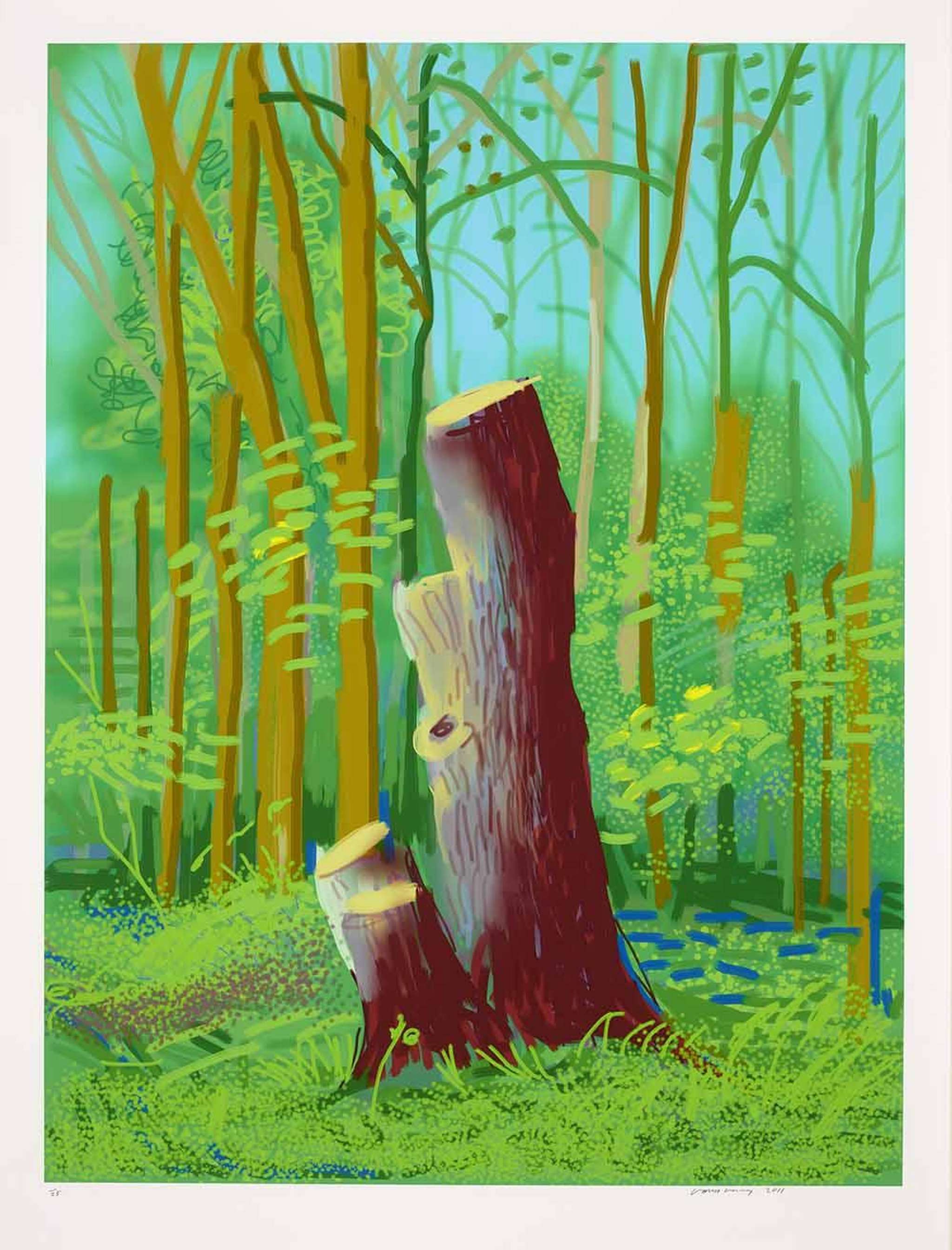
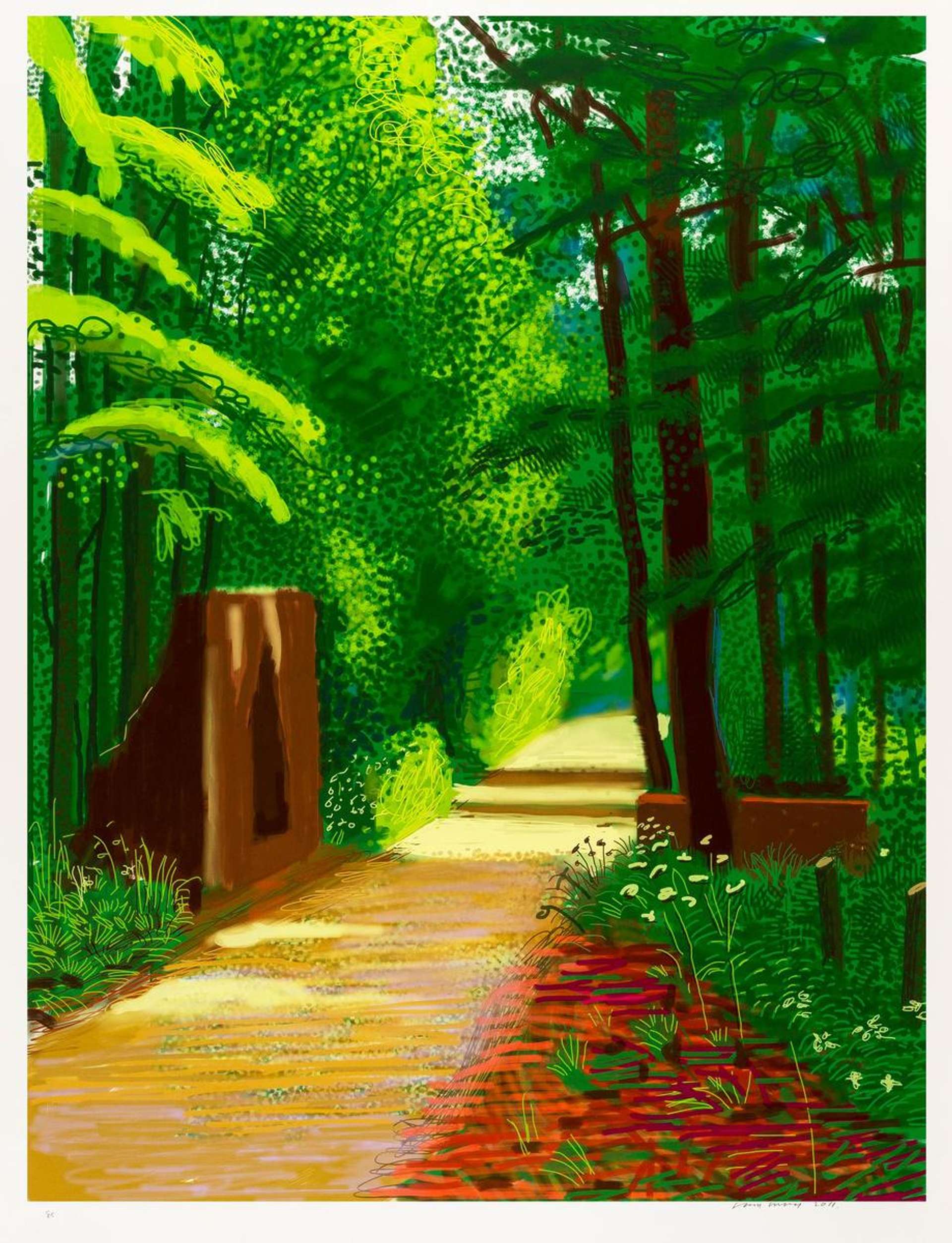
“He actually experimented with computer drawing early on but was frustrated by the delay lag. The iPad was the first technology that allowed him that immediacy, the hand-to-surface feedback that mirrors pen to paper. I think that’s crucial to understanding these works: they are handmade. The argument isn’t digital versus handmade, because each mark is drawn by Hockney’s hand, just on a tablet rather than a lithographic stone. He was even working alongside the technology itself to refine it so it could express exactly what he wanted.”
Q: Digital printmaking naturally invites questions about reproducibility. How did Hockney preserve artistic integrity in this format?
“For any editioned work, control and limitation are key,” Poole notes. “With an etching plate, the run is naturally limited by wear and tear; with digital printing, that limitation must be intentionally imposed by the artist. Hockney and his galleries were very deliberate in managing and certifying those editions, maintaining the same integrity and authorship as in traditional printmaking.”
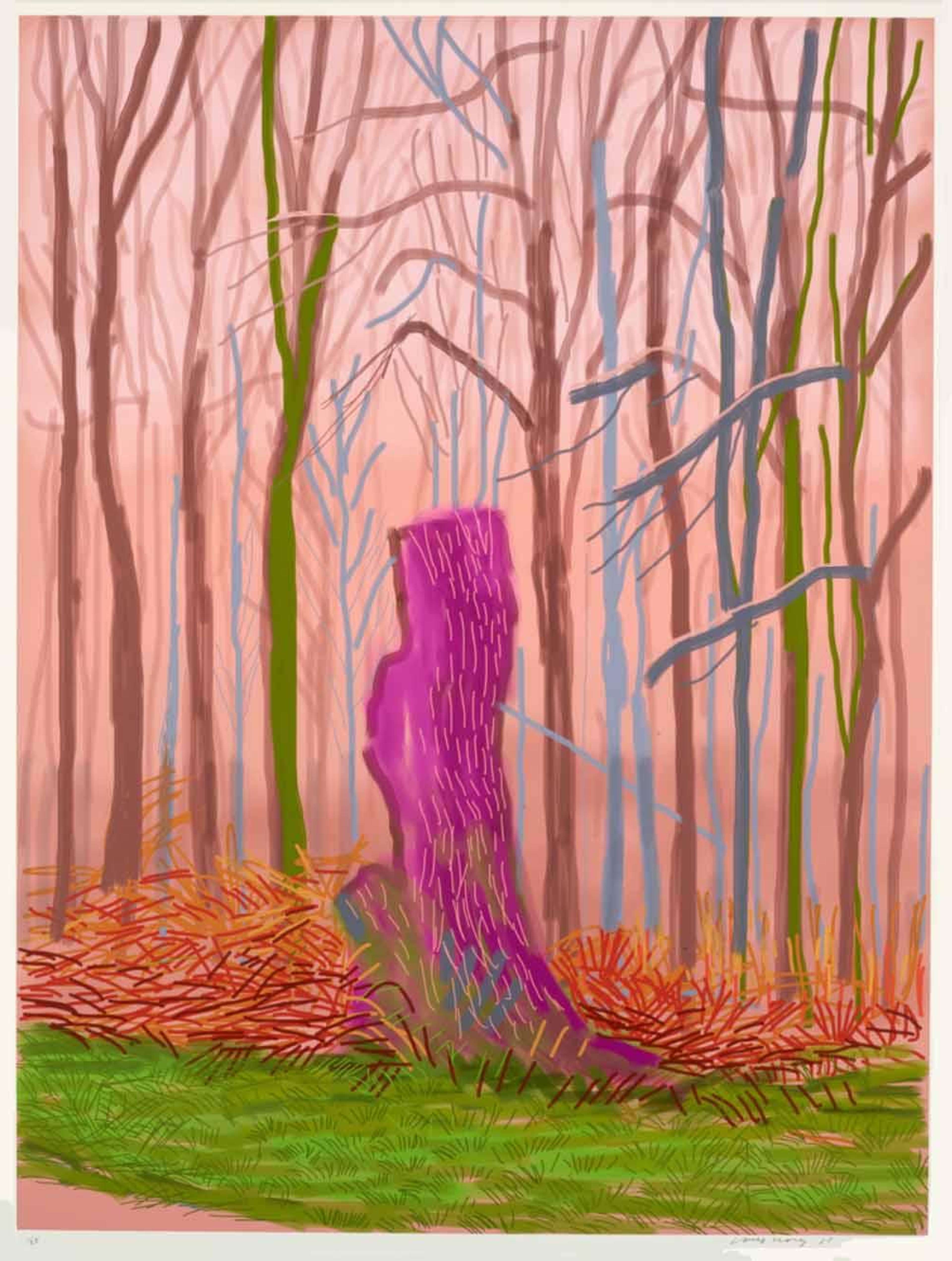
Q: When these iPad drawings first debuted, they divided opinion. How has perception changed since then?
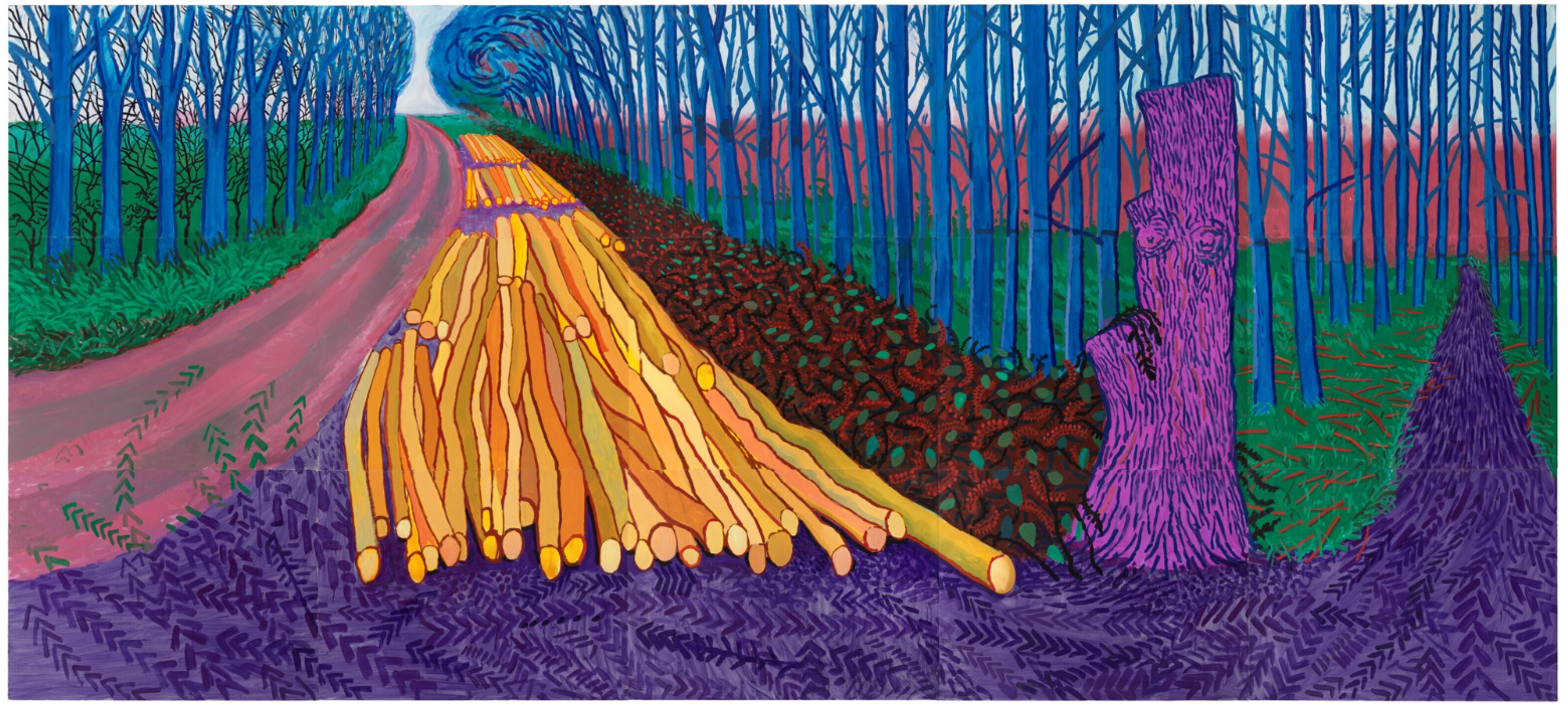
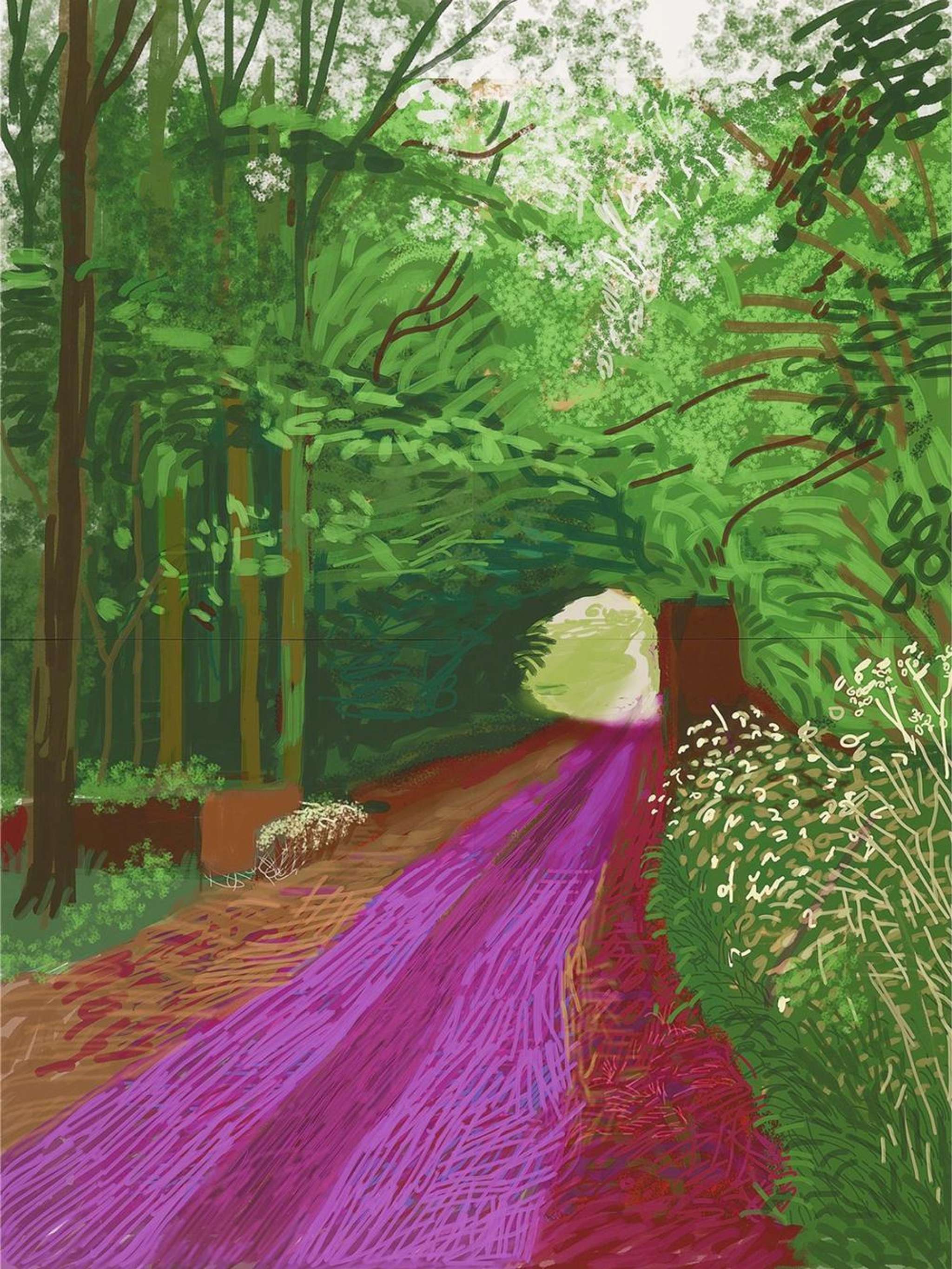
“Yes, there was definitely skepticism at the beginning,” Poole admits. “The Bigger Picture exhibition in 2012 received some rather scathing reviews, some critics found the digital medium too experimental or the vivid palette of pinks and greens too unnatural for Yorkshire. But over time, these works have become canonised as the most significant of Hockney’s iPad series among collectors.
“It’s interesting that The Arrival of Spring has become more sought after than the Yosemite iPad works. Part of that is the universality of the theme, it’s a celebration of renewal, of growth. But it’s also very personal to Hockney. After so many years in California, he returned to Yorkshire and reconnected with that landscape.
“Institutionally, these works have been front and centre from the beginning, from the Royal Academy show to the recent Paris retrospective. Market-wise, prices have risen consistently since they first appeared on the secondary market in 2017, peaking around 2023, and now we’re seeing the largest group ever offered publicly.”
Q: Hockney often speaks about the immediacy of drawing on an iPad. Do you think that spontaneity comes through in the prints themselves?
“Absolutely,” says Poole. “Hockney has always been fascinated by nature, the shifting light, changing seasons, fleeting shadows. When you see these works together, especially en masse, you feel that daily transformation of the landscape.
“The iPad allowed him to capture that immediacy in a way paint couldn’t. You can build layers quickly, establish relationships between objects instantly, and move fluidly through compositions. It’s very much an en plein air approach translated into digital form.
“When you see video footage of him drawing, you can sense the complexity of the layering, the decision-making, the movement of his hand. And within the series itself, the repeated elements - trees, paths, skies - are never static. They shift with weather, shadow, and colour, transforming the landscape into something newly alive each time.
“There’s also something wonderfully spontaneous about how he responds to spring itself, flowers emerging, colours intensifying. You can see him observing and reacting in real time. Each work becomes a dialogue between the artist and the season.”

Q: Hockney has long embraced new tools, from Polaroids and fax machines to iPhones and now iPads. Where does Arrival of Spring sit in that continuum?
“It fits perfectly within his lifelong exploration of image-making technologies,” Poole concludes. “From the photocopier and fax works of the 1980s to his Polaroid ‘joiners’ and now the iPad, Hockney has always questioned how we see, how we record, and how images are reproduced.
“The Arrival of Spring prints aren’t a departure, they’re a culmination. They embody his career-long inquiry into how technology can deepen, rather than distance, our connection to the world around us.”
Thinking of selling? Get a free valuation from our specialists today.