Four
Seasons
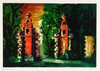
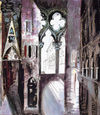
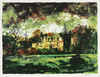
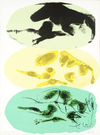
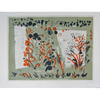
John Piper's Four Seasons (1981) print portfolio captures the essence of the changing seasons in a series of four creative etching prints. From the vibrant colours of spring to the serene landscapes of winter, Piper represents each season as a face, with decorative motifs in colours added to reflect each.
John Piper Four Seasons For sale
Four Seasons Market value
Auction Results
| Artwork | Auction Date | Auction House | Return to Seller | Hammer Price | Buyer Paid |
|---|
Sell Your Art
with Us
with Us
Join Our Network of Collectors. Buy, Sell and Track Demand
Meaning & Analysis
John Piper's 1981 Four Seasons is a print portfolio exploring the ever-changing beauty of nature throughout the year. With each of the four prints featuring, centrally, a large decorative face and titled after its respective season - Spring, Summer, Autumn, or Winter - Piper captures the essence of each season in his use of unique colours, facial physiognomy, and atmosphere. The prints are executed as etchings in colours, with a mixture of resin and carbonsodium powder used to generate rich texture.
Piper offers each season in personified form; in this, and in the notably pagan-influenced decorative style of the suite, he harks back to a long tradition of the seasons represent in anthropomorphic form. While associated with early culture worldwide, this tradition has been particularly strong in the British Isles. The figure of the Green Man in pagan literature, architecture and art is typically interpreted as an embodiment of the spirit of Spring. It is this figure which influences the style of Piper's portfolio: the faces represented through features only, with the head's outline absent, replaced by colourful, decorative motifs that allude leaves and other organic forms.
Piper's interest in the figure of the Green Man can be found elsewhere in his art, too.-- for example, in his two-part series Foliate Heads, or this ceramic plate, titled The Green Man (1992). This is likely thanks to the figure's recurrence in the architecture of many British medieval and nineteenth-century buildings, and Piper's well-documented fascination with architecture.
While remaining abstract, these boldly colourful elements demonstrate Piper's keen observation of nature and his ability to convey its essence through his art. Piper creates a visual narrative that invites the viewer to experience the cyclical rhythm of the seasons.
The portfolio highlights Piper's mastery of colour, as he captures the nuances of light, its transformative effects on the natural landscape, as well as the dominant palette of seasonal foliage. Whether it's the soft pastel hues of a spring morning, the vibrant and energetic colours of a summer day, the fiery tones of an autumnal scene, or the cool and stark atmosphere of a winter landscape, Piper's prints convey a sense of time, place, and atmospheric conditions specific to each season.
From an artist who often dedicated himself to depicting the pastoral character of the British Isles, the Four Seasons portfolio serves as John Piper's exemplary celebration of the beauty and diversity of the natural world.