
 Damien Hirst Print Market Investments © MyArtBroker

Damien Hirst
684 works
Key Takeaways
Damien Hirst’s investment outlook in 2026 is best read through auction trends, average value movement, and the behaviour of key market segments. Use these signals to assess risk, pricing stability, and long-term positioning in the print market.
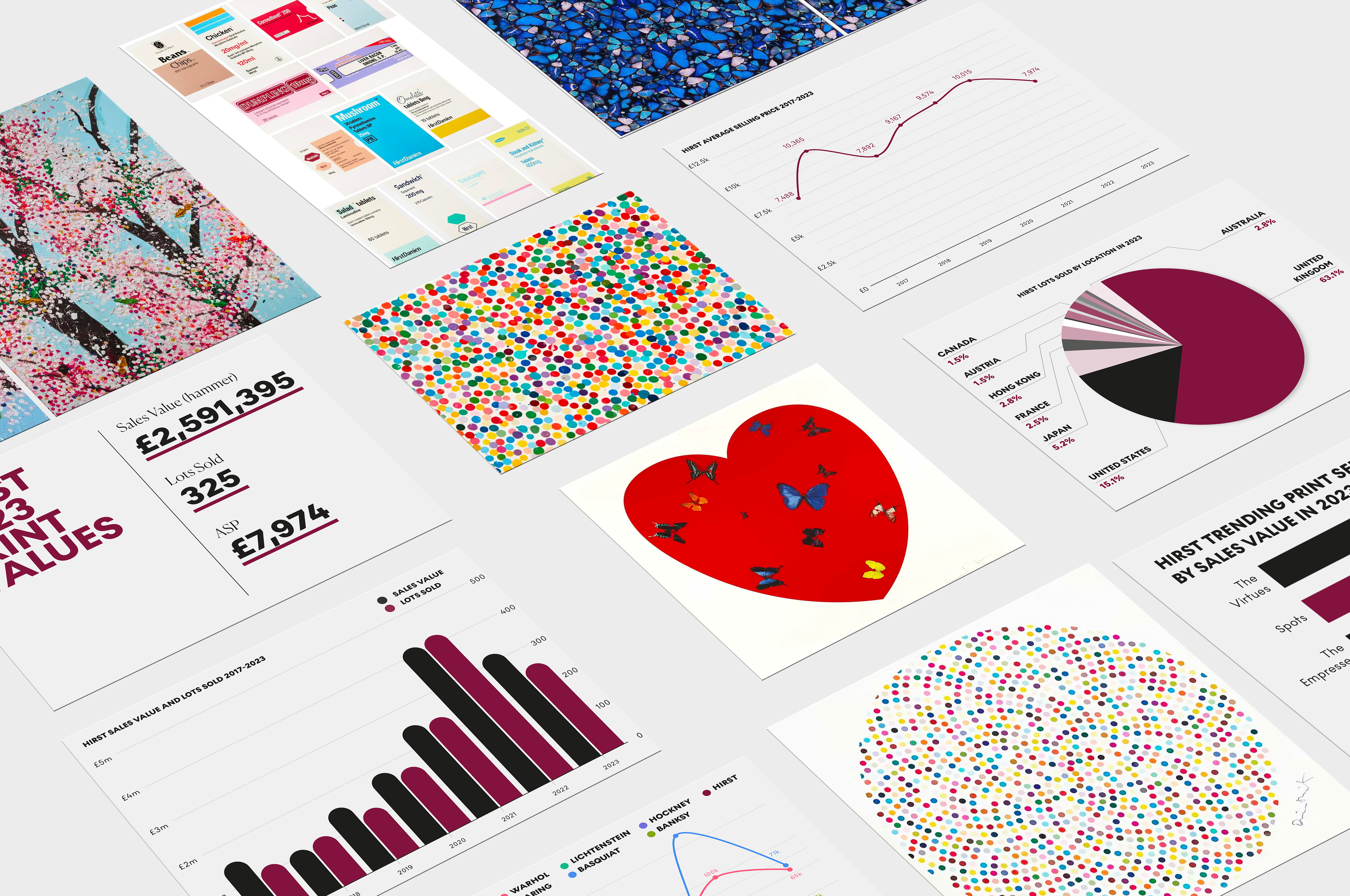
Damien Hirst’s print market reached its peak in 2022 before entering a period of consolidation. Since then, total sales value has declined to roughly half of peak levels, while transaction volume has remained broadly comparable to earlier years, including 2021. This divergence points to a market absorbing sustained supply, with trading activity continuing even as price levels adjust.
Unlike scarcity-led print markets, Hirst’s activity is shaped by continuous issuance and high availability, which has driven a gradual reset in values over time. By 2025, pricing had settled into a lower range supported by consistent transaction flow, indicating that the market has stabilised around a new equilibrium rather than experiencing structural stress.
Is Buying a Damien Hirst Print a Good Investment?
Hirst’s print market operates on a different investment logic to most blue-chip peers. Returns are not driven by episodic scarcity or headline results, but by how effectively individual series retain demand once supply peaks.
The current environment favours structural differentiation within the broader artistic framework. Established series with capped narratives or limited re-issuance have retained stronger pricing discipline, while heavily circulated works have softened as availability increased. The investment case therefore rests on understanding supply dynamics, format hierarchy, and series maturity, rather than expecting market-wide appreciation.
What Happened in Damien Hirst’s Print Market at Auction in 2025?
Auction activity in 2025 showed the market operating through a phase of absorption following its 2022 peak. Total sales value declined, while transaction volume remained resilient, confirming continued turnover at lower price levels.
Trading activity concentrated around familiar series with proven secondary-market depth, while newer or heavily circulated editions generated weaker results. Auctions functioned as a clearing mechanism, with prices resetting most visibly in areas where similar works had entered the market through large-scale primary releases. Where issuance had been more contained – and no close equivalents continued to enter circulation – pricing held firmer. This reinforced discipline by format and series, reflecting unique distribution dynamics.
What Is the Average Value of My Damien Hirst Print?
Average values in Hirst’s print market are structurally shaped by scale. A large proportion of his editions are intentionally released at (more) accessible price points, meaning average value functions as a volume-weighted signal rather than a proxy for quality or collector appetite.
As supply expanded post-2021, average selling prices moved lower, reflecting the increased circulation of widely available editions. In Hirst’s case, average value is best read as an indicator of release strategy and edition mix: lower averages coincide with broad participation across accessible works, while firmer averages emerge when trading concentrates in more controlled series or complete sets.

Top Performing Print Collections in Damien Hirst’s Current Market
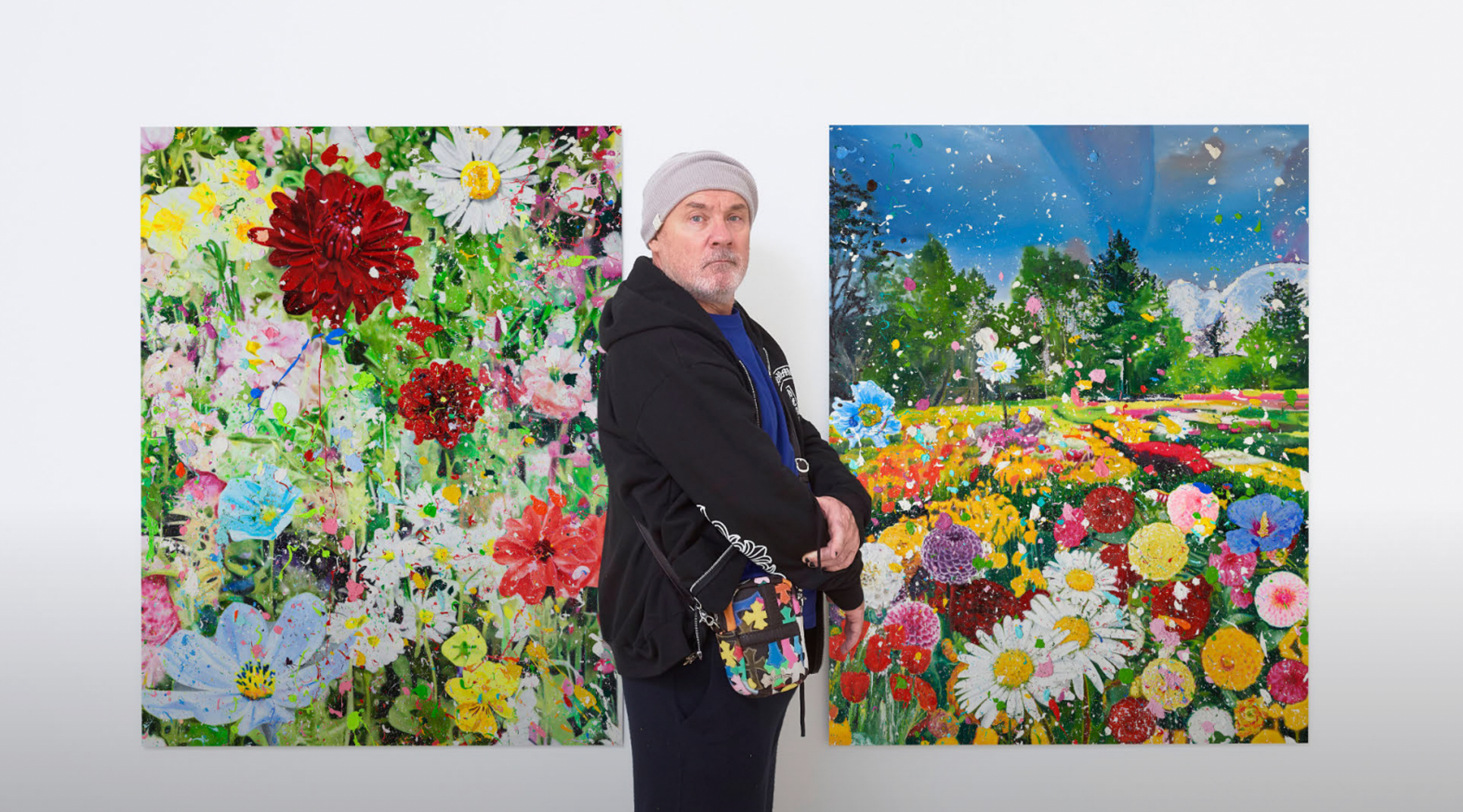
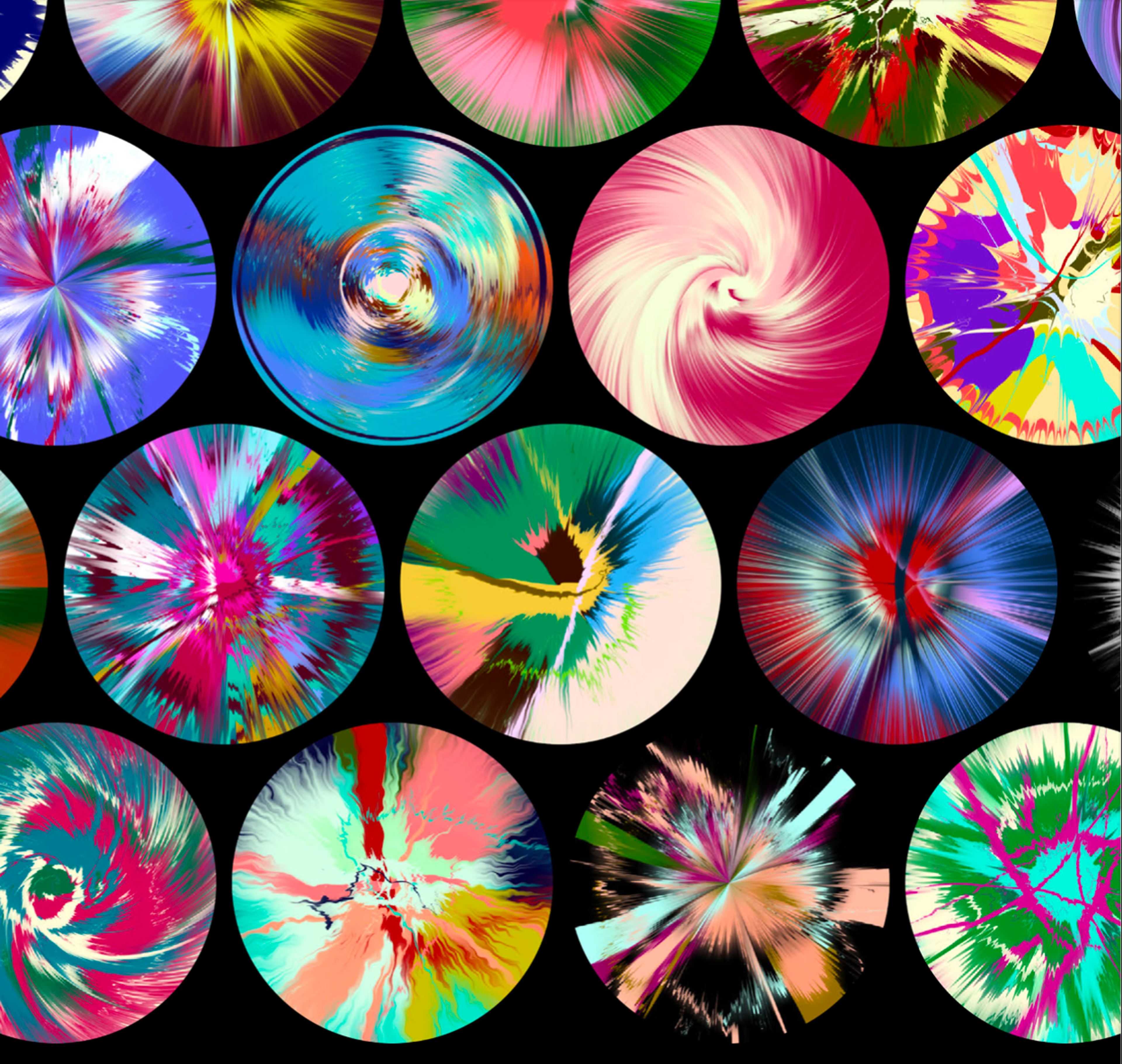
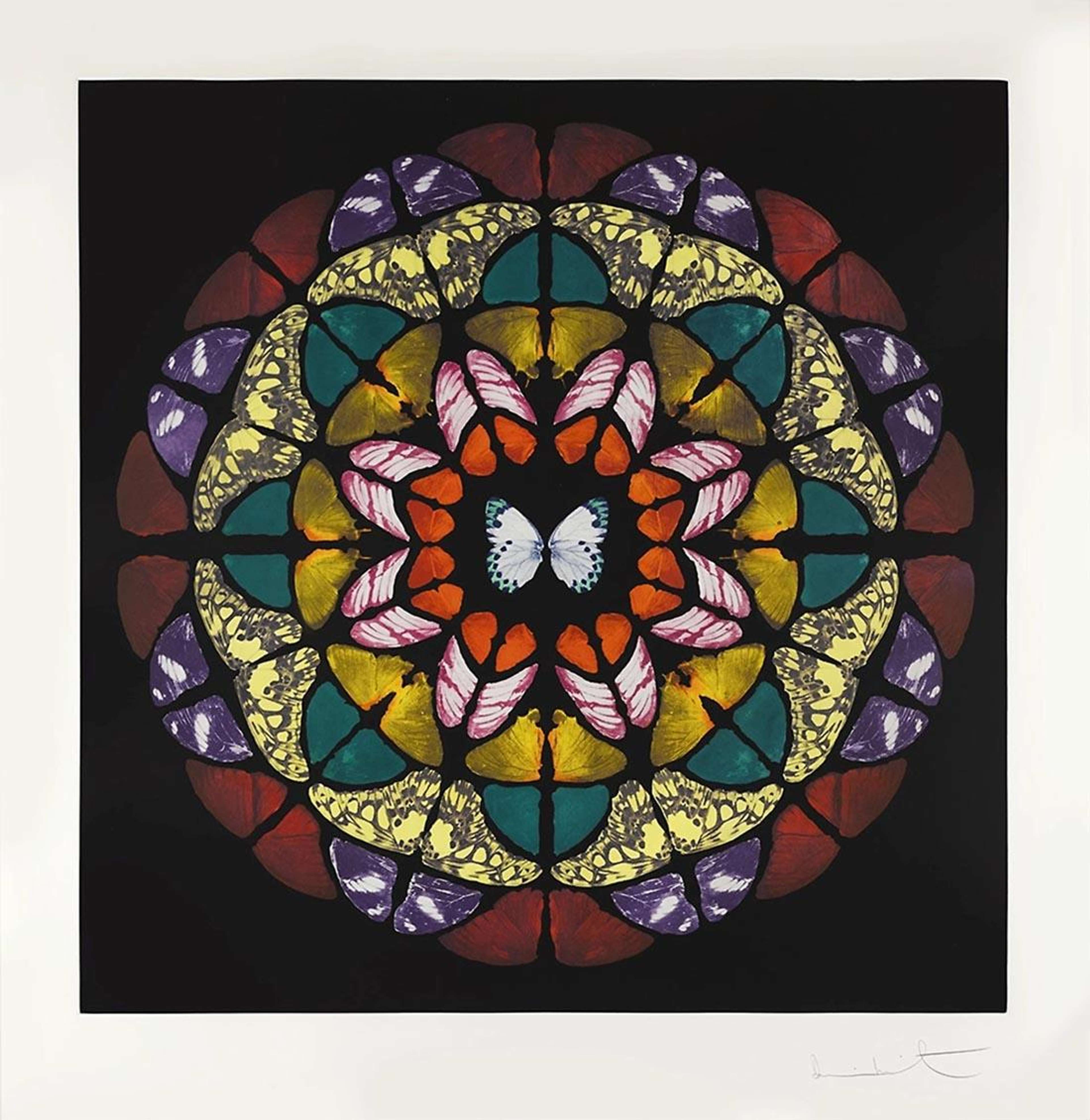
The strongest-performing collections in Hirst’s print market tend to represent completed ideas. Value concentrates where narrative, format, and issuance are finite, allowing pricing to stabilise once supply has cleared.
The Virtues remains the clearest example. As a capped series with a coherent conceptual framework and strong complete-set logic, it continues to outperform on a relative basis even as broader market values have softened.
Love Poems has followed a similar trajectory. Limited appearances, visual cohesion, and restrained circulation have supported price appreciation at both the set and individual-print level, despite wider market absorption.
Pharmaceutical (Spot) prints operate differently. Pricing is shaped by condition, availability, scale, colourway, and collector preference across variations, with some buyers placing added emphasis on the pharmaceutical title itself. Demand remains consistent, but outcomes diverge meaningfully across near-comparable works due to the breadth of the series.
The Most In-Demand Damien Hirst Prints from Investors
The most sought-after works in Hirst’s market tend to originate from earlier phases of his print practice and maintain a closer conceptual link to his core themes that straddle representations of mortality and transience.
Complete sets remain central to demand. They provide structural clarity, reinforce narrative completeness, and offer stronger pricing authority than individual works from the same series.
Alongside sets, early individual prints tied to Hirst’s memento mori language – including skull, cabinet, and tightly controlled spot editions – continue to attract sustained interest. These works benefit from restrained circulation and clearer positioning within his broader oeuvre.
Later HENI-era releases trade actively, though repeated issuance has, perhaps temporarily, stalled price growth.
What Are the Top Performing Blue Chip Artist Markets?
Hirst occupies a structurally distinct position within the blue chip print market. His is the only market shaped primarily by deliberate issuance decisions rather than discovered through scarcity or gradual validation.
This produces a different performance profile to his peers. Hirst’s market has proven less volatile than Basquiat’s, less scarcity-driven than Warhol’s, and more elastic than Haring’s. What ultimately differentiates Hirst is his exposure to supply decisions: pricing responds directly to how much material enters circulation, how often imagery repeats, and whether issuance is capped or ongoing.
Risk in Hirst’s market is therefore linked to over-issuance rather than relevance. Value holds where supply has ended or consolidated, and compresses where repetition continues.
Liquidity in Damien Hirst’s Print Market
Liquidity in Hirst’s print market is engineered. Constant circulation is built into the market’s design, with entry points deliberately maintained across lower and mid-price tiers. This has ensured consistent transaction volume even as prices have adjusted since the post-2022 peak.
Because supply is abundant by intention, exit outcomes depend more on timing, format, and structural containment than rarity alone. Auctions increasingly act as a clearing mechanism for surplus editions, while higher-value and constrained formats are more frequently absorbed through private transactions, where price integrity can be preserved without repeated public exposure.
Liquidity remains high, but value now concentrates selectively where issuance has stopped.
This guide is intended for informational and research purposes only and does not constitute investment advice. All analysis and commentary reflect MyArtBroker’s interpretation of historical and current market data at the time of writing. As market conditions evolve, our views and analysis may change. Individual artworks and editions can perform differently depending on factors such as condition, provenance, timing, and market context. Readers are encouraged to conduct their own research and consult with a specialist before making any acquisition or sale decisions.