

Key Takeaways
How to Buy a Banksy Print
- Banksy's print market has stabilised after the post-2021 correction – average hammer prices have held steady at £25,000–£31,000 across 2024–2026.
- Signed editions command a significant premium – signed prints average £46,000 at hammer versus £15,000 for unsigned.
- All Banksy prints require a Pest Control certificate of authenticity to be considered tradeable on the secondary market – effectively accounting for half of the works value.
- Girl With Balloon remains the market's anchor, consistently generating the highest values across public and private sales, with signed examples consistently achieving the highest results in Banksy's market.
- There is no primary market – Banksy has not released new editions since 2017, meaning all purchases happen through auction houses, private dealers, or specialist platforms.
This guide covers everything buyers need to know about acquiring Banksy prints in 2026 – from understanding edition structures and authentication requirements, to navigating current pricing, identifying the most sought-after works, and choosing where to buy.
Why Collect Banksy Prints?
Banksy emerged from Bristol's street art and graffiti scene in the 1990s, building a global profile through a combination of provocative public interventions, sharp political commentary, and a carefully maintained anonymity that has become central to his cultural mythology. His work addresses themes of consumerism, authority, conflict, and social inequality – often with a visual directness that resonates far beyond the traditional art world.
With Banksy originals regularly achieving seven-figure results, prints represent the most accessible entry point into one of the most liquid secondary markets in contemporary art. Banksy's cultural reach – amplified by the 2018 Sotheby's shredding incident and continued street interventions – sustains broad collector interest across both art market participants and a wider audience that few other artists command.
What Types of Banksy Prints Are Available?
Banksy's printmaking output spans roughly 15 years (2002–2017) and encompasses over 50 distinct editions. Understanding the different formats and edition structures is essential for assessing what you are buying and where it sits within his market.
Banksy Signed vs. Unsigned Editions
Most Banksy print series were issued in two tiers: a smaller signed edition (typically 25–150 prints) and a larger unsigned edition (often 500–750). Both formats are authenticated through a Pest Control authorised certificate of authenticity and are equally recognised as legitimate works. Signed editions bear Banksy's pencil signature and edition numbering on the front. Beyond the COA and signature, other authentication markers vary from print to print – Girl With Balloon, for example, carries a Pictures on Walls (POW) blindstamp, while Happy Choppers features a Banksy stamp. Buyers should familiarise themselves with the specific markers associated with the edition they are considering.
Banksy Print Techniques: Screenprint, Canvas, and Hand-Finishing
The vast majority of Banksy prints are screenprints on paper, consistent with his graphic, stencil-derived visual language. Certain editions incorporate hand-finishing and others were produced in a range of colourways. A number of prints were also produced as editioned canvas works, including variations of Girl With Balloon, Happy Choppers, and Heavy Weaponry, among others. These canvas-based editions sit separately within the market and are assessed differently to their paper equivalents.
Banksy's Most Notable Print Series
Banksy’s editions span a broad range of subject matter, symbolism, and visual identity. His most prominent prints include Girl With Balloon and Love Is In The Air. Both originated as early street works and continue to anchor demand across the print market.
Other mural-based editions carrying overt political undertones, including Nola and Choose Your Weapon, are also highly sought after by collectors. Despite being produced in multiple colourways, both series remain relatively scarce on the secondary market, and examples tend to generate concentrated bidding activity when they appear at auction.
Alongside these are works that have become emblematic of Banksy’s critique of the art world itself. Morons, produced across several edition types and colourways, remains one of the clearest expressions of his anti-establishment stance and continues to resonate strongly with collectors.
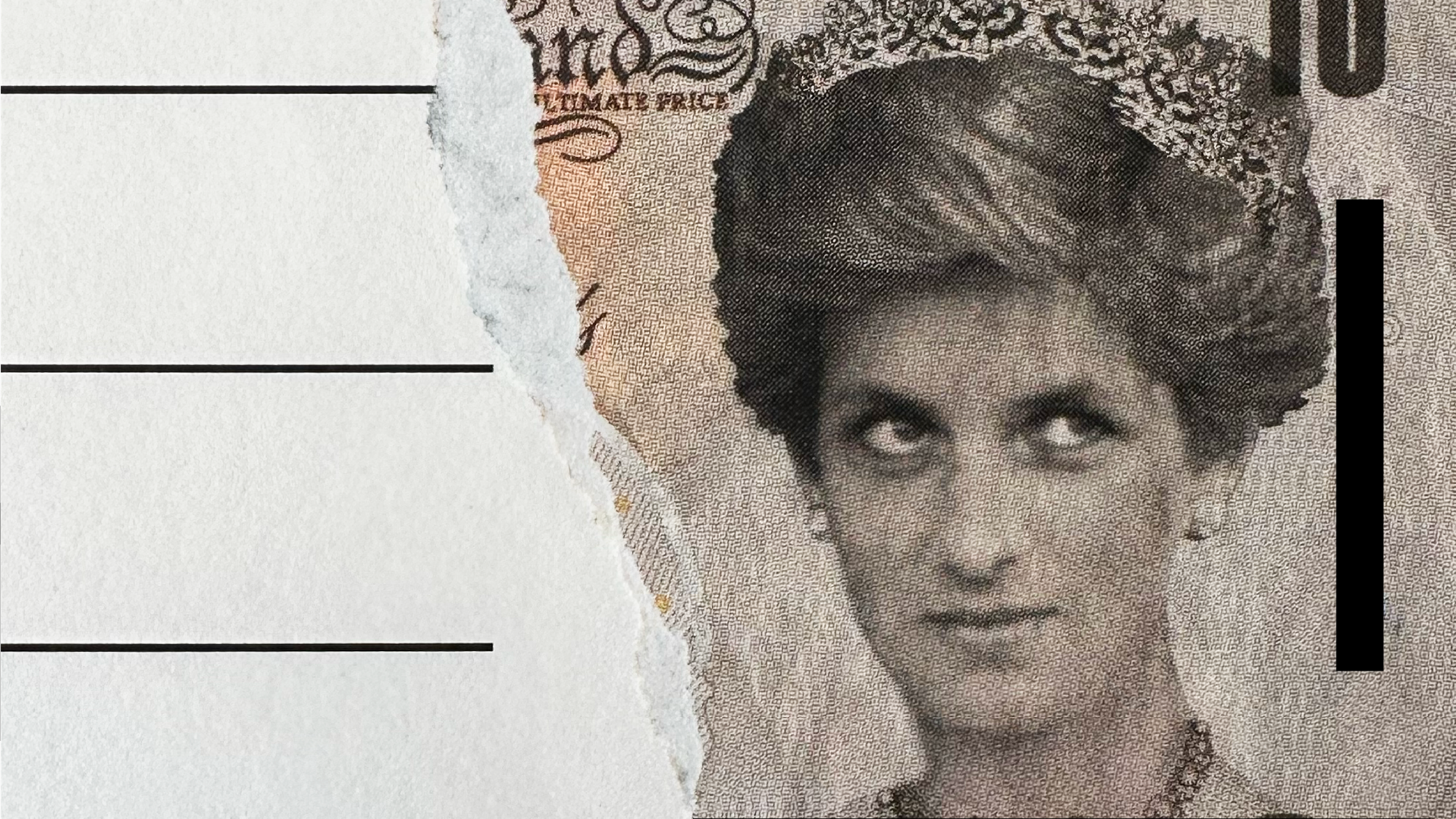
Banksy’s Los Angeles editions – often referred to as the Barely Legal print set – are similarly significant. Released in conjunction with his landmark 2006 Barely Legal exhibition in Los Angeles, these works were printed by Modern Multiples and originally sold for $500, giving them both historical importance and strong commercial appeal today.
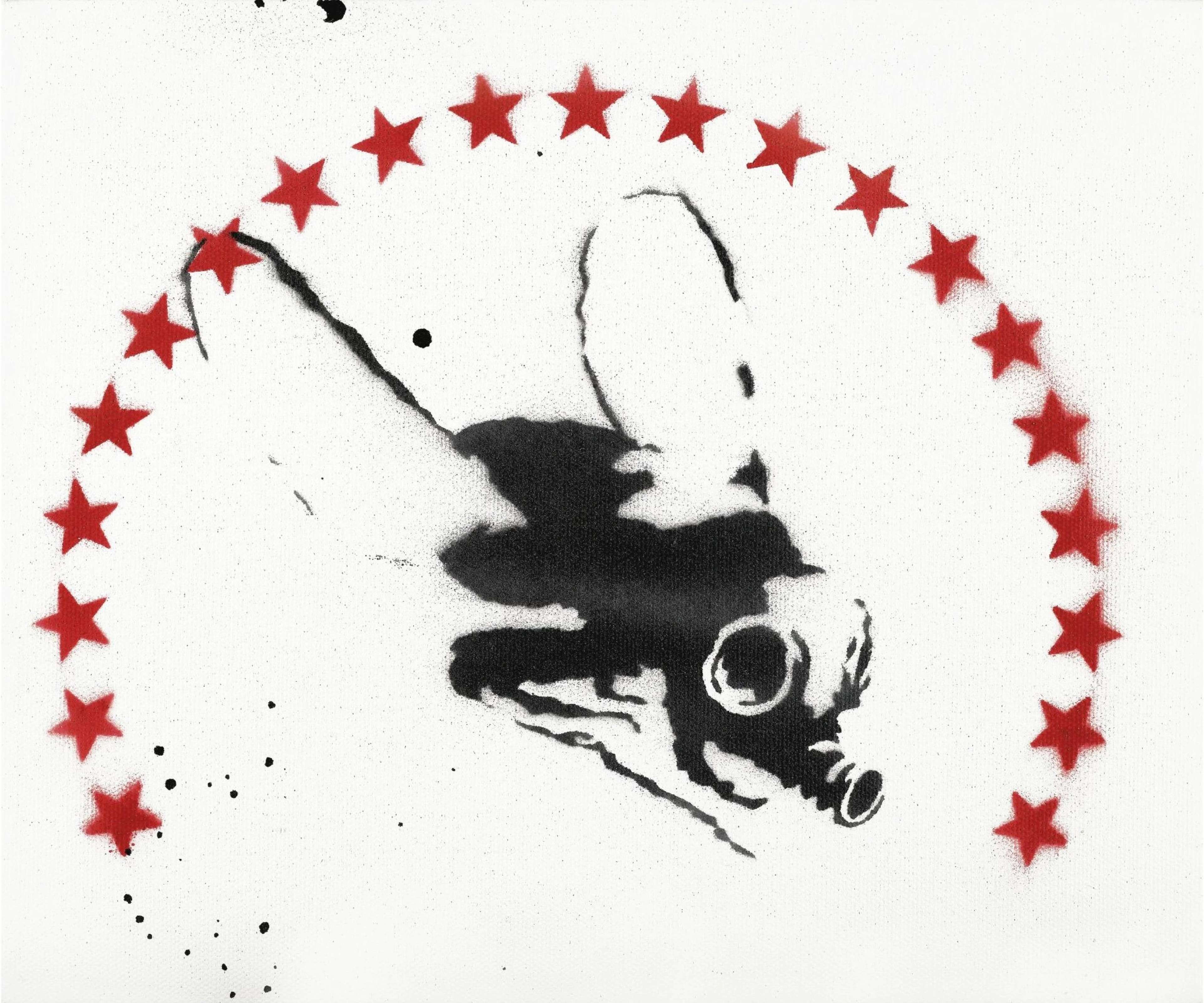
Other established series, including Laugh Now, Pulp Fiction, Napalm, Trolleys, HMV, CND Soldiers, and Bomb Love, form the broader core of the market and continue to trade regularly at auction.
Banksy Artist's Proofs and Colour Variants
Artist’s proofs (APs) occupy a distinct tier within Banksy’s print market, often combining significantly smaller edition sizes with alternative colourways not seen in the main edition. In Girl With Balloon, for example, APs feature balloons in different colours and were produced in far smaller numbers than the standard red edition. These works have become some of the most sought-after prints in Banksy’s market, with Girl With Balloon (AP Gold) currently holding the auction record for any Banksy print.
A similar dynamic exists across Choose Your Weapon and Nola. Certain Choose Your Weapon AP colourways have never appeared at public auction, while Nola variants – distinguished by different coloured rain – surface extremely infrequently. As a result, these works represent one of the tightest supply segments of the Banksy market and tend to attract concentrated competition whenever examples emerge publicly.
How Much Do Banksy Prints Cost in 2026?
Banksy's print market spans a wide value range, accommodating both new collectors entering at accessible levels and established buyers competing for the most sought-after editions. Pricing is shaped by edition structure, signature status, condition, proof status and the specific series.
What Do Banksy Prints Sell For at Auction?
The core of Banksy's market sits between £5,000 and £15,000 at hammer – this is where the majority of unsigned editions trade, covering established series like Trolleys, Bomb Love, HMV, and CND Soldiers. Above that, the £15,000–£30,000 range represents a transition zone: stronger unsigned titles and signed editions of mid-range series. Signed prints from the most sought-after editions – Girl With Balloon, Kate Moss, Kids On Guns – anchor the top end, with the strongest results regularly exceeding £100,000. Across 2024–2026, 463 lots generated £12.2 million in total hammer value.
Banksy Signed vs. Unsigned Print Prices
The signed–unsigned divide is one of the defining structural features of Banksy’s print market, with signed and unsigned editions effectively operating as two distinct markets with different buyer bases, pricing expectations, and levels of scarcity. As explored in MyArtBroker’s Banksy Market Report, signed works consistently command a substantial premium over unsigned works.
Across the same period, signed prints (166 lots) averaged £46,000 at hammer, while unsigned editions (297 lots) averaged £15,000. This near 3:1 pricing gap continues to shape buyer behaviour across the market for core and premium works.
Banksy Print Market Trends: 2024–2026
The Banksy print market peaked in 2021, driven by speculative demand and broader momentum in the contemporary art market. Since then, pricing has corrected and stabilised. In 2024, 200 lots generated £5.1 million in total hammer value (average £25,575). In 2025, 208 lots generated £5.4 million (average £25,810). In 2026 through Q2, 55 lots have already generated £1.7 million, with the average rising to £31,315 – suggesting strengthening results at the top end.
Transaction volume has held steady across this period, indicating sustained liquidity. The correction from 2021 peaks has largely played out, and the market is now operating on more disciplined fundamentals – pricing is increasingly aligned with edition structure, title recognition, and condition rather than speculative momentum.
Which Banksy Prints Are Most In Demand?
Demand in Banksy's market is concentrated around editions tied to his most culturally embedded imagery. The strongest-performing works combine high visual recognition, limited supply, and consistent auction history.
Most Sought-After Banksy Print Series
Girl With Balloon leads the market by a significant margin. It generated the highest total value of any Banksy series across 2024–2026, with 21 lots traded and consistently strong results across major international auction houses. Its status as Banksy's most universally recognised image sustains demand from both new and established collectors.
Choose Your Weapon has become one of the most structurally interesting series, with colourway scarcity now a primary driver of differentiation. Common colourways trade within their historical range, while rarer variants attract disproportionate competition. Kate Moss maintains a distinct collector base, drawing crossover interest from fashion and pop culture audiences alongside art market buyers.
Banksy Print Series Gaining Value
- Love Is In The Air/Thrower – Strong results in 2025–2026, with signed Thrower (Grey) examples demonstrating consistent upward momentum at the top of the market.
- Soup Can – A newer favourite with growing auction presence. Five lots traded in 2025, suggesting expanding collector interest.
- Banksquiat – Collaborative homage to Jean-Michel Basquiat, appealing to collectors of both artists. Small editions and distinctive imagery drive selective demand.
- Applause – Rare and infrequently traded, but achieving strong results when it appears, achieving a new record result at Sotheby's London in 2026.
As a general principle, demand concentrates around editions with a clear link to Banksy's most visible public works, combined with tight edition sizes and a strong auction track record. Colourway scarcity and proof status add further differentiation within series.
How to Authenticate a Banksy Print
When buying a Banksy print, a valid Pest Control certificate of authenticity (COA) is essential. Without one, a work is generally not recognised as authentic on the secondary market, and most reputable auction houses, dealers, and online platforms will not handle it. Pest Control certificattion accounts for a significant portion of a Banksy print’s market value and resale liquidity.
What Is Pest Control?
Pest Control Office, established in 2008, is the sole body authorised to authenticate Banksy’s work. All prints released from 2009 onward were issued with a Pest Control COA at the point of sale. For earlier works – particularly editions originally distributed through POW – retrospective certificates may still be obtainable through Pest Control, although the process can be lengthy and approval is not guaranteed. POW stamps or documentation alone are not considered sufficient authentication on the secondary market.
How To Tell If A Banksy Print Is Authentic
- A valid Pest Control COA matching the exact work, including title, edition number, and format.
- Consistent edition numbering and, where applicable, a matching pencil signature.
- Clear provenance and documented ownership history.
- Careful consideration of works offered without certificates, as retrospective authentication is not always possible and can materially affect resale liquidity and value.
Pest Control does not authenticate street works or murals and does not provide valuations.
How to Assess the Condition of a Banksy Print
Condition is a material factor in pricing, particularly for Banksy's earlier editions produced between 2002 and 2006. Many of these prints were created before his market fully developed, and some were printed on paper stock with higher acid content, presenting long-term conservation considerations.
Buyers should request unframed, high-resolution images and look for signs of fading, foxing (small reddish-brown spots), paper discolouration, buckling from humidity changes, and any evidence of trimming or restoration. Acid burn from poor-quality mounts or backing boards is a common issue with older prints and can cause visible edge discolouration.
Adhesive residue from previous mounting is another concern – tape or glue applied directly to the print can degrade paper over time. While some condition issues are treatable by specialist conservators, others (particularly light fading) are irreversible. Prints stored flat, in stable humidity and temperature conditions, away from direct light, will present best. Professional framing with UV-protective glazing and acid-free mounting is recommended for long-term preservation.
When Is the Best Time to Buy a Banksy Print?
With no new editions entering the market since 2017, supply is structurally fixed – the only variable is how many existing owners choose to sell at any given time. This creates a different dynamic from artists with ongoing production, where primary releases can dilute secondary-market pricing.
The post-2021 correction brought prices down from their speculative peak, and by 2024–2025, the market had broadly stabilised. For buyers, this reset offers an opportunity to acquire established editions at levels that are more closely aligned with long-term fundamentals. The strengthening average in 2026 points toward a market that is finding its floor, though specific titles and edition types will continue to move independently based on their own supply-demand dynamics.
Monitoring major auction house calendars helps identify acquisition windows – Banksy prints appear in prints and multiples sales throughout the year. Private sales through specialist platforms can surface works not available publicly, including specific colourways, artist's proofs, or signed editions of less frequently traded series.
Where to Buy Banksy Prints
All Banksy prints are acquired on the secondary market. There is no direct sales channel or gallery representation through the artist. Buyers have several routes, each with different cost structures and advantages.
Buying Banksy Prints at Auction
Christie's, Sotheby's, Phillips, Bonhams, and Forum Auctions all feature Banksy regularly in prints and multiples sales. Auction provides price transparency and competitive validation, but buyer's premiums (typically 25% plus VAT) significantly increase the final cost above the hammer price, alongside shipping, insurance, and any applicable taxes.
Buying Banksy Prints Through Private Sale
Specialist platforms such as MyArtBroker provide access to Banksy prints sourced through private collector networks. This route is particularly valuable for sourcing specific titles, colourways, or signed editions that may not appear at public auction – or for buyers who prefer to negotiate a fixed price rather than compete in a bidding environment where outcomes provide far less control.
Why Use MyArtBroker to Buy a Banksy Print?
MyArtBroker connects buyers with a dedicated specialist and a global network of over 40,000 collectors, dealers, and galleries. Our live Trading Floor provides access to Banksy prints – including signed editions, rare colourways, and works sourced exclusively through private networks.
Every print sourced through our platform is verified for authenticity and condition by our specialist team. We handle the full transaction – sourcing, verification, and delivery – combining specialist reliability with online transparency. Our market reports, valuation tools, and data-driven insights help you buy at the right level for your collection.