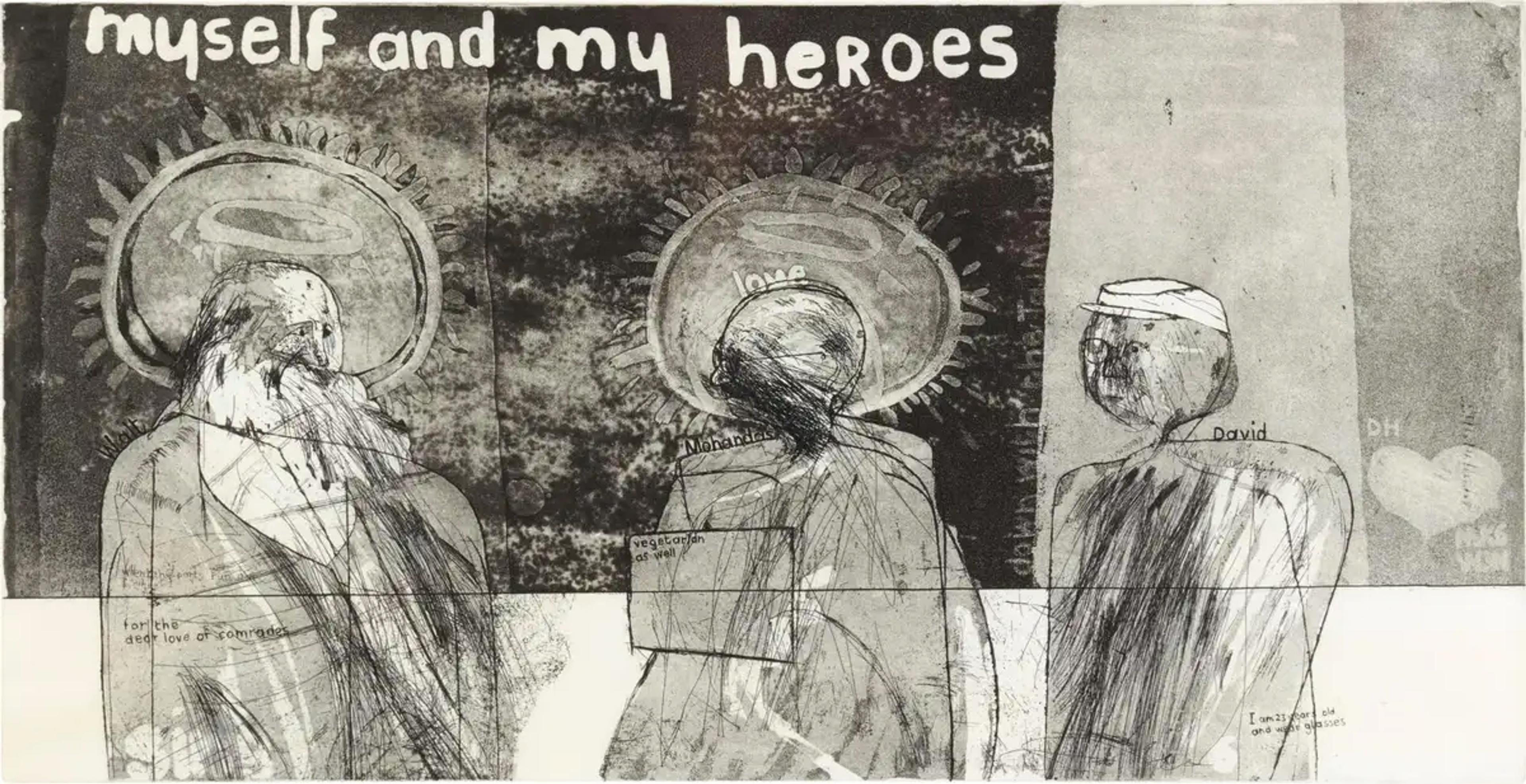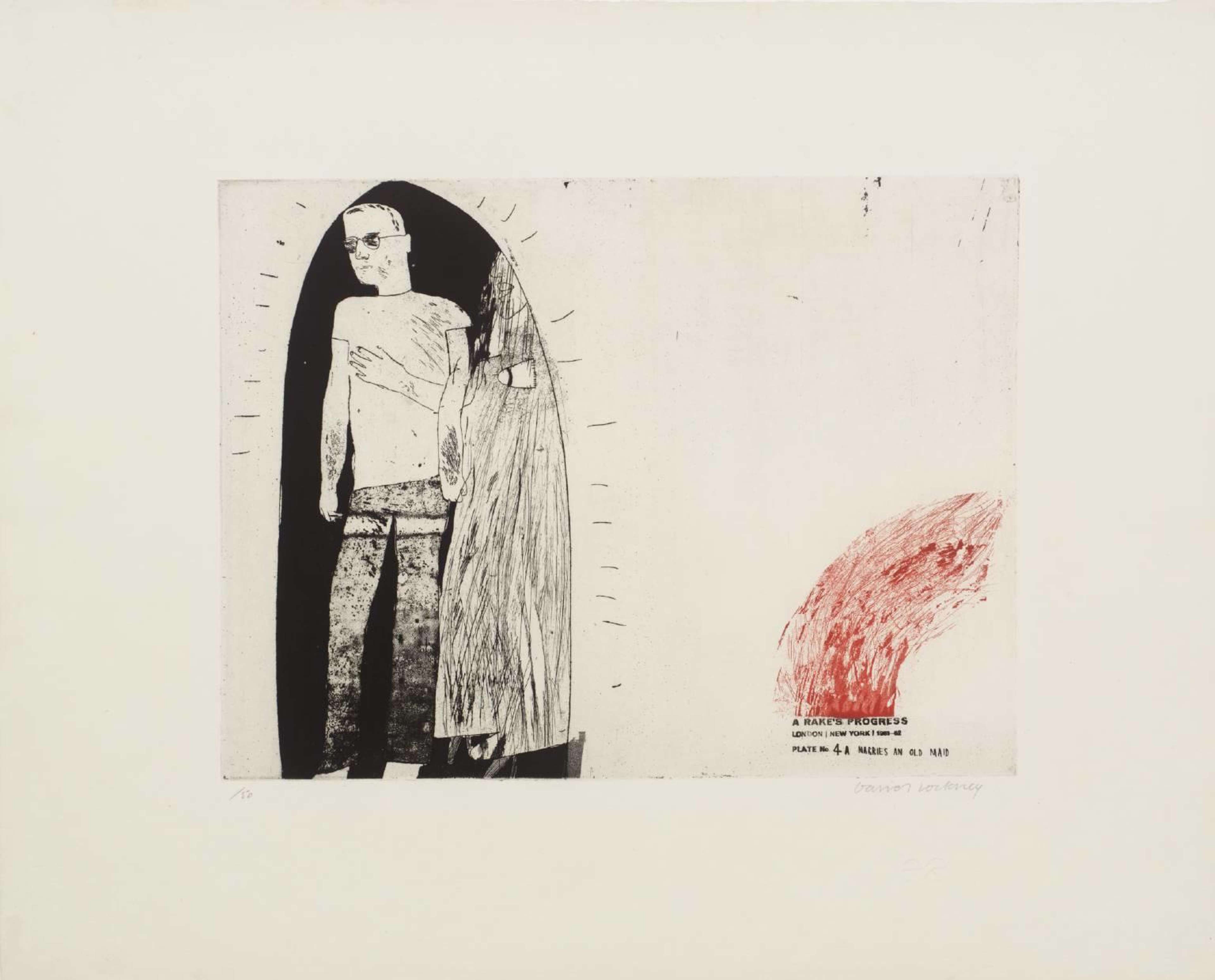


David Hockney’s 1963 series A Rake’s Progress reimagines William Hogarth’s eighteenth-century morality tale for a modern audience. Across sixteen prints in etching and aquatint, Hockney uses his first trip to New York to introduce self-portraiture and wit into a narrative of ascent and estrangement.
Hockney reimagines Hogarth’s morality tale as a modern New York tale
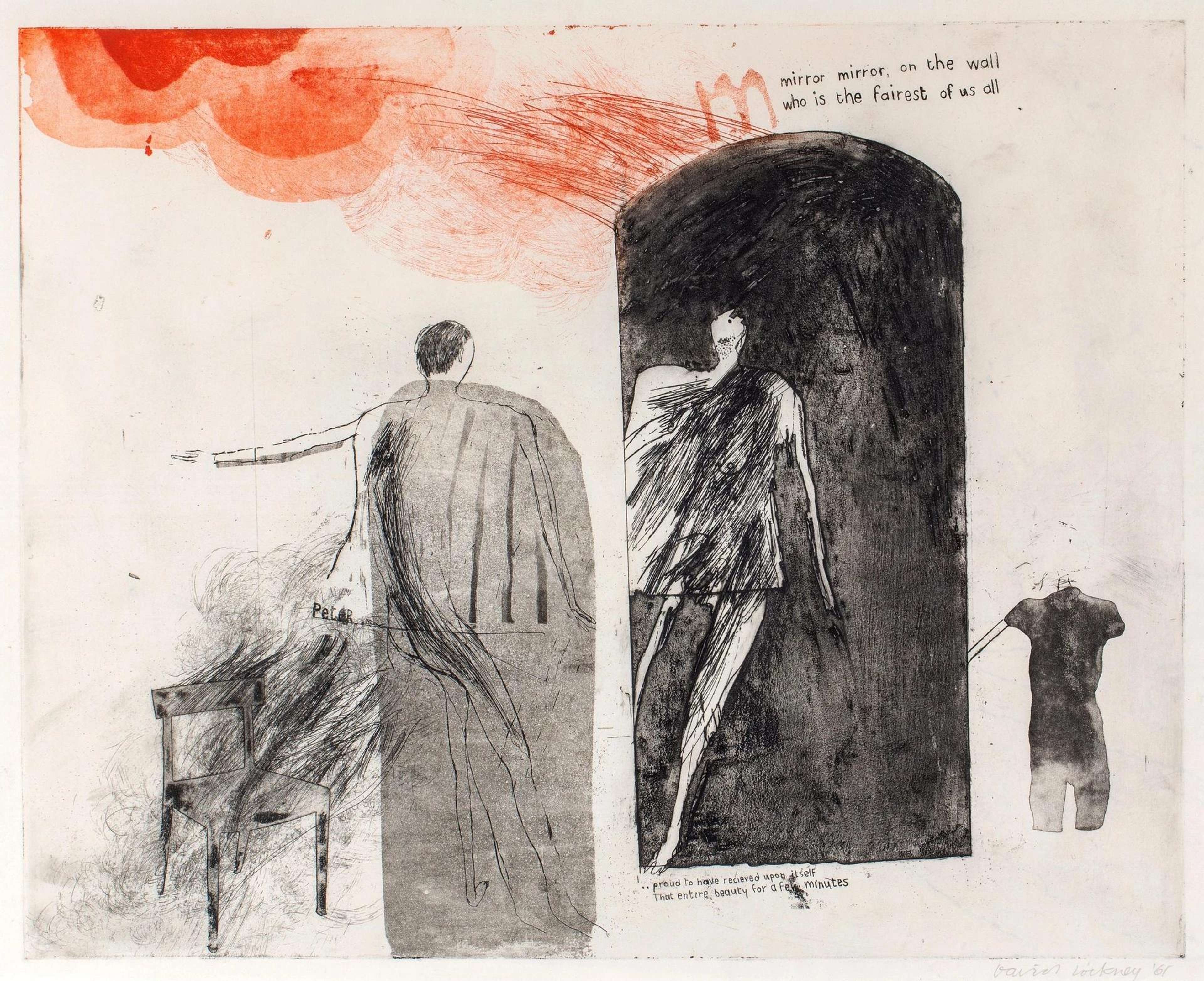
David Hockney’s A Rake’s Progress retells William Hogarth’s eighteenth-century cautionary tale into a contemporary journey through New York. Maintaining the narrative of arrival, temptation, and downfall, Hockney swaps Tom Rakewell for a figure resembling the young artist who navigates skyscrapers, stairwells and bars. What emerges is a witty, contemporary re-telling where consumer spectacle, identity and alienation replace Hogarth’s gambling dens. By recasting a “modern moral subject” for the age of mass media, Hockney shows how the Rake’s descent parallels the loss of individuality inside a commercial society.
Hockney used etching and aquatint to craft his visual language
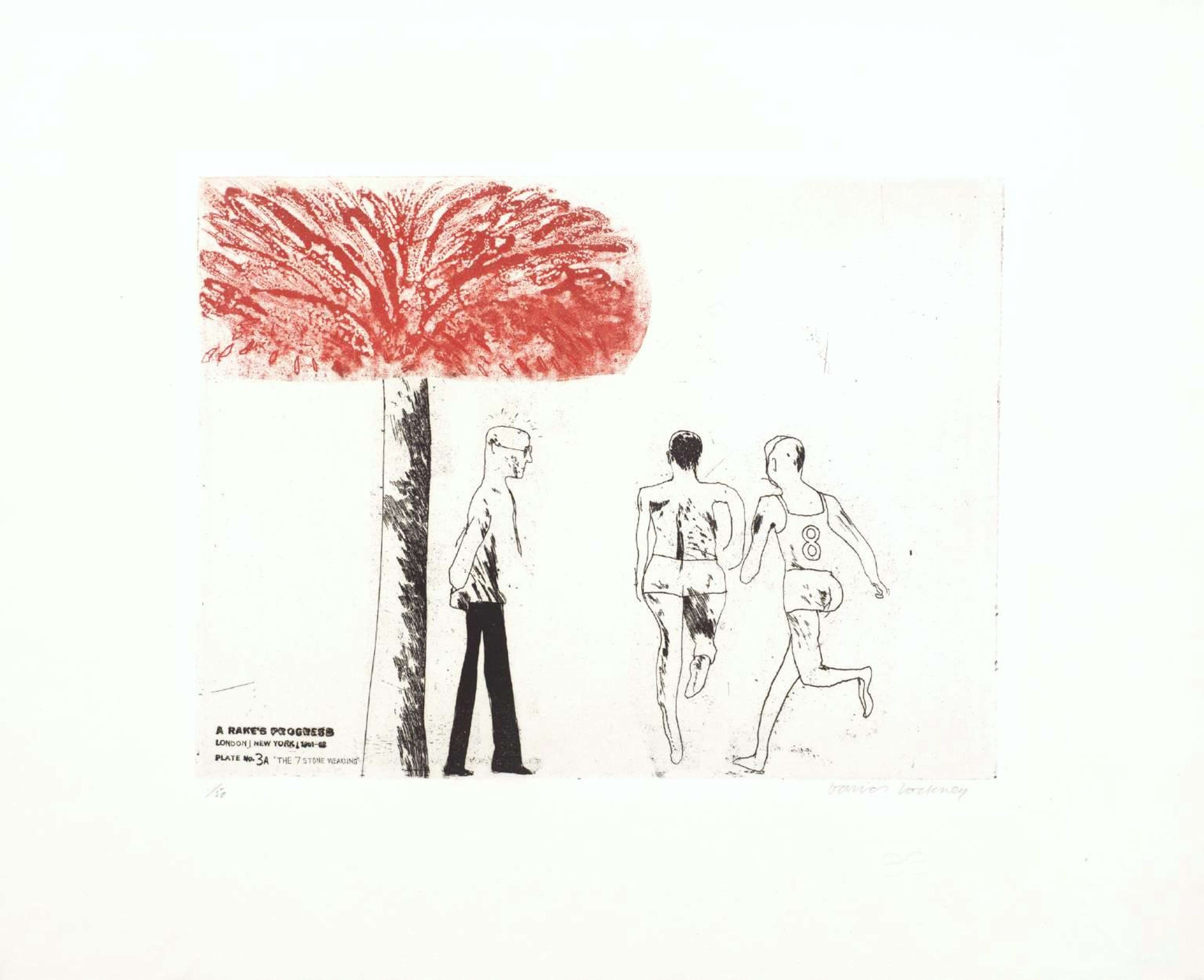
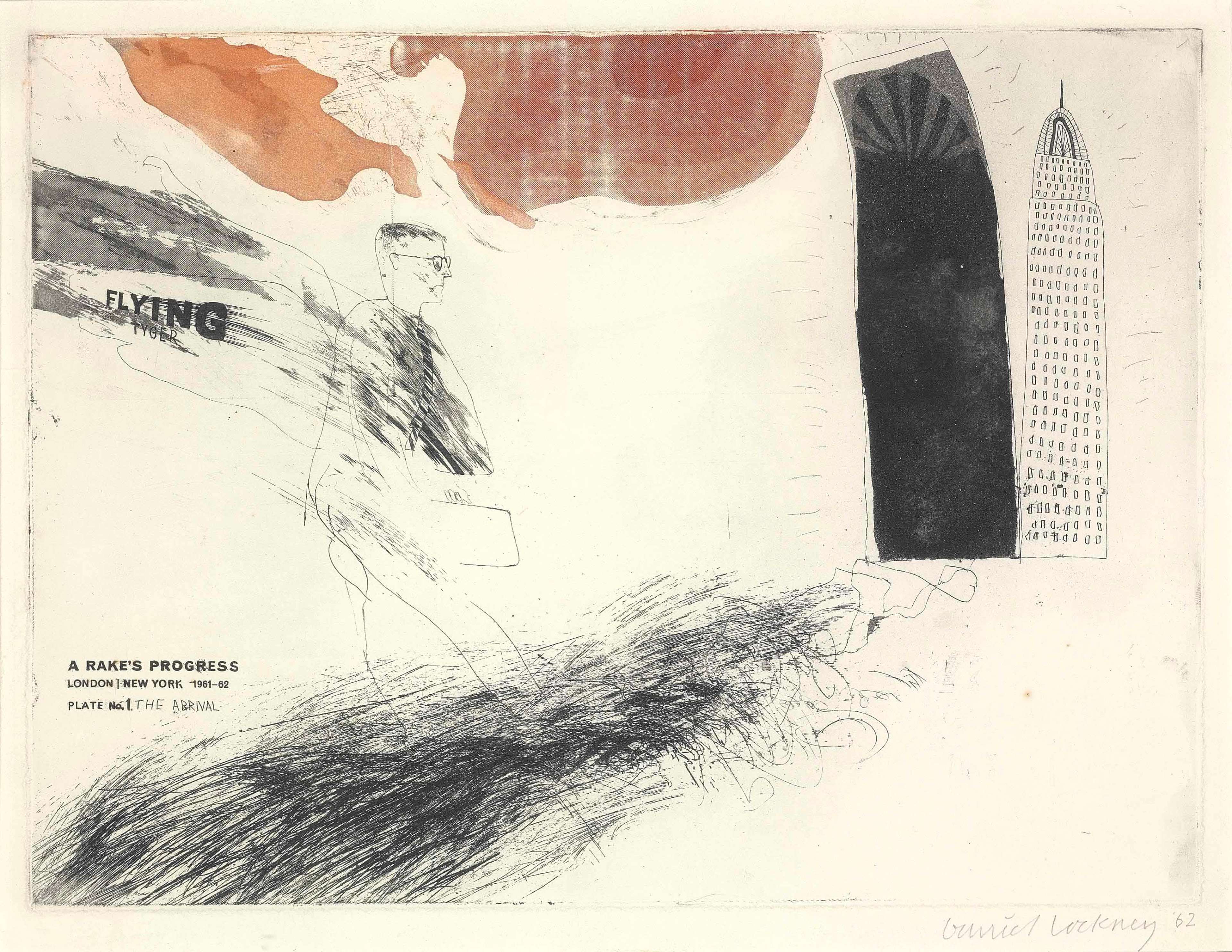
Hockney drew directly onto copper plates, combining incisive lines with flat aquatint fields. This technical pairing let him stage distinct figures against measured areas of shadow. Working largely in monochrome, he used strategic flashes of red to steers the viewers gaze: in The Arrival and The Wallet Begins to Empty, red emphasises the contrast with ominous black voids, while in The Gospel Singing it represents exaltation moving through the crowd.
Hockney’s minimalist compositions intensify drama and meaning
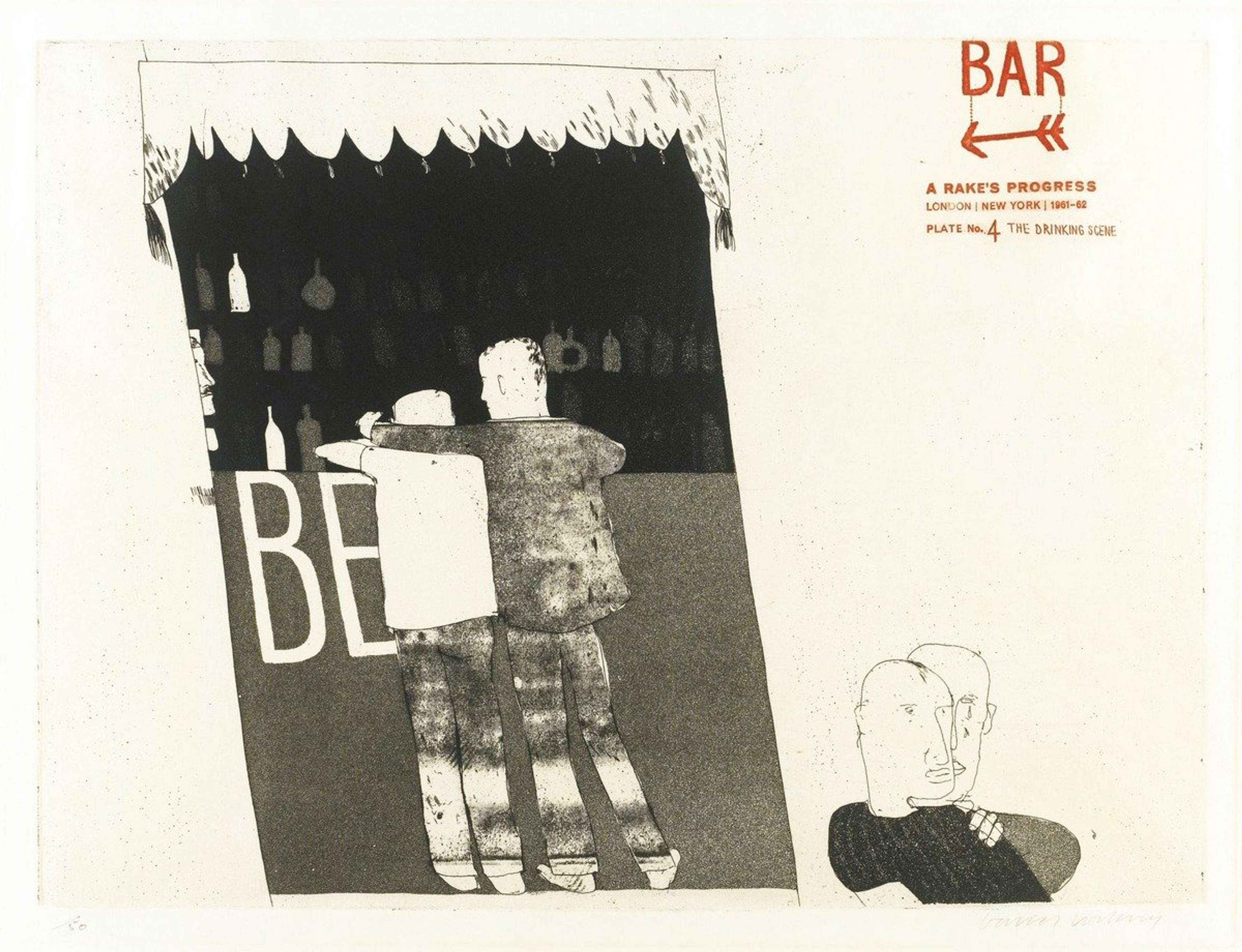
Where Hogarth’s series is full of rooms packed with props and characters, Hockney empties the space in his re-telling. Bare spaces, isolated staircases and curtained doorways become psychological scenery, heightening the “Rake’s” exposure. The “non-place” frames alienation and turns each motif into a cue for the viewer to decode: the result is a modern stage on which emptiness speaks volumes and the smallest splash of red serves as a plot point.
A Rake’s Progress is semi-autobiographical
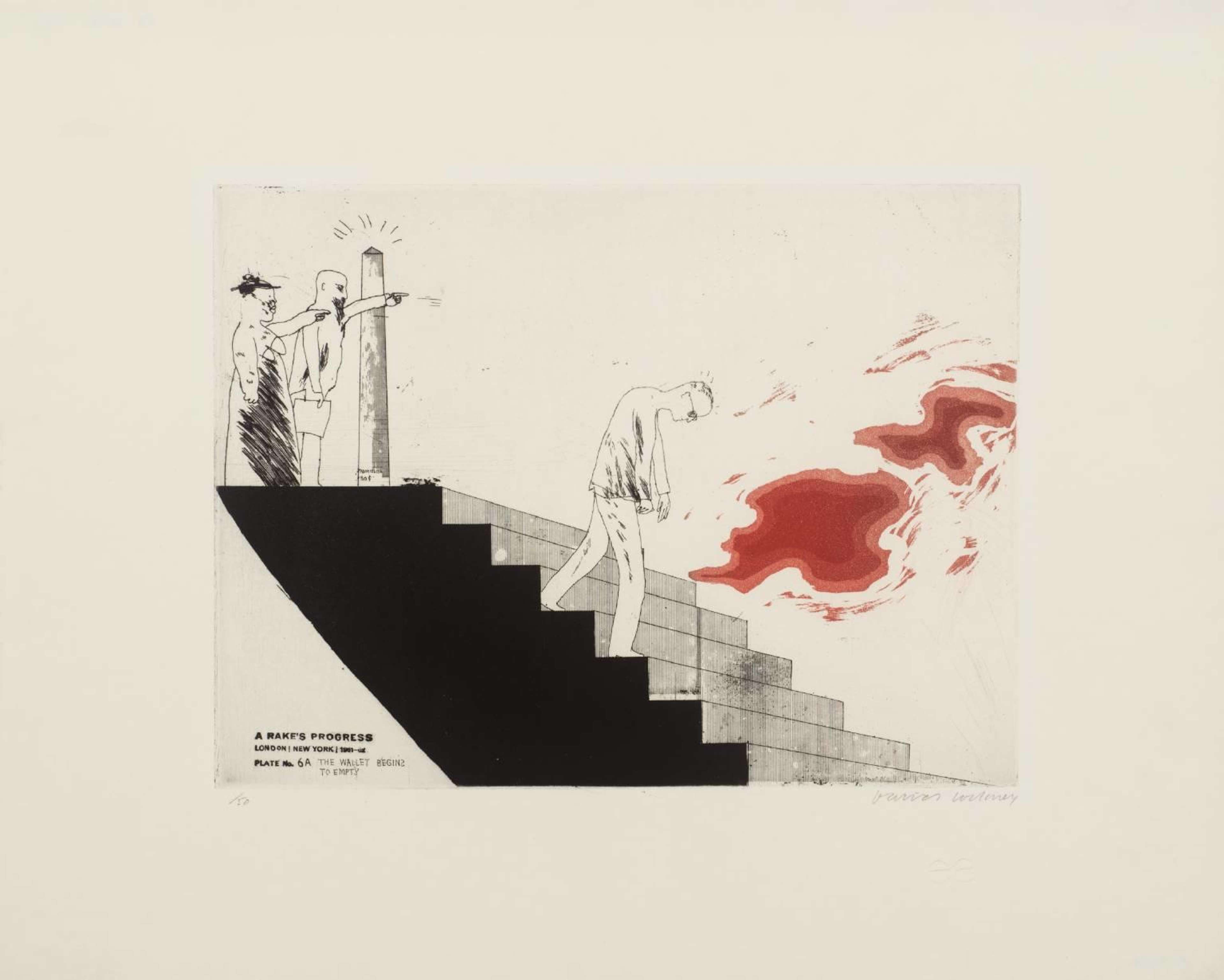
Hockney’s “Rake” has the artist’s bleached hair and round glasses, appearing in profile throughout his journey. The odyssey includes gay nightlife, flirtation, and captures the heady freedom of early-1960s New York, reframing Hogarth’s vice as questions of self-fashioning and belonging. Rather than moral collapse, the tension is between liberation and conformity, seen as moments of euphoria (The Gospel Singing) give way to estrangement (Disintegration and Cast Aside). The series translates as a candid study of identity, staged in a city that offered Hockney both alienation and liberation.
A Rake’s Progress uses satire to critique consumer culture
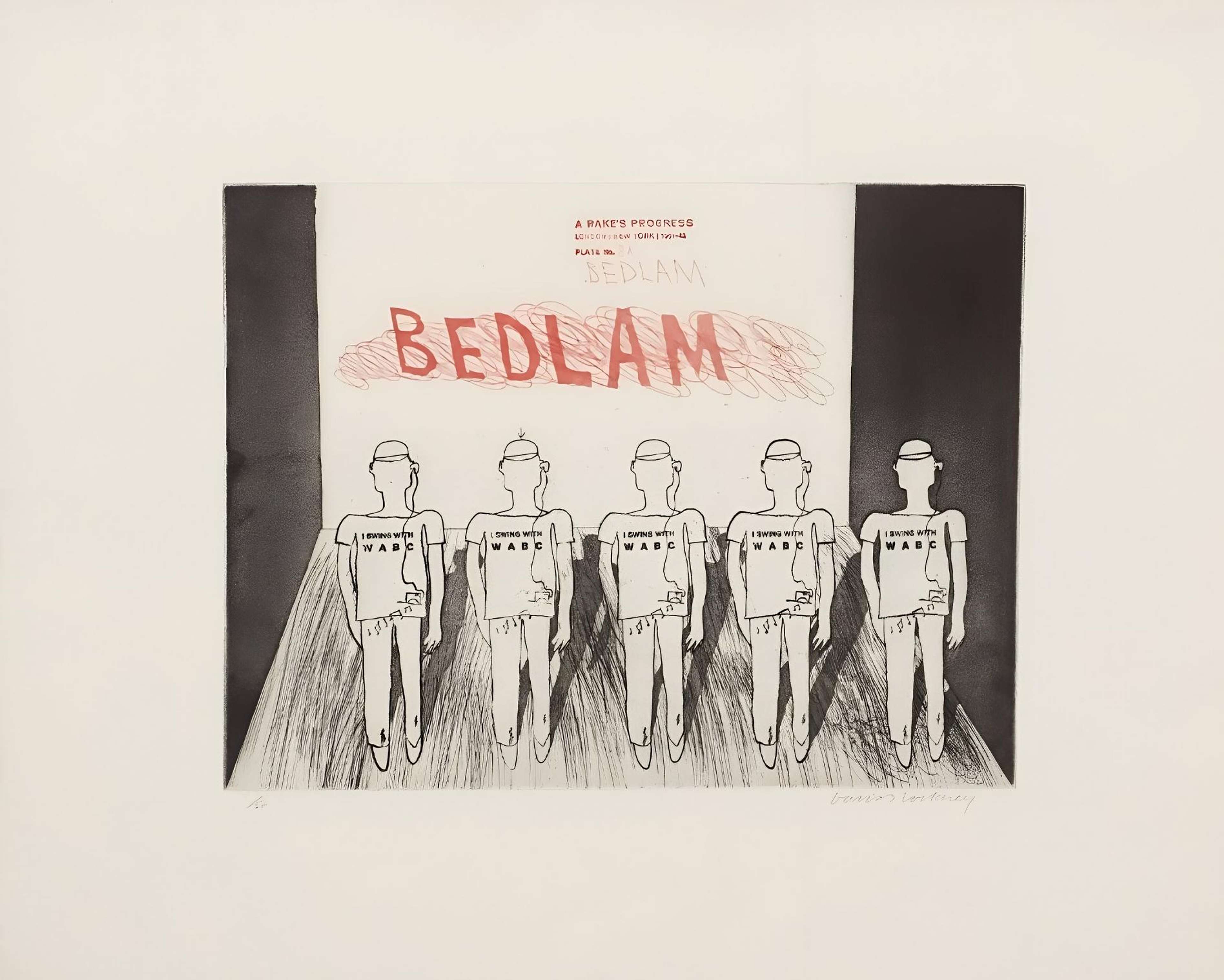
Hockney’s New York setting trades Hogarth’s gambling dens for 1960s New York advertising and mass media. In Disintegration, a whisky billboard dominates the scene, suggesting how ads sell the illusion of connection while making everything look and feel the same. In Bedlam, the final image of the series, Hockney suggests that madness now lies in mass conformity rather than moral collapse.
Hockney uses red to direct emotion and focus
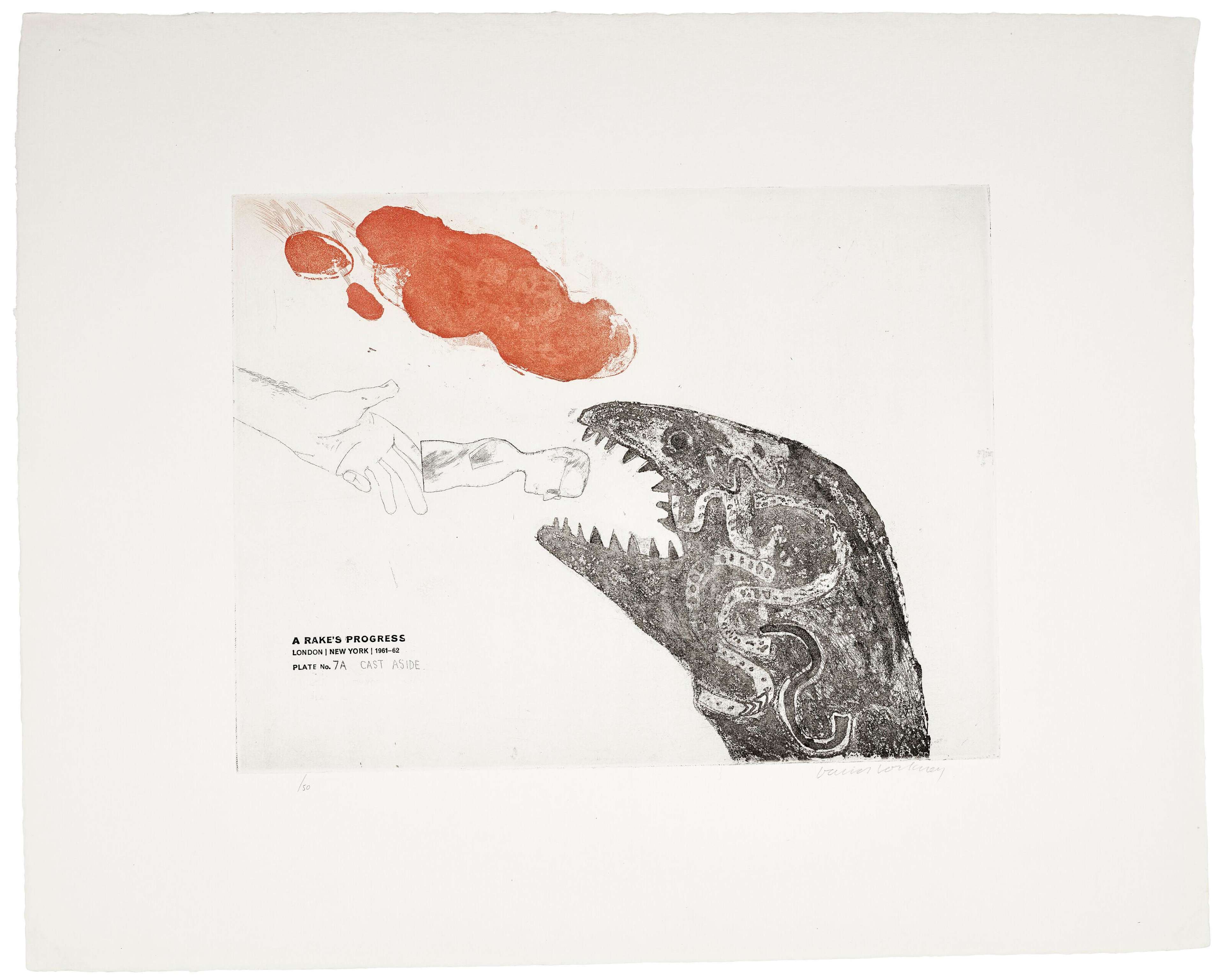
Hockney’s strategic uses of red anchors entrances and exits, punctuates speech and signage, and highlights peril or revelation. Because everything else is monochrome, the red stands out, guiding the viewer through open space. In The Election Campaign, Hockney uses red lettering to turn political speech into spectacle, while in The Drinking Scene and Disintegration, the same colour signals desire and decline. It’s a simple but powerful method used to direct emotion and focus across the series.
Hogarth and Hockney each mirror their own era’s social anxieties
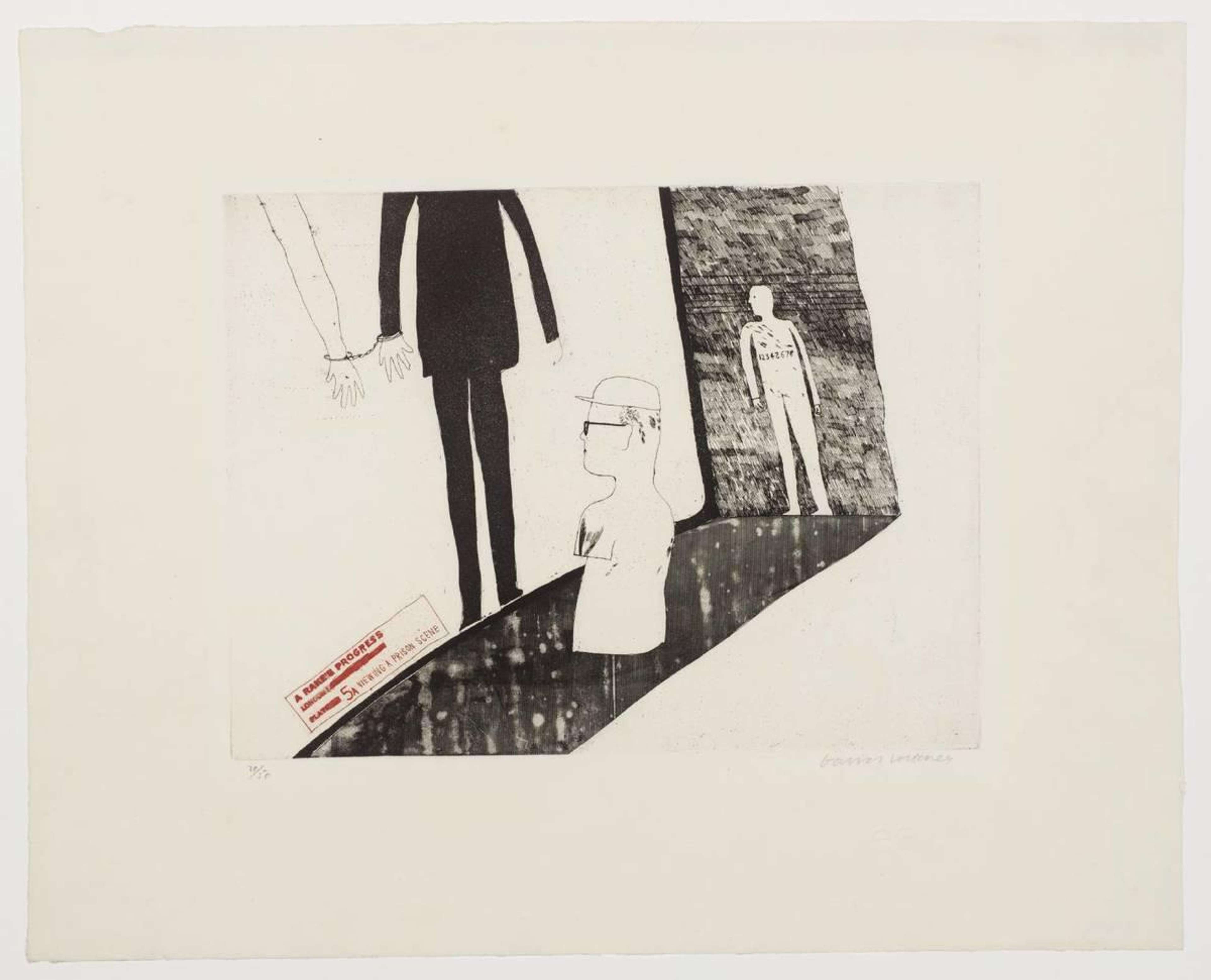
Both Hogarth and Hockney tell the story of a man who rises and falls in society, but each reflects his own time. Hogarth exposes the greed and vice of eighteenth-century London, while Hockney looks at the loneliness and self-performance of the modern age. Each tells the story of a young man shaped and undone by his city, but where Hogarth condemns moral decay, Hockney explores the loss of individuality in a world of slogans and repetition.
Hockney borrows old-master techniques and recreates them in the language of Pop Art
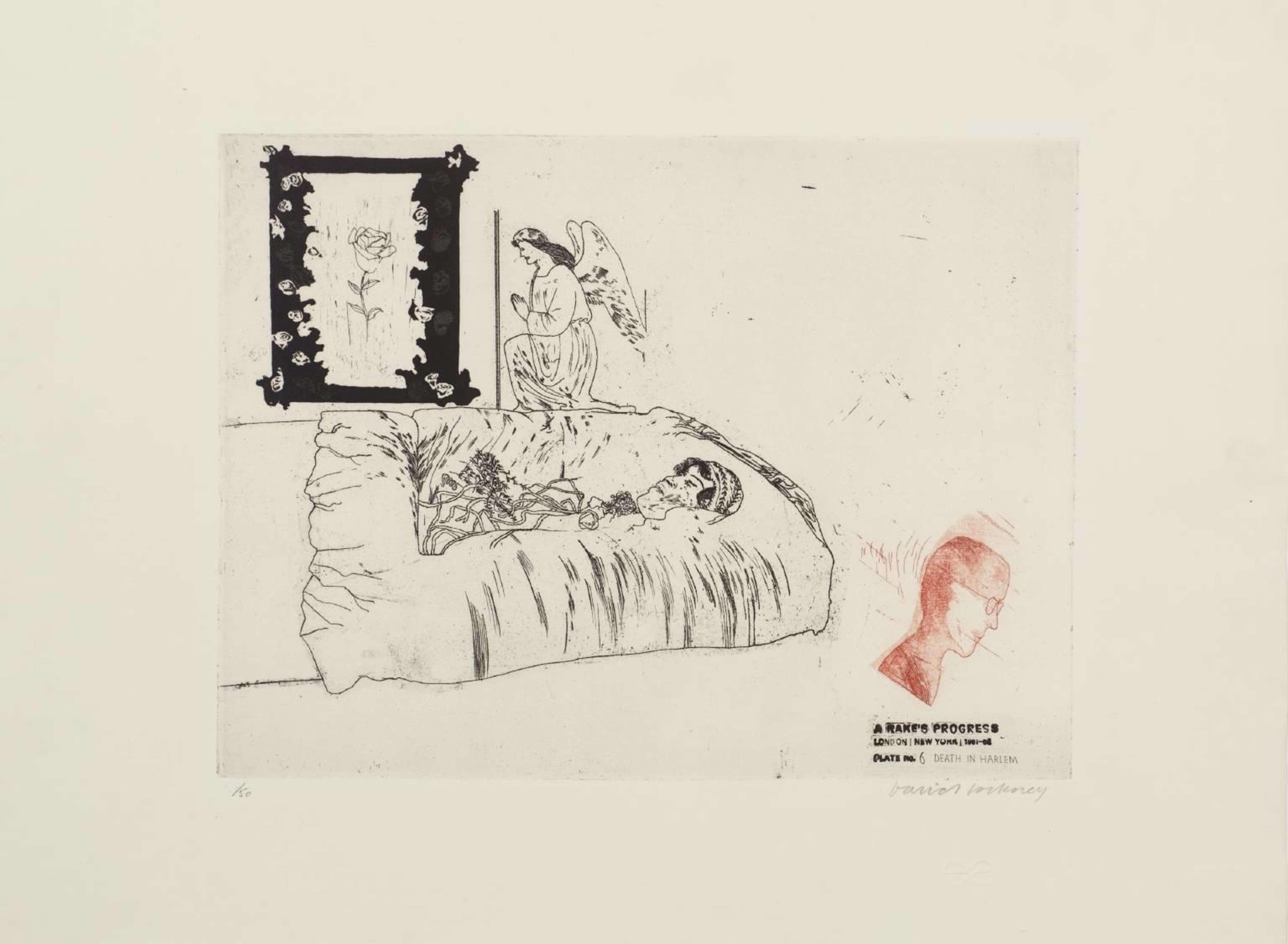
Hockney draws on earlier compositional structures from the early Renaissance, the fusion of image and text seen in William Blake, and Hogarth’s serial storytelling. He then pairs them with billboard-style typography, modern graphics and open space. This blend refreshes the eighteenth-century story for a twentieth-century audience, rendering the tale as visually direct but still layered with references and meaning.
A Rake’s Progress began Hockney’s narrative printmaking
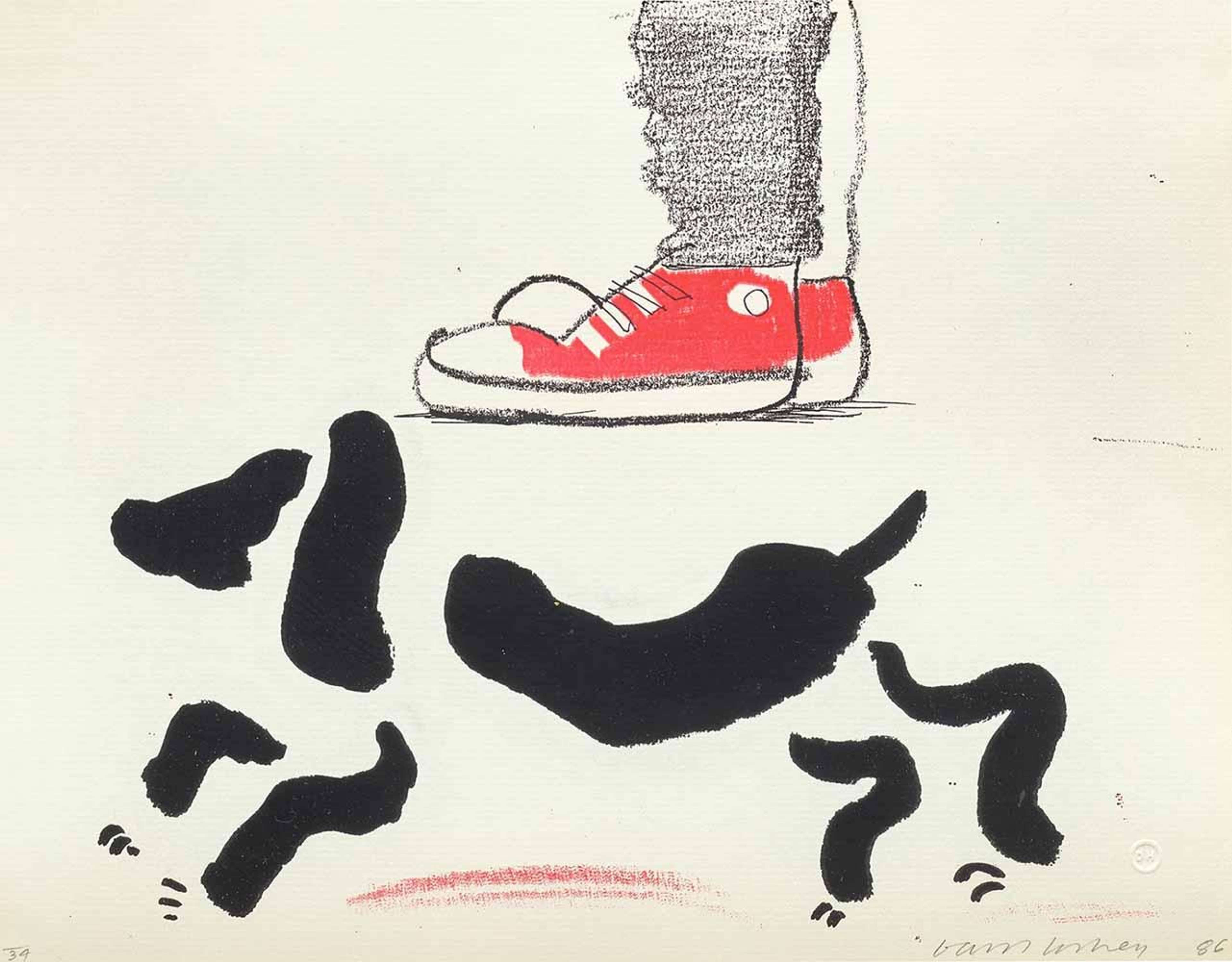
This 1963 series sets an approach Hockney returns to throughout his career: sequences of images that tell a story with distinctive line and stripped-back settings. Illustrations for Six Fairy Tales from the Brothers Grimm (1969), developed over three years, shows his growing command of draughtsmanship, while The Blue Guitar (1976–77) extends his storytelling into a thematic narrative inspired by Wallace Stevens’s 1936 poem and Pablo Picasso. Across these projects, narrative printmaking remains a central strand of Hockney’s practice.
A Rake’s Progress established Hockney as a leading British artist
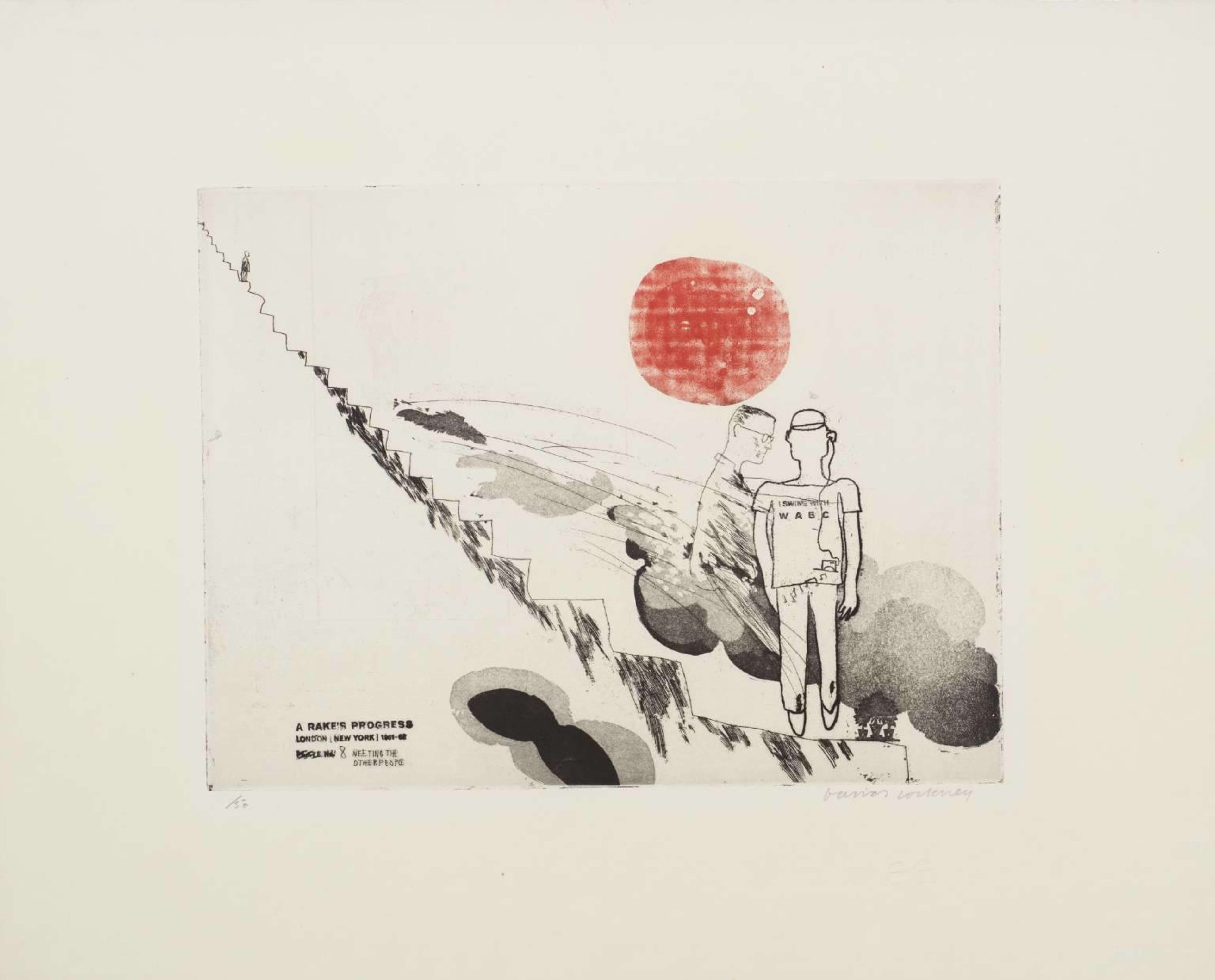
Created soon after the Royal College of Art, the series demonstrates Hockney’s early voice: witty and unmistakably Pop-leaning. Its blend of satire, inventive narrative, and unique draughtsmanship helped cement Hockney as a key figure in British Pop Art.