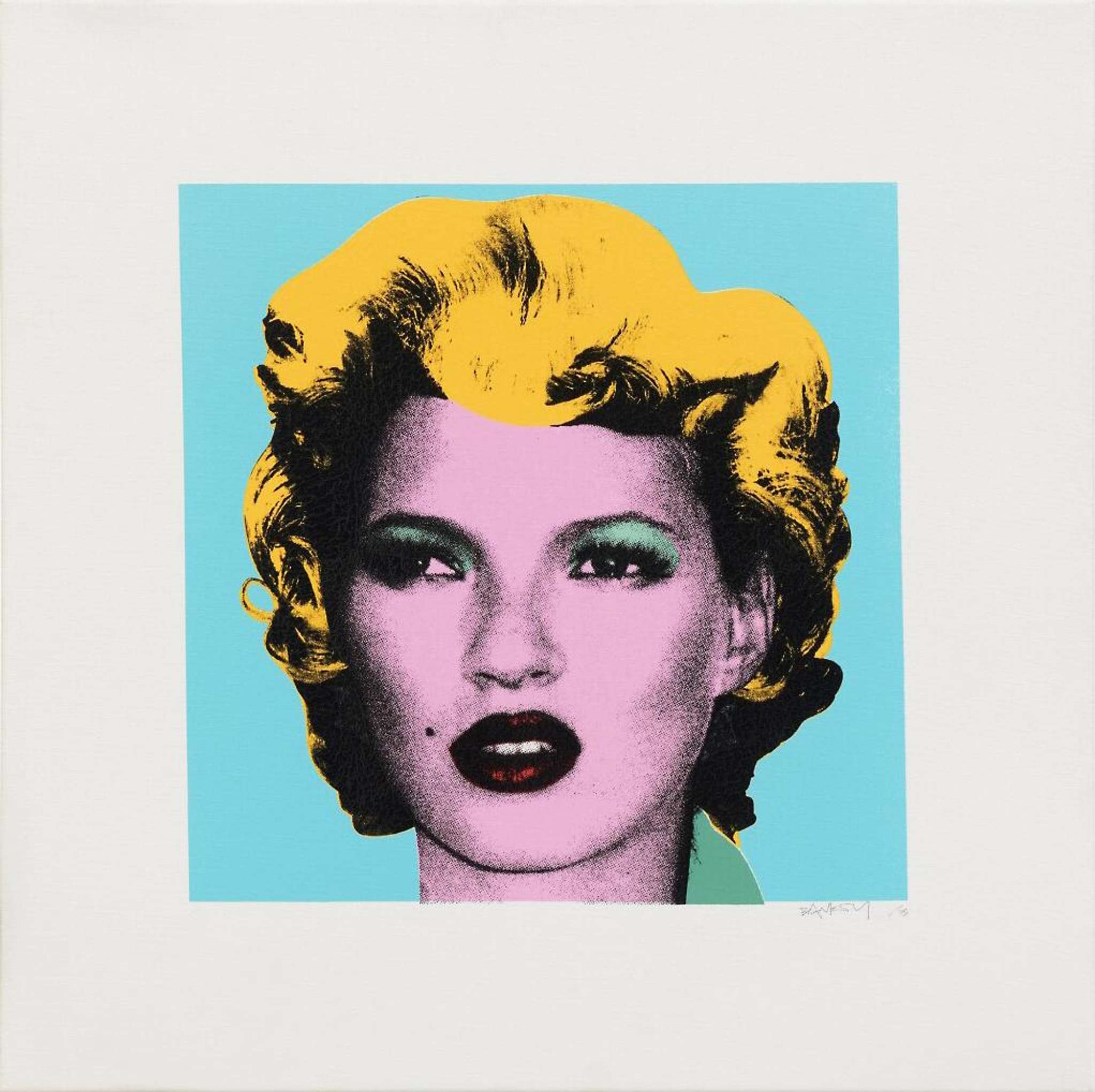


Banksy’s 2005 Kate Moss series reimagines Andy Warhol’s Marilyn Monroe for the 21st century, replacing Monroe’s face with Moss’s while retaining Monroe’s unmistakable neon hair. The series uses satire to interrogate celebrity culture and how fame is manufactured through appropriation, branding, and myth.
Banksy’s Kate Moss pay direct homage to Andy Warhol’s Marilyn Monroe
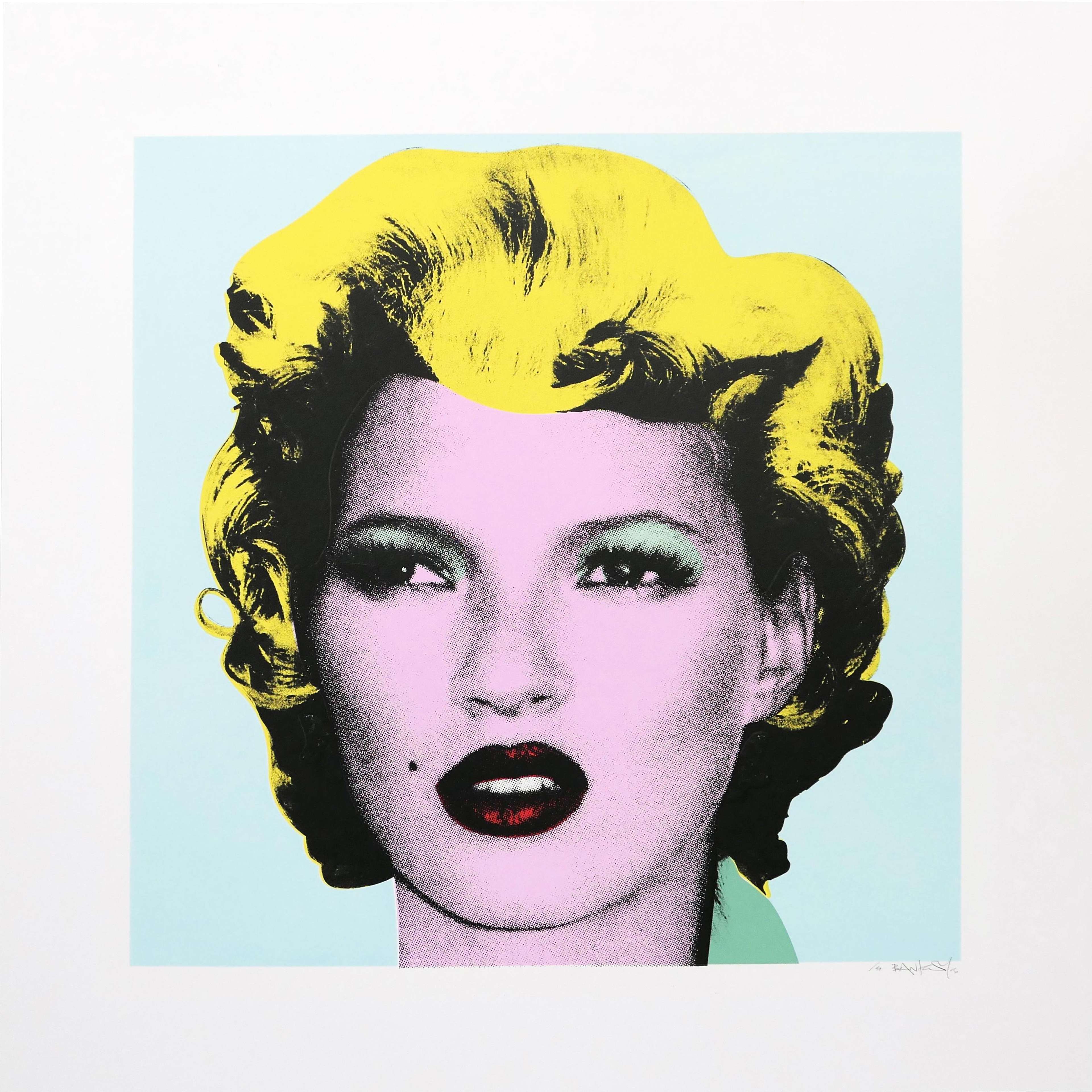
Banksy deliberately parallels Warhol’s Marilyn series through mimicking the composition, bright palette and Pop Art stylisms. By trading Monroe’s face for Kate Moss, the image becomes a celebration of mass-media glamour and a critique of fame as spectacle. Banksy’s adoption of Warhol’s visual language positions Kate Moss within a lineage of appropriated imagery, translating mid-century celebrity worship into early-2000s culture.
Kate Moss was chosen as a modern Marilyn because her image is ubiquitous
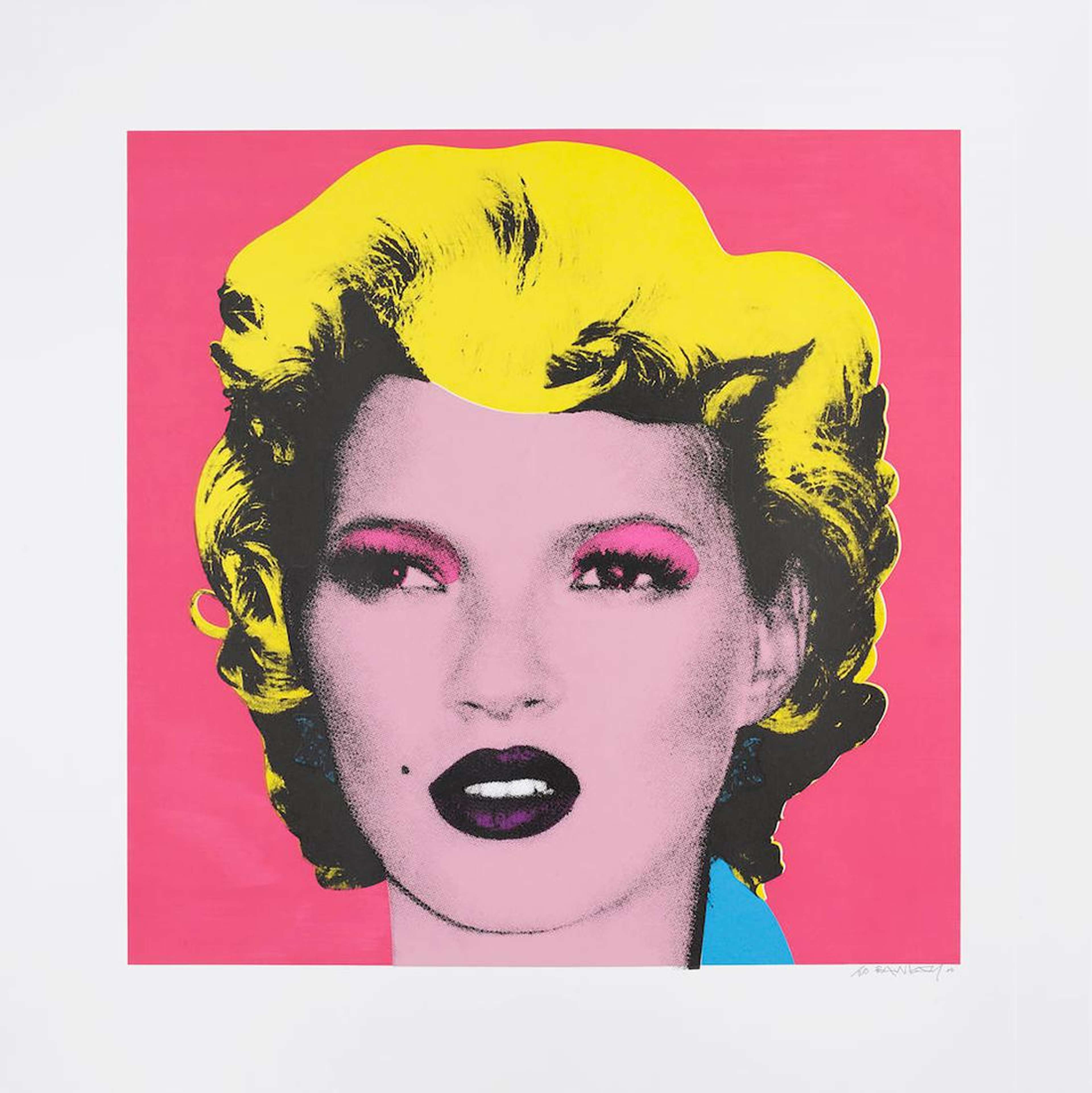
Kate Moss’s ubiquity - driven by an exceptionally successful modelling career and her later inclusion in Time’s 2007 “100 Most Influential People” - made her the perfect contemporary analogue to Monroe’s mid-century saturation. Banksy utilises that visibility to demonstrate that celebrity endures not because individuals are intrinsically unique, but because culture endlessly reissues the same archetype in a new face.
A rare Kate Moss canvas was exhibited in Banksy’s Crude Oils show
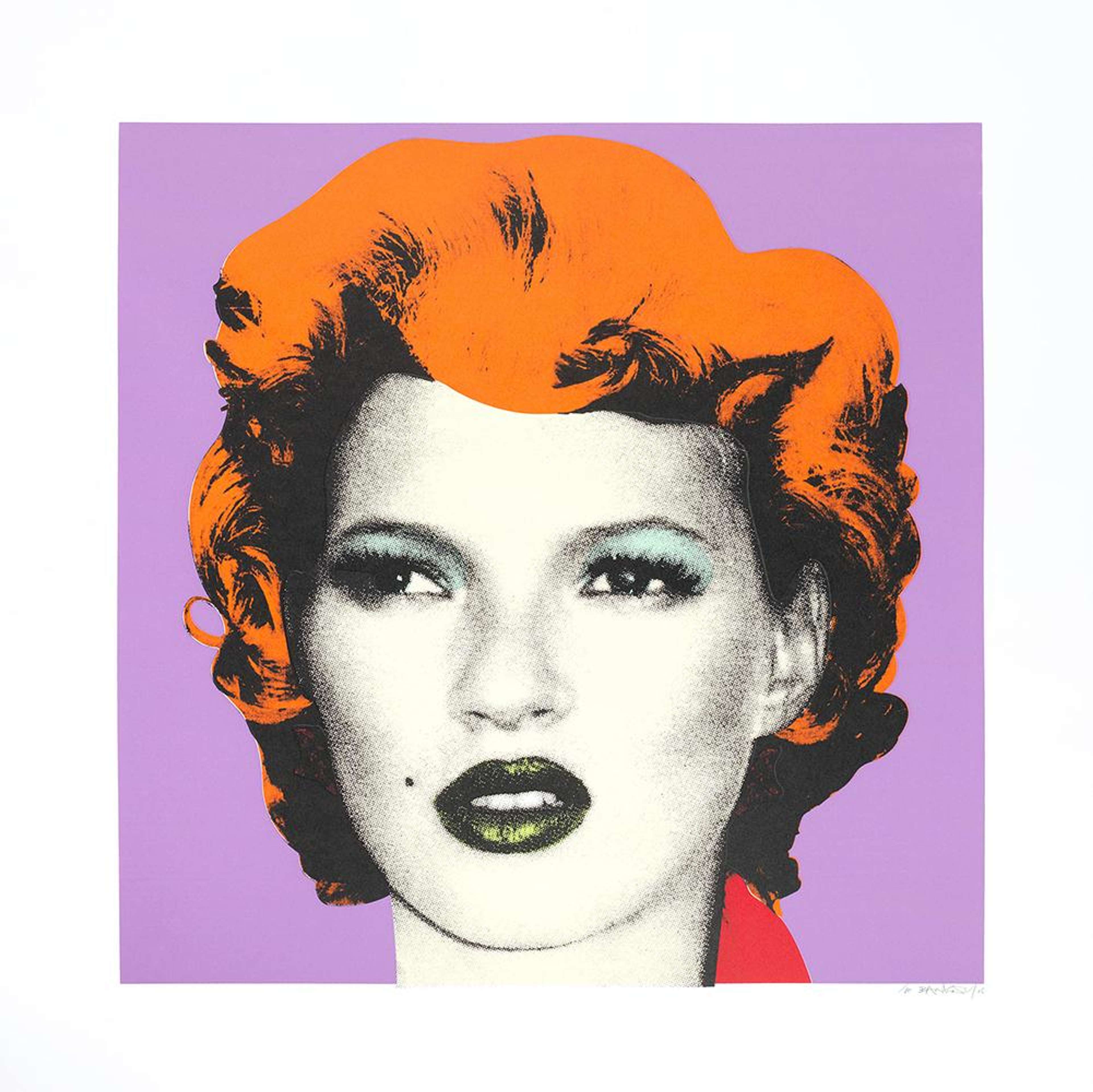
Banksy showcased Kate Moss as part of his Crude Oils exhibition in October 2005 - his first major gallery show. There, he reworked canonical art masterpieces by injecting his characteristic satire, situating Kate Moss within an art-historical conversation rather than just street culture.
Kate Moss both flatters and undermines its subject
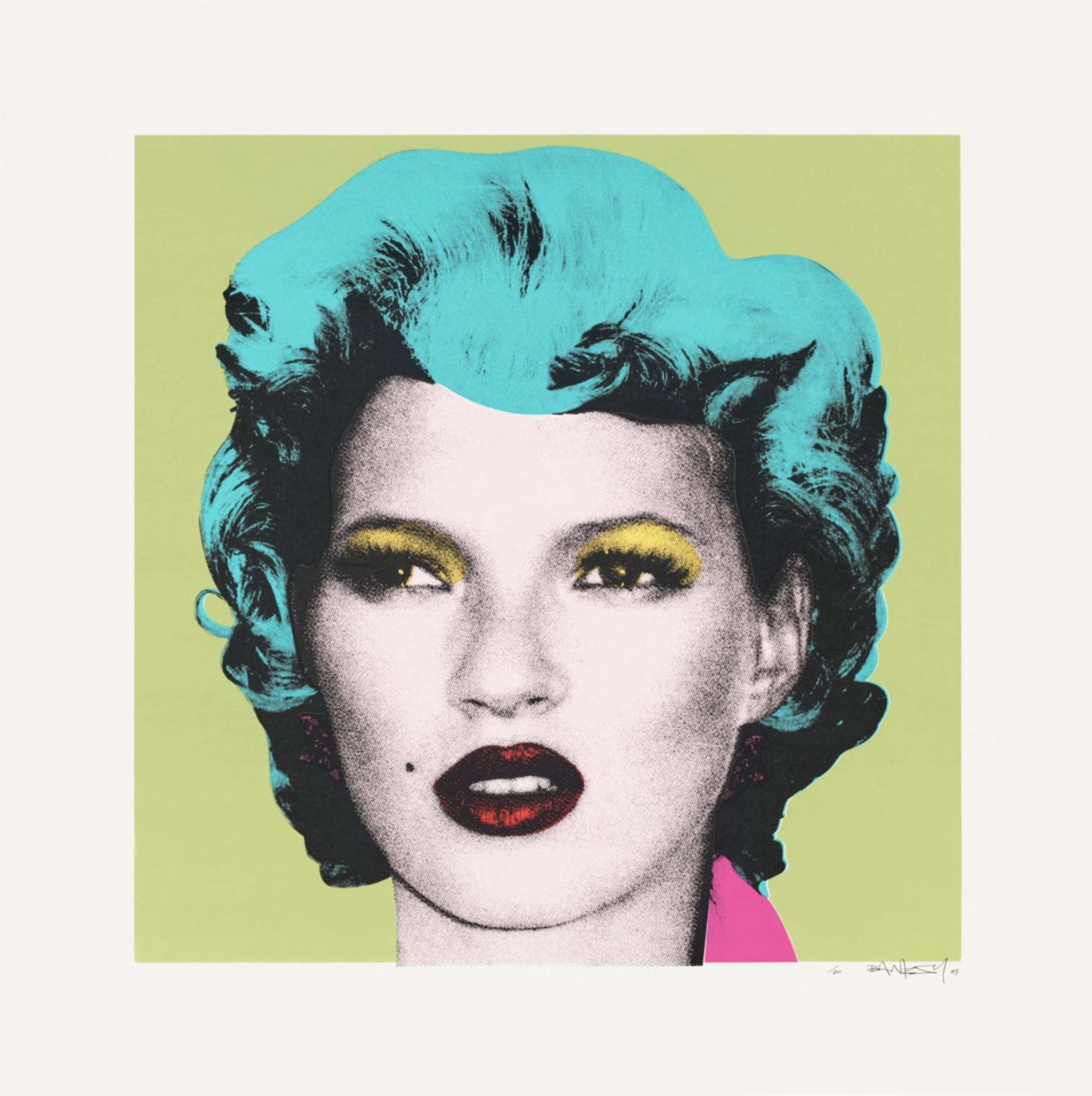
In this series, Kate Moss appears the archetype of beauty, yet the borrowed hair and cosmetic exaggeration tip the image into parody. This tension highlights that Moss functions as a portrait that reinforces her status while showing how easily status is fabricated through branding and cliché.
Banksy parallels Pop Art as a mirror for 2000s media culture
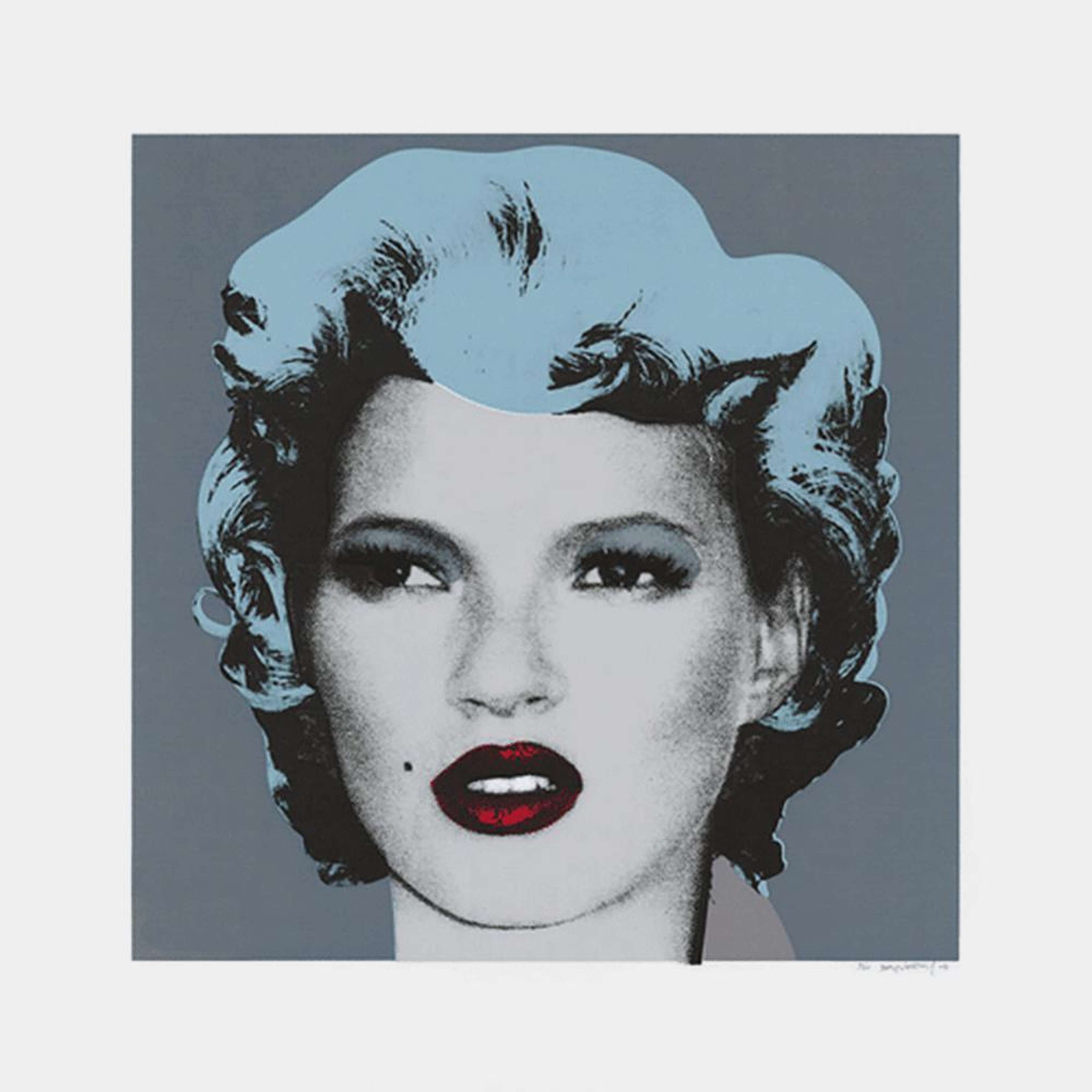
By reviving a 1960s Pop template in 2005, Banksy stages a culture comparison: Monroe’s Hollywood versus Moss’s supermodel fashion industry. The parallel emphasises that publicity still governs celebrity, commenting on how little the culture of fame has changed, even across decades.
Banksy gifted a unique Kate Moss print as a wedding present
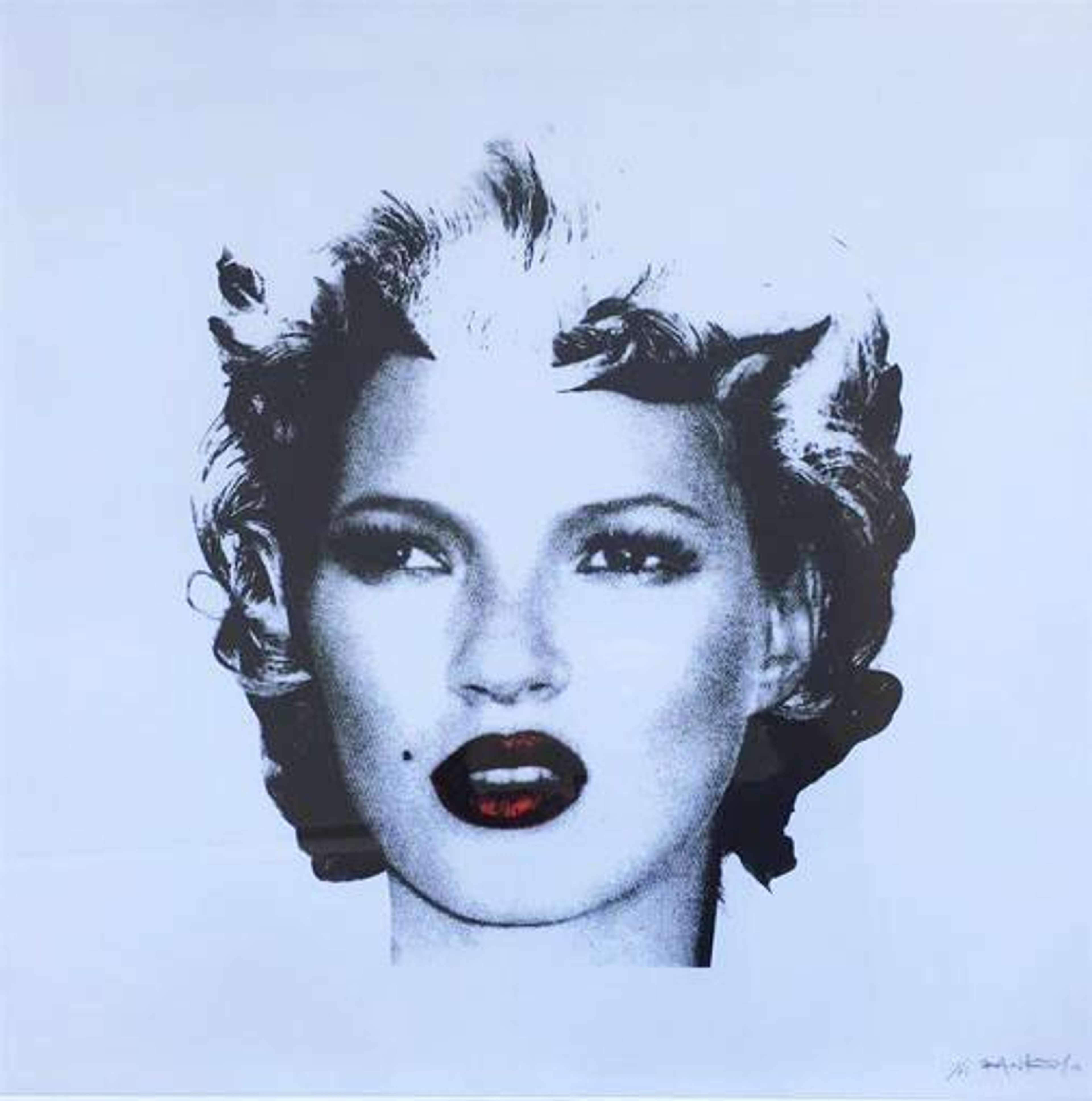
In 2011, Banksy created a unique Kate Moss for Moss’s wedding - allegedly discovered by the model in her hotel bathroom during her honeymoon. This story reinforces the image’s celebrity aura and underscores the artist’s playful myth-making around exclusivity and surprise.
Banksy’s Kate Moss transforms a celebration of fame into a critique

Where Warhol used the style of Pop Art to increase celebrities' surface appeal, Banksy turns that same language against itself. In Kate Moss, the repetition and bright colour that once glorified Monroe now expose the mechanical, hollow repetition of fame in the digital age. The image now reflects how icons are made, consumed, and discarded at speed. By reusing Pop Art’s style to question the commodification of celebrity culture, Banksy shows that the modern cult of celebrity is built on the same, seemingly empty, glamour.
Banksy’s Kate Moss marked a turning point from street art to collectible art

When Kate Moss was released in 2005, it signalled a shift in Banksy’s career from graffiti provocateur to blue-chip artist. The series merged his subversive street persona with the formal art world, translating his stencil style into high-value, limited-edition screenprints. Its success proved that Banksy’s social critique could flourish in galleries, auction houses and private collections, even as it criticised the institutions that housed it.
Banksy’s Kate Moss market has achieved six-figure auction results
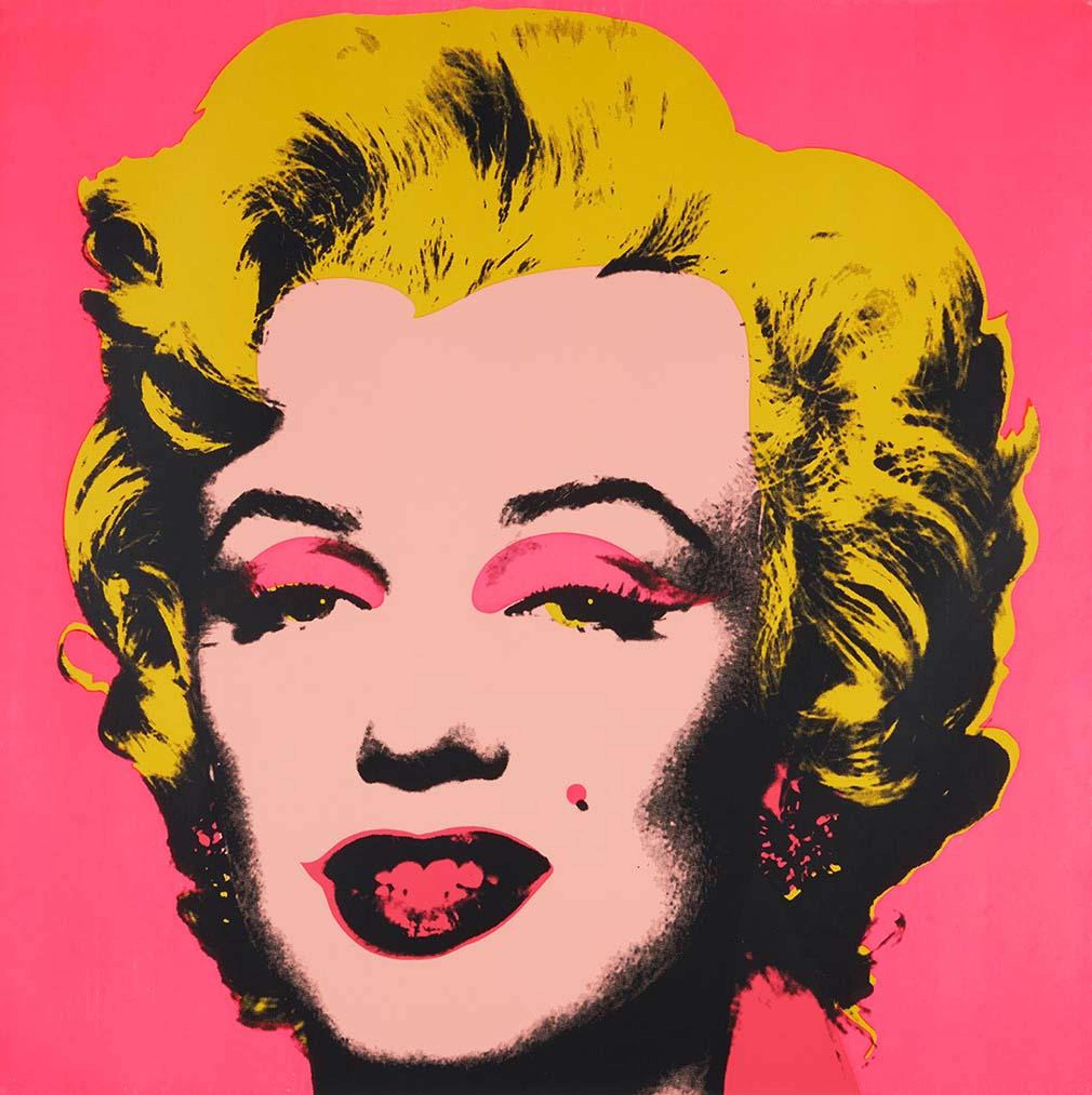
The image’s instant recognisability, Warhol homage, and the enduring mystique of Banksy’s anonymity has allowed this series to thrive at auction - the current record for a Kate Moss was set at Sotheby’s in 2021 with a £221,760 hammer price.
Banksy’s Kate Moss sits within his broader art-historical remix
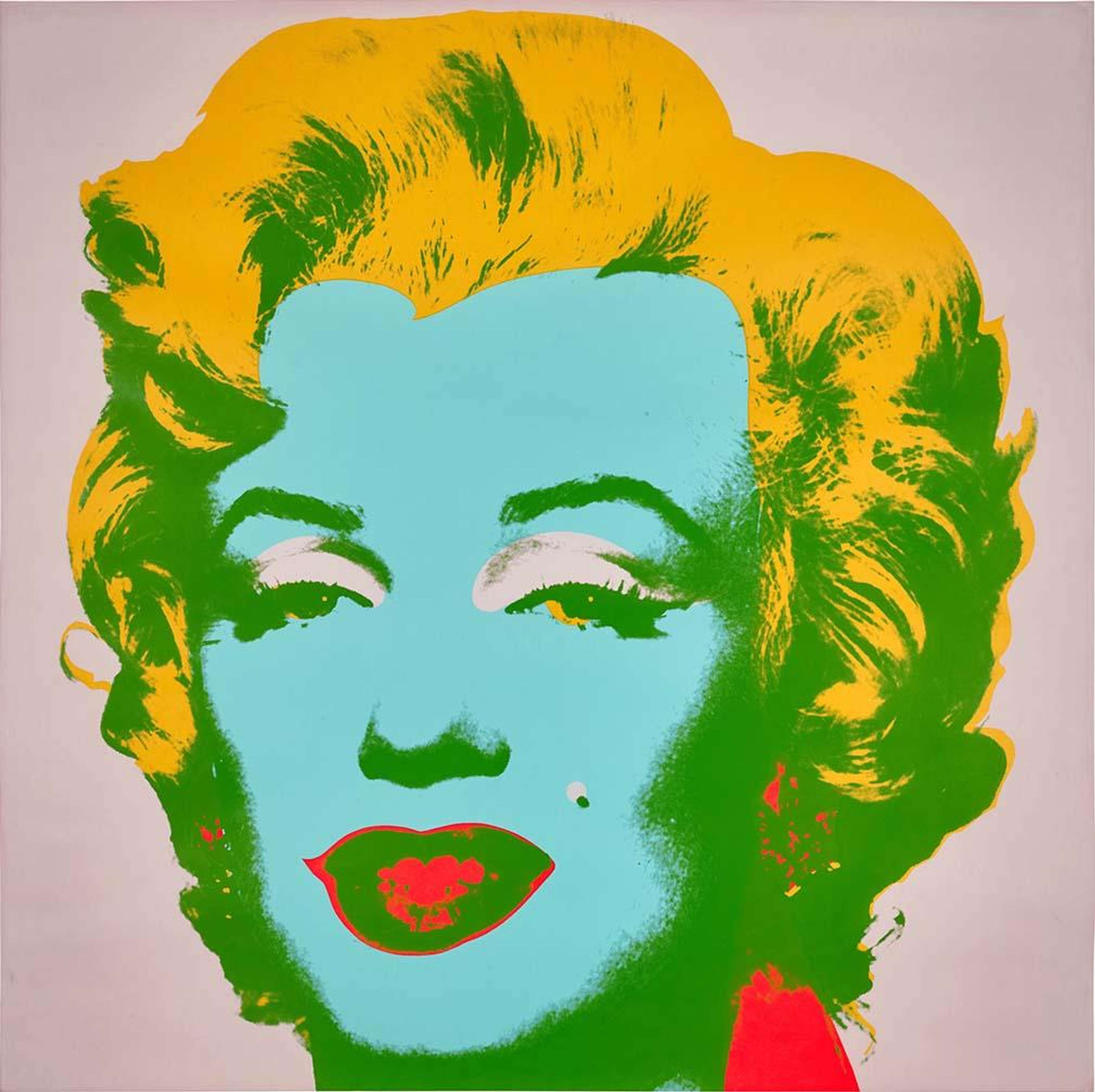
Banksy’s Kate Moss belongs to a broader practice of reworking art history. He references Keith Haring in Choose Your Weapon and recasts canonical images by Monet, Van Gogh, Vettriano and Hopper. The approach treats icons as material to test consumer culture, taste and authorship, and so within this context, Kate Moss becomes a considered contribution to Banksy’s sustained dialogue with the museum canon.