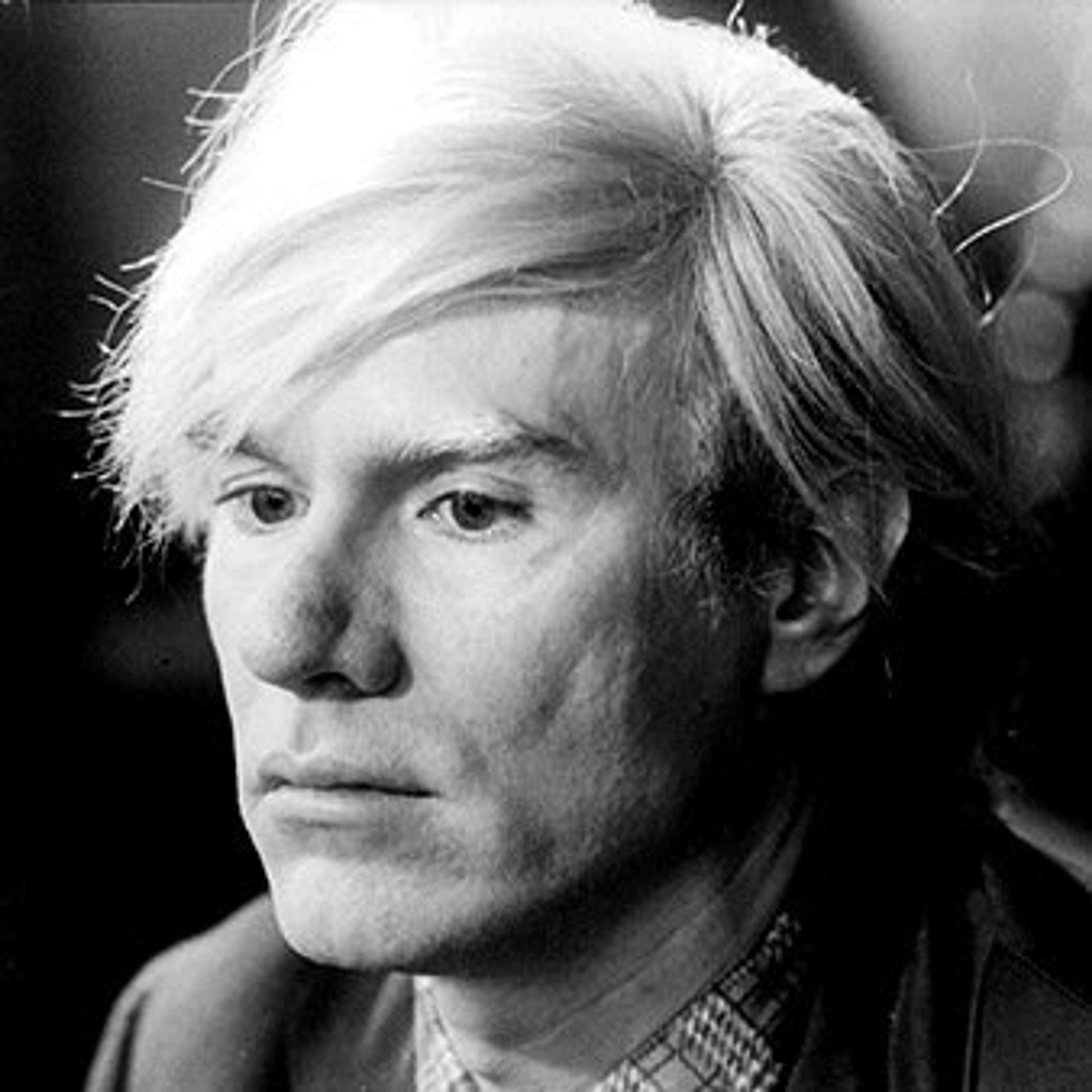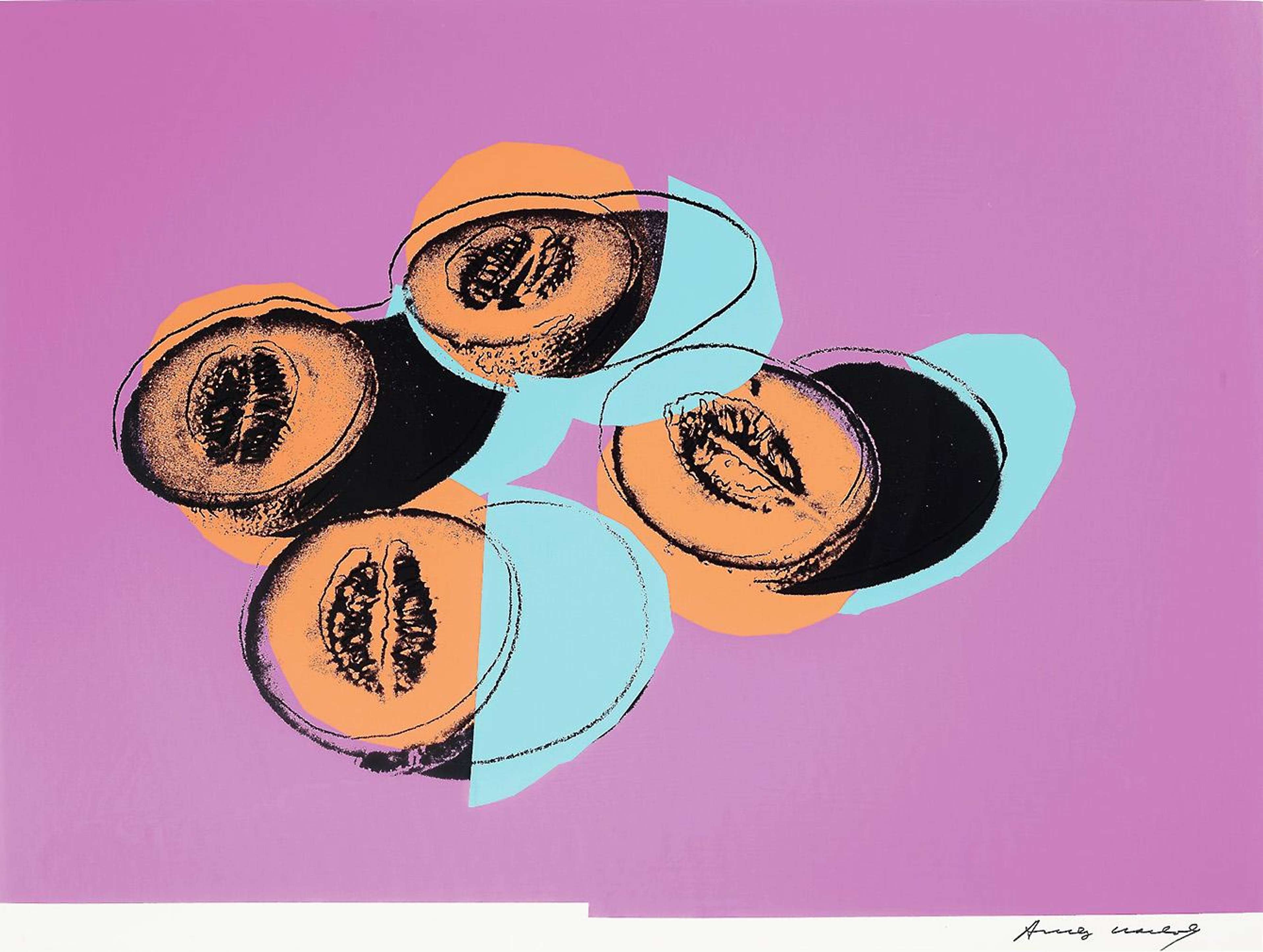


As one of the few still-life portfolios in Andy Warhol’s oeuvre, Space Fruit (1979) depicts everyday produce through the language of Pop Art. Apples, pears and cantaloupes become surreal forms reimagined somewhere between advertising and abstraction. Created on the cusp of the 1980s, the series bridges classic still life and mass production, probing consumer culture, perception and transcience.
Space Fruit began in 1979 as a rare Warhol still life series
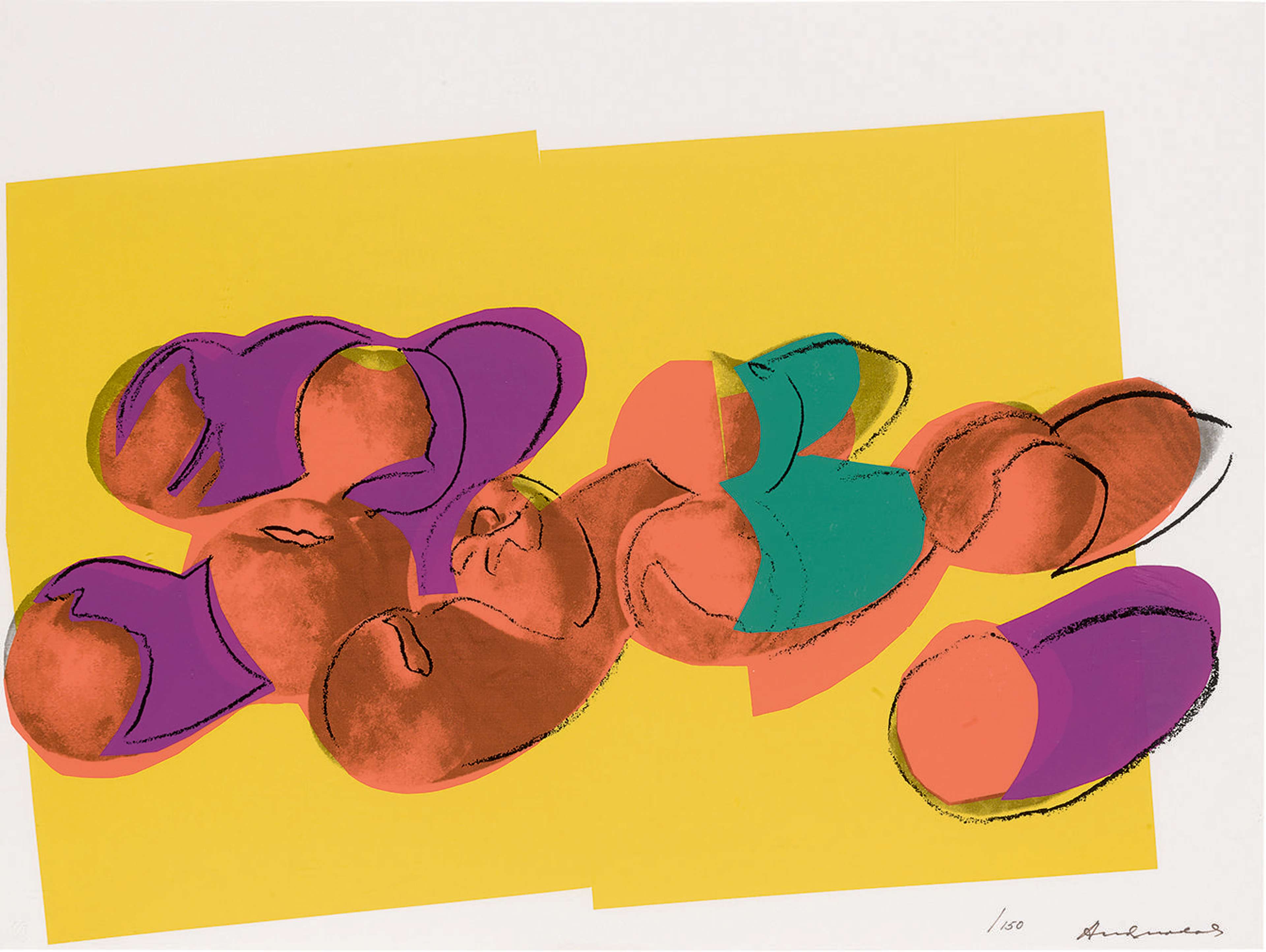
Warhol’s Space Fruit marks a detour from the celebrity portraits and commercial logos that had dominated his output since the 1960s. Returning to the art-historical subject of still life, Warhol stripped the genre of its sentimental and moral connotations, presenting fruit as a pure object of form and colour. By translating a centuries-old subject into the mechanical language of Pop, Warhol demonstrated that even the most traditional themes could be reshaped by modern media.
Warhol used studio lighting and photography to construct his Space Fruit compositions
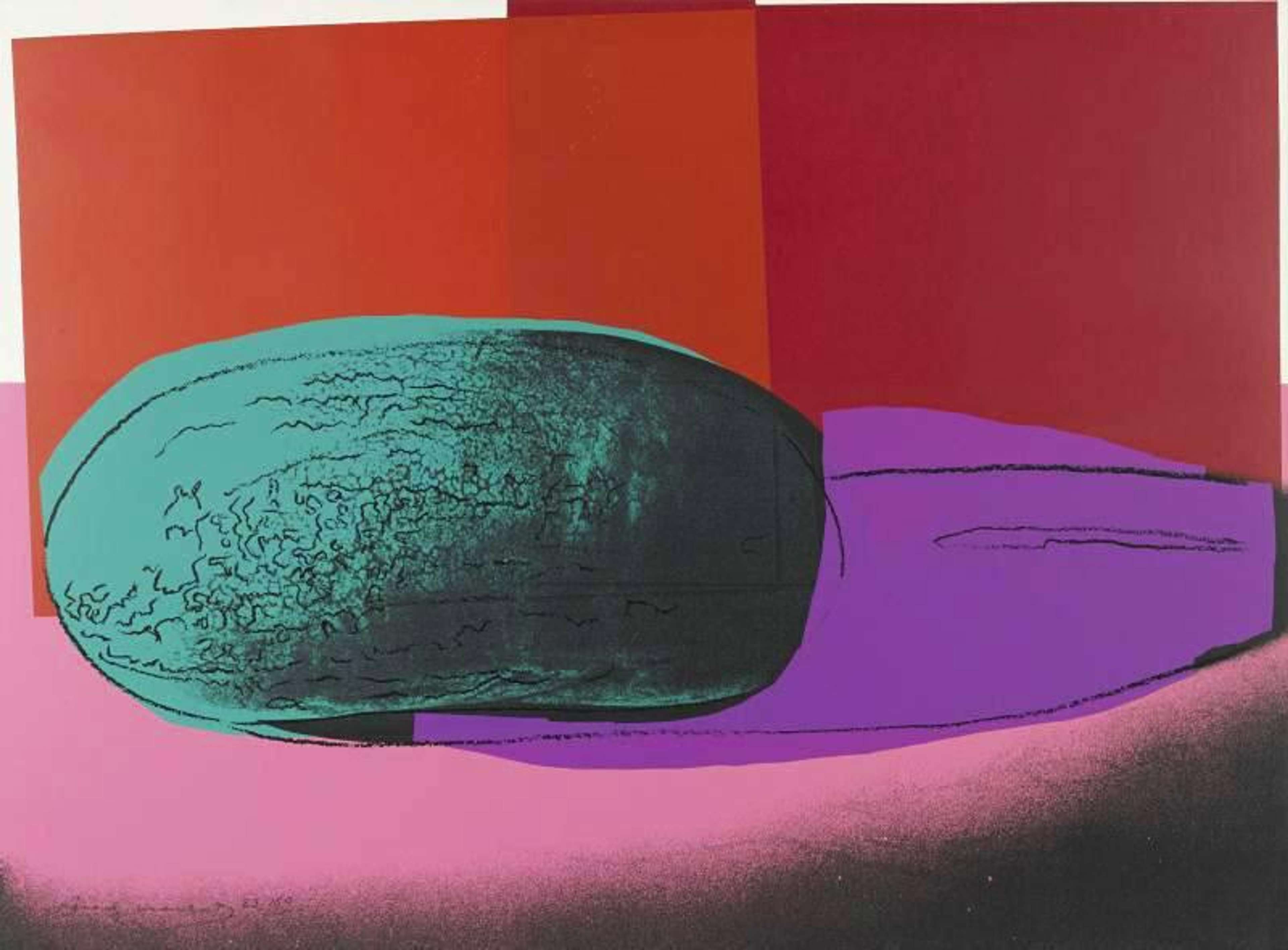
To create Space Fruit, Warhol arranged real pieces of fruit on a white surface, illuminating them with strong angled light to cast long, dramatic shadows. He photographed these setups and used the resulting images as the basis for his silkscreens, tracing outlines and layering colour through multiple screens. This photographic process allowed him to balance precision with experimentation, turning simple fruit into composed studies of light, shadow and form.
The title transforms everyday still life into a work of spectacle
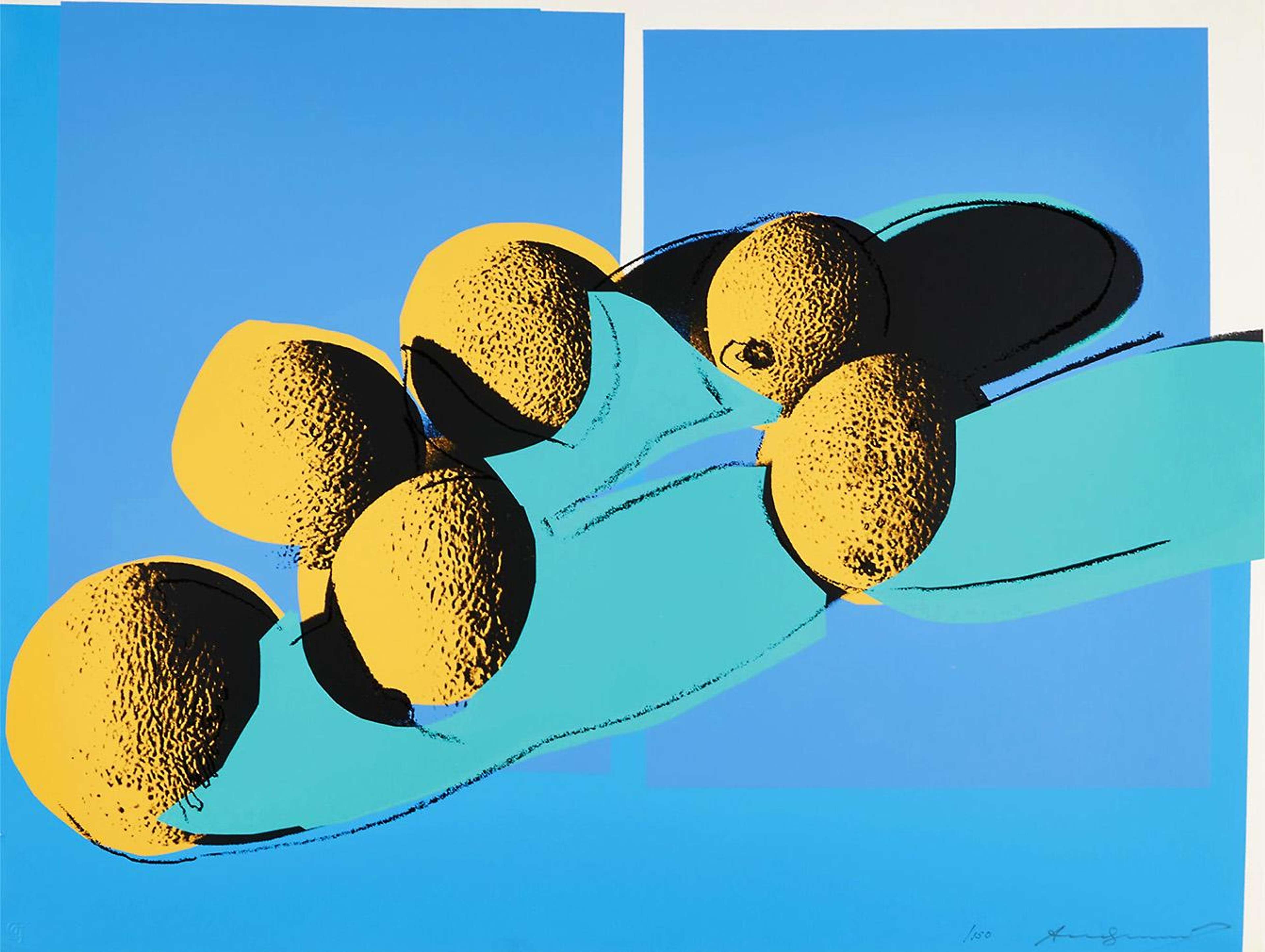
Warhol’s deliberately odd title recasts ordinary fruit as if it belonged to science fiction, encouraging viewers to look beyond straightforward representation. By branding a traditional subject with futurist language, he shifts still life into the realm of Pop spectacle. The title invites abstraction and heightens a sense of unreality, situating these prints within the late-1970s appetite for synthetic colour and futuristic fantasy.
The citrus prints in Space Fruit are the rarest
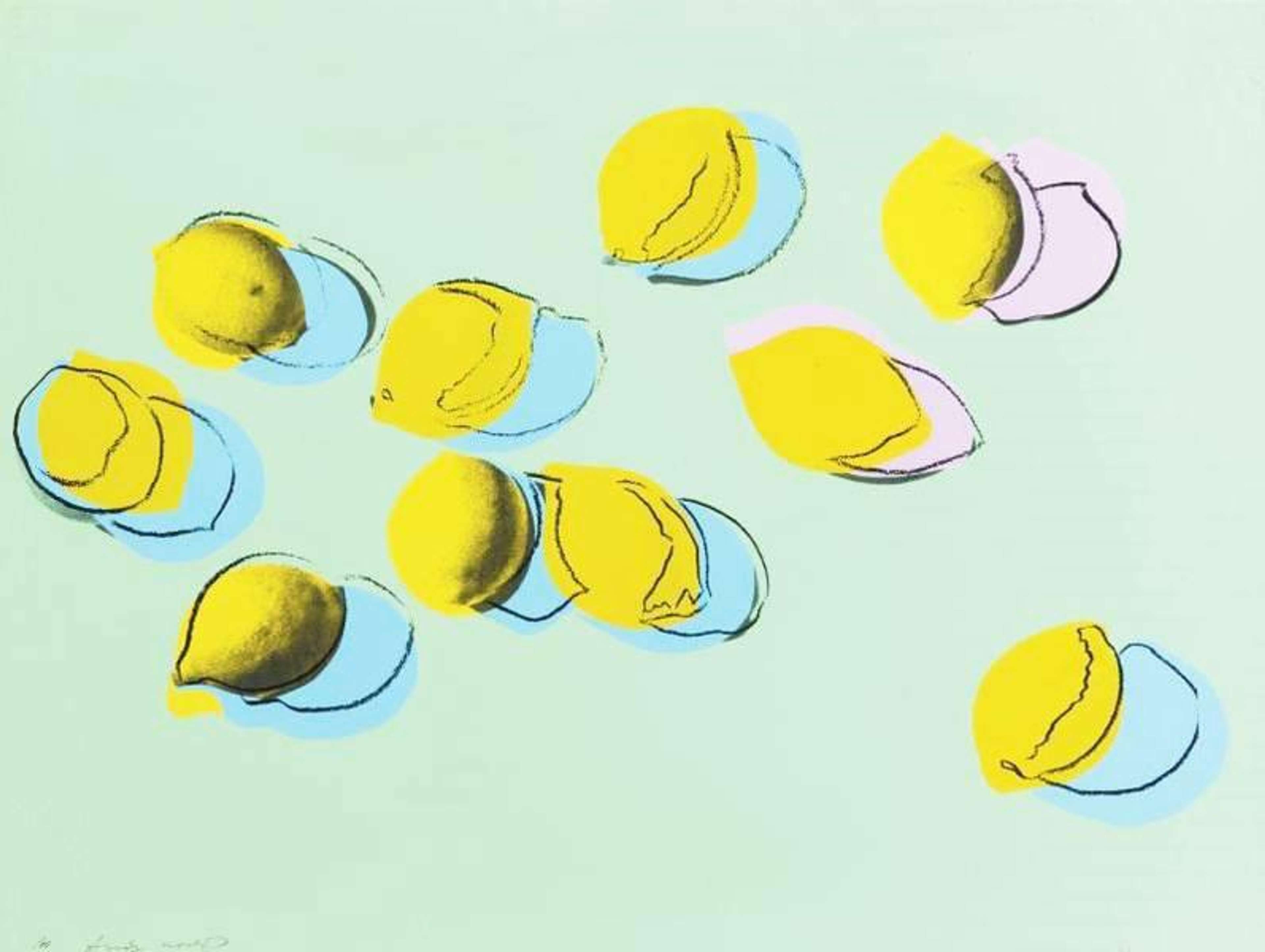
Among the Space Fruit images, Lemons are the rarest, each produced in an edition of just ten. These small runs reflect a conscious turn toward exclusivity at a time when Warhol's silkscreens often circulated in large editions.
Space Fruit imposes Pop Art techniques onto the still life tradition
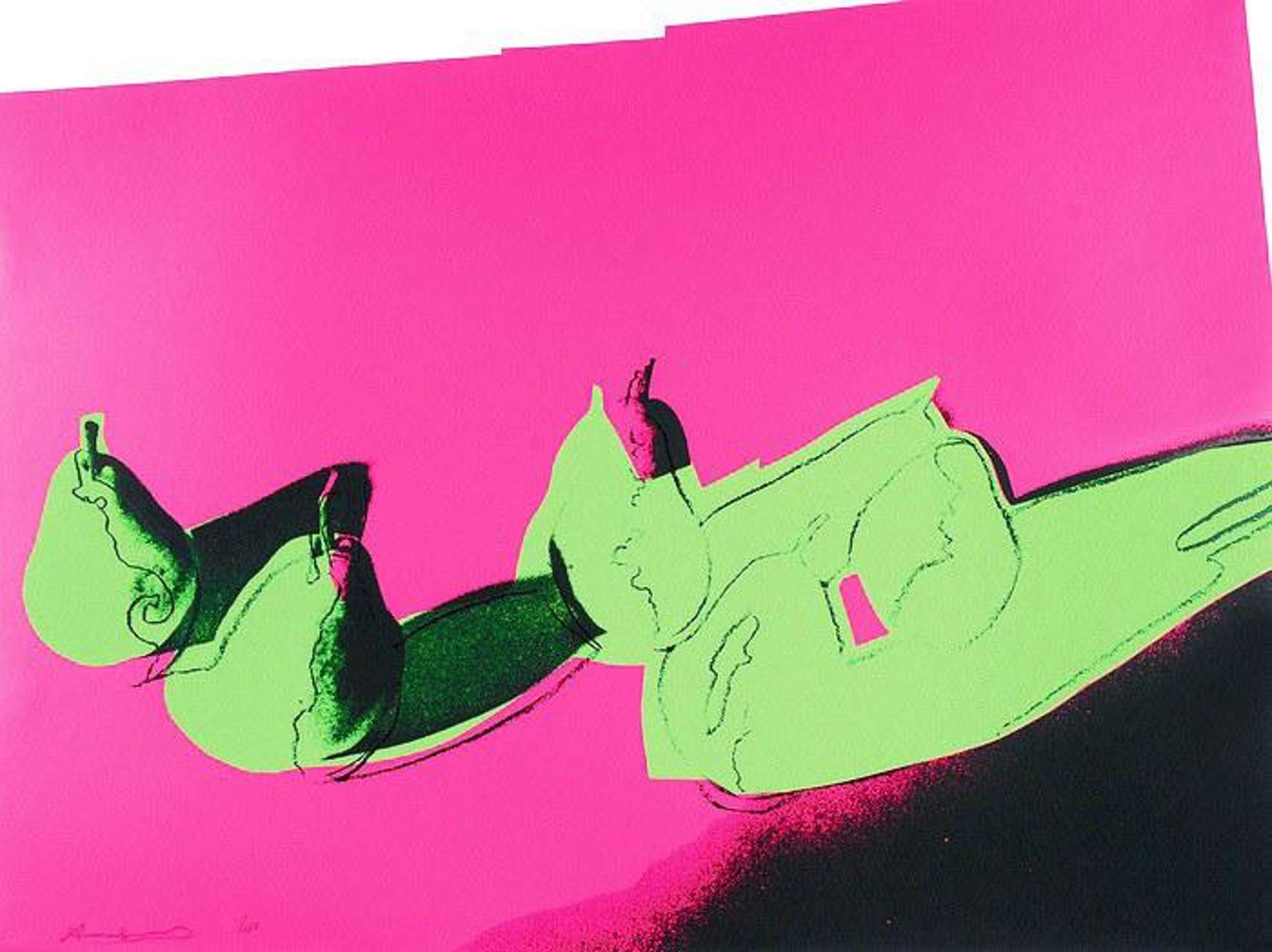
While earlier still lifes sought to capture natural beauty or the transience of life, Warhol’s Space Fruit celebrates the artificial. The fruits are rendered as icons in the cool, industrial minimalism of Pop. Warhol’s fruits do not decay or fade, instead they exist as eternal, endlessly reproducible images. In doing so, Warhol transformed the still life genre into an exploration of artifice, abundance and consumption.
Non-naturalistic colour exaggerates Space Fruit’s Pop aesthetic
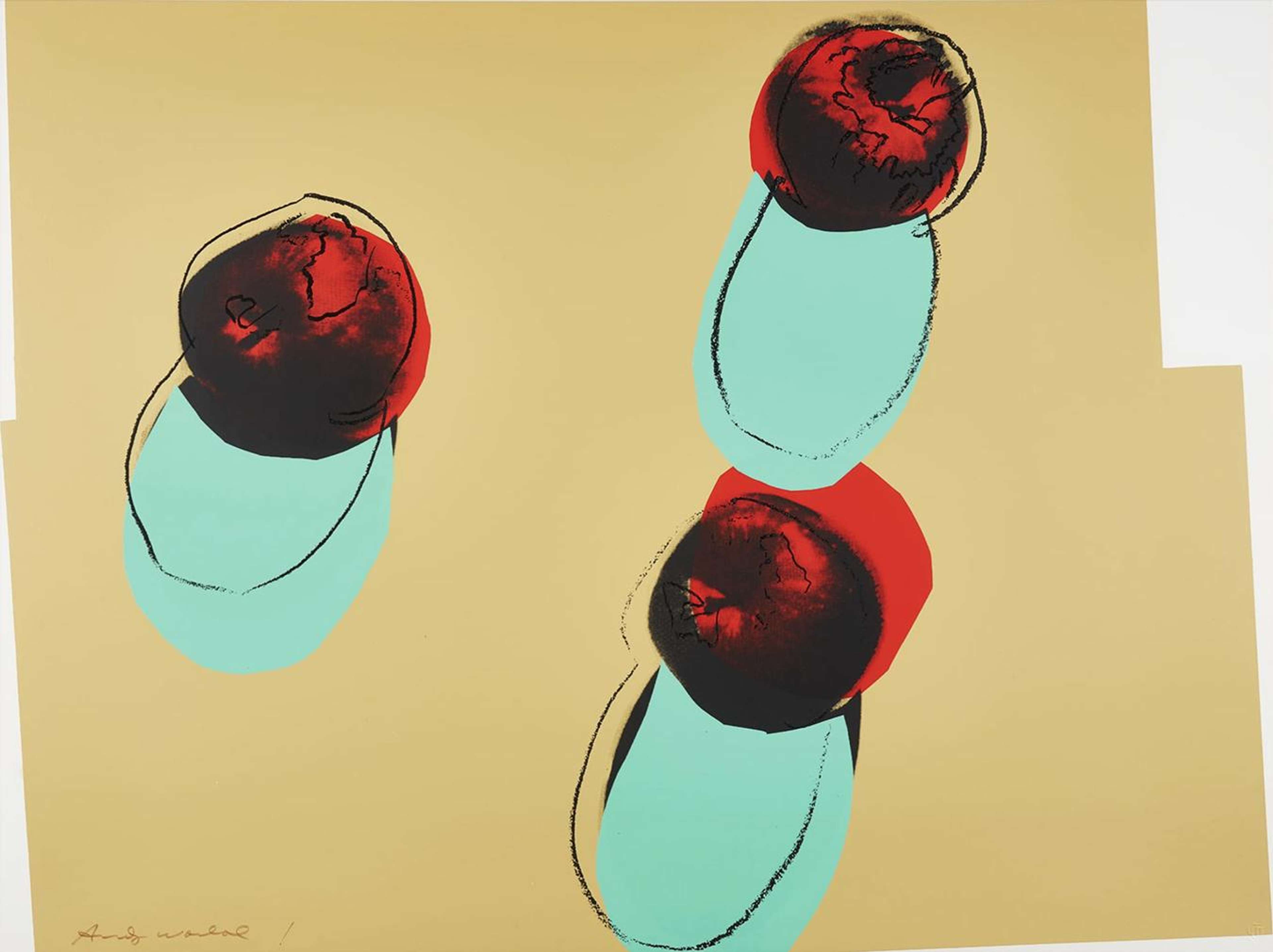
Warhol rejected natural tones in favour of hyper-saturation in order to heighten the sense of otherworldliness hinted at in the series title. The fruit appears to glow with internal light, their contours vibrating against contrasting backgrounds. The visual energy recalls Warhol’s earlier explorations of fame and desire, here the drama lies in the fruits’ colourful intensity.
Shadows are used in Space Fruit to mimic advertising photography

In Space Fruit, the angled lighting produces elongated silhouettes that anchor the composition and lend the fruit an ambiguous sense of space. These shadows create an illusion of depth and evoke the visual language of advertising photography, where lighting is used to dramatise ordinary products.
Space Fruit marks a pivotal moment between Skulls and Myths
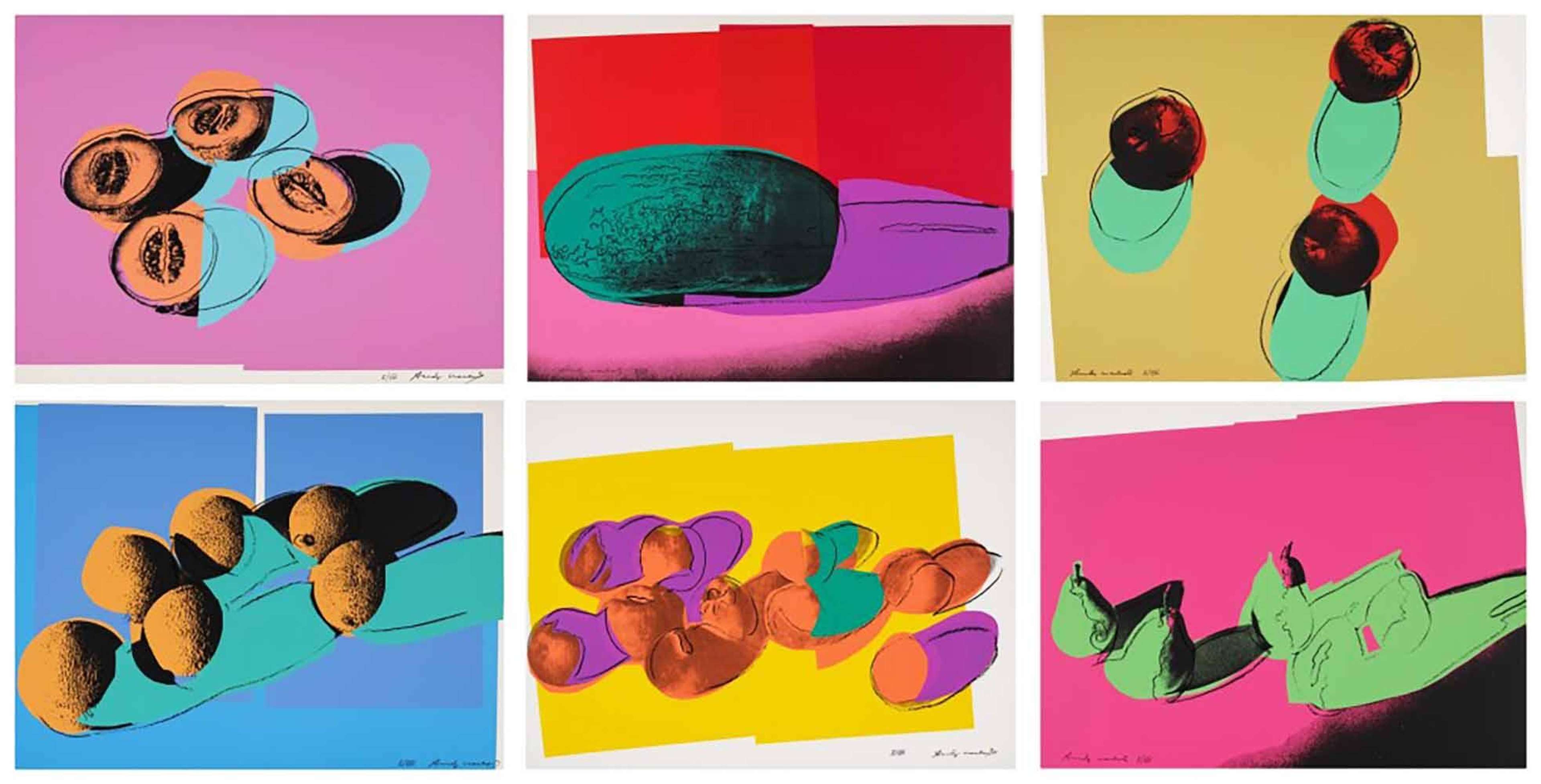
Created between his Skulls series (1976) and the Myths portfolio (1981), Space Fruit belongs to a transitional phase in Warhol’s practice. It bridges the introspective darkness of his mid-70s work and the return to Pop iconography of his 80s output. These still lifes radiate optimism, but beneath the brightness lies the same fascination with repetition, mortality and surface.
Multilayered techniques create depth within graphic flatness

Space Fruit exemplifies Warhol’s mastery of layered silkscreen printing, while hand-drawn outlines and collaged blocks introduce subtle irregularities, softening the mechanical edge. The prints appear flat at first glance, yet the layering creates optical depth, echoing the tension between image and object that runs throughout Warhol’s work.
Warhol collaborated with printer Rupert Jasen Smith to create Space Fruit
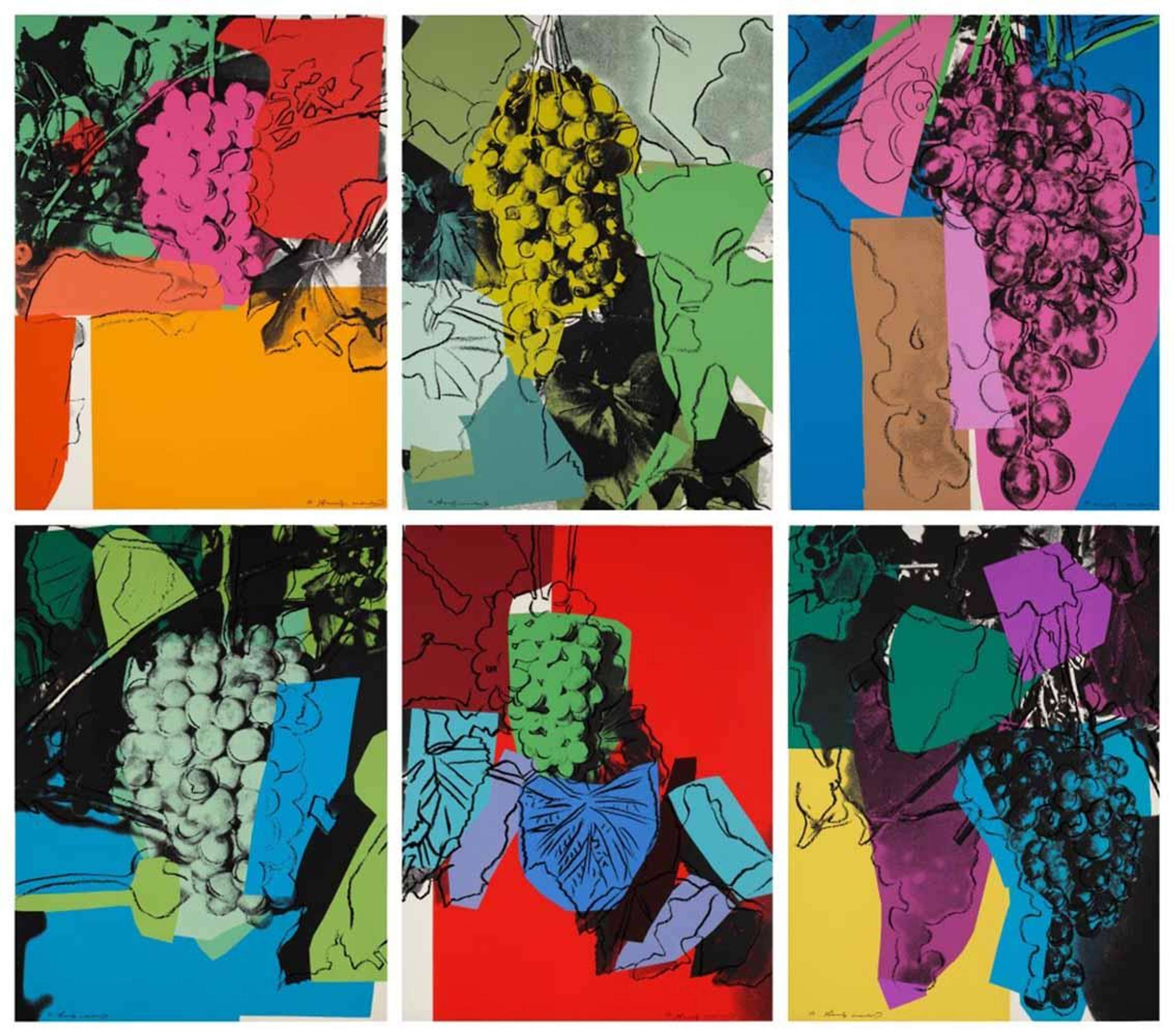
Warhol worked closely with his trusted printer Rupert Jasen Smith, whose technical precision and understanding of colour helped achieve the series’ luminous quality. Together they produced works that balance industrial process with aesthetic sensitivity.